Start with a phone, a spreadsheet for batches and stock, a GST billing app and a WhatsApp Business catalogue. Add a hosted online store with a courier plugin when orders from other cities arrive. Custom software only pays when a lot of manual work repeats every day, such as multiple price lists, subscriptions or bulk orders.
A food business has a data job most shops do not: every pack must trace back to a batch, a date and a set of ingredient lots. A good system answers one question quickly: if a customer reports a problem with this jar, which lot was it, who else got it and what do I do?
What the system has to remember
| Record | Example | Used when |
|---|---|---|
| Recipe and yield | 40 kg raw mango makes about 55 jars of 200 g | Costing and planning a batch |
| Batch record | Batch M-0426-03, date, quantities, who cooked and packed | A complaint or an inspection |
| Ingredient lots | Chilli lot from supplier X, bill number, arrival date | Tracing a bad lot |
| Packaging stock | Jars, lids, liners, labels, cartons | Production stops if one runs out |
| Finished stock with best-before date | 120 jars of batch M-0426-03, best before date | First-expiry, first-out dispatch |
| Orders and customers | Name, address, channel, items, repeat history | Shipping, reminders and refunds |
Stage one: a spreadsheet and a billing app
Under a few hundred orders a month, free tools are enough, if you keep a discipline of writing the batch number on every pack and entering it the same day.
- Google Sheets with four tabs: ingredient purchases, batches, packaging stock and finished stock by batch. One row per batch, one row per purchase bill.
- A GST billing app that makes invoices, tracks stock and reports tax. See our GST billing software guide. Many apps start free or at a few hundred rupees a month, but we have not verified any current price.
- WhatsApp Business for the catalogue, quick replies for shipping rates and labels for status (paid, packed, shipped).
- UPI QR and a payment link for online orders.
- Google Business Profile for local discovery.
- A shared photo folder with a picture of each batch label before dispatch, which is a very cheap form of traceability.
A spreadsheet is fragile. Lock formulas, back it up weekly and make one person responsible for updates. If two people edit the same stock sheet during a festival week, the numbers will drift.
Stage two: an online store with courier and payments
When orders come from outside your city, you need a store that handles shipping zones, a minimum order value, cash on delivery rules and tracking. Hosted store builders and marketplaces let you start without building anything.
| Need | Off-the-shelf option | Estimated cost | Fit for a food brand |
|---|---|---|---|
| Online store | Hosted store builders (Shopify, WooCommerce hosting, Indian builders) | From about ₹1,000–3,000 a month plus payment fees | Good for variants (100 g, 250 g), bundles and shipping rules |
| Courier booking | Shipping aggregators that offer multiple couriers | Per-parcel charges; weight slab based | Compare rates for glass jars and heavy parcels |
| Payments | UPI, cards and wallets through a payment gateway | A percentage per transaction | Check settlement time and refund process |
| Marketplace listing | Seller tools on marketplaces | Commission and fees vary by category | Needs FSSAI, GST and barcode set up |
| Email or SMS reminders | Simple mailers and WhatsApp reminders | Free to low monthly | Refill reminders at week five |
- Show best-before and batch practices on product pages. Customers want to know how fresh the pack will be.
- Set shipping rules by weight and zone so you do not lose money on glass-jar parcels.
- Turn on abandoned-cart or reminder messages for customers who left items in their basket.
- Collect reviews after delivery, and ask for a photo of damaged parcels in the same message.
For help choosing between a hosted store and a custom one, read our ecommerce website guide for India and the page on an online store for a food brand.
Stage three: stock, batch and wholesale tools
Once you supply shops and run three or more products, the spreadsheet starts to hurt. You are juggling retailer price lists, credit days, batch expiry and several courier channels.
| Tool category | What it adds | Signs you need it |
|---|---|---|
| Inventory and billing with batch and expiry tracking | Batch-wise stock, expiry alerts, GST invoices and e-way bills where needed | You have shops asking for invoices and you struggle to pick the oldest stock first |
| Order management across channels | One screen for website, WhatsApp and marketplace orders | You re-type orders and mis-ship |
| Production planning sheet or app | Raw material required for a given order quantity | You run out of jars or spices mid-batch |
| Accounting software | Receivables, payables, GST filings | Your CA asks for cleaner books |
| Label or barcode printing | Batch and date printing on stickers | Hand-writing dates slows packing |
When custom software pays, and what it would cover
Custom work is justified when something about your business does not fit a standard store or inventory app, and the manual workaround costs more than the build.
- Subscriptions of masala boxes with monthly rotation, pause and skip controls and a fixed delivery day.
- Wholesale and retailer portal: price lists by customer, minimum quantities, credit limits, reorder in one tap.
- Batch-linked traceability: order lines connected to batch numbers, so a complaint shows who received which batch.
- Gift and hamper builder that lets a customer pick six items, write a message and choose a delivery date.
- Regional storytelling pages with recipes and videos driving traffic.
If your sales are below a few hundred orders a month and mostly one channel, do not build. Use a hosted store and a good spreadsheet and revisit when the process, not the technology, is what slows you.
A concept to look at, and where The Saral fits
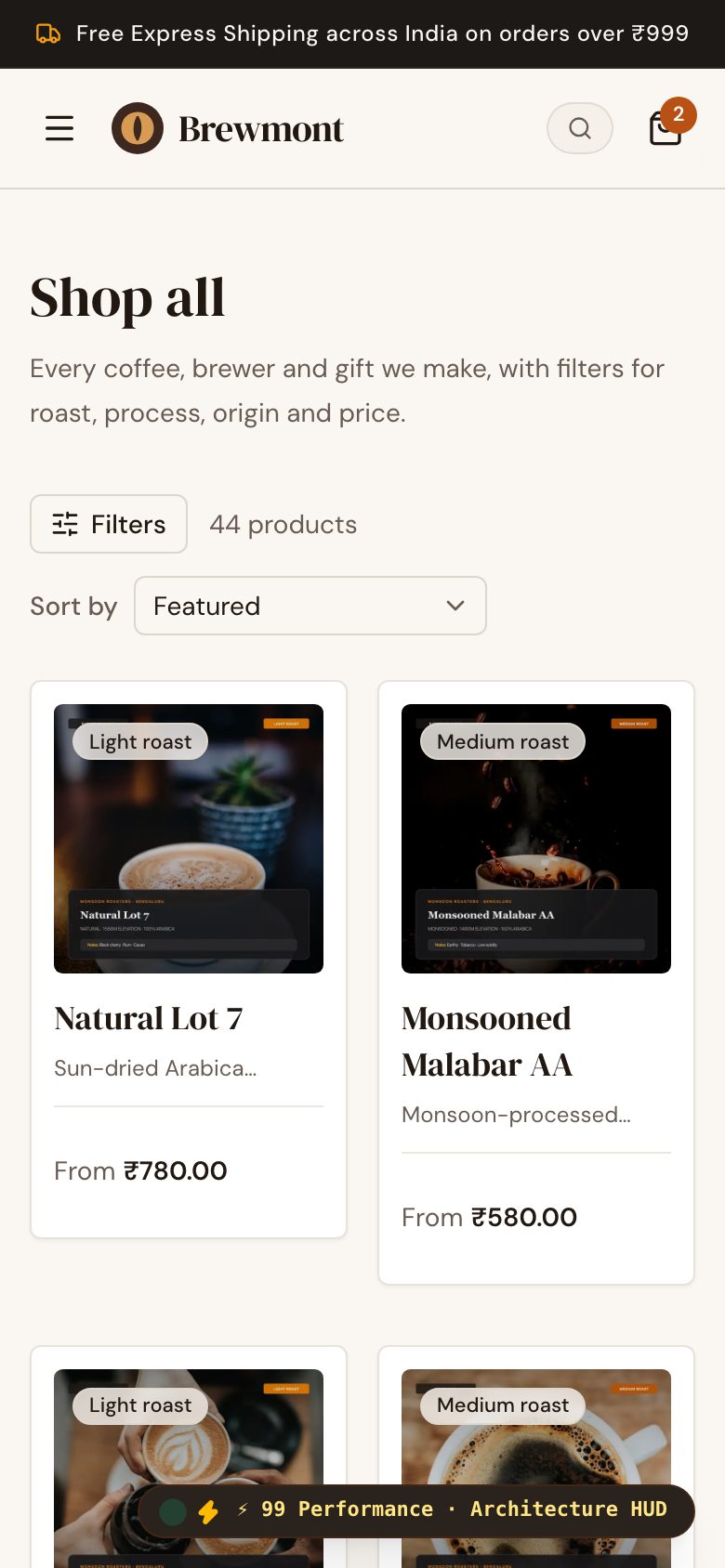
Our concept build Brewmont is a headless storefront for a coffee brand. It shows a product shop with variants, content pages, a sampler set and subscription ideas that carry over to packaged foods such as a masala refill box. It is a concept, not a food-production system: it does not cover batch records, FSSAI or Legal Metrology compliance, or inventory with expiry, and it is not a live food business.
The Saral builds custom storefronts and back-office tools for small brands. If your workflow has outgrown sheets and hosted store apps, send us a brief and we will tell you honestly whether a custom build or an off-the-shelf set-up is the better value for you.
More on starting a home food products business
- Start hereThe full playbook →Models, licences, startup costs and the steps to your first customer.
- Go deeperWhat to buy →Grinder, sealers, jars, pouches, dryers and tests, costed, with what to rent or leave for later.
- Go deeperGetting customers →Samples, WhatsApp, marketplaces, shops and gifting, with launch pricing and repeat-order tactics.
- Go deeperFinding suppliers →Spices, oil, fruit, jars, pouches and labels: where to buy, how to vet, and when to switch.
Questions people ask
What software does a small food brand need first?
A spreadsheet for batches and stock, a GST billing app and WhatsApp Business are enough to start. Add a hosted online store when orders arrive from other cities. Write the batch number on every pack from day one, because tracing a bad lot is the main data job a food producer has.
Do I need batch and expiry tracking software?
Not at first, but you need the records. A sheet with batch number, date, quantity and best-before is enough for a small unit. Move to inventory software with batch and expiry tracking when retailers, several products or multiple packers make manual picking of oldest stock error-prone.
Which platform is best for my own food store?
A hosted store builder is usually the cheapest way to start, with variants, bundles, shipping zones and payments built in. Pick one that supports weight-based shipping, cash-on-delivery rules and GST invoices. Compare two or three on a trial, and avoid custom development until you have repeat orders.
When should a home food business build custom software?
Build custom only when a repeating need does not fit off-the-shelf tools, such as subscriptions, a retailer ordering portal or batch-linked traceability, and the manual work is costing real time each day. With a few hundred orders a month and one channel, a hosted store and a spreadsheet are enough.
Does an online listing need my FSSAI number and label details?
Expect to show your FSSAI number and the packaged-goods declarations on listings, since marketplaces and Legal Metrology rules ask for them. We could not verify the exact current requirement for your own website, so check with the platform you use, the Legal Metrology department and a food consultant.