Solutions · Fintech
Fintech app: what to decide, build and test.
Planning one? Here's what to settle before you brief anyone, what goes in the first version, how the build runs week by week, how the beta is tested with real people, and the numbers that show it's working.
Who holds the licence, and who holds the money?
A fintech brief that starts with screens usually has to be rewritten once a lawyer or a partner bank reads it. These are the forks that decide what the app is allowed to do, and each one has a cost.
- Your own licence or a partner's. To run as a payment aggregator yourself, RBI asks a non-bank company for a net worth of ₹15 crore when it applies and ₹25 crore by the end of the third financial year after authorisation. That is why most first versions sit on a regulated partner's rails. The trade-off: faster launch, but the partner's rules shape your screens, fees and timeline.
- Distribute or advise. Selling mutual funds needs a NISM Series V-A certificate and an AMFI registration number (ARN). Telling people what to buy is a different activity that needs SEBI registration as an investment adviser. Decide which one you are before you write a word of in-app copy.
- Show loans or make them. Under RBI's digital lending directions, money moves straight between the borrower and the regulated lender, with no pool account of yours in the middle. An app that compares offers is a lighter product than one that lends, and it is built differently.
- Earn from users or from the partner. A visible fee builds trust and is easy to explain; partner-paid earnings keep the app free but make the app's incentives harder to defend. Pick one and show it plainly.
Before the brief, settle this list:
- What are we, in regulatory terms, and which partner holds each licence we do not?
- Does money ever sit with us, even for a day?
- Who answers a customer complaint, and in how many days?
- Which of these do we promise on day one: payments, investing, credit, insurance?
What goes in version 1 of a money app, and what waits
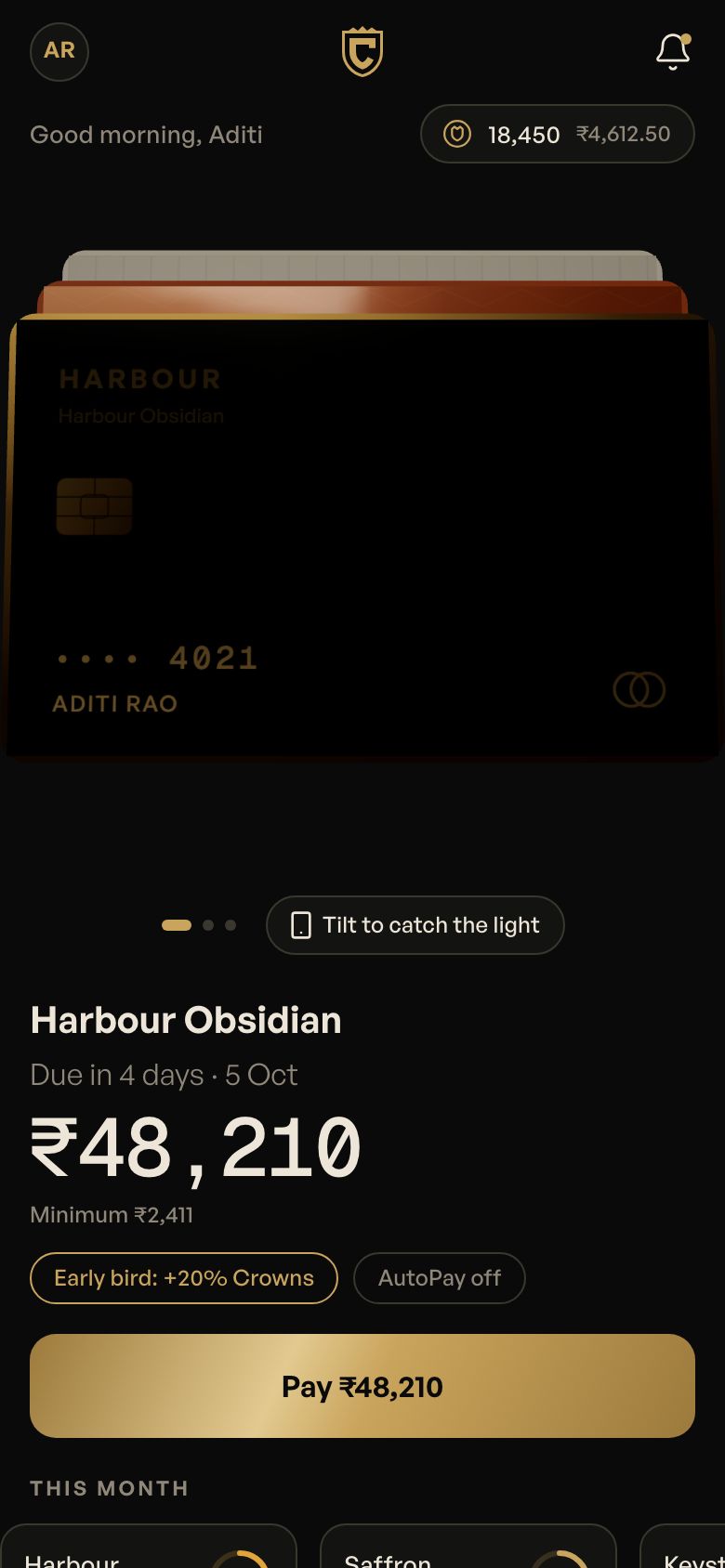
A first version should do one money job well and be ready for a partner's review. Seedvest is a useful reference: it is a concept build with a customer app, a dense web view and a staff console, and it shows how much surface even a modest investing product has.
| Module | First version | Add later | Why |
|---|---|---|---|
| Sign-up and KYC | Steps your partner requires, progress saved | Alternative routes such as video KYC | KYC is where users drop off; start with the one route your partner supports |
| Money in | UPI pay and one mandate type | Cards, netbanking, more mandate types | Every route adds partner approvals and failure states |
| Home screen | Balance, last activity, one clear next action | Charts, live prices, goals | Heavy charts slow budget phones |
| Charges and terms | Every fee in rupees before confirming | Calculators and comparison tools | Hidden fees end trust faster than a missing feature |
| Recurring payments | Create, pause, revoke, retry | Step-up amounts, bundled schedules | A failed instalment is the commonest support ticket |
| Ops console | KYC queue, customer lookup, refunds | Fraud rules, deeper reports | Your team handles the first refund on day one |
| Disputes | A queue with deadlines | Automated partner status sync | Partners expect complaints answered on time |
| Reconciliation | A daily match of your records to the partner's | Automated exception handling | Mismatches grow quietly if nobody looks |
| Alerts | SMS and in-app receipts | WhatsApp templates, regional languages | Receipts matter before reminders do |
| Merchant or partner side | Skip unless it is the product | Settlement views, QR tools | A second user type roughly doubles the work |
How an 8 to 12 week fintech build runs, and what you supply
The build and the partner process run in parallel. Start the partner conversation in week one, because their review can set the launch date.
| Weeks | We build | You supply |
|---|---|---|
| 1–2 | Flows, wireframes and a clickable prototype of the core journey | Partner agreements in progress, product rules, the list of fees |
| 3–5 | Customer app against the partner's sandbox | Sandbox access and API documents, test accounts |
| 5–8 | Ops console: KYC queue, lookups, refunds, audit trail | Roles list, complaint process, escalation contacts |
| 8–10 | Languages, alerts, device and security testing | Approved copy and disclosures from your lawyer, test phones you want covered |
| 10–12 | Partner review fixes, store listings, handover | Store accounts, privacy notice, sign-offs from compliance |
How we work with you each week
The same rhythm runs from week 1 to launch, so you always know what's happening and what we need from you.
- Friday: a demo link and a 30-minute call. You open the latest build on your own phone and try it yourself, rather than watching our screen.
- Within 48 hours: your feedback, in writing. In one shared doc, next to the screen it's about. Written feedback is clear, dated and doesn't get lost between calls.
- Monday: triage. Every comment goes into fix now, next week or later. Anything that changes the agreed scope gets a written quote before we touch it.
- Each milestone: two revision rounds, then your sign-off. Sign-off is against the scope we agreed, so it's clear what done means.
- One decision-maker on your side. Most delays aren't build time. They're feedback waiting on several people who disagree.
The full version, including how the beta and user testing work across every kind of project, is on our process page.
The beta: a closed group, small amounts, the ops console live
The beta starts around week 8, once a customer can sign up, finish KYC and move money, and your staff can see every step in the ops console. It runs alongside the partner review, so whatever the beta turns up goes into the same round of fixes.
- What's in it. Sign-up and KYC on your partner's route, UPI pay, one mandate type with pause and revoke, receipts, and the console's KYC queue, lookup, refunds and dispute queue. The daily reconciliation runs from the first rupee.
- What stays out. Charts, calculators, extra payment routes, WhatsApp alerts and any merchant side. They add screens without telling you whether the money journey holds.
- Who uses it. 15 to 25 customers who match your real audience (salaried first-time investors, small traders, whoever the product is for), plus two or three of your ops and compliance staff. You recruit them; staff relatives who never read a fee line tell you little.
- How they get it. iPhone users through TestFlight, Android users through a Google Play closed test. The console runs on a staging link with each staff member's own login and role.
- How money is limited. Most flows run against the partner's sandbox first. Real money only moves where the partner allows it in a closed group, with small amounts (a ₹100 payment, a ₹500 mandate) and a cap set with the partner. Every real transaction is matched by hand that day.
- How long. Two to three weeks, so at least one mandate debit, one failed instalment and one refund happen for real. A feedback button sends a screenshot and a note to the shared tracker.
A new personal Google Play developer account has to run a closed test with at least 12 testers for 14 days before it can publish. Count the beta group towards that, or use an organisation account.
What we test with real people, and the tasks we set
Each tester gets one job to do with real (small) money on the phone they already own, in the language they read best. We sit beside them, say nothing, and note where they hesitate. Around five sessions per role shows the main problems. We fix those and run the same tasks again.
| Who | The task | What we watch for |
|---|---|---|
| New customer | "Sign up and start KYC with your PAN. Stop halfway, close the app, and finish it tomorrow." | Is progress saved? If a document is rejected, do they understand why and what to send instead? |
| Customer | "Set up a ₹500 monthly SIP debited on the 5th through UPI AutoPay, then pause next month's instalment." | Do they see the next debit date and amount? Does the UPI app hand back to ours on a budget Android phone? |
| Customer | "Before you confirm, tell us what this will cost you in rupees." | Can they read every charge off the screen before paying, without opening a help page? |
| Customer with a failed instalment | "Your instalment didn't go through. Find out why and fix it." | Do they understand the reason (expired mandate, limit too low) and find the fix without calling support? |
| Ops staff | "A customer says ₹1,000 left her bank account yesterday but the app shows nothing. Find it and reply." | How fast do they find the transaction? Can they see the partner's status and the audit trail on one screen? |
| Compliance reviewer | "Clear today's KYC queue. One PAN photo is blurred; reject it with a reason the customer will understand." | Are reasons picked from a list or typed? Does the customer receive the same wording the reviewer chose? |
The numbers that say it's working
In week 1 we agree two or three measures with you, and note today's figure if a current product or process has one. Tracking goes in before the beta starts. We report the numbers at launch and again 30 days later. We can't promise where they land; our job is to make them visible, so you can see what to fix.
| Goal | What we measure | Where it comes from |
|---|---|---|
| People get through KYC | Share of sign-ups that finish KYC, and the step where the rest stop | App analytics and the partner's KYC status |
| Money goes in first time | Share of UPI payments and mandate registrations that succeed on the first try, by UPI app | Payment partner callbacks |
| Instalments don't fail quietly | Failed debits per 100 scheduled, by reason, and how many customers fix them | Partner mandate reports and app events |
| Fees are understood | Testers who can state the charge correctly before confirming | Testing sessions |
| Complaints close on time | Disputes closed within the deadline you committed to | Ops console dispute queue |
| The books match | Daily mismatches between our records and the partner's, and days to clear each one | Reconciliation report |
What a fintech app costs, and what moves it
A customer app plus an ops console is two user types plus admin. Small-studio ballpark for that shape is ₹10–25 lakh, as set out in our cost guide. A customer-only product with no console sits lower, but few regulated products can run without one. These are ballparks; we quote each project in writing.
- The number of sides. Adding a merchant or partner app, as in Coinjar, pushes towards the top of the range.
- Partner integrations. Each partner means sandbox work, approvals and edge cases. Each extra partner adds work, so keep the integration behind one layer.
- Ops depth. A queue and an audit trail are modest. Fraud rules, alerts and reports are not.
- Motion and live data. Real-time prices and rich charts add cost on the app and on the servers.
Rules and habits to design for in India
- Recurring payments. UPI AutoPay needs a second factor at registration, a notice at least 24 hours before each debit, and an easy way to pause or revoke. Debits up to ₹15,000 need no extra factor; for insurance, securities and credit-card-bill categories the limit is ₹1,00,000. Show your user the next debit date and amount.
- Failed instalments. In the Seedvest concept, a SIP instalment fails with an explicit reason when the mandate has expired or its maximum amount is too low, and staff can see the same state. Build the failure path first.
- Fee clarity. Seedvest's concept breaks a charge into lines before confirmation and runs a copy check that rejects phrases such as guaranteed returns. A build-time rule is harder to forget than a style guide.
- Partner-held funds. Aggregators keep merchant money in an escrow account with a scheduled bank, and payment data is expected to be stored in India. Confirm both with your partner.
- Data and consent. The DPDP Rules were notified on 13 November 2025, with notice, consent and breach duties applying from 13 May 2027. Design consent screens and a deletion path now; our DPDP checklist lists the steps.
- Language. Key flows, receipts and alerts in the user's language; see building apps in Indian languages.
This is general information, not legal advice. Fintech rules change often. Have a lawyer who works with regulated businesses confirm your category, licences and partner contracts before you build.
Seven mistakes that cost fintech founders months
- Designing before choosing a partner. Their API and disclosure screens change your flows. Talk to partners first, then design.
- Treating KYC as a form. It is a journey that gets interrupted. Save progress, explain rejections and show a status.
- Skipping the ops console. Without it, refunds and disputes go through spreadsheets. See what a fintech guide expects from ops.
- Burying fees. People leave when they find a charge after confirming. Show it before.
- Ignoring the failed path. Declines, timeouts and expired mandates are common. Design them as screens, not error strings.
- Testing only on a new phone. Many users have entry-level Android handsets on slow data. Test there.
- Collecting data you do not need. Every extra field is a consent and security burden under the DPDP rules.
Instead: pick the partner, draw the money flow on one page, build the failure screens, and ship one money job. If you are scoping, read our fintech guide and UPI guide, then send a brief.
Cost and timeline
8–12 weeks for a first version.
Fixed quote within 48 hours of your brief: scope, timeline and price in writing before we start. These are what move the number.
- How many sides the product has: customer only, or merchants, agents and ops too
- Which regulated partners you integrate with for payments, KYC or investments
- Depth of the ops console: case queues, audit trails and reports
- Number of languages at launch
- Charts, live prices and motion-heavy moments
Questions
About your fintech app.
How much does it cost to build a fintech app in India?
It depends on how many sides you need and which partners you plug into. We give every project a fixed quote within 48 hours of your brief, so the number is agreed before work starts. For typical market ranges and what pushes them up, read our guide to app development cost in India.
Do you handle licences, KYC and payment approvals?
No. Lending, payment aggregation, investment advice and KYC are regulated, so they need your own licences or a regulated partner such as a bank, payment gateway or broker. We design and build the product around those partners: their APIs, their approval steps and the screens your users see. Your compliance team or lawyer signs off the rules.
How long does a first version take?
A two-week concept sprint gets you a clickable prototype of the core flow for investors or partners. A full first version — brand, customer app, ops console and website — usually takes 8 to 12 weeks, depending mostly on partner integrations and how much the ops side has to do on day one.
Will it work on cheap Android phones?
Yes, we design for them first. Screens stay light, data is cached so the home screen opens without a network round-trip, and heavy charts load after the balance does. We test on entry-level Android handsets and slow connections, because that is where most first-time investors and merchants are.
Who owns the code?
You do. Source code, design files, the brand system and documentation are handed over in full, in repositories your team controls. That matters in fintech, where auditors and partners may ask to see how things work. Nothing stays locked in our accounts, and there is no licence fee to keep using what we built.
Read next
- FintechBuilding a fintech app in India: licences, KYC and partners →Building a fintech app in India: what's regulated, when you need a licence or a regulated partner, how KYC works, and how to design an app people trust.
- PaymentsAdding UPI payments to your app: a plain guide →How UPI works inside an app or website: intent, QR and collect flows, payment gateways, refunds, AutoPay mandates and reconciliation, explained for business owners.
- ComplianceThe DPDP Act for app owners: a practical checklist →What India's Digital Personal Data Protection Act means for your app or website: notice, consent, data rights, children's data, security and breaches, in plain words.
- CostHow much does it cost to build an app in India? →Ballpark app development costs in India for 2026, from a simple app to a multi-sided marketplace — what moves the price, and how to get a quote you can trust.
Start a project
Tell us how your business runs. We'll build what it runs on.
Four taps, about a minute. Fixed quote within 48 hours.