Start a business · Food & grocery · 5 min read

How to start a cafe in India: licences, cost and steps

How to start a cafe in India: kiosk, takeaway and sit-down models, FSSAI and other licences, ballpark costs for coffee equipment and fit-out, and launch steps.

Planning this? Ask an expert, free ↓
Brewmont coffee shop and ordering

A cafe is a coffee and snacks business that sells time as much as drinks. Decide early whether you are a quick takeaway counter or a place people sit for an hour, because that decides your rent, your seats and your menu. Then get FSSAI, GST and the local trade licence in place, and spend on coffee equipment before décor.

As a ballpark, a small kiosk or 10-seat cafe in a tier-2 city can open for roughly ₹8–20 lakh. A 40-seat metro cafe often needs ₹35–70 lakh. Good coffee, a consistent barista and a reason to come back each week matter more than the interiors.

Is a cafe right for you?

Cafes have spread well beyond the metros. Students, young professionals and freelancers in tier-2 cities now look for a place to meet, study or work over coffee, and specialty Indian coffee has made people more curious about what is in the cup.

Cafes suit owners who care about consistency — the same cappuccino at 8 am and 8 pm — and who enjoy being part of a neighbourhood. The hard parts: a coffee bill is small, so you need many customers a day; laptop users can fill seats for hours on one drink; and good baristas are hard to keep.

Business models to choose from

ModelHow it worksSuits
Kiosk or takeaway counterA small counter, coffee and grab-and-go snacksOffice complexes, colleges, metro and railway stations
Neighbourhood cafe20–40 seats, coffee, light food, a regular crowdResidential areas with young families and students
Work cafePlenty of seating, plugs, Wi-Fi and a minimum spend or time packsAreas with freelancers and startups
Roastery cafeYou roast beans and sell them alongside drinksOwners who want a retail and online beans business too
Bakery cafeCoffee led by fresh bakes made on siteOwners with baking skills; see starting a home bakery

Licences and registrations

RegistrationWhy you need itWhere you get it
FSSAI licence or registrationRequired for any business serving food or drinksFood Safety and Standards Authority of India, online
GST registrationNeeded above the turnover limit, and to bill businesses or list on platformsGST portal
Shop & Establishment registrationCovers working hours and staff under your state's lawState labour department or municipal body
Health or trade licencePermission to run an eating place at that addressMunicipal corporation
Fire NOCDepending on size, seating and buildingState or city fire department
Eating house licenceRequired in some cities for places that serve food on the premisesLocal police or licensing authority, depending on the city
Signage permissionFor a board facing the road, in many citiesMunicipal corporation
Music licenceIf you play recorded music for customersThe copyright licensing bodies for recorded music

If you sell packed coffee beans or bakes with labels, packaging and labelling rules for packaged goods also apply.

Go deeper in the library: licences and paperwork for a cafe.

Rules, tiers and thresholds vary by state and city, and they change. Confirm the exact list for your address with a CA or the local authority. This is not legal advice.

What it costs to start

Small start: a kiosk or 10-seat cafe in a tier-2 city. Larger setup: a 40-seat cafe in a metro.
ItemSmall startLarger setup
Rent deposit and advance₹1–2.5 lakh₹4–10 lakh
Espresso machine, grinders and brewing gear₹2–5 lakh₹6–15 lakh
Fridges, oven and small kitchen equipment₹1–2.5 lakh₹3–6 lakh
Interiors, seating and lighting₹2–6 lakh₹12–25 lakh
Licences, CA and consultant fees₹25,000–75,000₹1–2 lakh
Opening stock: beans, milk, cups, bakes₹30,000–75,000₹1–2 lakh
Staff salaries for the first two months₹1–2 lakh₹4–8 lakh
Billing, QR menu and website₹20,000–75,000₹1–3 lakh
Rough total₹8–20 lakh₹35–70 lakh

Coffee equipment is the one place not to save. A cheap machine that cannot hold temperature through a rush makes every drink worse. Many suppliers offer machines on rent or with a bean supply agreement, which lowers the upfront cost.

Go deeper in the library: what a cafe costs to start.

These are ballpark estimates to sanity-check a plan, not quotes.

Step by step: from idea to first customer

  1. Choose your crowd: students, office workers, families or remote workers. Your menu, hours and seats follow from that.
  2. Find a location with morning and evening footfall, and check it on a weekday and a weekend.
  3. Taste beans from several roasters and settle on a house blend and one single-origin.
  4. Register the business and apply for GST, FSSAI and the trade licence.
  5. Plan the bar so a barista can make drinks without crossing paths with the person at the till.
  6. Hire and train baristas until drinks taste the same no matter who makes them.
  7. Keep the food menu short: a few bakes and sandwiches you can make well and fast.
  8. Set up billing, UPI QR and a loyalty card — paper or digital — from day one.
  9. Create your Google Business Profile with photos of the drinks and the space.
  10. Soft-launch for a week, then open properly and track the busiest hours.

Running it day to day

The day starts with dialling in the espresso: tasting and adjusting the grind until shots run right. Milk deliveries come early, bakes go into the display, and the bar is set before the first rush. Evenings bring a second crowd in many neighbourhoods.

  • Beans: buy by roast date and use them within weeks, not months. Stale beans are the most common cafe mistake.
  • Machine care: clean the group heads and steam wands daily and service the machine on schedule.
  • Seats: if laptop users fill tables all day, try time-based packs or a minimum order after the first hour.
  • Margins: drinks carry good margins; food carries the wastage. Track both separately.

Getting your first customers

Cafes grow through habit. Your aim is to turn a first visit into a weekly one. A complete Google Business Profile helps people nearby find you — see our local SEO guide — but the loyalty card and the barista who remembers an order do the rest.

  • Nearby offices: offer morning coffee runs with ordering on WhatsApp.
  • Events: open-mic nights, book clubs and coffee tastings fill quiet evenings.
  • Beans to take home: selling bags of your house blend extends your brand into kitchens.
  • Delivery platforms: useful for cold coffees and snacks, but keep the menu short and the packaging spill-proof.

The tech you need

Day one: billing with GST invoices, a UPI QR at the counter, and a simple loyalty system. Next: a website with the menu, location and hours, plus pre-ordering for office crowds so their coffee is ready when they walk in. If you roast or sell beans, an online store with subscriptions turns regulars into monthly customers.

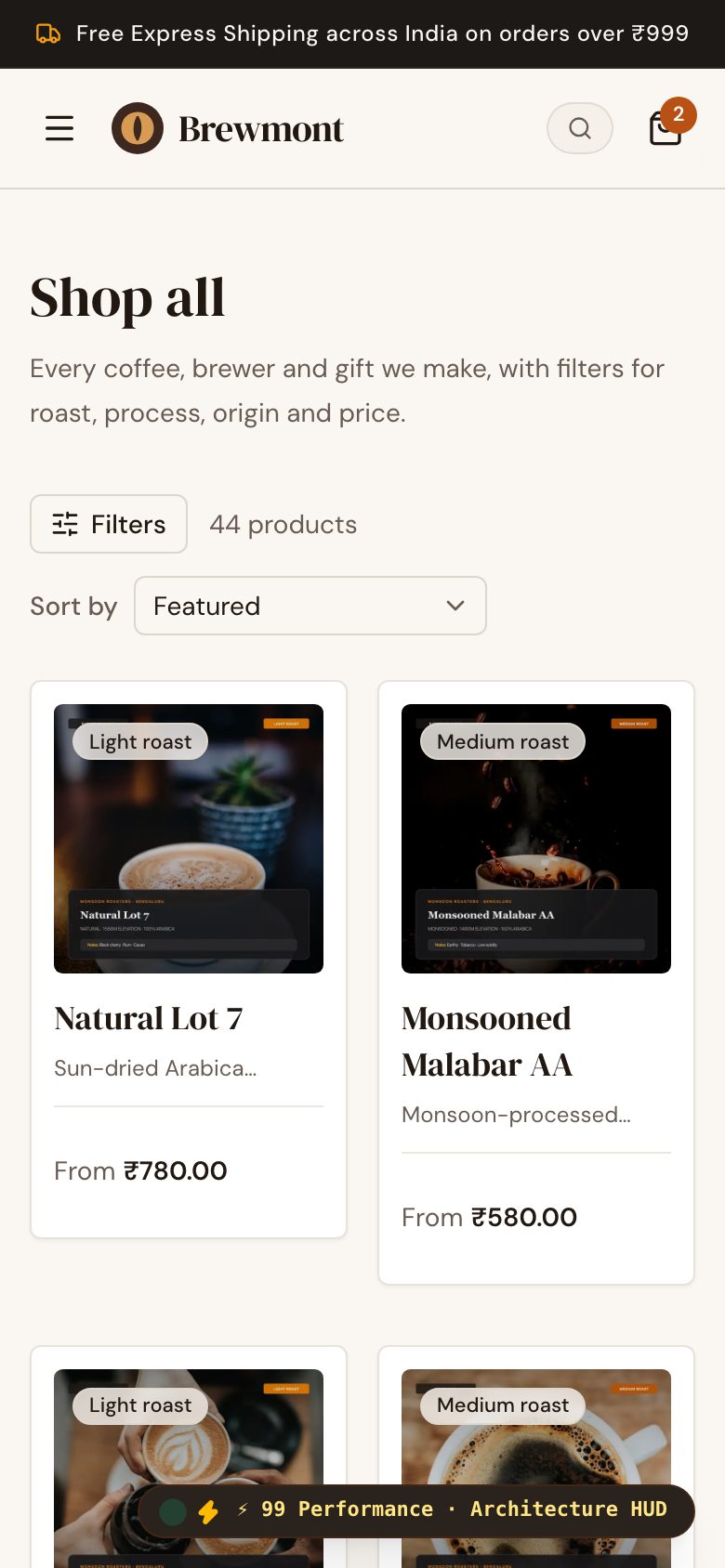
Our concept build Brewmont is a coffee storefront with brew guides, a brew-ratio calculator and a tasting-flight gift box — the kind of online shop a roastery cafe can grow into. See what a cafe or restaurant website involves, or an online store for beans, and how much a website costs.

Questions people ask

How much does it cost to open a cafe in India?

As a ballpark, a kiosk or 10-seat cafe in a tier-2 city needs about ₹8–20 lakh, and a 40-seat metro cafe about ₹35–70 lakh. Coffee equipment, interiors and rent deposit take most of it. Renting the espresso machine through a bean supplier can lower the upfront amount.

Do I need an FSSAI licence for a small cafe?

Yes. Every business that serves food or drinks needs FSSAI registration or a licence; which one depends on your size. You will usually also need a trade licence from the municipal body, Shop & Establishment registration and GST once you cross the threshold. Check the exact list with a CA.

Is a cafe business profitable in India?

It can be. Drinks have healthy margins, but the bill per customer is small, so profit depends on volume, rent and wastage. Cafes with a regular weekday crowd, a short food menu and sensible rent tend to do well; those relying on weekend crowds alone struggle.

How do I stop laptop users occupying tables all day?

Be clear and friendly about it. Common approaches are a minimum order every couple of hours, a separate work area with time packs, or limited plug points in the main seating. Many cafes welcome remote workers in quiet hours and keep peak tables for quicker customers.

Should my cafe have its own app?

Not at first. A website with the menu and pre-ordering, a loyalty card and a WhatsApp number cover most needs. An app becomes worthwhile when you have several outlets, many daily regulars or a bean subscription business that customers manage every month.

The whole plan · 14 steps

Starting a cafe, step by step.

Show notes for

Decide

  1. 1

    Choose the type of cafe your money and skills can carry

    Which kind of cafe can I open with the money I have?

    Why
    The type decides almost everything that follows: how much space you need, which machines, how many staff, which licences and which customers. A specialty coffee bar on a chai-counter budget runs out of money before it opens.
    When
    Before you look at a single property · takes 1–2 weeks
    Where
    • Online This library and your own spreadsheet · Write down the cash you can put in without borrowing against your home.
    How

    Start from three things you already have: your budget, the kind of place you can realistically rent, and what you or your partner are good at. Match those to a type, not the other way round.

    Cost
    Total money needed to open: ₹10–30 lakhMoney needed to open a small cafe or kiosk: ₹3–15 lakhMoney needed to open a medium cafe (about 20–50 seats): ₹15–30 lakhMoney needed to open a large or premium cafe (50+ seats): ₹30–100 lakh
    You'll have
    One chosen type and a back-up · A total budget, split into your money and borrowed money

    Common mistakes

    • Choosing a format because it looks good on Instagram rather than because the money and the street fit it
    • Counting the whole budget as available for fit-out and leaving nothing for the first slow months

    Coffee kiosk or mall counter A mall or station kiosk is the cheapest way in, but the landlord takes a share of sales (8–15% of revenue in malls). Count that as rent from day one.

    Board game cafe Add the game library (₹1.5–10 lakh) to the budget, and remember groups stay 2–4 hours, so you need more space per rupee of sales.

    Cafe in a tourist town Budget for the whole year, not the season: most of the sales arrive in a few months and the rent and staff costs don't stop. See surviving the off season.

    If you're a chef You'll lean towards a big kitchen and a long menu. A tighter type with a short menu often makes more money and leaves you time to run the business.

    Go deeper: Which type of cafe should I open? · Can I open a cafe with ₹5, 10 or 20 lakh? What does each budget get you? · How much does it cost to open a cafe in India? · Is a cafe a profitable business in India? · How much does a cafe owner earn a month? · How does a cafe in a tourist town survive the off season?

    Stuck on this step? Ask an expert, free →

  2. 2

    Fill the gaps in your experience before you spend

    Can I open a cafe if I've never run one?

    Why
    First-timers rarely fail for lack of passion. They fail because nobody on the team knows what a Saturday rush, a milk supplier who doesn't turn up, or a weekly stock count feels like.
    When
    While you're choosing the type, and before you sign a lease · after Choose the type of cafe your money and skills can carry · takes 1–3 months
    Where
    • On site A busy cafe near you · Work weekend shifts for a few months, behind the counter, not at a table.
    • A professional A barista course, if coffee is your main product
    How

    Decide what you'll do yourself and what you'll hire or partner for. If you keep your job, the cafe needs a manager and written systems before it opens, not after.

    Cost
    Certified barista course (SCA Barista Skills, Foundation level): ₹22,000–28,500Cafe manager pay: ₹1.9–5.4 lakh per year
    You'll have
    A clear split of who does what · Hands-on experience of a real service

    Common mistakes

    • Assuming you can run a cafe part-time from day one
    • Taking a partner on a handshake, with nothing written about money and control

    If you're a chef You know the kitchen. The gaps are usually the counter, the numbers and the landlord. Spend your learning time there.

    Go deeper: Can I open a cafe with no food business experience? · Can I run a cafe while keeping my job? · Opening a cafe with a partner: how to split money, work and control · How do I become a barista? Do I need a course?

    Stuck on this step? Ask an expert, free →

  3. 3

    Sell to strangers before you sign anything

    How do I know people will pay for my cafe before I commit?

    Why
    A few weeks of real sales tells you more than any survey: what people order, what they'll pay and who comes back. It costs a small fraction of a lease you can't get out of.
    When
    Before you sign a lease · after Choose the type of cafe your money and skills can carry · takes 3–8 weeks
    Where
    • Market Weekend and flea markets, pop-ups, office lobbies · Ask the organiser what licence or registration they need from you.
    How

    Pick one test that's close to the cafe you want: a market stall, a pop-up inside someone else's shop, a coffee cart, or delivery from a licensed kitchen. Keep a sheet of every sale.

    You'll have
    Real sales numbers by item and hour · A shorter, tested menu · A view of who your customers are

    Common mistakes

    • Counting friends and family as proof of demand
    • Testing a product you won't sell in the actual cafe

    Delivery-only cafe Test on the delivery apps from a shared or licensed kitchen; watch what's left after commission (18–35% of order value of each order).

    Bakery cafe Home-baked orders on WhatsApp and Instagram are a good test, but price them as if you were already paying rent.

    Go deeper: How do I test my cafe idea before signing a lease? · Why do most cafes fail, and how do I avoid it? · Cafe, cloud kitchen or franchise: which should I choose?

    Stuck on this step? Ask an expert, free →

  4. 4

    Build the money plan: startup cost, break-even and cash to survive

    How much money do I need, and when will the cafe break even?

    Why
    A cafe's fixed costs start the day the lease does. The plan tells you how many bills a day you need, how much rent you can afford and how long your cash lasts if sales start slow, which they usually do.
    When
    Before you look at properties seriously · after Sell to strangers before you sign anything · takes 1–3 weeks
    Where
    • Online A spreadsheet, using the line items in this library
    • Office Your bank branch · Only once the plan is written; banks read it for whether the cafe can repay from its own cash.
    How

    List startup costs line by line, then monthly fixed costs. Divide fixed costs by what you keep from an average bill to get the bills you need each day. Set aside three to six months of fixed costs as working capital.

    Cost
    Total money needed to open: ₹10–30 lakhIngredients and packaging as a share of sales: 25–35% of revenueSalaries as a share of sales: 25–30% of revenueShare of project cost the owner usually puts in (margin): 10–25% of project cost
    You'll have
    A startup budget · A break-even number of bills a day · A funding plan · A written business plan if you'll borrow

    Common mistakes

    • Leaving working capital out of the budget
    • Using hopeful sales to set the rent and the fit-out
    • Borrowing the whole amount and putting in nothing yourself

    If you're a chef Cost every recipe now, at today's milk and ingredient prices. It feeds directly into break-even.

    Go deeper: What goes into a cafe's startup cost, line by line? · How many customers does a cafe need to break even? · What does a cafe spend every month: rent, salaries, milk, power, gas? · How much money should I keep aside after my cafe opens? · How do I fund a cafe: savings, loans, partners or investors? · How do I write a cafe business plan a bank will read?

    Stuck on this step? Ask an expert, free →

Find the place

  1. 5

    Judge streets by footfall and rent, not by looks

    Where should I open my cafe?

    Why
    Rent is fixed from day one. If the street doesn't have enough people who'd pay your prices at the hours you're open, nothing inside the cafe fixes it.
    When
    Once your budget and break-even are written · after Build the money plan: startup cost, break-even and cash to survive · takes 3–8 weeks
    Where
    • On site The streets on your shortlist · Count footfall at the hours you'd trade, on weekdays and weekends.
    • A professional Local brokers · Their fee is usually 1 month of rent from each side.
    How

    Shortlist two or three areas that suit your type: offices, colleges, residential, a mall, a high street. Count the people who could plausibly become customers, in quarter-hour blocks, and watch the nearest cafes at their peak.

    Cost
    Rent a cafe can afford, as a share of monthly sales: 10–20% of revenueTypical broker's fee on a shop lease, from each side: 1 month
    You'll have
    Footfall counts for each shortlisted spot · A maximum rent for each

    Common mistakes

    • Judging a street from one busy evening
    • Falling for a large, cheap space on a street where nobody stops

    Chai cafe Count people at the exact times regulars would come: office arrival, lunch and the 4 pm break. A chai counter lives on those peaks.

    Cafe near a college Count in term time and ask what happens in the holidays; footfall can fall away for weeks. See how a college cafe survives the holidays.

    Highway cafe Parking, toilets and visibility from the road matter more than walking footfall.

    Board game cafe Weekday footfall matters less than whether groups of friends live within a short ride. Check evenings and weekends.

    If you're a chef You'll be tempted to judge a spot by its kitchen. Judge it by its footfall first; kitchens can be fitted, streets can't.

    Go deeper: How do I choose the right location for a cafe? · How do I count footfall and judge a street for a cafe? · How much rent can a cafe afford? · Mall, high street, office area or residential: where does a cafe do well? · Does a cafe work in a small town or tier 3 city? · How does a college cafe survive holidays and exam weeks?

    Stuck on this step? Ask an expert, free →

  2. 6

    Check the property works as a cafe, then sign a lease that survives a slow start

    What should I check before I sign a lease for a cafe?

    Why
    A cafe needs far more from a building than a clothes shop: power load, water, a drain for a grease trap, a route for the exhaust, gas and the landlord's written permission for all of it. A lease signed without these can block your licences.
    When
    Before you pay any deposit · after Judge streets by footfall and rent, not by looks · takes 2–6 weeks
    Where
    • On site The property, with an electrician or your fit-out contractor
    • Office Sub-registrar's office · For registering the rent agreement where your state requires it.
    How

    Check the property against a cafe checklist, get the landlord's permissions in writing, then negotiate the cafe-specific terms on top of the usual clauses.

    Cost
    Security deposit for a shop, Mumbai: 3–6 monthsSecurity deposit for a shop, Bengaluru: 6–10 monthsSecurity deposit for a shop, Delhi NCR: 3–6 monthsTypical rent-free period for fitting out a shop: 1–3 months
    You'll have
    A signed and, where needed, registered rent agreement · Landlord NOCs for licences · A floor plan with measurements

    Common mistakes

    • Signing before checking the power load and exhaust route
    • Accepting a long lock-in with no exit if a licence is refused
    • Starting rent from the signing date with no fit-out period

    Coffee kiosk or mall counter In a mall you sign the mall's standard agreement; negotiate the revenue share, fit-out period and trading hours instead of rent.

    Cafe in a tourist town Ask whether rent is yearly or seasonal and who maintains the place in the off season.

    Go deeper: What should a property have to work as a cafe: water, drainage, exhaust, power load, gas, washroom? · What must my landlord allow for a cafe: cooking, exhaust, signage, seating outside? · What should a cafe negotiate in its lease beyond the usual clauses? · How big should my cafe be, and how many seats? · Which clauses should I check in a commercial rent agreement? · How much security deposit is normal for a shop, and how do I get it back?

    Stuck on this step? Ask an expert, free →

Paperwork

  1. 7

    Register the business, open the bank account and take GST

    What do I register first after signing the lease?

    Why
    Every licence is in the business's name and tied to the address. Choosing the structure, opening a current account and taking GST early stops you redoing applications later.
    When
    In the first week after signing the lease · after Check the property works as a cafe, then sign a lease that survives a slow start · takes 1–2 weeks
    Where
    • Online portal GST portal
    • Online portal Udyam registration
    • Office Your bank, for a current account
    • A professional A CA · Worth it for the structure and GST choice.
    How

    Decide between sole proprietor, partnership, LLP or company. Then open the current account, register on Udyam (free) and apply for GST with the registered rent agreement.

    Cost
    Government fee for Udyam (MSME) registration: ₹0Time for GST registration to be approved: 7 working daysGST on restaurant, cafe, takeaway and cloud-kitchen food: 5%
    You'll have
    A current account · Udyam certificate · GSTIN

    Common mistakes

    • Opening in a personal name and having to change every licence when a partner joins
    • Choosing the composition scheme without checking whether you'll sell on delivery apps

    Go deeper: In what order should I apply for cafe licences, and how long does each take? · What GST does a cafe charge, and should it take the composition scheme? · Sole proprietor, partnership, LLP or private limited: which should a small business choose? · What do I need to open a current account for my business? · What is Udyam registration and should my small business get it? · When do I need GST registration, and how do I get it?

    Stuck on this step? Ask an expert, free →

  2. 8

    Apply for FSSAI and the local licences in the right order

    Which licences does a cafe need, and in what order?

    Why
    You can't legally serve food without FSSAI, and the city's trade or health licence and, in some cities, an eating house licence or fire NOC can take weeks. Applied too early, the inspector sees bare walls; too late, you open without them.
    When
    When the layout is final and fit-out is starting · after Register the business, open the bank account and take GST · takes 3–10 weeks
    Where
    • Online portal FoSCoS (FSSAI)
    • Office Your municipal corporation or ward office · Trade, health or eating house licence; the name differs by city.
    • Office Fire department · Only where your seating and building need a fire NOC.
    How

    Small cafes under the turnover limit take FSSAI basic registration; larger ones a state licence. Apply for the municipal licence with the layout, and book fire and gas inspections once the fit-out is nearly done. File Shop and Establishment and sort music licences in the last week.

    Cost
    FSSAI basic registration fee: ₹100 per yearFSSAI state licence fee for a restaurant or caterer: ₹5,000 per yearLongest the authority may take to issue an FSSAI registration: 7 daysLongest the authority may take to issue an FSSAI licence: 60 daysMusic composition licence (IPRS) for a cafe: ₹10,000–20,000 per year, plus GST
    You'll have
    FSSAI number for your bills and board · Municipal licence · Fire NOC where it applies · Shop and Establishment certificate

    Common mistakes

    • Applying for FSSAI before you have the premises' address and documents
    • Assuming the fire NOC doesn't apply without checking your seat count
    • Playing film music without a licence

    Pet cafe You also need animal-welfare arrangements and food areas animals never enter. Read the pet cafe rules before you finalise the layout.

    Coffee kiosk or mall counter The mall or station authority usually has its own approval, which comes before the municipal licence.

    Cafe in a tourist town Some states add a tourism department registration; check yours before opening.

    Go deeper: What licences does a cafe need in India? · FSSAI basic registration, state licence or central licence: which do I need? · Does my cafe need an eating house licence, and which cities ask for one? · Does my cafe need a fire NOC? · How do I get a Shop and Establishment registration? · What is a trade licence and how do I get one from the municipality? · Do I need a licence to play music in my cafe? · Do I need permission for my cafe's signboard? · Can I put tables outside my cafe? What permissions do I need? · What licences, hygiene rules and insurance does a pet cafe need?

    Stuck on this step? Ask an expert, free →

Set up

  1. 9

    Fit out the space and buy the equipment for your busiest hour

    How do I fit out a cafe without the budget running over?

    Why
    Fit-out and equipment are the biggest cheque you'll write, and the one that most often overruns. A counter laid out badly slows every drink for years.
    When
    Straight after signing, in the rent-free period · after Check the property works as a cafe, then sign a lease that survives a slow start · takes 5–10 weeks
    Where
    • A professional A fit-out contractor and, for larger cafes, a designer
    • Market Equipment dealers in your city · Ask who services the machine locally before you buy it.
    How

    Fix the counter and kitchen layout first, then get a bill of quantities so contractors quote the same work. Pay against milestones. Buy equipment for your busiest hour and for the service you can get in your city.

    Cost
    Fit-out and equipment: ₹6–20 lakhInterior fit-out cost per square foot: ₹900–4,500 per sq ft of carpet areaTime to fit out a cafe once drawings are final: 5–7 weeks2-group commercial espresso machine: ₹1.7–3.6 lakhBilling and POS software for one cafe: ₹2,000–25,000 per outlet per year
    You'll have
    A finished, snag-free space · Installed and tested equipment · A working billing system

    Common mistakes

    • Starting fit-out on rough sketches and paying for changes later
    • Buying a machine nobody in your city can service
    • Spending on walls and ceilings instead of the counter, lighting and seating

    Bakery cafe The oven (₹0.5–1.7 lakh for a 2-deck electric) drives the power load and the kitchen layout. Size it before the electrician quotes.

    Chai cafe A chai station and a good burner replace the espresso machine; spend the saving on the counter and quick service.

    Delivery-only cafe Skip the dining room; spend on packing space and a pickup point riders can reach quickly.

    If you're a chef Draw your own kitchen line before the designer does. You know where each step happens.

    Go deeper: How should a small cafe kitchen and counter be laid out? · How do I hire a cafe fit-out contractor and stop the budget running over? · How do I design a cafe interior on a budget? · What equipment does a cafe need, and what does it cost? · Which espresso machine should a new cafe buy, and should it be second-hand? · How much does each piece of cafe equipment cost in India? · Which billing, POS and inventory tools does a cafe need?

    Stuck on this step? Ask an expert, free →

  2. 11

    Hire the core team and train them before opening day

    Who do I hire first, and how do I get them ready?

    Why
    Staff are the second-biggest cost and the reason customers come back. A team trained on the real machines, with timed mock services, opens calm; an untrained one burns through your launch crowd.
    When
    Three to six weeks before opening · after Write a short menu, price it from cost, and line up suppliers · takes 3–6 weeks
    Where
    • Online Job boards, local hospitality groups, referrals
    How

    Work out headcount from your hours and peak stations, not from a rule of thumb. Hire the person who makes your main product first, then helpers and a cashier. Give the core team two to three weeks: recipes by weight, hygiene, billing, then mock services.

    Cost
    Staff for a small cafe or kiosk: 2–5 staffStaff for a medium cafe (about 20–50 seats): 6–12 staffBarista pay: ₹18,000–30,000 per monthCafe cook pay: ₹18,000–28,000 per monthKitchen helper pay: ₹12,000–18,000 per monthWhat a first employee costs on top of their monthly salary: 10–25% on top of the monthly salary
    You'll have
    A trained core team · A first roster · Written recipes and routines

    Common mistakes

    • Hiring a full team weeks before you can pay them, or the week before opening
    • Training on paper instead of on the actual machines

    Specialty coffee bar The head barista is the hire that makes or breaks you; pay for experience (₹20,000–45,000 per month).

    Cafe in a tourist town Seasonal staff often need housing; settle that before you hire.

    Go deeper: How many staff does a cafe need? · Who should I hire first for a cafe, and what should I pay them? · How do I train new cafe staff before opening? · How should I staff my cafe on weekdays and weekends? · How do I find and hire my first employee? · PF, ESI, minimum wage and contracts: what applies when I hire staff?

    Stuck on this step? Ask an expert, free →

Open

  1. 12

    Run the last two weeks off a checklist and hold a soft launch

    What needs to be ready before a cafe opens its doors?

    Why
    The last fortnight is where small things pile up: a machine not dialled in, a missing FSSAI number on the bill, a fridge that never reached temperature. A soft launch finds them with friendly guests instead of paying customers.
    Where
    How

    Work through a pre-opening checklist, set up hygiene routines from the first day, and get the cafe on Google Maps before opening so people can find you. Invite neighbours, nearby shops and offices to one or two soft openings.

    You'll have
    A cafe ready to trade · A list of fixes from the soft launch · A verified map listing

    Common mistakes

    • Opening to the public on the day the fit-out finishes
    • Leaving the map listing until after opening

    Go deeper: What does a cafe need ready in the last two weeks before opening? · How do I keep my cafe ready for a food safety inspection? · Where must my FSSAI number appear: bills, boards, menus, packaging? · How do I get my cafe to show up on Google Maps? · Where should a cafe be listed online?

    Stuck on this step? Ask an expert, free →

  2. 13

    Get the first hundred customers from within two kilometres

    How do I get people into my new cafe?

    Why
    A new cafe's first customers almost always live, work or study nearby. Win them in the first weeks and they become the regulars that carry the slow months.
    When
    Launch week and the first month · after Run the last two weeks off a checklist and hold a soft launch · takes 2–6 weeks
    Where
    • On site Your shopfront, nearby offices, colleges and housing societies
    • Online Google Maps and Instagram
    How

    Open with a short menu you can make well and more staff than you think you need. Make the shopfront work, invite neighbours and offices, post the place and the people on Instagram, and ask happy customers for reviews without paying for them.

    Cost
    Daily spend Indian agencies suggest for a first local Instagram or Facebook ad: ₹100–500 a dayWhat a local food creator with 10,000–50,000 followers asks for one Reel: ₹4,000–30,000 per Reel
    You'll have
    A first group of repeat customers · Early reviews · A sense of which hours and items sell

    Common mistakes

    • Spending the launch budget on influencers whose followers live elsewhere
    • Running discounts so deep that the first customers only come back for the discount

    Cafe near a college Time the launch for the start of term, not the week before exams or holidays.

    Delivery-only cafe Your shopfront is the app listing: photos, ratings and delivery time do the work a signboard does.

    Go deeper: How do I get my cafe's first 100 customers? · What should a cafe do in its launch week? · How do cafes grow on Instagram? · How do I turn first-time visitors into cafe regulars? · Are food influencer visits worth it for a small cafe?

    Stuck on this step? Ask an expert, free →

First 90 days

  1. 14

    Track the numbers every day, and pay yourself last

    How do I know whether my new cafe is working?

    Why
    Sales usually spike in launch week, dip in months two and three, then climb as regulars build. Owners who don't reconcile daily, count stock weekly and watch cash can't tell a normal dip from a real problem until the money is gone.
    When
    From the first day of trading · after Get the first hundred customers from within two kilometres · takes 3 months
    Where
    • On site Your billing system, cash drawer and stock room
    • A professional Your CA, monthly
    How

    Reconcile cash, UPI and card every night. Count main stock on the same day each week and compare it with what sales say you used. At month end, put sales and costs into a simple P&L and compare with your break-even.

    Cost
    Net profit margin: 5–15% of revenueIngredients and packaging as a share of sales: 25–35% of revenue
    You'll have
    Daily sales records · A first three months of P&L · A clear view of cash left

    Common mistakes

    • Judging the cafe on launch week's sales
    • Paying yourself a full salary before the cafe covers its costs
    • Not counting stock, so wastage and leakage stay invisible

    Go deeper: How do I reconcile cash, UPI and card in my cafe every day? · What does cash flow look like in a cafe's first six months? · How do I control inventory and cut wastage in a cafe? · What does a typical month look like on a cafe's profit and loss? · When can I start paying myself from the cafe?

    Stuck on this step? Ask an expert, free →

Where these numbers come from

  1. Total money needed to open: ₹10–30 lakh (tier 1 and tier 2 cities; fit-out plus deposit, licences, launch and working capital). Ballpark cafe.fitout for the type, plus a rent deposit of 2–6 months' rent, licences ₹0.35–2 lakh, launch marketing ₹0.25–1 lakh, opening stock ₹0.5–1 lakh, and working capital for 3–6 months of running costs (all ranges from Restaurant India). Checked against Restaurant India's own bands: kiosk ₹3–5 lakh, small cafe ₹8–15 lakh, mid-sized ₹15–30 lakh, premium ₹30 lakh and up. Tourist town: a Goa cafe-leasing consultant puts a small 8–12 seat cafe at ₹15–35 lakh including deposit, fit-out, equipment, licences and working capital (OTA Studio, accessed 2026-11-09); deposits there are often 6 months' rent (cafe.goa-cafe-rent).
  2. Money needed to open a small cafe or kiosk: ₹3–15 lakh (tier 1 and tier 2 cities; a kiosk at the bottom (₹3–5 lakh), a 200–400 sq ft small cafe at ₹8–15 lakh). Reported: How much investment is needed to open a cafe in India? A low-budget guide (Restaurant India), checked 7 November 2026.
  3. Money needed to open a medium cafe (about 20–50 seats): ₹15–30 lakh (tier 1 and tier 2 cities; Restaurant India's 'mid-sized café' band, which we read as 20–50 seats). Reported: How much investment is needed to open a cafe in India? A low-budget guide (Restaurant India), checked 7 November 2026.
  4. Money needed to open a large or premium cafe (50+ seats): ₹30–100 lakh (metros and premium locations; Restaurant India's 'premium café' band, Rs 30 lakh to Rs 1 crore and more). Reported: How much investment is needed to open a cafe in India? A low-budget guide (Restaurant India), checked 7 November 2026.
  5. Certified barista course (SCA Barista Skills, Foundation level): ₹22,000–28,500 (Bengaluru, Mumbai and Surat providers, Oct 2026, 1–2 days with exam; Intermediate level ₹36,000–42,500; uncertified one-day practical courses ₹7,000–8,300). Reported: Barista courses and certifications in India 2026: fees from providers' own pages (Restronaut), checked 9 November 2026.
  6. Cafe manager pay: ₹1.9–5.4 lakh per year (all India, 2–11 years' experience; job-board average about ₹20,000 a month, chain cafe managers ₹25,000–45,000; restaurant managers earn more (₹2.4–8.4 lakh)). Reported: Cafe manager salary in India (AmbitionBox, 896 salaries); cross-checked with Indeed India, checked 9 November 2026.
  7. Ingredients and packaging as a share of sales: 25–35% of revenue (all India). Reported: How much investment is needed to open a cafe in India? A low-budget guide (Restaurant India), checked 7 November 2026.
  8. Salaries as a share of sales: 25–30% of revenue (all India). Reported: How much investment is needed to open a cafe in India? A low-budget guide (Restaurant India), checked 7 November 2026.
  9. Share of project cost the owner usually puts in (margin): 10–25% of project cost (all India; varies by bank and scheme (PMEGP and MUDRA have their own norms)). Ballpark Checked 2026-11-09 against published MSME and MUDRA pages of a few public sector banks: 25% on machinery term loans at one, 20% at another, 20% on MUDRA loans above ₹50,000 at a third, and usually nil on MUDRA Shishu loans. PMEGP asks 5–10%. A few banks ask a third of project cost; ask yours.
  10. Rent a cafe can afford, as a share of monthly sales: 10–20% of revenue (all India; above 20% is a warning sign, though prime locations sometimes run higher). Reported: How much investment is needed to open a cafe in India? A low-budget guide (Restaurant India), checked 7 November 2026.
  11. Typical broker's fee on a shop lease, from each side: 1 month (metro and tier 2 cities; one month's rent from the tenant and often one from the landlord, plus 18% GST if the broker is registered). Ballpark Market convention, not a regulated rate: broker guides (2025–2026) give one month's rent per side for shop and office leases (half a month is also common in Bengaluru, Hyderabad and Chennai), and a 2009 Delhi High Court judgment records the same practice as trade evidence.
  12. Security deposit for a shop, Mumbai: 3–6 months (Mumbai; months of rent). Ballpark Moneycontrol (Nov 2024) reports Mumbai deposits around 3–6 months' rent (rentals generally); a Mumbai office-leasing guide gives 3–6 months for offices. Prime shop frontage can ask more.
  13. Security deposit for a shop, Bengaluru: 6–10 months (Bengaluru; months of rent, high-street shops). Ballpark A Bengaluru commercial leasing adviser's October 2026 guide reports 6–11 months on the high-street spaces it represents, 10 months most common; press (Moneycontrol, Nov 2024; The Hindu BusinessLine, Nov 2025) describes 6–10 months as the Bengaluru norm for rentals generally. No consultant report publishes a city-wide figure for shops.
  14. Security deposit for a shop, Delhi NCR: 3–6 months (Delhi NCR; months of rent). Ballpark The Better India (2017) reports Delhi landlords charge 3–6 months' rent as deposit; Moneycontrol (Nov 2024) puts Delhi residential deposits lower, at 1–2 months, so shops sit at the higher end. Ballpark only.
  15. Typical rent-free period for fitting out a shop: 1–3 months (metro and tier 2 cities; negotiated, not a right). Ballpark Commercial leasing guides (2026) give 1–3 months rent-free for retail and food tenants (30–90 days in a retail leasing guide), longer for bare-shell spaces. Small landlords on 11-month agreements often give two to four weeks or none.
  16. Government fee for Udyam (MSME) registration: ₹0 (all India). Official source: Udyam Registration portal, Ministry of MSME, checked 7 November 2026.
  17. Time for GST registration to be approved: 7 working days (all India; up to 30 days if the officer orders physical verification (e.g. Aadhaar not authenticated)). Official source: CBIC, CGST Rules, rule 9, checked 7 November 2026.
  18. GST on restaurant, cafe, takeaway and cloud-kitchen food: 5% (all India; outside specified premises (2.5% CGST + 2.5% SGST)). Official source: CBIC Circular No. 164/20/2021-GST (cloud kitchens, restaurant service rate), checked 7 November 2026.
  19. FSSAI basic registration fee: ₹100 per year (all India; restaurants, dhabas, petty retailers of snacks and tea, canteens). Official source: FoSCoS: kind of business, eligibility and fee per annum (updated 1 April 2026), checked 7 November 2026.
  20. FSSAI state licence fee for a restaurant or caterer: ₹5,000 per year (all India). Official source: FoSCoS: kind of business, eligibility and fee per annum (updated 1 April 2026), checked 7 November 2026.
  21. Longest the authority may take to issue an FSSAI registration: 7 days (all India; the 2026 reforms promise instant registration without pre-inspection). Official source: FSSAI FAQs on licensing and registration (FoSCoS), 21 June 2021, checked 7 November 2026.
  22. Longest the authority may take to issue an FSSAI licence: 60 days (all India; state and central licences, counted from a complete application). Official source: FSSAI FAQs on licensing and registration (FoSCoS), 21 June 2021, checked 7 November 2026.
  23. Music composition licence (IPRS) for a cafe: ₹10,000–20,000 per year, plus GST (all India from 1 April 2025; ₹20,000 in 15 'classified' cities (Mumbai, Delhi NCR, Bengaluru, Chennai, Kolkata, Hyderabad, Pune, Ahmedabad, Goa and others), ₹10,000 elsewhere; covers background music; New Year, Christmas and similar events need a separate licence). Reported: IPRS Tariff RB: restaurants, coffee shops, cafes (the society's published tariff), checked 9 November 2026.
  24. Fit-out and equipment: ₹6–20 lakh (tier 1 and tier 2 cities; interiors, furniture, kitchen and coffee equipment, POS; excludes deposit and working capital). Ballpark Typical: interiors and furniture ₹4–10 lakh for 400–800 sq ft plus equipment ₹2–10 lakh (Restaurant India's ranges). Chai: a counter with burners, milk boiler and one fridge, ₹1–3 lakh each for build and equipment. Specialty: one 2-group machine ₹1.7–3.6 lakh mid-range or ₹9–12 lakh premium, two grinders ₹0.6–3 lakh each, brew bar, plus higher-spec interiors. Bakery: adds a 2-deck oven ₹0.5–1.7 lakh, mixer, proofer and display chillers. Board game and book: larger floor at 1,000–2,000 sq ft, shelving, sturdy tables. Pet: partitions, washable flooring and extra ventilation. Kiosk: Restaurant India puts a coffee kiosk at ₹3–5 lakh all in; mall design rules push up. Highway: 1,500–4,000 sq ft with washrooms, parking surface and a generator. Tourist town: 400–1,000 sq ft at ₹2,000–2,500 a sq ft all in (interior fit-out bands in cafe.fitout-per-sqft) plus equipment; hill sites cost more because materials travel further.
  25. Interior fit-out cost per square foot: ₹900–4,500 per sq ft of carpet area (tier 1 and tier 2 cities, 2026; civil, flooring, ceiling, joinery, lighting, wiring, signage; excludes GST, coffee machines and kitchen equipment. Lower half: Chennai, Kolkata and tier 2 basic finishes; upper half: Bengaluru, Mumbai and Delhi NCR). Ballpark Range of seven interior and fit-out firms' published 2026 rates for cafes (Chennai ₹900–2,000; national basic to mid ₹900–2,200; Kolkata ₹1,500–3,500; Delhi NCR ₹2,000–3,500; Bengaluru ₹2,500–4,500 and ₹2,500–5,500; Hyderabad ₹2,500–4,500). Firms that quote 'all in' include services like HVAC and exhaust, which is most of the spread. Small units cost more per sq ft. Get two itemised quotes (BOQ) against your own drawings.
  26. Time to fit out a cafe once drawings are final: 5–7 weeks (South India contractor's timelines; a mall kiosk takes 2–3 weeks, a cafe with a full kitchen 6–10; hill and island sites take longer). Reported: Retail and F&B fit-out cost and timeline table (AlcorOne), checked 9 November 2026.
  27. 2-group commercial espresso machine: ₹1.7–3.6 lakh (all India; new, mid-range semi-automatic; premium imported models ₹9–12 lakh; before GST and installation). Reported: Commercial espresso machine listings, B2B marketplace, checked 7 November 2026.
  28. Billing and POS software for one cafe: ₹2,000–25,000 per outlet per year (India, Nov 2026, before GST; basic GST billing with KOT about ₹2,000–8,000; delivery-app integration, inventory and recipe costing push it to ₹12,000–25,000; hardware (tablet or terminal, thermal printer) extra). Ballpark Range of eight Indian restaurant POS vendors' published annual plans for one outlet (Bhozone ₹1,499–2,999; POSYatra ₹2,000–7,000; OnePe ₹2,999–9,999; BillClap ₹4,499; Jhattse ₹4,800–8,000; RestroInvoice ₹5,999–11,999; Restrofi ₹6,999–8,388; Etable ₹7,999–24,999), all accessed 2026-11-09. Large brand-name POS vendors quote on request.
  29. Ingredient cost of a milk coffee: ₹20–25 per cup (urban India; cappuccino-size drink). Reported: Cafe business in India: setup cost, profit margins and what nobody tells you (Restaurant India), checked 7 November 2026.
  30. Cost to make one cup of chai: ₹6–11 per cup (all India; 90–100 ml cup with milk, sugar and a paper cup or kulhad). Ballpark Milk 60–80 ml at ₹56–68 a litre ≈ ₹3.4–5.4; tea 2–3 g at ₹250–500 a kg ≈ ₹0.5–1.5; sugar 8–10 g ≈ ₹0.4–0.5; ginger, elaichi and gas ≈ ₹0.5–1; paper cup ₹0.5–1 or kulhad ₹1.5–3. Total ≈ ₹6–11. A published breakdown of one kulhad chai (milk ₹3.5, tea ₹0.78, sugar ₹0.34, spices ₹0.4, kulhad ₹1.4, power ₹0.8 ≈ ₹7.2) falls inside this range.
  31. Packaged full cream milk, retail: ₹72 per litre (Delhi NCR and Mumbai, the two largest dairy brands, from 14 May 2026; toned milk ₹60, bulk vended toned milk ₹58 in Delhi; other states' cooperatives price differently, and cafes buying in bulk from a distributor or dairy can negotiate). Reported: After Amul, Mother Dairy hikes milk prices from May 14 (Business Today, 13 May 2026), checked 9 November 2026.
  32. Roasted coffee beans: ₹400–800 per kg (all India; 1 kg packs from roasters and wholesalers, before GST; bulk orders cost less). Reported: Roasted coffee bean listings, B2B marketplace, checked 7 November 2026.
  33. Staff for a small cafe or kiosk: 2–5 staff (all India; owner usually works a shift). Ballpark 1–2 people per shift (one at the machine or stove, one at the counter) × 1–2 shifts, plus cover for weekly offs. A specialty coffee franchisor staffs its 200–400 sq ft kiosk with 2–3 baristas (Westend Coffee franchise page, accessed 2026-11-09); a Manali franchise chai outlet reports a 6-person team in a tourist town (LinkedIn profile of the franchisee, accessed 2026-11-09).
  34. Staff for a medium cafe (about 20–50 seats): 6–12 staff (all India; open 10–14 hours in two shifts). Ballpark Per shift: 1–2 baristas, 1–2 cooks or a cook and helper, 1–2 servers or a cashier; two shifts with overlap at peaks, plus weekly-off cover ≈ 6–12. A franchisor lists 6–9 staff for its 25–35 seat cafe-with-bakery format and 8–12 for 35–45 seats with a hot kitchen (Westend Coffee franchise page, accessed 2026-11-09).
  35. Barista pay: ₹18,000–30,000 per month (all India; gross monthly; skilled specialty baristas in metros earn more). Reported: How much investment is needed to open a cafe in India? A low-budget guide (Restaurant India), checked 7 November 2026.
  36. Cafe cook pay: ₹18,000–28,000 per month (all India; gross monthly). Reported: How much investment is needed to open a cafe in India? A low-budget guide (Restaurant India), checked 7 November 2026.
  37. Kitchen helper pay: ₹12,000–18,000 per month (all India; gross monthly; check your state's minimum wage). Reported: How much investment is needed to open a cafe in India? A low-budget guide (Restaurant India), checked 7 November 2026.
  38. What a first employee costs on top of their monthly salary: 10–25% on top of the monthly salary (all India; lower end for a business under the PF and ESI headcounts paying only customary extras, upper end once PF, ESI and a yearly bonus apply). Ballpark Our estimate: employer PF at 12% of basic pay (basic usually half or more of pay, so about 6–12% of gross), employer ESI at 3.25%, a festival or statutory bonus averaging about 8% of yearly pay, plus meals, uniform and leave cover. Not a survey; varies with the pay structure.
  39. Daily spend Indian agencies suggest for a first local Instagram or Facebook ad: ₹100–500 a day (India, 2026; a test budget for a 3–5 km radius around one outlet, run for a week or two; agencies suggest more for steady results; GST added on the ad bill). Ballpark Indian agency and marketing guides read 9 Nov 2026: ₹100–500 a day to begin (digitaltrainee.com), ₹300–500 a day for reach and ₹300–1,000 for results (a Noida agency blog), about ₹333 a day as a practical minimum (upgrowth.in). Meta's own minimums are set in dollars (about $1 a day for impressions, $5 for clicks). Not one provider's figure.
  40. What a local food creator with 10,000–50,000 followers asks for one Reel: ₹4,000–30,000 per Reel (India, 2026; the median asking rate on one creator marketplace is ₹4,000, rate guides put it up to ₹30,000 or more; nano creators (1,000–10,000 followers) ask about ₹1,500; many small cafes pay in food (barter); add GST if the creator is registered). Ballpark Low end: median listed Reel price for food creators with 10K–50K followers on Hypee (₹4,000; 27 rates, 6 Nov 2026). High end: rate guides for food micro creators (CreatorIQ ₹19,000–38,500, a modelled figure; Xley's tier 2 guide ₹12,000–30,000 for 25K–50K). Asking rates, not paid prices; views and local reach matter more than follower count.
  41. Net profit margin: 5–15% of revenue (all India; well-run cafes with strong traffic reach 15–20%, poorly run ones fall below 5%). Reported: How much investment is needed to open a cafe in India? A low-budget guide (Restaurant India), checked 7 November 2026.
  42. Revenue share a mall takes from a cafe, kiosk or food counter: 8–15% of revenue (malls in tier 1 and tier 2 cities; paid as the higher of this share or a fixed minimum monthly rent). Ballpark Range of published figures: a mall-leasing advisory note gives 8–12% of turnover for food and beverage tenants; cafe and franchise guides give 10–15% of gross monthly revenue. No mall publishes a rate card, so this is a negotiating range, not a standard. CAM charges come on top and were not reliably sourced.
  43. Starting board game library: ₹1.5–10 lakh (all India; 150–250 games bought new). Ballpark 150–250 games (Restaurant India notes board game cafes may hold more than 200) × ₹1,000–4,000 per game (Indian retail listings run from under ₹500 for simple card games to ₹3,500–4,500 for large strategy games). 150 × ₹1,000 = ₹1.5 lakh; 250 × ₹4,000 = ₹10 lakh. Replacing lost pieces and worn boxes is a running cost.
  44. How long a board game cafe group stays: 2–4 hours (all India). Reported: Cafe business in India: setup cost, profit margins and what nobody tells you (Restaurant India), checked 7 November 2026.
  45. Commission charged by food delivery platforms: 18–35% of order value (Bengaluru restaurants, 2026; established outlets pay the low end, new ones the high end, before ads and discounts). Reported: Deccan Herald: Bengaluru restaurants say food delivery apps sharply cut payouts (30 July 2026), checked 7 November 2026.
  46. Electricity load to ask the landlord for: 10–20 kW (all India; sanctioned load on the meter, single or three phase). Ballpark Sum of equipment ratings with some running at once. 2-group espresso machine 4.3–5.5 kW (manufacturer spec sheets); commercial grinder 0.3–1 kW each; under-counter fridge or display chiller 0.3–0.5 kW each; 1.5-ton split AC about 1.5–2 kW each; microwave or convection oven 1.5–3 kW; lights 1–2 kW. Typical cafe: 5 + 1 + 1.5 + 3 ACs at 5–6 + 3 + 1.5 ≈ 17 kW. Bakery adds a 2-deck electric oven (commonly 6–12 kW on plate ratings) plus a proofer and mixer. Chai counters run on LPG with only a fridge, lights and maybe a water boiler. Highway cafes add more ACs, a bigger kitchen and outdoor lighting.
  47. 2-deck electric bakery oven: ₹0.5–1.7 lakh (all India; new; Indian-made; before GST and delivery). Reported: Bakery deck oven listings, B2B marketplace, checked 7 November 2026.
  48. Choices per menu category that diners rated 'about right': 6 items per category (quick-service style menus, one UK study of 241 people (2013); fine-dining style menus came out at 7–10; a cafe menu sits closer to quick service). Reported: Johns, Edwards and Hartwell, Menu choice: satisfaction or overload? (Journal of Culinary Science and Technology, 2013), abstract on Bournemouth University's research profile, checked 9 November 2026.
  49. Senior or head barista pay: ₹20,000–45,000 per month (metros, 2026; senior barista averages about ₹20,000–23,000 on job boards; a head barista running a specialty bar in Bengaluru was advertised at ₹30,000–45,000). Reported: Barista and senior barista salaries, Karnataka (Indeed India), checked 9 November 2026.

Fees, rates and rents change. Check the official source before you pay or sign anything.

Menu

Read

Ask an expert Ask an expertFree, real peopleHub
Ask an expert