Start a business · Health & fitness · 7 min read

How to start a gym in India: costs, licences and members

How to start a gym in India: models, licences, ballpark setup costs, a step-by-step launch plan and how to keep members coming back after month three.

Planning this? Ask an expert, free ↓
Groundwork gym membership and fitness training app
Runs on Groundwork · Fitness

Most new gyms in India start as either a compact functional-training studio of around 1,000–1,500 sq ft or a full-floor gym with cardio, machines and free weights. You need a registered business, GST, a Shop & Establishment registration, a municipal trade licence and, depending on the building, a fire NOC. Equipment and fit-out take most of the money; rent and salaries decide whether you survive.

The hard part is not opening. It is keeping members past the first three months, when the January and post-Diwali resolutions fade. Plan your pricing, classes and follow-up for retention from day one, and the rest of the business gets much easier.

Is a gym right for you?

Fitness has moved from a niche to a habit in most Indian cities. Office-goers want an early-morning slot near home, students want low monthly fees, women want a floor where they feel safe, and older members want guided strength work for knees and backs. Every neighbourhood has a slightly different mix, which is why the same gym concept can thrive in one area and struggle two kilometres away.

People who do well usually have one of three strengths: they are trainers with a following, they know the local area and its families, or they are operators who love systems — attendance, maintenance schedules, renewals. If you have none of these, partner with someone who does.

  • Seasonal demand. Sign-ups spike in January, before weddings and after festivals, then dip in the monsoon and exam season.
  • Peak hours. Most of your members want 6–9 am and 6–9 pm. Afternoons are quiet, so your space and staff sit idle for half the day unless you plan for it.
  • Retention. Many members stop coming within weeks. A gym that renews members is far healthier than one that keeps hunting new ones.
  • Capital locked in kit. Commercial equipment is expensive and loses resale value fast. Buy for your members, not for the brochure.

Business models to choose from

ModelHow it worksSuits
Full-floor gymCardio, machines and free weights, monthly to annual memberships, personal training on topOwners with a larger budget and a dense residential catchment
Functional or group-class studioSmall floor, timed batches (strength, HIIT, mobility), capped class sizesTrainers with a following; smaller spaces in busy areas
Women-only or senior-focused gymDedicated floor or timings, more guided coachingAreas where a general gym leaves a group underserved
Society or corporate gym operatorYou run gyms inside housing societies or offices for a feeOperators who want low capex and steady contracts
Hybrid studio + online coachingStudio classes plus paid home programmes and remote check-insCoaches who want income beyond the floor's capacity

If you are unsure, start smaller. A studio with timed batches tells you exactly how many people turn up, which a big open floor hides. You can always add a second floor; you can't easily give one back.

Licences and registrations

RegistrationWhy you need itWhere you get it
Business entity (proprietorship, partnership, LLP or private limited)A legal identity for contracts, a bank account and liabilityBank and PAN for a proprietorship; MCA portal for LLPs and companies
GST registrationGym memberships and personal training are taxable services once you cross the threshold, and corporate clients will want GST invoicesGST portal
Shop & Establishment registrationCovers working hours, holidays and staff recordsState labour department, usually online
Trade or health licenceMost municipalities license gyms and fitness centres as a tradeMunicipal corporation or local body
Fire NOCDepends on building height, floor area and occupancyState or city fire department
Music licencesPlaying recorded music in a commercial space may need licences from copyright societiesThe relevant copyright licensing bodies
Signage permissionMany cities regulate shopfront and rooftop boardsMunicipal corporation

Trainer certifications are not a government licence, but ask for them, keep copies, and make sure every floor trainer is trained in first aid and CPR. Get public liability insurance as well: someone will eventually drop a dumbbell on a foot.

Go deeper in the library: licences and paperwork for a gym.

Rules vary by state and city, and they change. Confirm the current requirements with your municipal office, a CA or a lawyer before you sign a lease. This is general information, not legal advice.

What it costs to start

Small start: a 1,000–1,500 sq ft functional studio in a mid-sized city. Larger setup: a 4,000 sq ft+ full-floor gym in a metro.
ItemSmall startLarger setup
Rent deposit and advance₹2–6 lakh₹8–25 lakh
Fit-out: flooring, mirrors, AC, changing rooms, lockers₹5–12 lakh₹20–50 lakh
Equipment₹8–20 lakh₹40 lakh–1 crore
Registrations, legal and CA₹30,000–1 lakh₹1–3 lakh
Launch marketing and founding-member offers₹50,000–2 lakh₹3–8 lakh
Software: billing, bookings, website₹20,000–1 lakh a year for ready-made toolsCustom apps quoted separately
Working capital (3–6 months of rent and salaries)₹4–10 lakh₹20–50 lakh

These are rough ballparks to help you plan, not quotes. Rent, equipment brand and city change the numbers a lot. Get three quotes for fit-out and equipment, and keep working capital separate from your setup budget.

The line people underestimate is working capital. Annual memberships bring cash in early, but that money belongs to the next twelve months of service. Spend it as if it arrived monthly.

Go deeper in the library: what a gym costs to start.

Step by step: from idea to first customer

  1. Pick your member. Office-goers, students, women, seniors or athletes. One clear answer shapes your floor, timings and price.
  2. Walk the catchment at peak hours. Stand outside existing gyms at 7 am and 7 pm. Count footfall, note prices on their boards, and ask people what they wish was different.
  3. Shortlist a site. Ground or first floor, a slab that can take heavy weights, ventilation, parking for two-wheelers, and visibility from the main road.
  4. Build the budget and runway. Setup costs plus six months of rent and salaries. Decide how much is your money, a loan or a partner's.
  5. Register the business, open a current account, and apply for GST, Shop & Establishment and the trade licence.
  6. Plan the floor before you buy. Map zones for strength, cardio and classes. Buy commercial-grade kit with a service contract.
  7. Hire and train trainers. Check certifications, run a trial session, and agree how personal-training revenue is shared.
  8. Set pricing and policies. Monthly, quarterly and annual plans, PT packs, a freeze policy for travel, and a clear refund rule written down.
  9. Pre-sell founding memberships four to six weeks before opening, with a site banner, a Google Business Profile and a WhatsApp number.
  10. Soft-launch with trial classes for a week, fix the snags, then open properly.
  11. Watch weeks three to eight closely. Call anyone who has not come in for ten days. That call saves more memberships than any ad.

Running it day to day

A gym is an operations business dressed up as a fitness one. The mornings run on whether the floor is clean, the AC works and the trainer turned up.

  • Staffing peaks. Roster your strongest trainers for 6–9 am and 6–9 pm. Use afternoons for PT, women-only batches or senior sessions.
  • Maintenance log. Note every machine fault, who fixed it and when. A broken treadmill for a week costs more in goodwill than the repair.
  • Health declarations. Ask new members to fill a short health questionnaire and sign a waiver. Store it securely; it is personal health data, so read our DPDP Act checklist.
  • Attendance and renewals. Track who comes, who has dropped off and whose plan ends this month. Renewal calls should go out two weeks before expiry.
  • Cash flow. Collect by UPI and card, issue GST invoices, and keep annual-plan money in a separate account so a slow month doesn't eat it.
  • Hygiene. Towels, wipes, clean washrooms and fresh air. Women members notice first and tell their friends.

Getting your first customers

Your first members will live or work within two or three kilometres. Win that circle before you spend on anything wider.

  • Google Business Profile. Exact timings, real photos of the floor, the class timetable and your phone number. Our local SEO guide walks through it.
  • Trial week. Let people try three sessions free or at a token price. Follow up personally on day four.
  • Societies and offices. Offer a group rate to a housing society or a nearby office, with a batch at a time that suits them.
  • Referrals. A free month for the member who brings a friend who joins.
  • Honest content. Share workouts and member stories only with written consent. Avoid promises like guaranteed weight loss — they attract the wrong members and invite complaints.

Reviews matter, but ask for them after a good session rather than paying for them. Fake reviews can get your profile restricted.

The tech you need

Don't build an app on day one. Start with a billing tool that issues GST invoices, WhatsApp for reminders, a Google Business Profile and a simple website with your timetable and prices. Our guide on whether you need a website, an app or both helps you decide what to add when.

Once you have a couple of hundred members, or more than one branch, a proper fitness app starts paying for itself: class booking with capped slots, a digital pass at the door, renewals by UPI AutoPay (see UPI payments in your app) and a trainer app for attendance and progress notes.

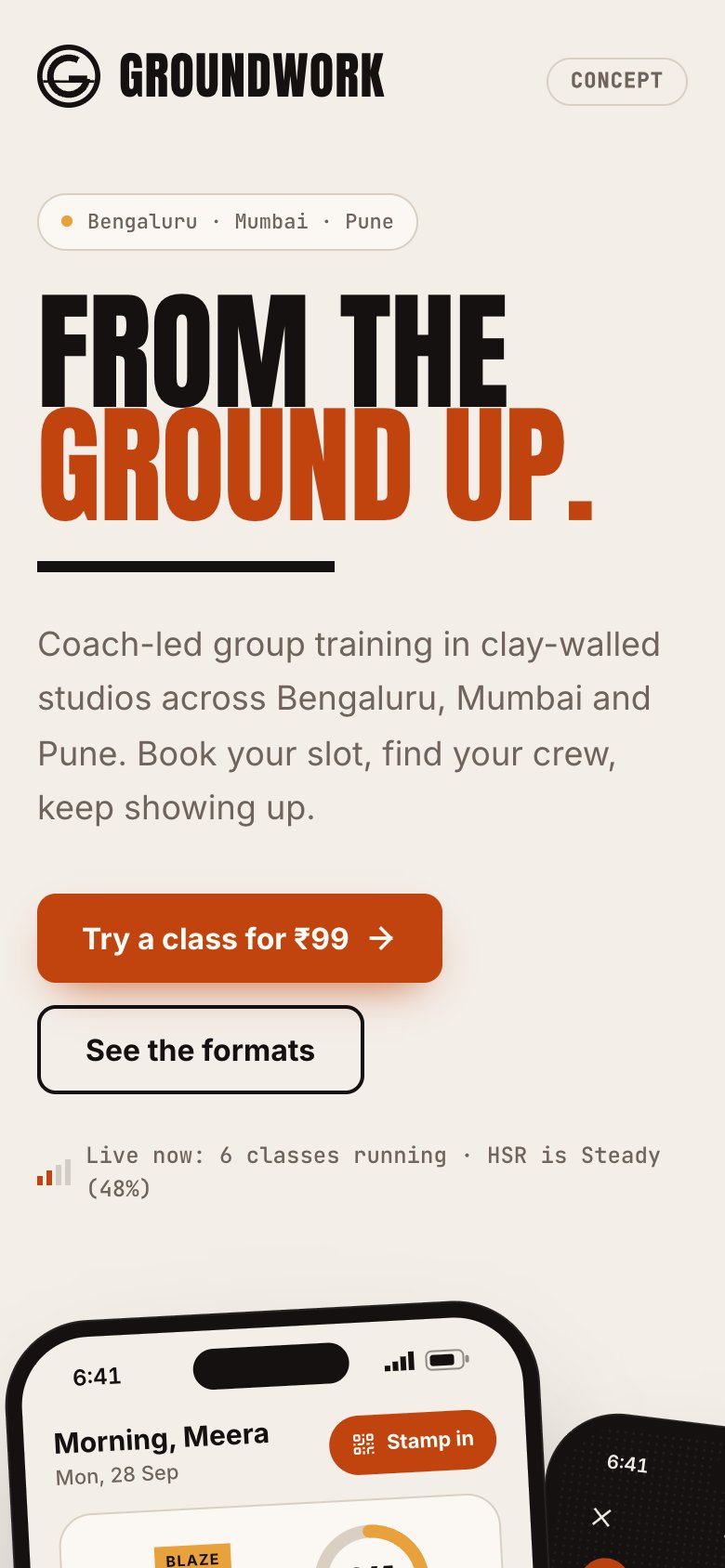
Our concept build Groundwork shows what that looks like: a member app with class bookings and workout streaks, a trainer app for check-ins and form feedback, and a studio ops dashboard for floor capacity, equipment maintenance and retention. If you're planning something similar, send us a brief — you'll get a fixed quote within 48 hours.

Running a physio corner inside the gym? Read how to start a physiotherapy clinic too.

Questions people ask

How much does it cost to open a gym in India?

A compact functional studio in a mid-sized city often needs somewhere around ₹20–50 lakh including deposit, fit-out, equipment and a few months of running costs. A large full-floor gym in a metro can need well over a crore. These are ballparks; rent, equipment brand and city move them a lot, so get local quotes before committing.

Do I need a licence to open a gym in India?

Yes, usually several. Most gyms need a registered business, GST once they cross the threshold, Shop & Establishment registration, a municipal trade or health licence and, depending on the building, a fire NOC. Some cities also regulate signage and recorded music. Requirements differ by state, so check with your municipal office or a CA.

How do gyms make money besides memberships?

Personal training is usually the biggest extra, followed by group classes, diet and coaching programmes, supplements and merchandise, and corporate or society contracts. Keep add-ons honest: members who feel pushed into packages stop renewing, which costs more than the upsell earned.

Should I take a franchise or build my own gym brand?

A franchise gives you a known name, playbooks and suppliers, in exchange for fees, royalties and less control over pricing and design. Your own brand costs less upfront and lets you fit the neighbourhood, but you build trust from scratch. Talk to existing franchisees before you sign anything.

How many members does a gym need to break even?

Divide your monthly fixed costs — rent, salaries, electricity, maintenance and loan repayments — by the average monthly revenue each member brings in, including personal training. That number is your break-even membership. Then plan how to reach it with renewals, not only new sign-ups.

The whole plan · 12 steps

Starting a gym, step by step.

Show notes for

Decide

  1. 1

    Choose the kind of gym your money and skills can carry

    Which kind of gym can I open with the money I have?

    Why
    The type decides the space, the machines, the staff, the licences and the fee. A premium gym on a neighbourhood budget runs out of cash before it opens.
    When
    Before you look at a single property · takes 1–2 weeks
    Where
    • Online This library and your own spreadsheet · Write down the cash you can put in without borrowing against your home.
    How

    Start from your budget, the kind of place you can realistically rent and what you or your partner are good at. Then match a type. Do not start from a gym you liked in another city.

    Cost
    Total cost to open a gym or studio (equipment, fit-out, deposit, licences, launch, working capital): ₹15–45 lakhEquipment bill for a new gym or studio, new, before GST: ₹6–25 lakh, new, before GST
    You'll have
    One chosen type and a fallback · A total budget, split into your money and borrowed money

    Common mistakes

    • Choosing a format because it looks good on Instagram rather than because the street and the money fit it
    • Counting the whole budget as available for equipment and leaving nothing for the slow first months

    Pilates studio One reformer is ₹1,20,000–6,20,000 each, before GST, freight and installation rupees, so a six-reformer room is a very different budget from a floor of machines.

    CrossFit or functional training box A functional box needs barbells, rigs and clear floor rather than machines. Add the affiliate fee (2,500–4,500 US$ a year, by country US dollars a year) if you want the name.

    Go deeper: Which type of gym or studio should I open? · Big gym, small studio or personal training from a rented room: which should I choose? · Can I open a gym with ₹5, 10 or 25 lakh? What does each budget get you? · How much does it cost to open a gym in India? · How much does a gym owner earn a month?

    Stuck on this step? Ask an expert, free →

  2. 2

    Check that a gym can make money at your size

    Is a gym a profitable business in India, and how many members do I need?

    Why
    A gym looks busy and still loses money when rent and trainers take too much of each fee. Ten minutes with the break-even number tells you whether to go on.
    When
    Right after you pick a type · after Choose the kind of gym your money and skills can carry · takes 2–5 days
    Where
    • A professional A CA · Ask them to check your cost list once.
    How

    Work out your monthly costs: rent (aim for 15–30% of revenue% of revenue at most), trainers (15–20% of revenue% of revenue), power, maintenance and software. Divide by what each member brings in a month.

    Cost
    Paying members needed to cover monthly costs: 120–200 paying members (clients, for a personal training studio)Revenue per member per month, all income: ₹1,500–3,000 a monthOperating margin of a gym once running, before the owner's own pay: 15–30% of revenueTime to earn back the investment: 18–36 months
    You'll have
    A break-even member count for your space · A monthly cost sheet

    Common mistakes

    • Using the fee as revenue per member, when many members join and never come
    • Forgetting power: air conditioning alone can be 40–57% of the bill% of the bill

    Go deeper: Is a gym a profitable business in India? · What does a gym spend every month: rent, trainers, power, maintenance? · How much does a gym earn per member, and why is it less than the fee? · How many members does a gym need to break even? · Why do most gyms fail in the first two years, and how do I avoid it?

    Stuck on this step? Ask an expert, free →

  3. 3

    Test demand before you sign anything

    How do I know people near me will pay for a gym?

    Why
    A lease and equipment are hard to undo. A month of testing costs almost nothing and tells you whether the first hundred members exist.
    When
    Before the lease, while you look at areas · after Choose the kind of gym your money and skills can carry · takes 2–4 weeks
    Where
    • On site The streets, societies and offices within about a 10 minute walk or ride · Count homes, offices and gyms; visit the competitors at 7 am and 7 pm.
    • Online Google Maps · See ratings and the busy-hours graph of every gym nearby.
    How

    Count the households and offices in the catchment and the gyms already in it. Visit rival gyms at peak hours as a member would. Talk to ten or more residents and ask what they would pay.

    You'll have
    A competitor sheet with fees · A list of people who say they will join

    Common mistakes

    • Asking friends, who say yes to be polite
    • Counting residents without counting the three gyms they already pay for

    Go deeper: How do I test demand for a gym before signing a lease? · How many gym members can a locality support, and how do I count the competition? · Does a gym work in a small town or tier 3 city? · Why do most gyms fail in the first two years, and how do I avoid it?

    Stuck on this step? Ask an expert, free →

Find the place

  1. 4

    Pick the area and the kind of building

    Where should I open my gym?

    Why
    Members come from a short walk or ride, and parking, lifts and noise decide who stays. The right street is worth more than a good fit-out.
    When
    After demand testing, before you talk to landlords · after Test demand before you sign anything · takes 3–8 weeks
    Where
    • On site The shortlisted streets, at peak hours
    • Market Local property brokers
    How

    Compare a mall, a high street and a residential road on rent, footfall, parking and noise. Decide the floor: ground floor is easier for members, upper floors cost less but need a lift or wide stairs.

    Cost
    Carpet area a gym or studio needs: 1,500–4,000 sq ftPaying members a gym floor can carry, per 1,000 sq ft of carpet area: 80–140 members per 1,000 sq ft
    You'll have
    Two or three shortlisted spaces · Rent and deposit quotes for each

    Common mistakes

    • Taking a cheap upper floor with no lift and a landlord who dislikes noise
    • Judging a space at noon, not at 7 am or 7 pm

    Go deeper: How do I choose the right location for a gym? · How much rent can a gym afford? · Ground floor, first floor or basement: where should a gym be? · How big should my gym be, and how many members per sq ft? · Mall, high street, office area or residential: where does a gym do well? · What should a property have to work as a gym: floor load, ceiling height, power, ventilation, washrooms?

    Stuck on this step? Ask an expert, free →

  2. 5

    Check the building and sign a lease that survives a slow start

    What should be in the lease for a gym?

    Why
    You will pay rent for months before the gym is full. A lock-in with no rent-free fit-out period, or a landlord who can stop the noise, can end the business.
    When
    After you pick a space, before you pay a deposit · after Pick the area and the kind of building · takes 1–3 weeks
    Where
    • A professional A lawyer · Have the draft checked once.
    • Office The sub-registrar's office · Registration depends on the lease length and state.
    How

    Get the landlord's permission for gym use in writing, with the right to put up a sign and to run music and equipment. Ask for a rent-free fit-out period and a lock-in you can survive.

    Cost
    Rent deposit and advance a landlord asks from a gym: 3–6 months of rent
    You'll have
    A checked, signed and registered lease · Written permission for gym use

    Common mistakes

    • Paying a large deposit on a verbal promise about noise or signage
    • A 3 year lock-in with no rent-free fit-out period

    Go deeper: What should a gym negotiate in its lease beyond the usual clauses? · What must my landlord allow for a gym: noise, dropped weights, signage, a lock-in? · Neighbours and the society complain about noise and dropped weights. What can I do? · What should I check before renting a shop or commercial space in India? · Which clauses should I check in a commercial rent agreement?

    Stuck on this step? Ask an expert, free →

Paperwork and money

  1. 6

    Register the business and apply for licences in order

    What licences do I need to open a gym in India?

    Why
    A gym that opens without its trade licence, fire clearance or music licence can be closed or fined, and several of these need the lease first.
    When
    As soon as the lease is signed · after Check the building and sign a lease that survives a slow start · takes 3–10 weeks
    Where
    • Online portal Your municipal corporation's trade licence portal
    • Online portal GST portal · 5% GST, without input tax credit% GST applies to gym memberships; registration depends on turnover.
    • A professional A CA
    How

    Choose the business structure and register. Then work through the licence list in order for your city, because some need others first. Allow for the fire clearance if you are above the area or height limits.

    Cost
    Municipal trade licence for a gym, a year: ₹2,000–15,000 a yearShops and Establishments registration for a gym: ₹500–10,000GST on gym, fitness-centre, health-club and yoga services: 5% GST, without input tax credit
    You'll have
    Registered business and current account · Licence applications filed in the right order

    Common mistakes

    • Opening on the day the equipment arrives and applying for licences later
    • Playing music with no licence, which draws notices from the rights bodies

    Go deeper: What licences does a gym need in India? · In what order should I apply for gym licences, and how long does each take? · Does my city treat a gym as a health club, and which trade licence do I need? · Does a gym in a commercial building or above the ground floor need a fire NOC? · How much do music licences cost for a gym, and what happens if I skip them? · Should my gym register for GST, and what happens when I cross the limit? · Sole proprietor, partnership, LLP or private limited: which should a small business choose? · What is Udyam registration and should my small business get it? · How do I get a Shop and Establishment registration? · What do I need to open a current account for my business?

    Stuck on this step? Ask an expert, free →

  2. 7

    Fund the gym and keep cash aside

    How do I fund a gym and how much cash should I keep?

    Why
    Gyms take advance fees, which makes the first months feel rich, and then rent, salaries and EMI arrive. Owners who spend the advances on the fit-out run short in month four.
    When
    Before you order equipment · after Check that a gym can make money at your size · takes 2–6 weeks
    Where
    • Office A bank or NBFC · Ask about equipment finance and working capital.
    • A professional A CA
    How

    Decide how much is your own money, family money, a loan or a partner. Keep 3–6 months of running costs months of costs aside after opening. Compare buying, equipment finance and leasing.

    Cost
    Cash to keep aside after opening: 3–6 months of running costsTotal cost to open a gym or studio (equipment, fit-out, deposit, licences, launch, working capital): ₹15–45 lakh
    You'll have
    A funding plan · A separate working-capital balance

    Common mistakes

    • Spending the advance fees from early members on the fit-out
    • Taking equipment finance for machines you could buy second-hand

    Go deeper: How do I fund a gym: savings, equipment finance, loans, partners or investors? · How much money should I keep aside after my gym opens? · What does cash flow look like in a gym's first twelve months, with advance fees coming in? · Should I buy gym equipment on finance or lease it? · Which government loan schemes can a small business use? · How do I take money from family or friends without ruining the relationship?

    Stuck on this step? Ask an expert, free →

Set up

  1. 8

    Choose and buy the equipment

    What equipment does a gym need and where do I buy it?

    Why
    Equipment is 40–60% of total start-up cost% of the budget and the biggest thing you cannot return. A third of what dealers pitch is not needed in month one.
    When
    While the lease and licences are in progress · after Fund the gym and keep cash aside · takes 3–8 weeks
    Where
    • Market Equipment dealers and makers · Get three quotes and visit a gym that uses the brand.
    • Online Dealer catalogues and used-equipment listings
    How

    Write the list by budget: a core of racks, benches, dumbbells and a few cardio machines, then add. Ask each dealer for the service terms, the warranty and the spares, not only the price.

    Cost
    Equipment bill for a new gym or studio, new, before GST: ₹6–25 lakh, new, before GSTAnnual maintenance contract for a gym's machines, service only: ₹85,000–1,10,000 a yearWorking life of commercial cardio machines: 7–10 years
    You'll have
    An equipment list by budget · A chosen supplier with a service contract

    Common mistakes

    • Buying cardio in bulk when members use free weights
    • Ignoring service: one treadmill down for a month costs members

    Go deeper: What equipment does a gym need to open, and what does it cost? · Which equipment first if I have ₹5, 10 or 25 lakh? · New, refurbished or second-hand gym equipment: which makes sense? · Indian or imported equipment: how do quality, warranty and price compare? · How do I tell commercial gym equipment from home-use equipment that will break in a year? · What should I ask an equipment supplier before I sign: warranty, spares, installation, buy-back?

    Stuck on this step? Ask an expert, free →

  2. 9

    Plan the layout, floor, air and power

    How do I lay out and fit out a gym?

    Why
    Layout decides how many members the room carries at 7 am. Flooring, air and power are the fit-out costs people forget and the ones members notice first.
    When
    In parallel with equipment, before delivery · after Check the building and sign a lease that survives a slow start · takes 3–8 weeks
    Where
    • A professional An interior contractor or electrician · Ask for a power-load check before ordering AC.
    How

    Draw the floor with zones and clear space between machines. Cost flooring, ventilation, mirrors, changing rooms and an electrical upgrade before you commit to the equipment count.

    Cost
    Rubber gym flooring, supplied, per sq ft: ₹50–350 per sq ftAir conditioning or industrial fans for a gym floor: ₹1.5–5 lakhElectrical upgrade and wiring for a gym (commercial connection, load, earthing): ₹1–3 lakhFit-out and set-up costs on top of the equipment quote: 40–80% of the equipment bill
    You'll have
    A floor plan · A fit-out quote and schedule

    Common mistakes

    • Ordering AC before checking the sanctioned electrical load
    • Packing machines in until members cannot pass each other

    Go deeper: How should I lay out a gym floor: zones, aisles and the spacing machines need? · Which flooring, rubber mats, platforms and mirrors should a gym use? · How do I cool and ventilate a gym in an Indian summer, and what does it cost to run? · How much power load does a gym need, and what happens in a power cut? · How many washrooms, showers and lockers does a gym need?

    Stuck on this step? Ask an expert, free →

  3. 10

    Hire the first team and set your fees

    How many staff does a gym need and what should I charge?

    Why
    Trainers are your biggest cost and your fee is the only lever you control. Too many staff sinks the margin; a fee set by copying a rival can leave you under water.
    When
    Two to three months before opening · after Check that a gym can make money at your size · takes 2–6 weeks
    Where
    • Online Job boards and trainer communities
    • On site Rival gyms' fee boards
    How

    Staff by peak hours and shifts, not by area. Price against the gyms your members would otherwise join, then check the fee against your break-even.

    Cost
    People on payroll at a typical gym or studio (trainers, front desk, cleaning, manager): 5–8 peopleMembers per trainer on the floor: 30–40 active members per trainerMid-range independent gym, mid-size city (3 to 10 lakh people), monthly fee: ₹1,000–2,000 a monthPersonal training, per session, metro: ₹700–2,500 a session
    You'll have
    A staffing plan and first hires · A fee card

    Common mistakes

    • Hiring a full team before you have members
    • Copying the cheapest rival's fee and not covering your costs

    Go deeper: How many staff does a gym need, by size and timing? · Who should I hire first for a gym, and what should I pay them? · What should I pay a floor trainer, a personal trainer and a head trainer in my city? · How much should a gym charge for monthly, quarterly and annual memberships? · My competitor charges less. How do I set gym fees without a price war? · How should a gym sell personal training so it earns without eating floor time? · Which gym management software suits an Indian gym, and what does it cost per month?

    Stuck on this step? Ask an expert, free →

Open and the first 90 days

  1. 11

    Sell memberships before you open and run the opening checklist

    How do I get my first members and open the gym?

    Why
    An empty gym on opening day is the real risk. Pre-launch members pay cash, fill the floor and tell you early whether your fee is right.
    When
    Six to eight weeks before opening · after Hire the first team and set your fees · takes 4–8 weeks
    Where
    • On site Societies, offices and the street outside the site
    • Online Google Business Profile and Instagram
    How

    Sell founding memberships while the fit-out is on, with a start date and a clear refund promise. Run a pre-opening checklist with a safety check, a fire check and a trial day.

    Cost
    Paying members a new gym can aim for by day 90: 80–150 paying members
    You'll have
    Founding members who have paid · A signed-off opening checklist

    Common mistakes

    • Taking advance fees with no refund promise if the opening slips
    • Opening before the fire and electrical checks

    Go deeper: Should I sell pre-launch memberships, and how many do I need before opening? · What should a gym do in its launch month, and what offers actually work? · How do I get my gym's first 100 members? · What does a gym need ready in the last two weeks before opening? · How do I get my gym to show up first on Google Maps for 'gym near me'?

    Stuck on this step? Ask an expert, free →

  2. 12

    Watch five numbers for the first 90 days

    What should I track in my gym's first three months?

    Why
    In the first 90 days you learn whether people come back. Numbers tell you in a week what a feeling will take six months to admit.
    When
    From opening day · after Sell memberships before you open and run the opening checklist · takes 12–13 weeks
    Where
    • Online Your gym software and a one-page sheet
    How

    Every week write down paying members, visits, renewals, leads and money in the bank. Compare with 80–150 paying members members at day 90. Call every member who has not come in two weeks.

    Cost
    Paying members a new gym can aim for by day 90: 80–150 paying membersPaying members needed to cover monthly costs: 120–200 paying members (clients, for a personal training studio)
    You'll have
    A weekly sheet · A decision date: scale, adjust or fix

    Common mistakes

    • Looking at joins and ignoring who stopped coming
    • Cutting the fee to hit a number and breaking your margin

    Go deeper: What should a gym's opening and closing checklist include? · How many members should a gym keep after 3, 6 and 12 months, and how do I measure it? · Half my members never come. Is that a problem or my profit? · How do I get members to renew before their membership ends? · How should a walk-in enquiry be handled so it becomes a membership?

    Stuck on this step? Ask an expert, free →

Where these numbers come from

  1. Total cost to open a gym or studio (equipment, fit-out, deposit, licences, launch, working capital): ₹15–45 lakh (all India; the top of each range is a metro with a 6-month deposit. Excludes buying property and any franchise fee). Ballpark Published all-in budgets overlap like this: small 800 to 1,500 sq ft ₹5 to 12 lakh, medium 1,500 to 2,500 sq ft ₹15 to 30 lakh, large ₹35 to 60 lakh+ (Lifefit); ₹12 to 20 lakh in a tier 2 city and ₹25 to 45 lakh in a metro for 1,500 to 2,500 sq ft (CoachFit); boutique ₹10 to 25 lakh, mid-size ₹25 to 50 lakh, large ₹50 lakh to ₹2 crore (ATE); worked budgets ₹17, ₹34 and ₹71 lakh (Zenvore); bootstrap ₹6 to 12 lakh, standard ₹18 to 45 lakh, health club ₹60 lakh to ₹1.5 crore (Codingclave); medium commercial ₹35 to 65 lakh and premium club ₹80 lakh to ₹2.5 crore (Gymbera). Women's studio ₹12 to 19 lakh (VentureKhoj). Boxing studio ₹7 to 12 lakh in a starter budget (USI), MMA gym ₹10 to 25 lakh (Interius). Pilates: 4 reformers at ₹1.2 to 4.5 lakh each plus fit-out. 24-hour: a franchise chain's own capital outlay is ₹80 to 130 lakh (Franconomy); an independent can be lower, our 40 lakh floor is judgement. Personal training studio and managed gym: our judgement from room-sized equipment budgets; in a managed gym the client usually provides the room.
  2. Equipment bill for a new gym or studio, new, before GST: ₹6–25 lakh, new, before GST (all India; Indian-made commercial equipment. Imported machines can double it). Ballpark Equipment is the biggest line: ₹5 to 10 lakh small, ₹15 to 30 lakh mid-size, ₹30 to 60 lakh large (ATE); ₹3 to 8, 8 to 20 and 15 to 40 lakh (Fitactus); ₹4 to 20 lakh of strength plus ₹3 to 15 lakh of cardio for a medium gym (Lifefit). Box: rig, bars, bumper plates and rowers per Okfit's list, costed from Jerai's price bands. Pilates: 3 to 4 reformers plus a chair ₹4 to 6 lakh, 6 reformers and apparatus ₹10 to 14 lakh (Mahadev); a complete imported studio package for 4 reformers is ₹38 lakh before duties (StudioFly). Combat: bags, gloves, pads and a ring ₹1.4 to 7 lakh each for the ring (Interius), kit lists in USI; our range. Women-only: lighter strength mix, our range from the women's studio ₹12 to 19 lakh total (VentureKhoj). 24-hour: more machines per member because nobody coaches; our range.
  3. Paying members needed to cover monthly costs: 120–200 paying members (clients, for a personal training studio) (a 1,500 to 2,500 sq ft gym in a mid-size city or metro suburb with rent of ₹60,000 to 90,000. Worked examples, not surveys. Your own rent, trainers and average fee move it a lot). Ballpark Four published worked examples: 135 members (₹2.7 lakh costs at ₹2,000 collected each, GymPilot); 137 (₹3.08 lakh fixed, ₹2,500 inclusive of GST, GymForce); 178 (₹2.85 lakh fixed, ₹1,400, MyGymGate; 188 once GST is taken out); 200 (₹2.34 lakh at ₹1,171 cost each, GymForce). Box: Okfit says rent should be covered at 80 to 120 paying members. Personal training studio: our arithmetic, ₹1.2 lakh of rent, electricity and a part-time desk plus a trainer on 40% share, divided by an average ₹10,000 to 15,000 package, gives about 12 to 25 clients.
  4. Revenue per member per month, all income: ₹1,500–3,000 a month (all India; a vendor's 'healthy range' for gyms that sell personal training and supplements besides memberships. Note that fee revenue is lower than the sticker price because discounts, annual plans and GST come off it). Reported: GymForce, Gym revenue vs profit: what owners should track (16 Oct 2026; worked examples), checked 10 November 2026.
  5. Operating margin of a gym once running, before the owner's own pay: 15–30% of revenue (wide in practice: worked examples show 2%, 16% and 31%. A vendor calls 20 to 35% healthy and below 15% for three months a red flag). Ballpark Worked examples: 2.2% (rent 33% of revenue) and 31.5% (rent 22%, a tier 2 gym, GymForce); 16.4% (MyGymGate); 'healthy range 20 to 35%' and 'below 15% means one repair or one resignation away from a loss' (GymForce). Quora-type operator summaries give EBITDA 8 to 18% for budget gyms and 15 to 30% for mid-market; those are unsourced, so not used.
  6. Time to earn back the investment: 18–36 months (a vendor's 'most gyms'; one worked ₹30 lakh gym at ₹58,000 a month takes 52 months; operating break-even is reported at months 10 to 14 and full payback at 18 to 22 for a standard gym. Franchisors quote 24 to 26 months). Ballpark ATE: most gyms break even in 18 to 36 months. Codingclave: 14 to 22 months for a standard gym, 'not 6 months like equipment vendors will tell you'. MyGymGate's worked example earns back ₹30 lakh in about 52 months. We use 18 to 36 and say how wide the real spread is.
  7. Carpet area a gym or studio needs: 1,500–4,000 sq ft (all India; carpet area, not super built-up). Ballpark Ranges are where published sizes overlap, not one survey. Neighbourhood gym: 'small' 800 to 1,500 and 'medium' 1,500 to 2,500 sq ft in the maker and lender guides (Lifefit, ATE, Fitactus). Premium: large 3,000+ and 4,000 to 8,000+ for a health club (Gymbera), taken to 10,000 for a pool or studio rooms. Box: 1,500 to 3,500 sq ft with overhead height (Okfit). Women-only: a 1,800 to 2,200 sq ft chain format (its franchise page), 700 to 900 sq ft in the bootstrap tier (Codingclave), so 800 to 2,000. Pilates: Merrithew says 400 sq ft holds about 4 reformers and 800 sq ft four plus other apparatus; Jetz says a 1,000 sq ft studio fits 6 to 8; a 3-room franchise format asks for 1,500 to 2,000 (StudioFly, BASI). 24-hour: a franchise chain's own format is 3,000 to 5,000 sq ft (Franconomy), and Codingclave's small neighbourhood format is 2,500+; we take 2,500 to 5,000. Combat: a boutique 800 to 1,500, mid-size 1,500 to 3,000 (USI). Personal training studio and managed gym: our own judgement from a few rooms to a clubhouse room, no published survey.
  8. Paying members a gym floor can carry, per 1,000 sq ft of carpet area: 80–140 members per 1,000 sq ft (all India; self-serve gyms on split timings. A gym with a big crowd at 7 am and empty afternoons is limited by the peak hour, not by this average). Ballpark Three published examples, divided out: 120 to 200 members for a 1,000 to 1,500 sq ft gym (Gymbera) is about 120 to 133 per 1,000 sq ft; 200 paying members in a 2,000 sq ft gym is 100 (GymForce, cost per member); 150 members in about 1,500 sq ft is 100 (GymForce, Gym B). We use 80 to 140 and say it is a planning figure: members on the books, not people on the floor at once.
  9. Rent deposit and advance a landlord asks from a gym: 3–6 months of rent (all India; some brokers quote up to 10 months. City-wise deposits are in basics). Reported: CoachFit, Cost to open a gym in India 2026 (published 20 Sep 2026), checked 10 November 2026.
  10. Municipal trade licence for a gym, a year: ₹2,000–15,000 a year (varies by city and floor area; GHMC (Hyderabad) charges ₹3, ₹4 or ₹6 a sq ft by floor area and road width, so a 2,000 sq ft gym pays about ₹6,000 to 12,000. Some cities class a gym as a health club under a different schedule). Ballpark A licence adviser's general range of ₹2,000 to 15,000 a year (GymForce) and GHMC's per-sq-ft rate quoted by StudioFly. Neither is the municipal tariff itself: read your own corporation's fee schedule before you rely on this.
  11. Shops and Establishments registration for a gym: ₹500–10,000 (state-wise, by number of workers; Delhi's fee is in basics). Reported: GymForce, Gym licence in India 2026: permits, costs and timelines (16 Oct 2026), checked 10 November 2026.
  12. GST on gym, fitness-centre, health-club and yoga services: 5% GST, without input tax credit (all India; applies to memberships and personal training from 22 September 2025. 2.5% CGST plus 2.5% SGST within a state. Charging the old 18% with credit is not allowed). Official source: Ministry of Finance, Notification No. 15/2025-Central Tax (Rate), 17 September 2025, effective 22 September 2025, checked 10 November 2026.
  13. Cash to keep aside after opening: 3–6 months of running costs (all India; lenders and operators agree on 3 months as the floor, 6 for a first gym). Ballpark Gyms rarely break even in month one. CoachFit says six months of running costs in the bank, ATE and Codingclave say 3 to 6, Zenvore models 3. Codingclave puts months 1 to 3 as pure cash burn and operating break-even at months 10 to 14 for a standard gym.
  14. Annual maintenance contract for a gym's machines, service only: ₹85,000–1,10,000 a year (one Indian service company's published plan, scaled by equipment count; spares charged extra. Get two or three local quotes). Reported: An Indian gym-equipment service company's published maintenance plan (annual contract ₹85,000 to ₹1,10,000 by equipment count), checked 10 November 2026.
  15. Working life of commercial cardio machines: 7–10 years (commercial use with regular servicing; high-traffic units in large gyms can last 5 to 7; cheap non-commercial machines 2 to 5). Reported: Rework, Gym equipment lifecycle and maintenance (19 Mar 2026), checked 10 November 2026.
  16. Rubber gym flooring, supplied, per sq ft: ₹50–350 per sq ft (all India; tiles at the low end, thick poured or roll flooring and platforms at the top). Ballpark IndiaMART and TradeIndia rubber floor tiles about ₹50 to 150 per sq ft rising with thickness (MyGymGate); ₹80 to 150 per sq ft (CoachFit); ₹150 to 350 per sq ft (Lifefit). Three sellers, three bands; ask for thickness and density with every quote.
  17. Air conditioning or industrial fans for a gym floor: ₹1.5–5 lakh (all India; split ACs for a 1,500 to 3,000 sq ft gym, more for centralised or large halls). Reported: Lifefit, ₹1.5 to 5 lakh+; CoachFit, ₹1.5 to 4 lakh, checked 10 November 2026.
  18. Electrical upgrade and wiring for a gym (commercial connection, load, earthing): ₹1–3 lakh (all India; the sanction itself takes weeks, so start it before fit-out). Reported: CoachFit, ₹1 to 2.5 lakh; Lifefit, ₹1 to 3 lakh, checked 10 November 2026.
  19. Fit-out and set-up costs on top of the equipment quote: 40–80% of the equipment bill (all India; flooring, mirrors, AC, electrical, reception and changing rooms. Higher in metros). Reported: WTF Gym Equipment (an equipment seller): 'budget roughly another 40 to 80% of the equipment figure for fit-out, depending on city and shell', checked 10 November 2026.
  20. People on payroll at a typical gym or studio (trainers, front desk, cleaning, manager): 5–8 people (all India; counts people, not full-time posts, and excludes owner). Ballpark A 2,000 sq ft gym needs 5 to 8 staff (1 manager, 2 to 3 trainers, 1 front desk, 1 to 2 housekeeping) and a 5,000+ sq ft gym 12 to 18 (MyGymDesk staff calculator, planning ranges). We stretch the premium range to 35 for pools, spa and many class rooms. The other types are our judgement: a 24-hour gym and a managed gym run with minimal staff by design; a personal training studio is mostly the trainers themselves.
  21. Members per trainer on the floor: 30–40 active members per trainer (a vendor's rule of thumb for self-serve gyms: below 30 is over-staffed, above 50 members notice. It is not a safety standard). Reported: MyGymDesk, Gym staff and salary calculator (planning ranges, not surveyed), checked 10 November 2026.
  22. Mid-range independent gym, mid-size city (3 to 10 lakh people), monthly fee: ₹1,000–2,000 a month (cities of roughly 3 to 10 lakh people; budget gyms there run ₹500 to 1,000). Reported: Gym Fees in India 2026, researched ranges by city band and gym tier (reviewed Jul 2026), checked 10 November 2026.
  23. Personal training, per session, metro: ₹700–2,500 a session (metros; charged on top of membership at every gym tier). Reported: Gym Fees in India 2026, researched ranges by city band and gym tier (reviewed Jul 2026), checked 10 November 2026.
  24. Paying members a new gym can aim for by day 90: 80–150 paying members (one software founder's playbook for a gym in a good catchment, with pre-sales. A target, not an average). Reported: Codingclave, How to start a gym in India 2026 (10 Jun 2026), checked 10 November 2026.
  25. Share of the opening budget that goes on equipment: 40–60% of total start-up cost (all India; sellers say 40 to 70%, lenders 40 to 60%). Reported: ATE, Fitactus and Shine Fitness all give 40 to 60%; Lifefit says 60 to 70% for its sample, checked 10 November 2026.
  26. Pilates reformer, one machine: ₹1,20,000–6,20,000 each, before GST, freight and installation (Indian-made wooden or aluminium reformers from about ₹1.1 lakh; imported studio-grade reformers ₹3.7 to 6.2 lakh; boards sold as 'reformers' at ₹50,000 are not spring reformers). Reported: StudioFly, How to start a pilates studio in India (24 Sep 2026; seller listings dated 24 Sep 2026), checked 10 November 2026.
  27. CrossFit annual affiliate fee: 2,500–4,500 US$ a year, by country (payable monthly; CrossFit's page does not name India's rate, so confirm during application). Reported: CrossFit, Affiliate application overview (US$1,000 application, US$2,500 to 4,500 a year by country), checked 10 November 2026.
  28. Rent a gym can afford, as a share of monthly revenue: 15–30% of revenue (all India; above 30% there is little left for trainers and profit). Ballpark From worked examples: 22% for a gym earning ₹2.7 lakh paying ₹60,000 rent and 33% for one earning ₹4.5 lakh paying ₹1.5 lakh, the second making 2% profit (GymForce, revenue vs profit); about 29% in a break-even model (₹90,000 rent, ₹2.85 lakh fixed, ₹3.1 lakh fees, MyGymGate); a women's studio plan puts rent at 18 to 28% (VentureKhoj). No survey of Indian gyms was found, so the range is a planning guide.
  29. Trainer payroll as a share of monthly revenue: 15–20% of revenue (all India; fixed pay plus personal-training commission, a self-serve gym with a floor trainer). Reported: GymForce Lite: 'budget 15 to 20 per cent of expected monthly revenue for the entire trainer payroll'. The women's studio range (25 to 35%) comes from VentureKhoj's cost structure for that format, checked 10 November 2026.
  30. Air conditioning's share of a gym's electricity bill: 40–57% of the bill (hot-climate gyms open 6 am to 10 pm). Ballpark 40 to 55% (Tristar, Tamil Nadu), 40 to 50% (a gym ROI calculator, Fitplex), 57% in a worked example (MyGymGate). Treadmills are the next biggest load; a 3 HP commercial unit draws about 1.5 to 2.5 kW under load (Tristar).

Fees, rates and rents change. Check the official source before you pay or sign anything.

Menu

Read

Ask an expert Ask an expertFree, real peopleHub
Ask an expert