A new pharmacy gets its first customers by being the place that has the medicine, answers the phone and delivers to the people who find it hard to travel: senior citizens, post-surgery patients and anyone on monthly medicines. Chronic-care families who are won once often stay for years.
This page is about reaching and keeping those customers legitimately. Pharmacy is a regulated trade, so some common retail tricks (promoting prescription drugs, paying doctors for referrals, selling without a prescription) are not options. Take legal advice on any claim, offer or advertisement before you run it.
Where the first walk-ins really come from
In most Indian neighbourhoods, the chemist a customer visits is the one nearest the clinic, the one nearest home, or the one a family member has always used. Your marketing is mostly your address and your availability, so choose them deliberately.
| Source | What it looks like | Estimated share of a new store's first-month customers |
|---|---|---|
| Passing trade near a clinic or hospital gate | Prescription in hand, wants the whole script filled in one place | 40–60% if you are within a short walk |
| Residential lanes and apartment complexes | Monthly refills, children's fever medicines, OTC | 25–40% |
| Phone and WhatsApp repeat customers | Regulars who send a photo of the strip | 5–15%, growing over months |
| Online search for a chemist near me | Late-night and emergency buyers | 5–10% |
If your shop is not near a clinic, plan on a longer ramp. Home delivery and phone orders become the main route to the first 100 customers.
Working with nearby doctors, within the rules
Doctors do not send patients to a chemist for a discount; they send them where the medicine they wrote is in stock and the patient is treated well. Stock their top prescriptions, and tell them what you stock.
- Visit each clinic once with a short note: your name, the registered pharmacist's name, timings, delivery radius and phone number.
- Ask which therapy areas matter to them and whether any medicine they write often is hard to find locally. Stock it or tell them how fast you can get it.
- Never pay for referrals. Cash, gifts or commission to doctors for sending patients is not a growth tactic; it can breach professional conduct rules and the licence relationship. Confirm with a lawyer if in doubt.
- Do not push brands on patients because a doctor or a distributor asks you to. Offer what the prescription says and what the pharmacist considers appropriate.
- Keep prescriptions confidential. Never share a patient's script with another party, including a doctor's marketing team.
The refill list: the actual business
A new chemist that signs up fifty chronic-care families on monthly refills has a steady base before it has built a reputation. The mechanism is simple and very human.
- Ask permission, then note it. At the counter, ask a regular if they would like a reminder before their medicines run out, and note the date and the strip count on a card or in the billing software.
- Send one message a few days before the refill date: 'Your medicines are due around the 12th. Shall we deliver on the 11th?' A phone call works better for older customers.
- Offer a monthly packed bag. Medicines packed together, billed together and delivered. Convenience is what keeps them.
- Track who lapses. If a regular misses two months, a polite call is better than a discount.
- Keep the data safe. Names, ailments and medicines are sensitive personal data; see the DPDP Act checklist and keep it out of shared WhatsApp groups.
A ballpark benchmark to watch: if about 30–40% of your monthly bills are from people you have seen before, your base is forming. It is a guide, not a rule.
Home delivery that people trust
For a senior living alone, a chemist who delivers on time and does not make mistakes is a lifeline. For you, it is the best retention tool. The rules of the game are simple but strict.
| Decision | What works | Watch out for |
|---|---|---|
| Delivery radius | 2–3 km from the store, free above a modest bill value (for example ₹300–500, an estimate) | A bigger radius means more bikes and late deliveries |
| Who delivers | A trusted staff member or a long-term delivery boy, not a rotating gig rider | A rider who forgets cold packs or hands medicines to the wrong person |
| Packing | Sealed bag, bill inside with batch and expiry, a note that cold items are included | Loose strips in an unlabelled cover |
| Prescription for scheduled drugs | The pharmacist verifies it before dispatch | Dispatching first and checking later |
| Payment | UPI at the door, cash if needed, a monthly ledger for regulars | Credit that is never collected |
| Timing | Same day for orders before about 6 pm; urgent medicines within an hour if stock is available | Promising a fixed number of minutes you cannot keep |
Taking orders by phone or WhatsApp and delivering from your own licensed store is common practice. Building a public app or website that sells medicines to anyone is a different legal question; see the e-pharmacy note below.
WhatsApp, Google and the local search routine
Most of your online visibility is a Google Business Profile and a WhatsApp number.
- Google Business Profile: exact timings, a 24-hour or late-night note if true, phone number, delivery radius, 'WhatsApp us a prescription photo' in the description and a few real photos of the shop. Follow the local steps in our local SEO guide.
- WhatsApp Business: a catalogue of fast-moving OTC lines and baby care only. Prescription-only medicines should not be advertised as a menu. Use quick replies for 'Is it available?' and 'When can you deliver?', as covered in WhatsApp for business.
- Reviews: ask happy regulars at the counter once, in person. Never offer a discount or free items for a review, and never write your own.
- Hours people remember: a chemist that is open late on Sundays and festivals is remembered. Rotate shifts to cover them if you can.
Launch pricing without a price war
MRP is the ceiling and many customers compare to a chain's discount. You do not have to match every offer; you have to avoid being obviously worse on the lines people check.
| Lever | How to use it | Caution |
|---|---|---|
| Discount on chronic-care monthly bill | A small, consistent percentage for regulars (for example 5–10%, an estimate) | Do not discount below your cost; check your margin first |
| Generic alternatives | Pharmacist explains that a lower-cost equivalent exists where one is appropriate | Never substitute without the customer's understanding and prescription rules being met |
| Free delivery above a bill value | Encourages consolidating the month's medicines in one order | Only if your rider capacity can cope |
| Health checks | Occasional BP and sugar camps with a qualified person | Do not diagnose or imply treatment; ask local rules and consent requirements |
| Loyalty card | A stamp or points per bill redeemable on OTC lines | Keep it away from prescription-only medicines |
Regulations on advertising medicines, discounts and online sale vary and change. Advertising prescription-only drugs to the public is restricted. Confirm what you may say or offer with a lawyer or your state drug control department. General information only, not legal advice.
A note on e-pharmacy and building an app
Draft central rules for online sale of medicines were published in 2018 and, going by the sources we could find, had not been finalised as of 2025. Courts have looked at the question, and the position is contested. We have not independently confirmed the current status against the official gazette, so treat this as unverified.
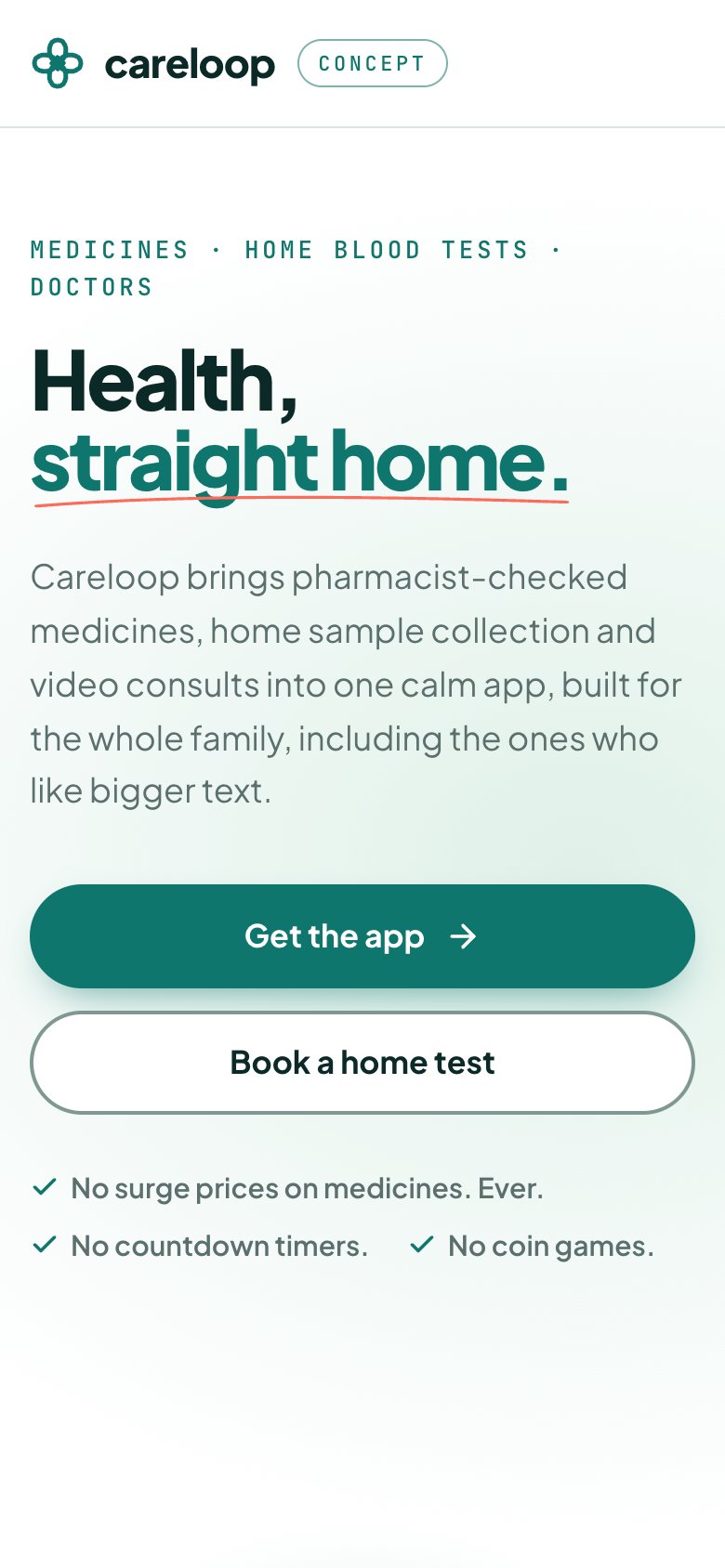
What that means in practice: a local chemist taking orders by phone or WhatsApp and delivering to known customers is a very different thing from running an app that sells to the public across towns. If you plan the second, take legal advice first. A concept like Careloop shows how a pharmacist-verified order flow can look to a patient, but it is a design concept, not an approved pharmacy.
More on starting a pharmacy
- Start hereThe full playbook →Models, licences, startup costs and the steps to your first customer.
- Go deeperWhat to buy →Fridge, shelving, locked cabinet and opening stock by therapy area, costed, plus what to skip.
- Go deeperFinding suppliers →Stockists, CFAs and wholesalers: credit, expiry returns, invoice checks and red flags.
Questions people ask
How do I get my first 100 customers for a new pharmacy?
Stock what nearby doctors prescribe, introduce yourself at each clinic, answer the phone every time, and deliver reliably to seniors and chronic-care families. A Google Business Profile with accurate timings adds search traffic. Expect most early customers to be walk-ins from the closest clinic or lane, with a base of refill customers forming over two to four months.
Can I pay doctors for sending patients to my chemist?
No. Paying or giving gifts to doctors for referrals is not a legitimate or safe practice; it can breach professional conduct rules and create licence problems. Earn their trust by stocking the medicines they write and treating their patients well. Confirm what is allowed with a lawyer or your state drug control department.
Is it legal to advertise discounts on medicines?
General discounts on OTC and wellness lines are common, but advertising prescription-only medicines to the public is restricted, and price-controlled items cannot be sold above the ceiling. Rules on offers vary and change, so confirm locally before you advertise. We have not verified current state-level guidance, and this is not legal advice.
Should I offer free home delivery?
Usually yes within a small radius, ideally above a modest bill value. For seniors and chronic-care customers it is the main reason they stay. Use a trusted rider, a sealed pack with the bill, cold packs for insulin and a pharmacist's check on any prescription items. Do not promise delivery times you cannot keep.
How do I keep regular customers from going to a chain?
Be the chemist who remembers them: refill reminders, a monthly packed bag, a pharmacist who explains medicines patiently, and reliable delivery. Chains win on discounts, you win on trust and convenience. Track repeat customers monthly and call anyone who lapses before they leave for good.