Bike taxi · Mobility & logistics
Hoppr
Hop on. Skip the jam.
A bike-taxi-first ride app with a captain app and a live city pulse board.
The idea
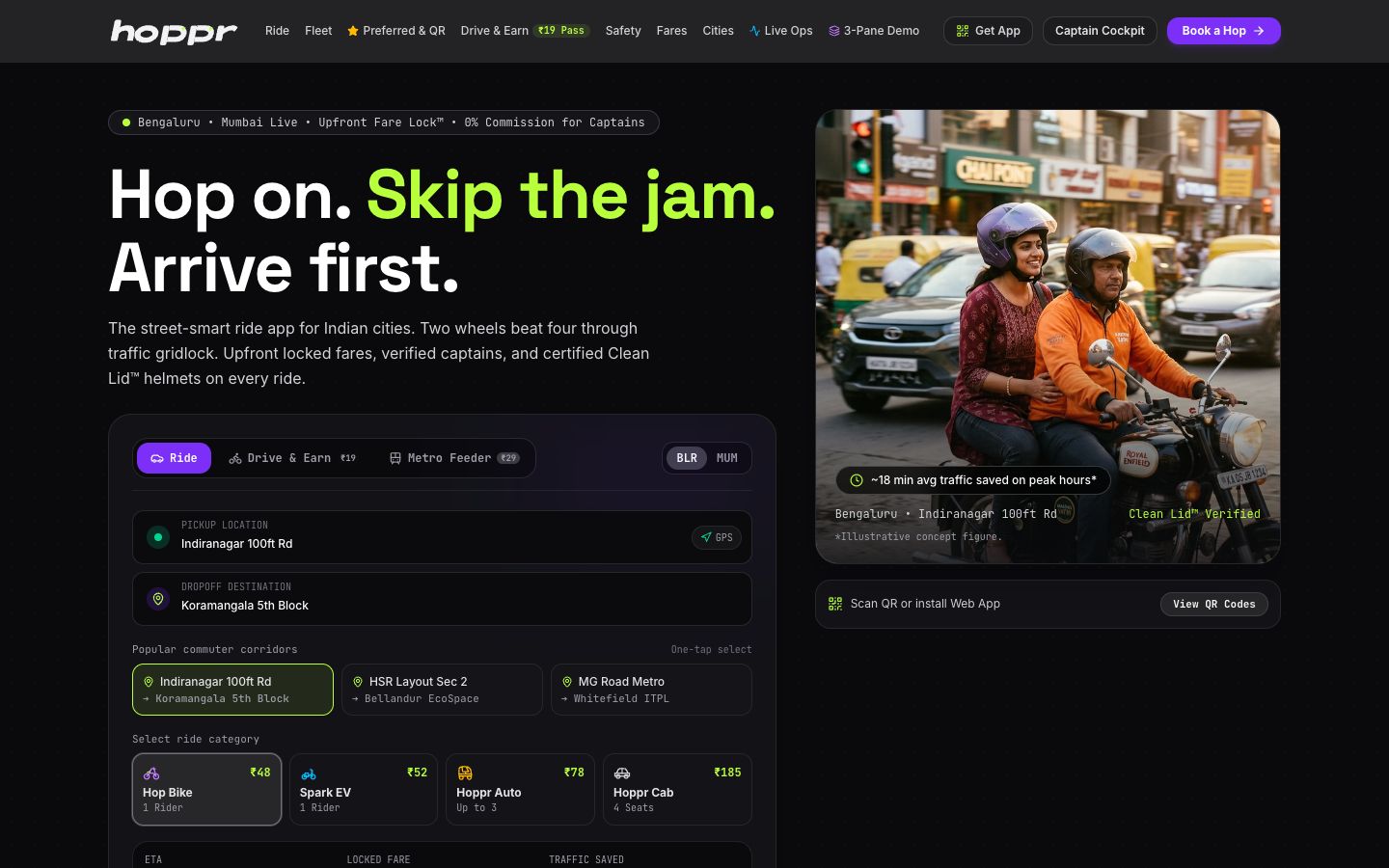
A ride app for Indian cities that leads with bike taxis, with autos and cabs as back-up. Street-smart and youthful — as if a sneaker brand made a ride app.
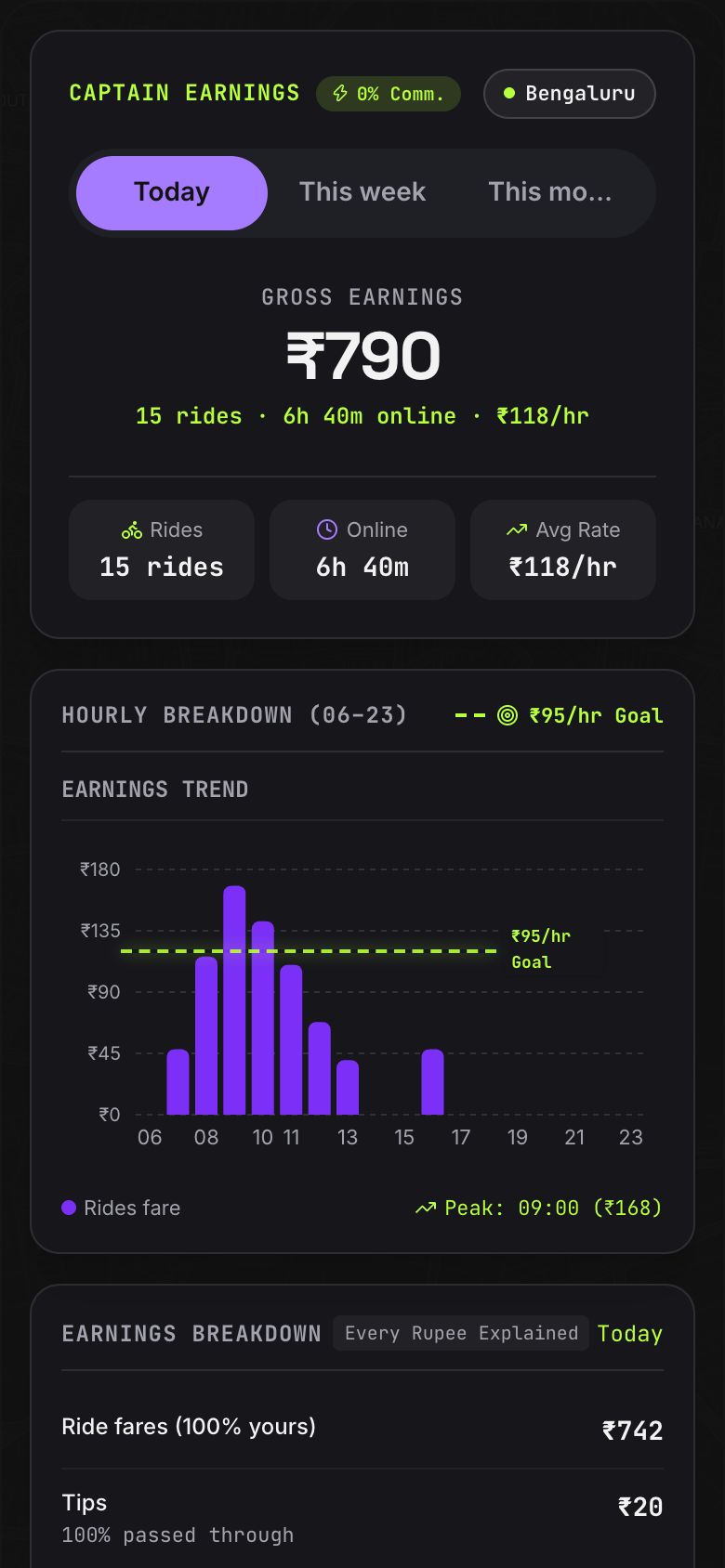
Two sides of the marketplace, both fully built: the rider app with Match Pulse and Fare Lock, and an asphalt-dark captain app with onboarding, day passes and earnings. A Pulse Board shows the whole city live.
- 01
Match Pulse
Violet rings radiate from your pin until a nearby bike pings back.
- 02
Jam Skipped
Every trip shows the minutes you didn't spend in traffic.
- 03
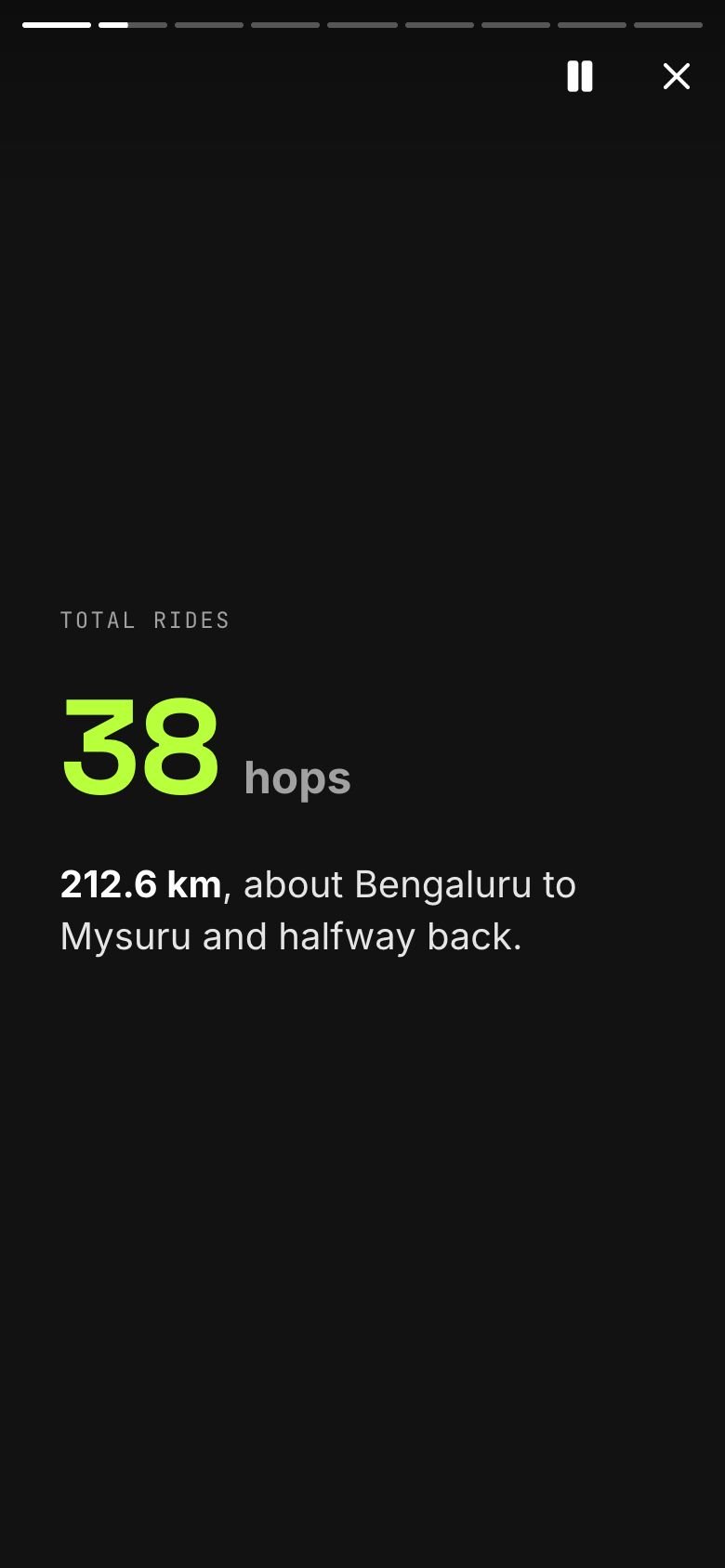
Hoppr Wrapped
A shareable year-in-rides story.
The problem
Short trips are where Indian city traffic hurts most: a 6 km hop to the office or the metro that takes 40 minutes by cab and 15 on a two-wheeler. Bike taxis fit that gap, but the rules around them differ from city to city, change often, and a ride app has to follow them in the product itself, not in a footnote.
A ride app is also two products. The rider needs a fare they can trust and a way to feel safe; the captain needs a day's earnings that survive fuel, platform fees and downtime. If only one side is designed well, the marketplace thins out.
Who it is for
- RiderSee the fare and a vehicle choice quickly, know the captain is verified, and be able to share the trip or call for help in one tap.
- Captain (driver)Onboard with documents, go online with a swipe, see a request's pickup distance and fare at a glance, and understand daily earnings after costs.
- City operationsA live map with demand zones, surge limits per zone, an incident feed and captains on the road.
What we built
Every side of Hoppr, live.
Each one opens the real build in a new tab. On a laptop the apps sit in a phone frame; on a phone they run full screen.
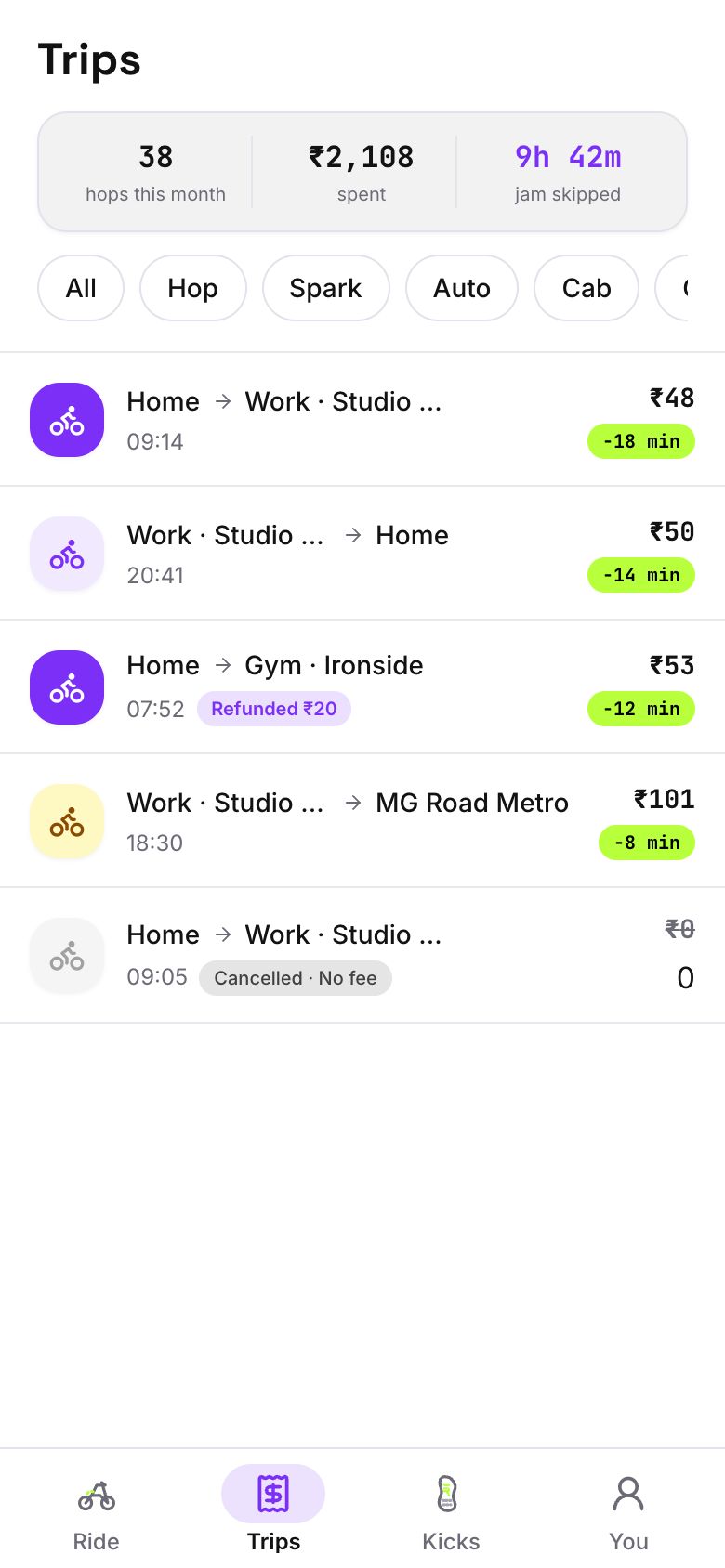
Rider app
Vehicle carousel, Match Pulse, captain card, Tag Along and SOS.
Open /app/solutions ↗Captain app
10-step onboarding, Day Pass, helmet check and earnings streaks.
Open /captain ↗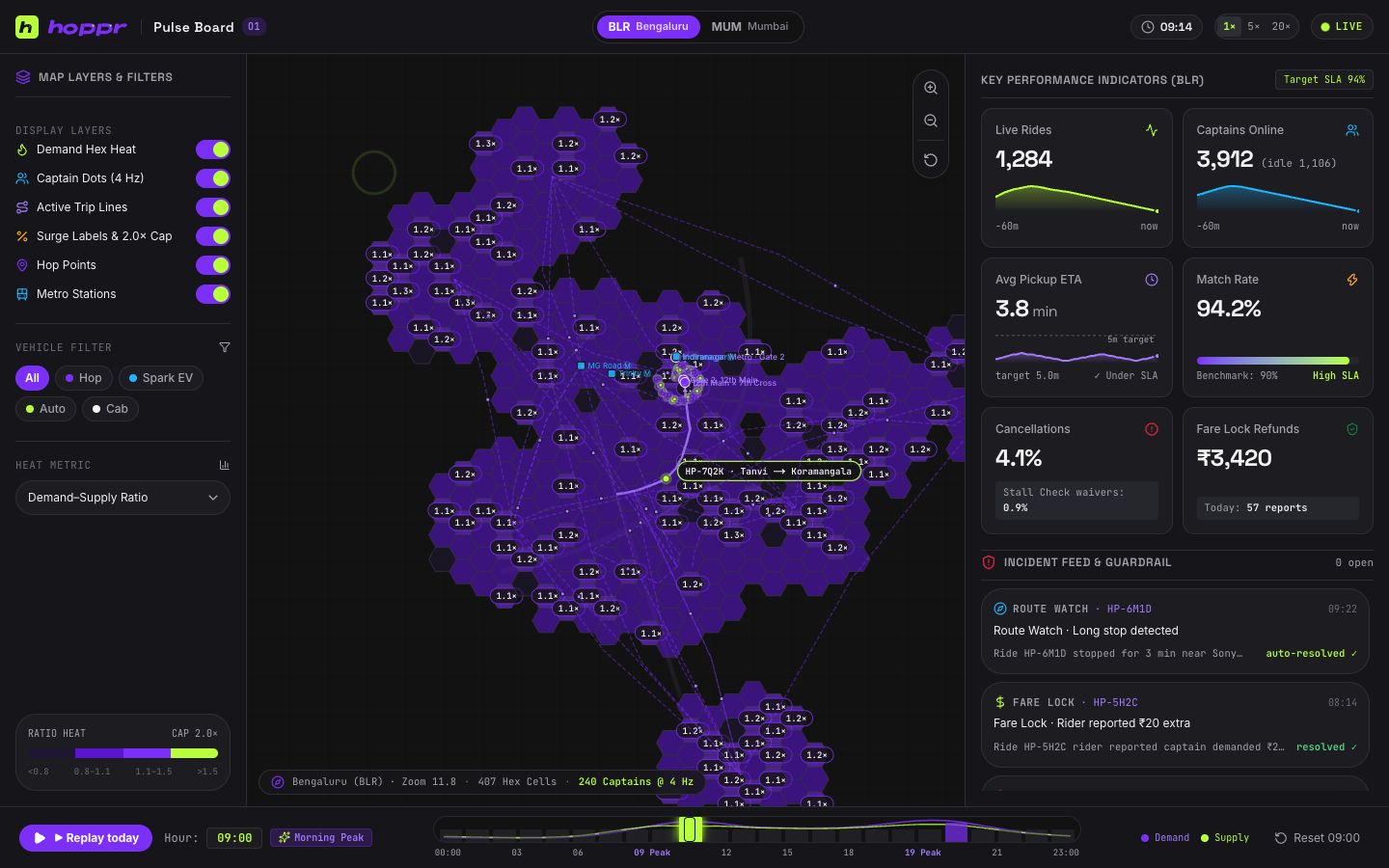
Pulse Board
Hex demand heatmap, surge caps, 240 captains and a live SOS feed.
Open /ops ↗Website
Fares, cities, safety, captains and business pages.
Open /home ↗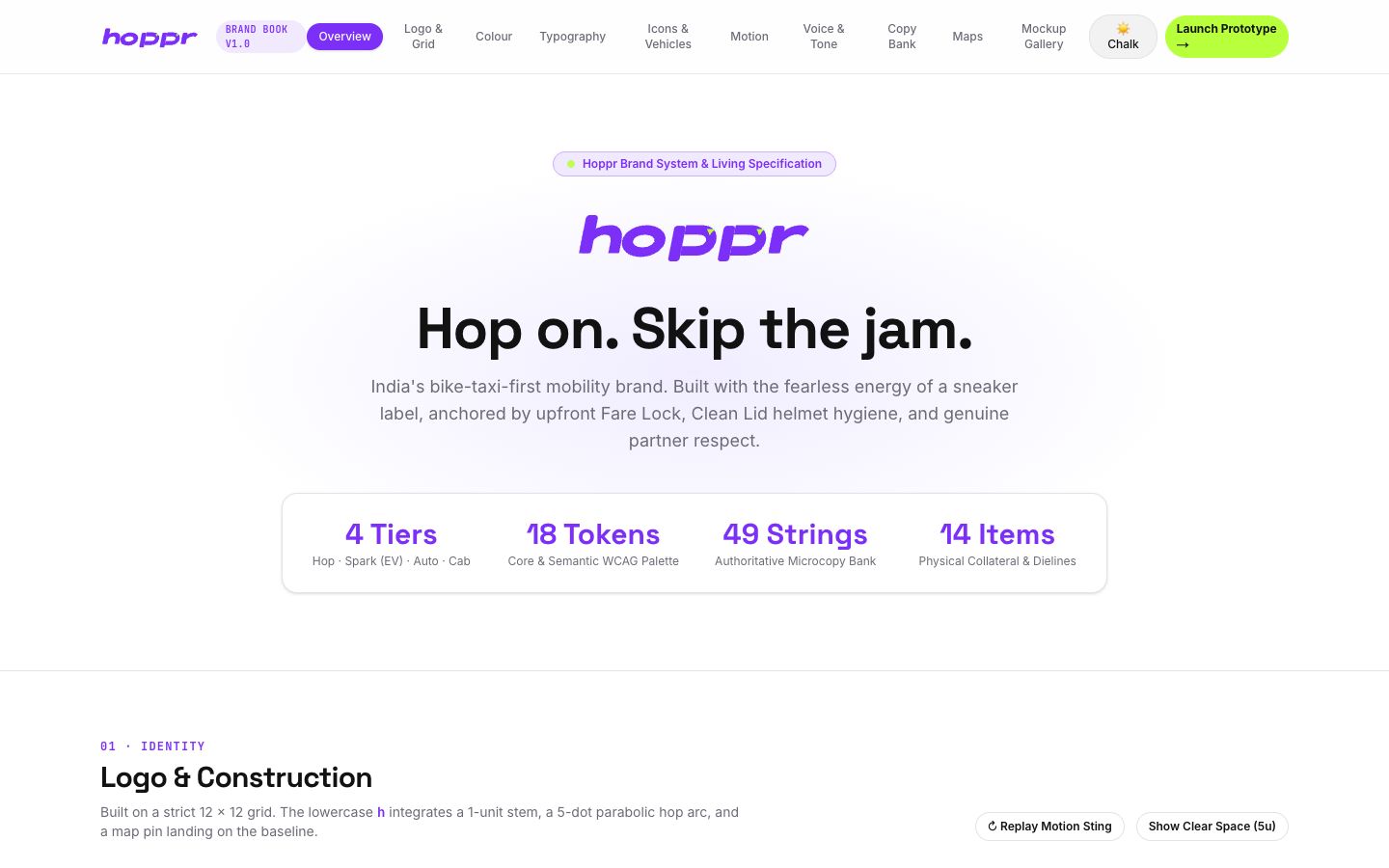
Brand book
Token explorer with contrast tags and live motion demos.
Open /brand ↗Synced demo
PROD BUILDRider, captain and ops on one stage, ~45 s autoplay.
Synced demo
Rider, captain and ops on one stage, ~45 s autoplay.
Open /demo ↗In detail
Surface by surface
Captain app · /captain
The captain app starts with a stepped onboarding: phone, driving licence, registration certificate, selfie, vehicle, a road-readiness check, a helmet-lid check, payout and review, plus a Mumbai-only step for a domicile document and a passenger-vehicle badge number.
Pulse Board · /ops
The Pulse Board is a full-screen operations view: a live map with captain dots, trip lines, a hex-cell demand heatmap, metro and hop points, an hour scrubber, KPI tiles and an incident feed with a detail drawer.
Website · /home
The in-world website lists fares and cities, how it works, safety, a captain recruitment page, business accounts, careers, press, a help centre with an FAQ and a Wrapped page.
Brand book · /brand
A token explorer shows the colour, type and motion tokens with contrast tags and live motion demos, beside a marketing kit with editable collateral and physical mockups such as helmets, jackets and bike livery.
Synced demo · /demo
The demo stage puts rider, captain and ops side by side on one simulated clock and autoplays a ride in about 45 seconds. It is meant for walking a client through the whole loop without needing three devices.
Why it works this way
Design and product decisions
A fare that explains itself
The fare card per city and vehicle has a base, a per-kilometre rate, a per-minute rate and a minimum. A Bengaluru bike hop sample card is Rs 12 base, Rs 5 per km, 50 paise per minute and a Rs 25 minimum. The breakdown screen shows distance, time, surge and coupon as separate lines so the total is never one opaque number.
Surge with a ceiling and a floor
Surge is clamped between 0.5 and 2.0 times in the pricing function, with a code comment citing state aggregator guidelines. The ops zone drawer can pause surge for a cell, and metro-connector rides are a flat fare (Rs 29 in Bengaluru, Rs 35 in Mumbai, up to 2.5 km) that ignores surge. Predictable fares matter more than extracting peak demand on short rides.
Cancellation rules written as code
A rider can cancel free within two minutes of a match, when the captain's vehicle stalls, or with a Hop Pass. Otherwise the fee is 10 percent of the fare, clamped between Rs 5 and Rs 100. Having the waiver reasons as named values means the cancel sheet can say why no fee applies.
Rewards never touch the fare
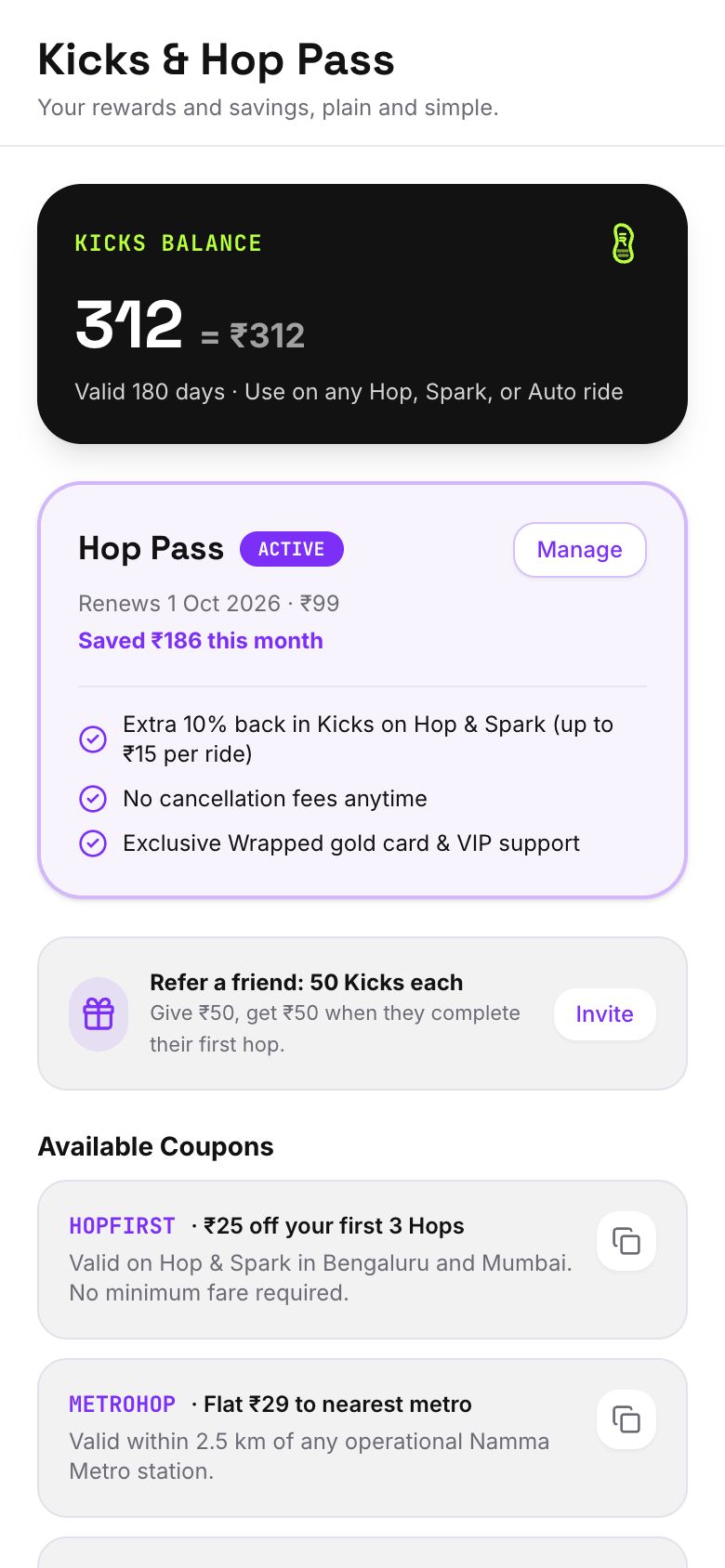
Kicks back is 10 percent of the total as post-ride credit, with a Hop Pass adding up to Rs 15 more on bike rides. The code comment is explicit that this never changes the fare, so a locked price stays locked. The same logic keeps coupons from taking a fare below Rs 1.
Engineering notes
Under the hood
A front-end prototype on a shared simulation core
Next.js, React, zustand and Tailwind with shared workspace packages for UI, tracking and the simulation clock. lib/api.ts holds async functions over sample data, with simulated failures that can be switched on by key. There is no server, payment gateway or real dispatch.
Cross-window sync with a message bus
Events such as ride.requested are posted on a named browser channel (folio:hoppr), so the rider, captain and ops windows react to each other in one browser. This is what the demo route relies on; it does not work across devices.
Maps, audio and haptics
The maps use MapLibre with a custom palette and a hex heat layer. The code includes sound synthesis and haptic helpers for key moments. The helmet check opens the device camera if it is allowed and then runs a timed, scripted analysis; it does not detect a helmet.
Local details
Built for India
City rules as data
Each city has a bike-rule value, a welfare levy and a short rules note with an updated date. Bengaluru allows any bike, Mumbai is EV-only for bike taxis, so Mumbai shows the electric vehicle and hides the petrol one. The notes reflect the studio's reading when the concept was made and would need legal review before use.
A welfare levy shown as a line
Bengaluru applies 1 percent capped per vehicle type and Mumbai applies 2 percent, both paid by the platform in the sample model. Making a levy a typed field means a rule change is a data edit, not a code rewrite.
Four languages in the rider and captain UI
English, Hindi, Kannada and Marathi dictionaries of the same size sit behind one lookup function that falls back to English for any missing key.
What this is, and is not
This is a concept build. Captains, riders, rides, fares, earnings, levy figures and every number on the Pulse Board are sample data. Nothing is dispatched, no payment is taken, no licence or helmet is verified and no GPS is read. The rules notes are not legal advice. A real launch would need driver verification and background checks, aggregator licensing in each city, insurance, a payments and payout stack, real dispatch with fraud controls, a support and incident team behind the SOS button, and a data-protection review of how trip and location data are stored.
Last updated 2026-11-07
More screens
Brand system
Building something like Hoppr? Let's talk.
We'll walk you through this build on a call and map what yours would need.