Eyewear · Commerce & D2C
Specsy
Be the specsy one.
Omnichannel eyewear: 3D frames, a lens lab, home eye tests and a store desk.
The idea
An eyewear brand that flips the schoolyard tease into a compliment: glasses as a style statement. Bold, graphic, cobalt — and it winks.
App, web, stores and a home-test service, all connected: a 3D frame turntable, a Lens Lab that stacks coatings, an Eye Pro app for home visits and a Studio Desk for stores.
- 01
Lens Lab
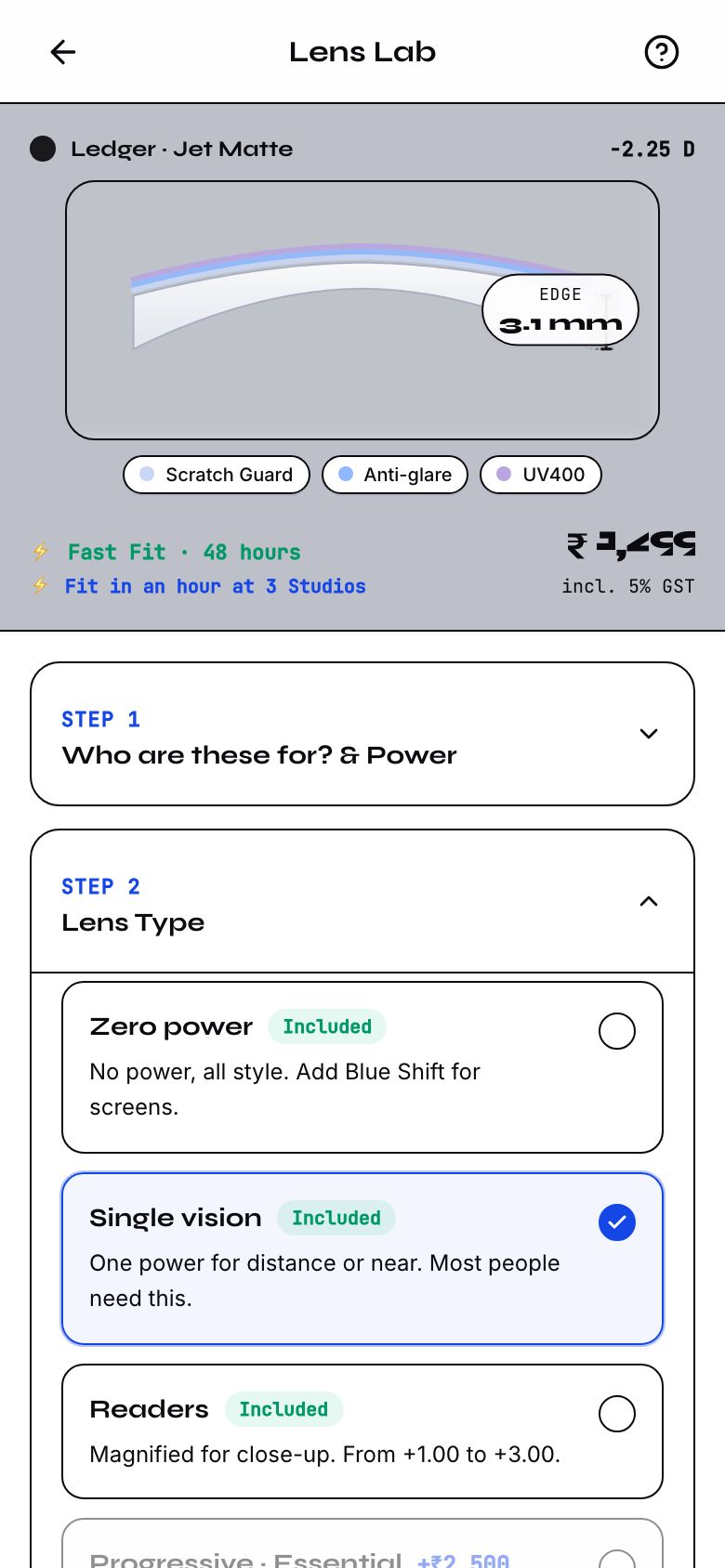
A lens cross-section that stacks coatings layer by layer.
- 02
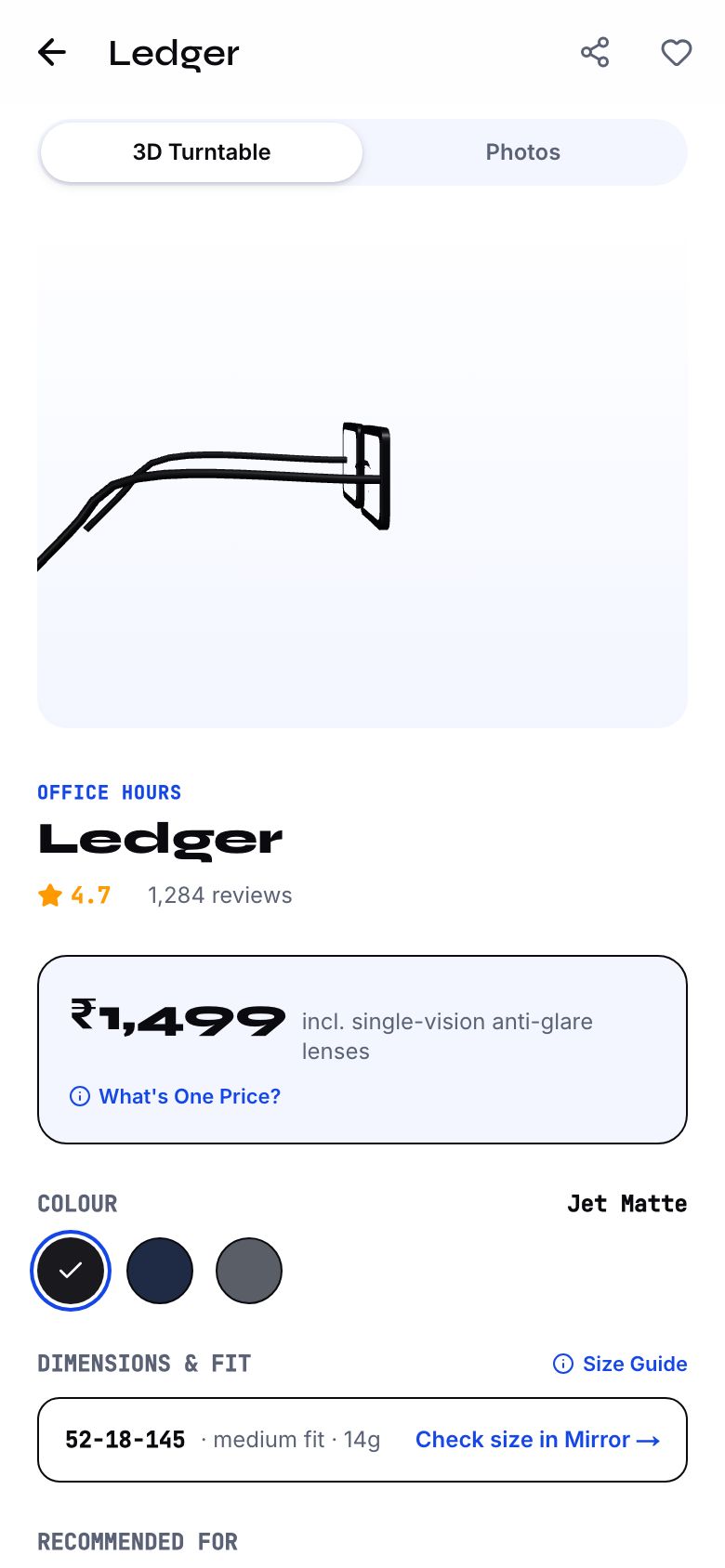
3D turntable
Spin the frame; one honest price.
- 03
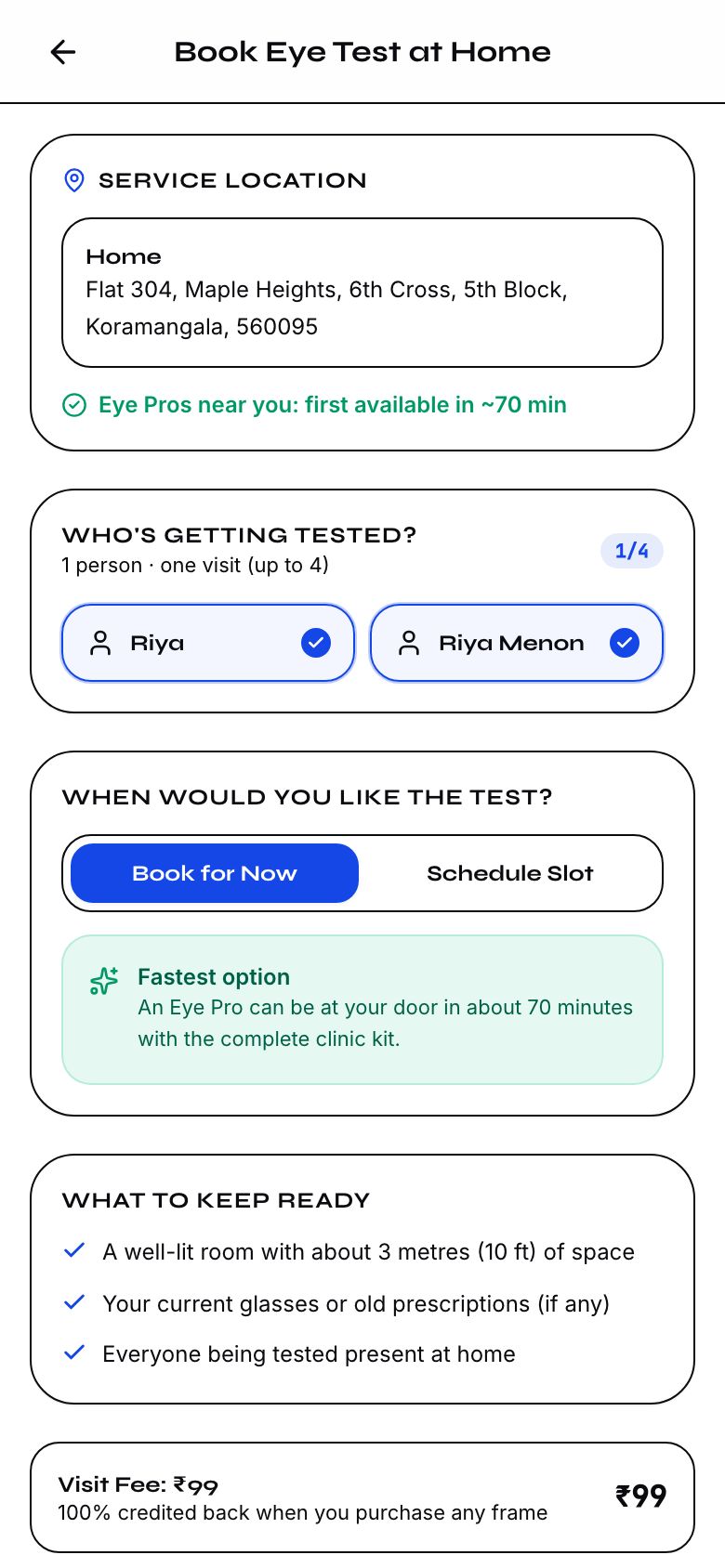
Specsy at Home
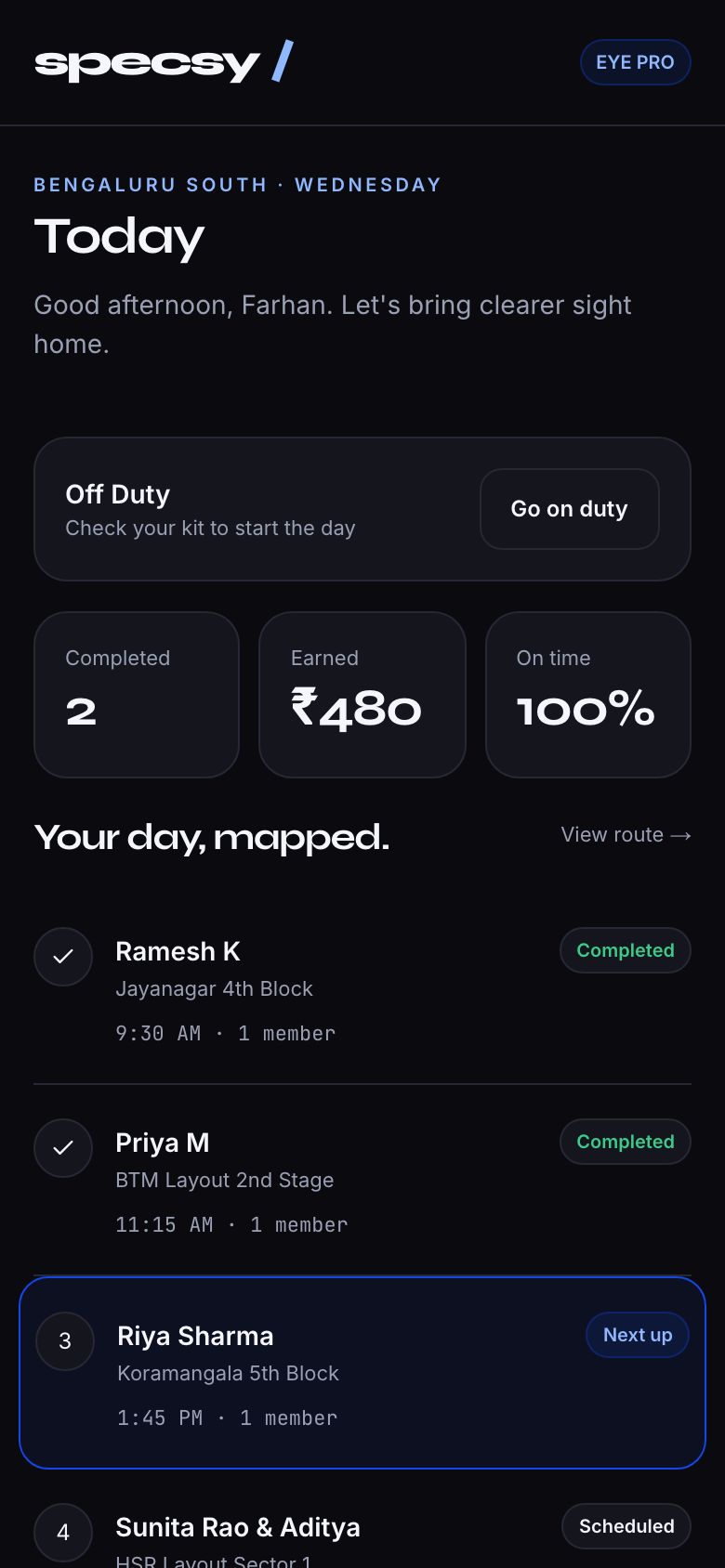
An Eye Pro to your door, routed on a day map.
The problem
Buying glasses is two purchases in one: a frame, which is about style and fit, and lenses, which depend on a prescription, an index and coatings most buyers cannot judge. In a shop the price grows at the counter; online, people cannot try the frame on, and a trip to an optician is a chore for parents.
Specsy is a concept build that removes those steps: a frame page with one price, a Lens Lab that updates the price as coatings stack, a camera try-on mirror, a home eye test for up to four people and a store desk that follows each order to collection. It is a studio concept: no frames are sold and Blink Check is not a medical test.
Who it is for
- CustomerFind frames for a face shape, try them on, build lenses with a live price and keep a prescription per family member.
- OptometristA day of home visits on a map and a prescription form that rejects impossible values.
- Store staffA queue from walk-in to test, billing, fitting and pickup.
What we built
Every side of Specsy, live.
Each one opens the real build in a new tab. On a laptop the apps sit in a phone frame; on a phone they run full screen.
Customer app
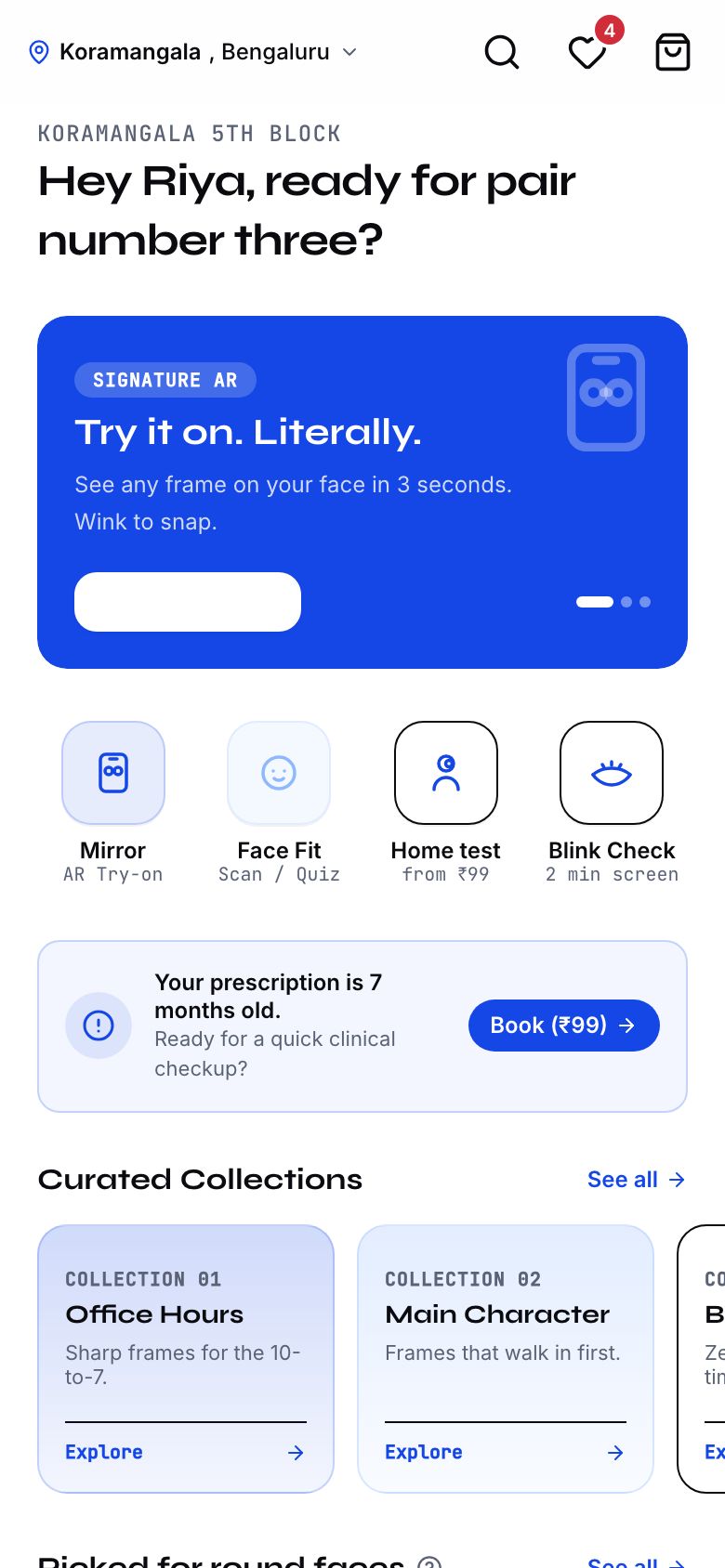
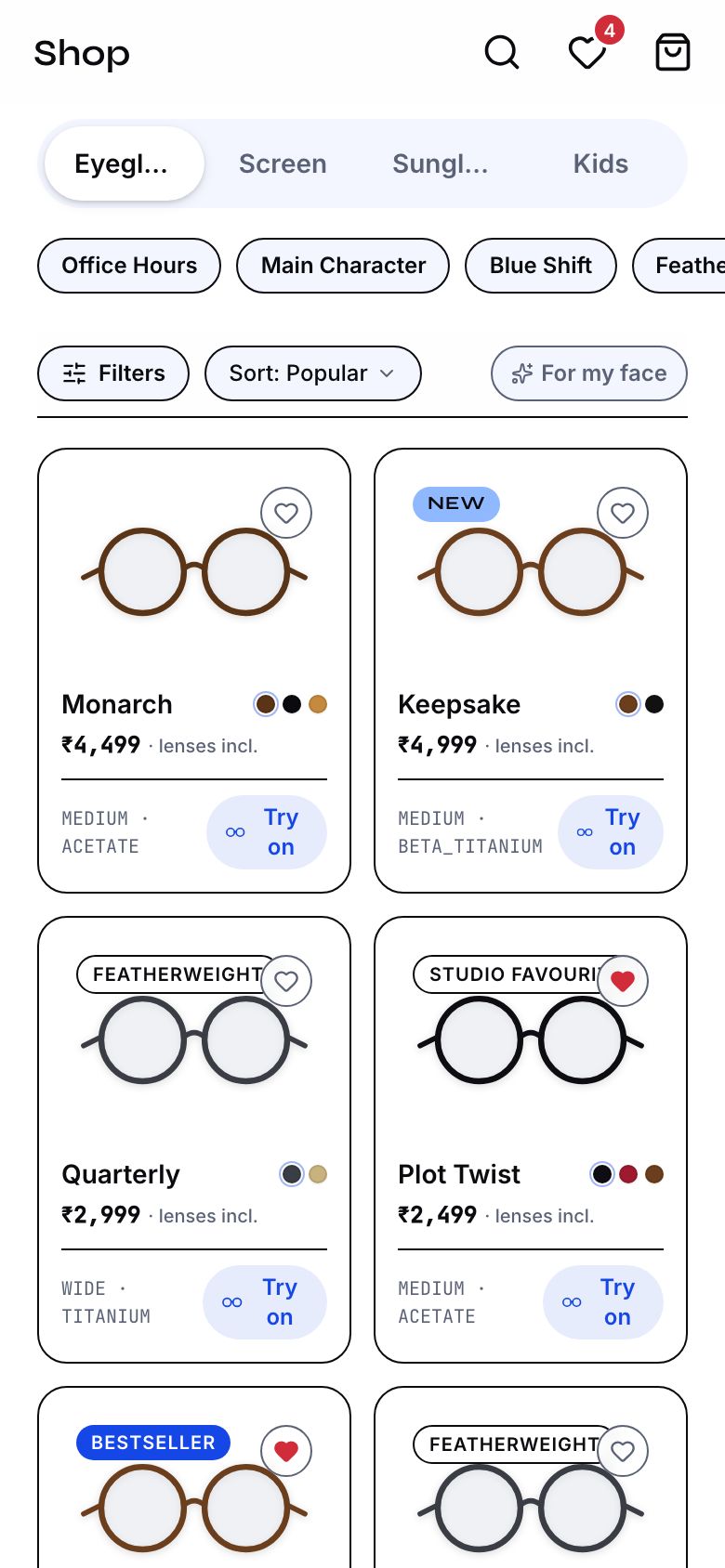
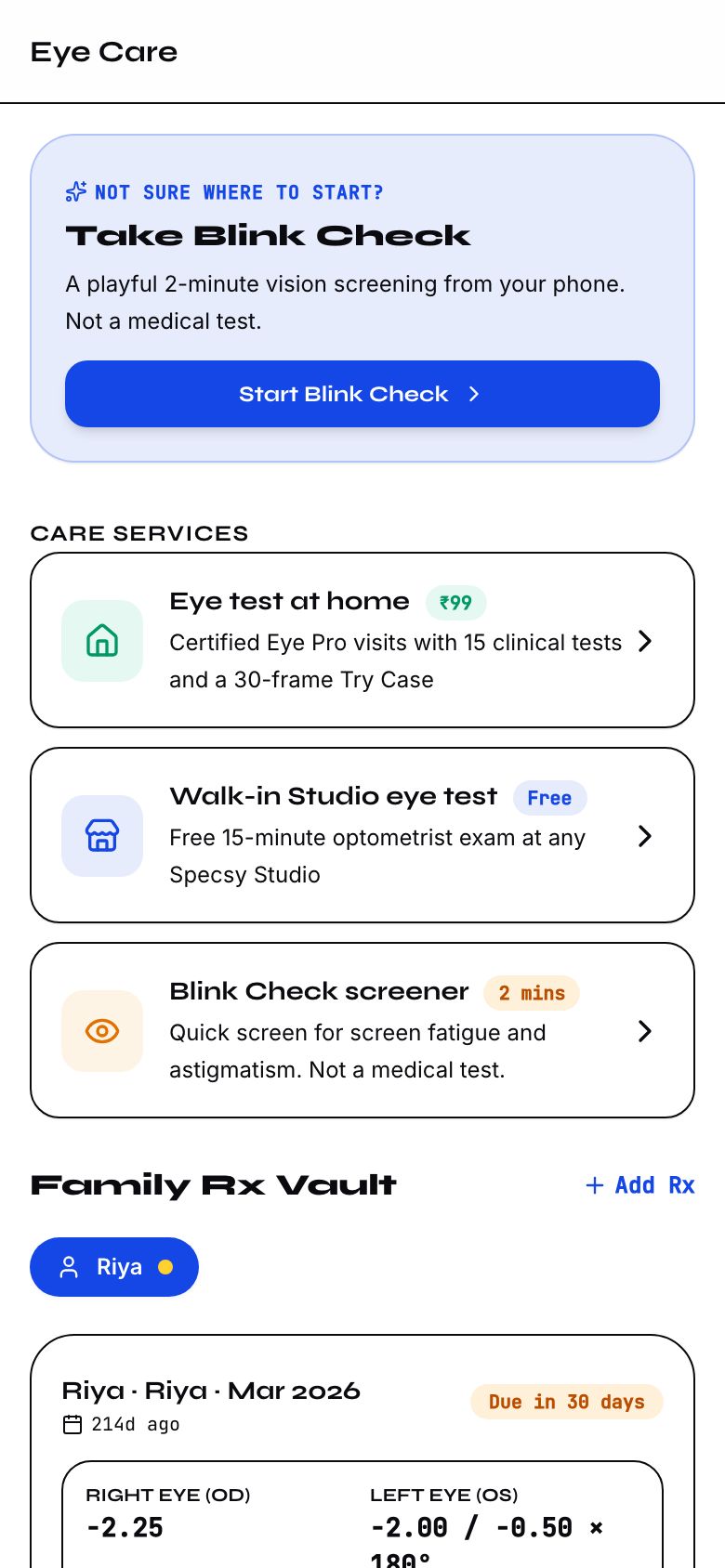
Shop by face shape, 3D frames, Lens Lab and home eye-test booking.
Open /app/solutions ↗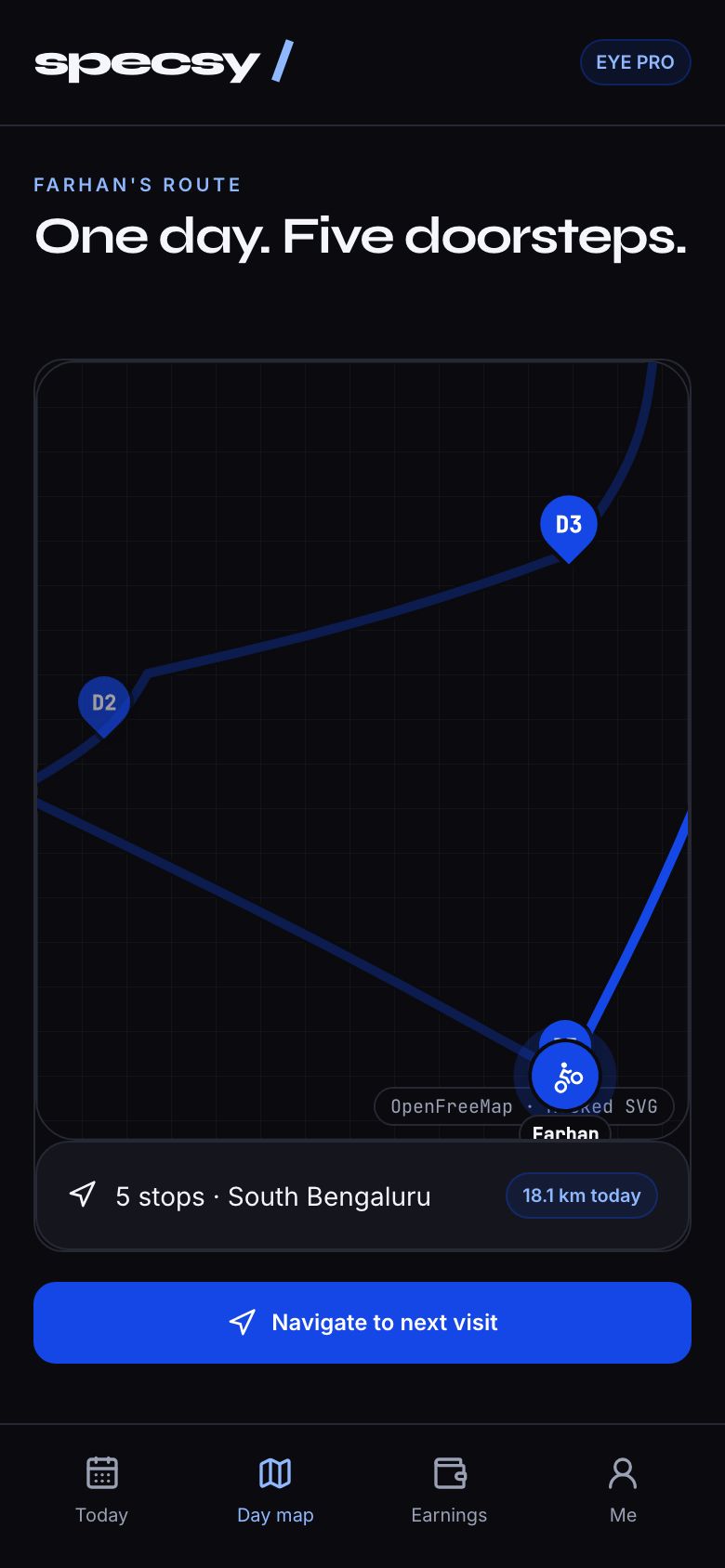
Eye Pro app
A day of doorstep eye tests on a map, with patient checklists.
Open /optom ↗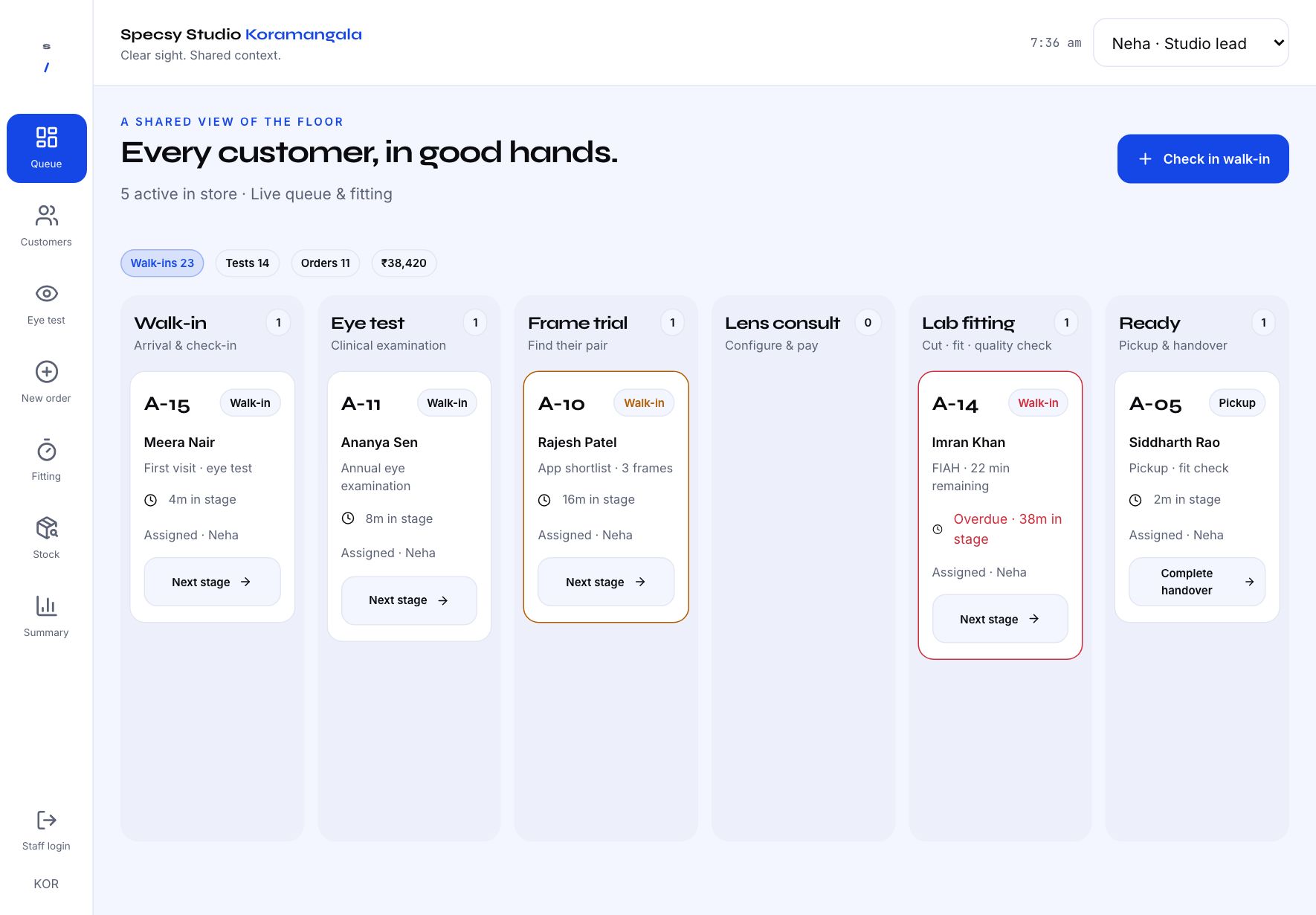
Studio Desk
Store queue from walk-in to lab fitting to ready.
Open /studio ↗Website
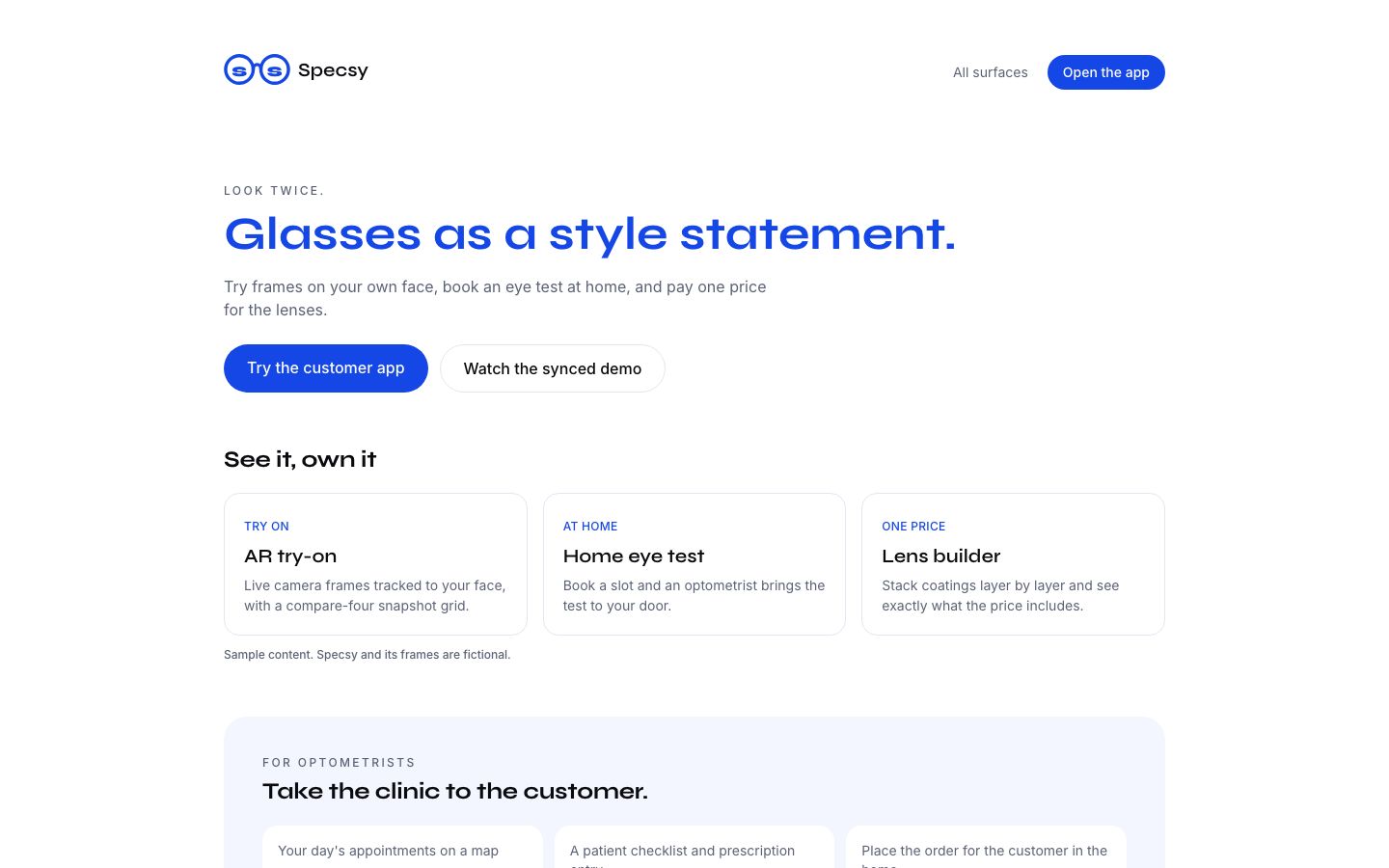
Try on, Specsy at Home and One Price.
Open /website ↗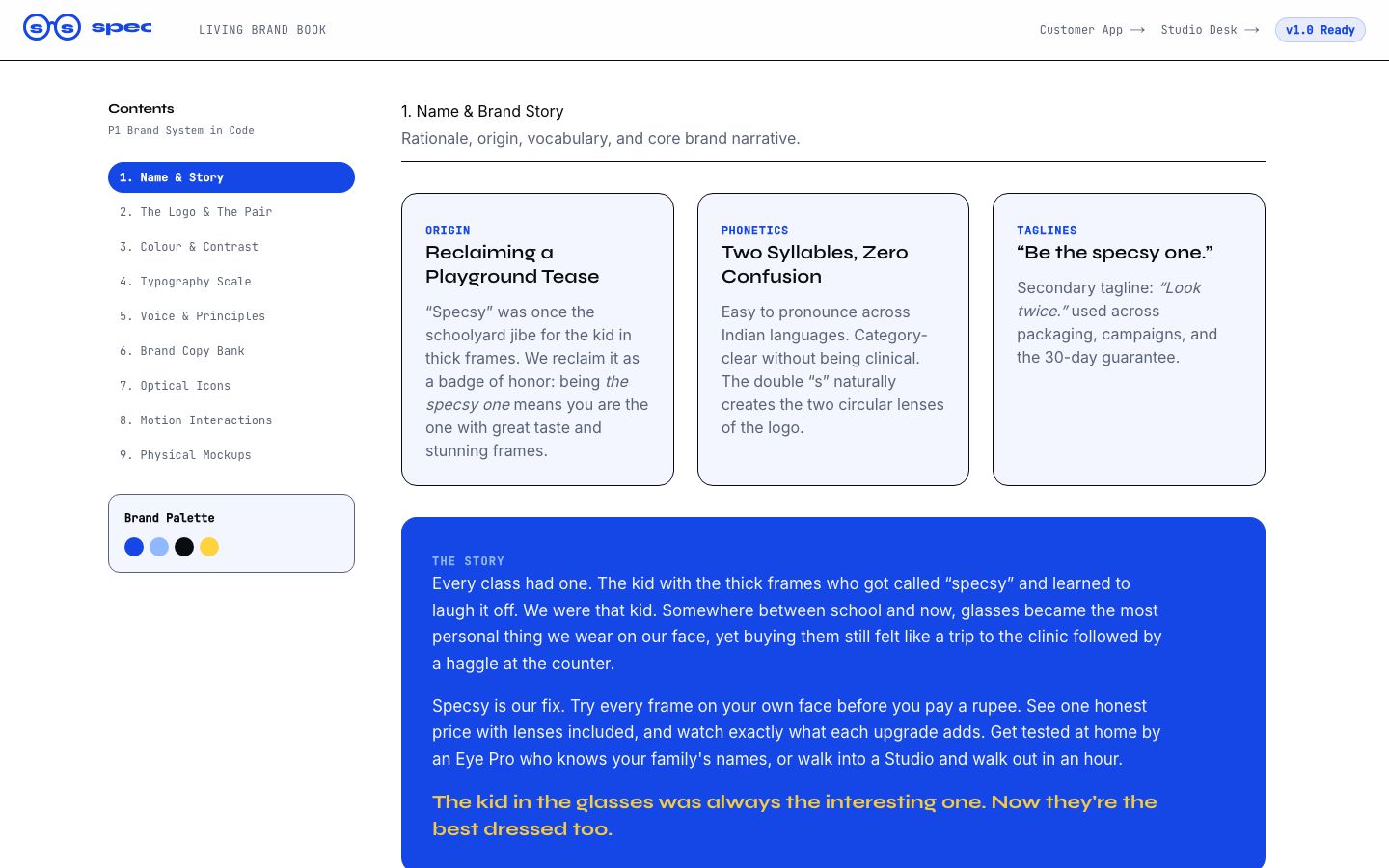
Brand book
The Pair logo, colour, type, voice and copy bank.
Open /brand ↗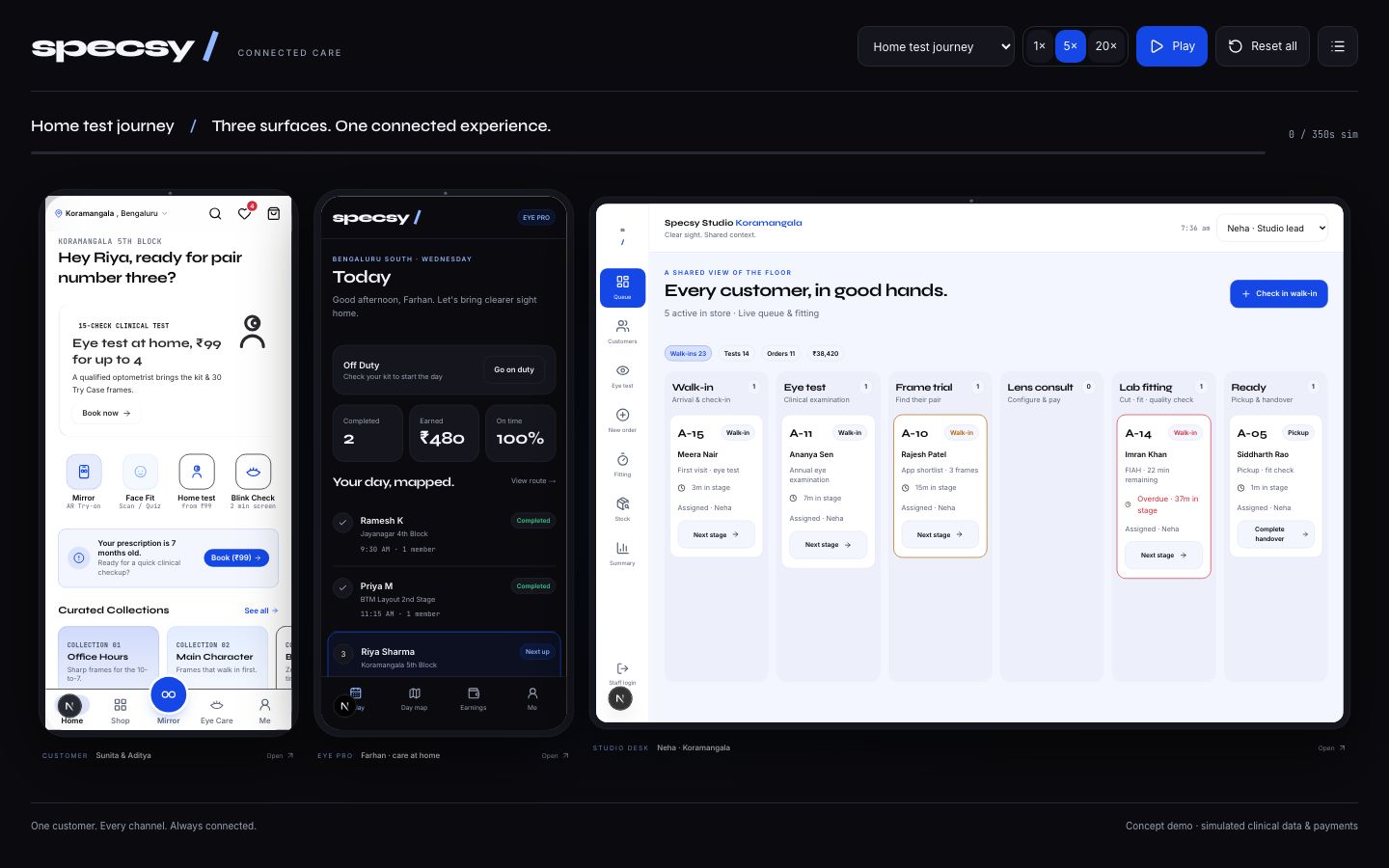
Synced demo
Customer, Eye Pro and Studio Desk side by side.
Open /demo ↗In detail
Surface by surface
Eye Pro app · /optom
The Eye Pro day: a map of doorsteps, a visit screen with a checklist, and a prescription form that requires an axis from 1 to 180 whenever cylinder is present and refuses one when it is not.
Studio Desk · /studio
A tablet queue with seven stages (waiting, in test, choosing, billing, fitting, ready, collected) and time in stage, plus in-store test, customer, lab order, stock and day summary screens.
Website · /website
Frames, lenses, a web try-on, Specsy at Home, studios by city, a franchise calculator, the pass and press. A footer note says it is a fictional concept.
Brand book · /brand
The Pair logo (two circles and a bridge, one lens winking), Cobalt, Sky and Jet, Syne with Inter, a voice guide and mockups of cases, cloths and boxes.
Synced demo · /demo
Customer, Eye Pro and Studio Desk side by side. The home-test scenario books a visit for a family, then shows the optometrist accept it, ride out, check in with a code and run the exam.
Why it works this way
Design and product decisions
One Price, with the lenses inside
A frame's price includes a lens with scratch guard, anti-glare and UV400. Upgrades appear as separate lines, such as Thin at ₹800, Super Thin at ₹1,800 and Night Drive at ₹900, so the buyer sees what is already paid for.
The lens index follows the power
From the stronger meridian: up to 4.00 gets 1.56, up to 6.00 gets 1.60, up to 8.00 gets 1.67, above that 1.74. Rimless and kids frames start at polycarbonate, and above 12.00 the flow says to visit a studio.
Credit, points and a pass
A ₹99 home-test credit applies to an order. Winks are worth ₹1, earned at 5% (10% with a Pass) and redeemable up to 20% of the bill. The Pass takes 50% off the cheaper of two pairs, capped at ₹2,500.
A screener that says what it is
Blink Check sizes letters for a phone at 40 cm, skips a row whose stroke would be under two device pixels, and returns looks ok, worth a test or book soon. The copy says it is not a medical test.
Engineering notes
Under the hood
Try-on engine
Next.js, React 19, TypeScript, Zustand and Three.js. A MediaPipe face landmark model runs on the camera feed with a GPU-to-CPU fallback, a One Euro filter smooths head pose, and the engine reports fps, pupillary distance, yaw, pitch and roll. A wink takes a snapshot. It is a prototype with no backend.
Frames are built in code
The 40 frames are drawn as procedural 3D glasses from their measurements, not from modelled files. Face shape is classified from landmark ratios such as face length to cheekbone width.
Rx and price logic
Prescription validation, lens quotes and the bill are pure, tested functions. GST splits into 5% for corrective eyewear and 18% for zero-power or plain sun lenses, and saved prescriptions sit in a browser vault.
Local details
Built for India
GST that depends on the product
The bill splits 5% and 18% buckets after discounts so invoice lines add up, which an Indian eyewear bundle has to do.
Family home tests
A booking covers up to four people, which suits a household visit. Sample optometrists carry registration numbers and languages including Hindi, Kannada and Urdu, and eight cities are marked for faster fitting.
UPI and Hindi
Checkout uses a mock UPI sheet and the app has English and Hindi text files. Nothing is charged.
What this is, and is not
Specsy is a concept build with sample data. Frames, prices, studios, optometrists and customers are invented, the mirror is an approximate camera demo, not a measurement for a real prescription, and Blink Check is not a medical test. There is no lab, inventory, payment or registered optometrist behind it. A launch would need lab and inventory systems, certified pupillary distance measurement, payments, legal review of prescription eyewear and home tests, GST registration and frame models tested on real faces.
Last updated 2026-11-07
More screens
Brand system
Building something like Specsy? Let's talk.
We'll walk you through this build on a call and map what yours would need.