For a pilot with 15 to 30 captains on one corridor, you do not need an app: use WhatsApp for bookings, a Google Sheet for trips and payouts, UPI for fares and a shared live-location link for each ride. Move to proper software when manual dispatch starts missing rides.
A bike taxi runs on real-time matching, live location, payouts and a safety desk. That combination is hard to stitch together from off-the-shelf office tools, so most operators eventually build or license a taxi platform. This page shows the cheapest thing that works first, and when custom pays.
The jobs the software has to do
List the jobs before you shop. Each one can be done by hand, by a tool or by custom code, and the right answer changes with volume.
| Job | What it involves | By hand until |
|---|---|---|
| Booking | Rider asks for a pick-up and drop, gets a fare and a captain | Roughly 30–50 trips a day |
| Dispatch and matching | Pick the nearest free captain and handle refusals | Calls and WhatsApp stop keeping pace at peak |
| Live tracking and trip share | Rider and family follow the ride | Immediately, a shared location link works first |
| Fare calculation | Distance, time, surge and discounts | Fixed corridor fares need no engine |
| Payments | UPI, cash, wallet, pass | UPI QR works for pilots |
| Captain payouts | Fares, your share, incentives, deductions | Weekly sheet works for the first 30 captains |
| Safety and SOS | Alerts, escalation, trip audit | Never fully by hand once strangers ride |
| Fleet and charging (own fleet) | Service dates, battery health, bike allocation | A sheet works up to about 20 bikes |
Running a pilot on tools you already have
A founder with a phone can run a corridor for weeks on four things:
- WhatsApp Business with a catalogue of fixed fares and a quick-reply for confirmation. See our WhatsApp for business apps guide for what the platform allows.
- Google Sheets or Forms for captain sign-up, a trip log (time, rider, captain, fare, payment mode) and a payout tab.
- UPI QR codes on the captain's phone or helmet, settled to your account daily; reconcile every evening.
- A live location share link from the captain's phone to the rider and one family contact.
This costs next to nothing and teaches you what the software must do. Its weaknesses are all about scale: one dispatcher cannot match more than a few rides at once, the sheet has no audit trail, and a captain can edit a message after a dispute.
Off-the-shelf pieces that help before you build
Some of the jobs have mature tools in other trades. Use them to delay a custom build, but know where they stop.
| Tool category | Useful for | Where it stops short |
|---|---|---|
| Accounting and GST billing software | Invoices, GST, payout books, corporate-pass billing; see our GST billing guide | No trips, matching or live location |
| Payment gateway or UPI collection | Fare collection, refunds, settlement reports | Does not know a trip; you reconcile by hand |
| Vehicle telematics and fleet-tracking apps | GPS trackers, geofences, service reminders for owned bikes | Built for vehicles, not rider bookings |
| Forms and a CRM inbox | Captain onboarding, complaints, corporate leads; see business inbox and CRM | No dispatch logic |
| Ready-made taxi or ride-hailing script or white-label platform | A fast start with rider, captain and admin apps | Hard to adapt to local rules, fares, or your safety flows; check licences, source access and support |
A white-label ride-hailing platform can be the right bridge, but insist on three things before you sign: you own your captain and rider data, you can export it, and you can change fare and safety rules without paying for each change.
When custom software pays for itself
Custom software costs money and attention. It pays when at least two of these are true:
- Manual dispatch is missing rides at peak, and missed rides are visibly costing you riders.
- You need a rule an off-the-shelf platform cannot do, such as women-captain preference, corporate pass pricing, station geofences or a state-specific fare cap.
- Your safety process needs an SOS feed, trip audit and suspend-first controls in one screen.
- Captain payouts take more than a few hours a week, or captains dispute them often.
- You want to own the rider and captain data as an asset, for investors or for a state licence application that asks about it.
A custom build for a bike taxi usually covers a rider app, a captain app and an ops dashboard. Budget estimates for a pilot are in the range of ₹3–8 lakh and for a fuller product ₹20–40 lakh (estimates; see our app cost guide). Cut scope with the MVP guide and decide between native, cross-platform and web in the native versus PWA guide.
What a custom bike taxi build would cover
| Piece | What it does | Detail that matters in India |
|---|---|---|
| Rider app | Pick-up and drop, fare estimate, live tracking, trip share, SOS | Works on low-end Android, patchy data and Hindi or regional languages |
| Captain app | Duty toggle, trip accept, navigation hand-off, earnings | Battery and data use, because the app runs for hours |
| Ops dashboard | Demand heatmap, captains online, open trips, alerts | Suspend a captain in one step |
| Fare and incentives engine | Base, per-km, peak cap, passes, referral credit | A visible cap protects trust and may be required by your state |
| Payments and payouts | UPI collection, refunds, weekly or daily captain payouts | Reconciliation of cash and UPI trips; see UPI in your app |
| Safety layer | Verified profiles, SOS, trip audit trail, a helmet check | Prompt human response matters more than the feature list |
| Compliance and data | Captain documents, consent, retention and deletion | See the DPDP checklist; ask a lawyer |
Plan for running costs too: maps and routing API usage, SMS or WhatsApp messages, servers, and a yearly allowance for fixes and updates (see app maintenance cost). Publishing steps are in the Play Store launch guide.
The data and rules to design for
Whichever route you take, write these down first, because they decide how the system behaves:
- Which states you will operate in, and whether the model is private bikes, transport-registered bikes or an electric-only fleet. We have not verified any state's current rule, so treat it as a setting that can change.
- How a captain is suspended: instantly from the dashboard, with a reason and an audit trail.
- How long you keep trip and location data, and who inside your team can see it.
- How a rider reports a problem and how fast a person must answer.
- How cash trips are recorded so that payouts and commission add up.
The policy changes more often than the code. Keep fares, caps, allowed vehicle types and areas as settings, not hard-coded values.
Our concept build, and where The Saral fits
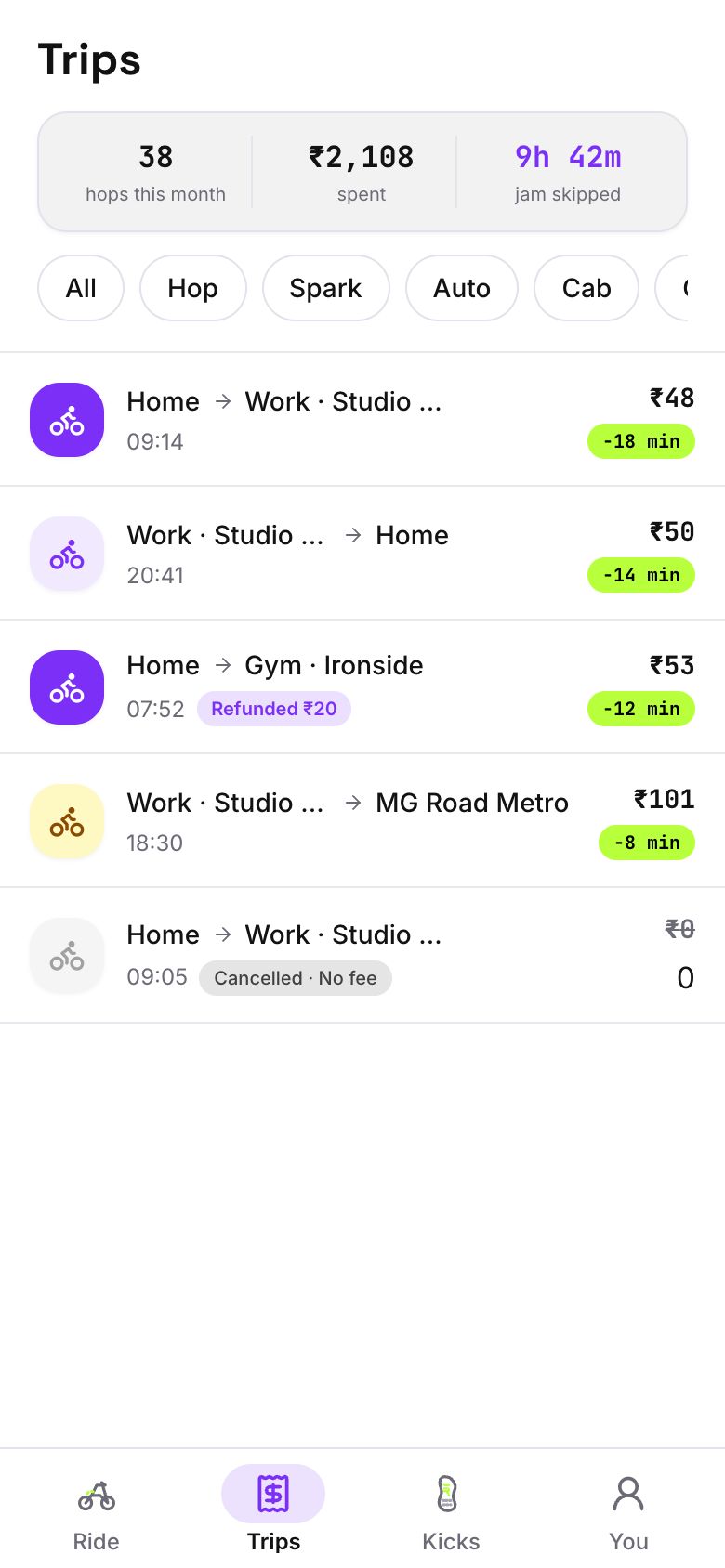
Hoppr is a concept we built to show how this fits together: a rider app, a captain app and a Pulse Board with a demand heatmap, surge caps and a live SOS feed, running on realistic sample data. It is a demonstration, not a licensed product, and it has no live riders, no payments and no state permission built in. It does not make your business legal in your state and does not replace the policy or permit work above.
If you decide a custom build is worth it, The Saral can scope one against your model, your state's rules and your budget. Start with our taxi app development guide and the taxi booking app overview, or send us a brief.
More on starting a bike taxi business
- Start hereThe full playbook →Models, licences, startup costs and the steps to your first customer.
- Go deeperWhat to buy →Bikes (lease or buy), helmets, trackers, charging and insurance, costed, plus what to hold back.
- Go deeperWho to hire →Captains, ops lead, SOS desk and fleet mechanic: pay, vetting and gig versus salaried.
- Go deeperGetting customers →Corridors, station feeder points, first 10 riders, launch fares and repeat-ride habits.
Questions people ask
Can I run a bike taxi business without an app?
For a small pilot, yes. WhatsApp bookings, a Google Sheet, UPI payments and shared live-location links can handle a few dozen trips a day on one corridor. It breaks when peak-hour dispatch misses rides, payouts become complex or you need an audit trail for safety. Confirm your state allows your model before launching.
How much does a bike taxi app cost to build in India?
As a rough estimate, a pilot with rider app, captain app and a basic ops dashboard costs around ₹3–8 lakh, and a fuller product with incentives, payouts and a safety desk can run ₹20–40 lakh. Add ongoing maps, messaging, hosting and maintenance. Get written quotes and check what is excluded.
Should I use a white-label taxi app script?
It can be a faster start, but check who owns the data, whether you can export it, how much you can change fares and safety rules, and what support and updates cost. Test it against your state's rules and your corridor before paying for a long contract. Do not assume any script meets a state permit's requirements.
What safety features must the software have?
At least verified captain profiles with photo and vehicle number, an SOS that reaches a person, live trip sharing, ratings and a way to report problems, plus a dashboard control to suspend a captain. Legal requirements differ by state, so ask your transport department what an operator must provide. A feature without a responsive human behind it does not protect anyone.
How do bike taxi captains get paid through software?
Usually through a weekly or daily payout from your account, based on completed trips, your share and any incentives or deductions, with a statement the captain can read. Cash trips need recording so your share is collected. Pay on the day you promise. The Centre's 2025 aggregator guidelines address driver share, but check how your state applies them.