A boutique needs software for four things: customer measurements, an order book with fitting and delivery dates, jobs given out to karigars, and GST billing. A well-kept spreadsheet plus WhatsApp Business covers the first ten to thirty orders a month; a billing app with a customer record covers the next stage. Custom software pays only when order tracking across tailors and karigars becomes the bottleneck.
Prices and plan limits for these tools change often and we have not verified current rates, so treat any rupee figure as an estimate and check each vendor's own page. The aim is the cheapest thing that works at each stage and a clear sign that it is time to move on.
What a made-to-order boutique has to track
Retail billing tools assume that a sold item leaves the shop. A boutique sells a promise: this blouse will fit by this date. That makes the data different.
- Customer and measurements: bust, waist, hip, shoulder, armhole, sleeve, neck depths, lengths and posture notes, with the date each was taken, since bodies change and customers get remeasured.
- Order: design reference photo, fabric (customer's own or yours), lining, embroidery, add-ons, price, advance, balance and promised date.
- Stage: booked, fabric received, cut, with embroidery karigar, stitching, first fitting, alteration, ready, delivered. Each stage has an owner.
- Karigar jobs: which fabric or piece went to which karigar on which date, what was agreed and what is due back. This is where lost fabric and late bridal orders come from.
- Fittings and alterations: slot, who did the fitting, what changed, and whether it is free or charged.
- Stock: a short list of ready-made pieces by size and colour, plus fabric and trims used against orders.
- Billing: a GST invoice for each sale, with the right treatment for stitching, fabric and garments; confirm rates and invoice wording with your CA, as tax explainers we read do not all agree and we did not verify them from official notifications.
The spreadsheet and WhatsApp setup that costs almost nothing
For the first months, a few well-designed sheets beat any tool you will not keep updated. One person must own them.
| Sheet | Columns worth having | Habit that makes it work |
|---|---|---|
| Customers | Name, phone, WhatsApp consent, birthday or anniversary month, source (referral, Instagram, walk-in), notes | Add the person the day they first visit; note the consent to message them |
| Measurements | Customer ID, date taken, each measurement in its own column, taken by, posture notes | Never overwrite; add a new row for each remeasure |
| Orders | Order no., customer, garment, fabric source, design photo link, total, advance, balance, fitting date, delivery date, assigned tailor, status | A colour for each status; filter by the next seven days every morning |
| Karigar jobs | Job no., order no., karigar, item given, date out, date due, rate agreed, advance paid, date back, quality note | Give nothing out without a row; photograph the fabric on handover |
| Stock and fabric | Item, size or metre, location, purchase rate, supplier, last moved date | Count monthly; mark ready-made pieces not sold in a season |
- WhatsApp Business for the catalogue, quick replies, labels (enquiry, advance paid, in stitching, ready, delivered) and a broadcast list for customers who asked for updates. See our WhatsApp for business guide for what each feature does and the rules on consent.
- A printed order slip with a carbon copy for the customer and one for the workroom, tied to the order number, remains useful even when everything else is digital.
- A cloud drive folder per customer or a single photo album per order keeps design references and fitting photos together.
This stage breaks when the sheet is edited by three people, when a delivery date is missed because nobody filtered by date, or when you need to find a customer's old measurement and have two versions. That is the sign to move on.
Off-the-shelf tools: billing, customer record and store
No mainstream retail app is built for made-to-order tailoring, so most boutiques combine two or three tools.
| Tool category | What it covers for a boutique | Where it falls short |
|---|---|---|
| GST billing / retail POS app with variants and a customer record | GST invoices, barcode labels, size and colour stock, UPI payments, customer history, daily sales reports | Rarely has a measurement sheet, fitting stage or karigar job; usually the notes field is used for measurements, which gets messy |
| Tailoring or boutique order-management apps | Order slips, measurement templates, delivery dates, fittings, SMS or WhatsApp alerts | Quality and Indian GST support vary; check data export before you commit; some are built for men's tailoring only |
| Spreadsheet or no-code database (a table with views and forms) | Orders with stage views, a form for karigar handover, filters by tailor and date | Needs setup and discipline; permissions are basic |
| Hosted online store for ready-made and made-to-measure | Catalogue, size guide, payments, shipping and order emails | Made-to-measure needs a measurement form and long lead times that standard templates handle awkwardly |
| Courier aggregator | Rate comparison, labels and tracking for ready-made orders | Not useful for local pickup orders |
| Accounting software and your CA | Ledger, GST returns, TDS, payroll records | Does not manage orders; feed it from the billing tool |
Our GST billing software guide explains what to look for in a billing tool, and the e-commerce website guide covers the storefront side. A billing app built for you can sit between the two when the standard ones do not fit.
When a custom system starts to pay
Custom software is an overhead for a boutique and rarely worth building before a few conditions appear.
- You have more than one workroom or branch, and orders move between them.
- Karigar jobs and fabric movement are costing you money in lost or late work, and sheets no longer show it reliably.
- Customers want to track an order or see their measurements and book a fitting slot online, and you have a base of repeat customers who would use it.
- You sell made-to-measure online with a measurement form, a size finder and long lead times that your store template cannot handle.
- You want a customer record that links orders, measurements, birthdays and festive reminders with WhatsApp consent, instead of scattered chats.
A custom system for a boutique would normally cover: a customer and measurement record with history; an order with stages, assigned tailor and delivery date; a karigar job register with due dates and photos; a fitting calendar; GST-ready invoices; WhatsApp or SMS status updates with consent; and a dashboard of what is due this week. Start with the order and measurement core and add the rest when each pain shows up. Under the Digital Personal Data Protection Act, you should ask consent and keep customer data safe; see our DPDP checklist and confirm obligations with a lawyer.
Where the Saral and the concept build fit
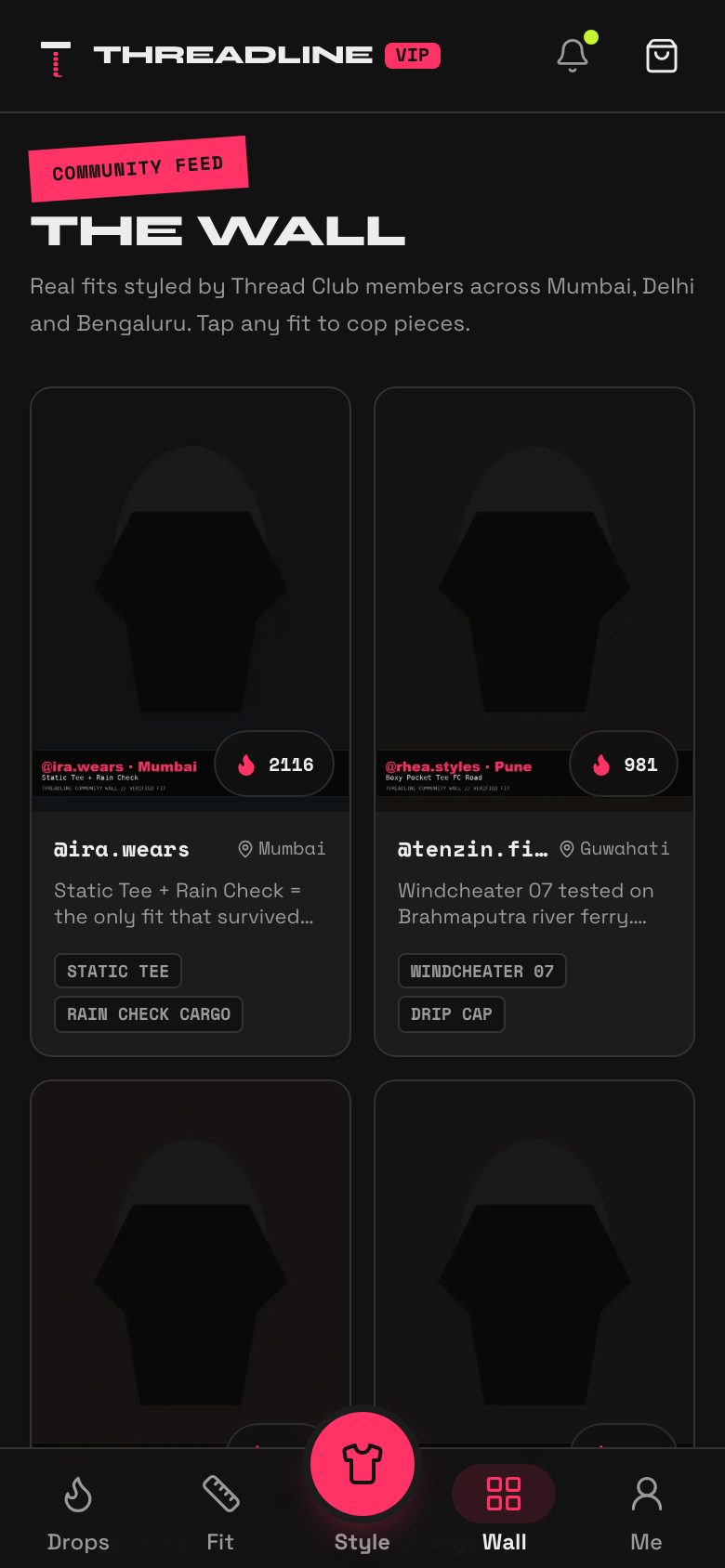
Threadline is our concept build for a streetwear label, not for a boutique. It shows a storefront with drops, an outfit builder, a size finder and lookbooks, plus studio tools behind it. A boutique could borrow the size finder, lookbooks and festive-collection launches for its ready-made range or for an online made-to-measure form. It does not cover tailoring order stages, karigar jobs, fitting slots, GST filing or accounting, and it is a concept to look at, not a product you can buy off the shelf.
The Saral builds custom software like this, scoped and quoted for each business. If you want an online store or an order and measurement system for your boutique, send us a brief. Our boutique playbook covers the business around the software.
More on starting a boutique
- Start hereThe full playbook →Models, licences, startup costs and the steps to your first customer.
- Go deeperWhat to buy →Workroom machines, trial room, mannequins, fabric and sample stock, costed, with what to skip early.
- Go deeperWho to hire →Master tailor, cutter, finisher, karigars on piece rate and a stylist: roles, pay, trials and contracts.
- Go deeperGetting customers →Instagram and WhatsApp, wedding vendors, first 10 clients, order pricing and repeat-customer habits.
- Go deeperFinding suppliers →Fabric markets, embroidery clusters, trims, designer labels and consignment, with terms and red flags.
Questions people ask
What software does a boutique need first?
Start with a shared spreadsheet that has customer, measurement, order and karigar-job tabs, plus WhatsApp Business for the catalogue, quick replies and labels. Add a GST billing app with a customer record once you issue regular invoices. The spreadsheet carries the first dozens of orders if one person keeps it updated daily and the others read from it.
Is there ready-made software for a tailoring boutique?
Yes, several tailoring and order-management apps exist, but quality, GST support and data export vary, and some are built for men's tailoring. Retail POS apps cover billing and stock but usually lack measurements and fitting stages. Run a real order from booking to delivery on a trial before committing, and check pricing on the vendor's own page.
How should a boutique store customer measurements?
Keep each measurement in its own column with the date taken and who took it, and add a new row at each remeasure instead of overwriting. Include posture and fit notes. Ask permission before saving personal data, keep the file access-controlled and backed up, and follow DPDP Act guidance; confirm obligations with a lawyer.
When is custom software worth it for a boutique?
When you have several workrooms or branches, lose money to late or lost karigar jobs, or want customers to track orders and book fittings online. Before that, sheets and an off-the-shelf billing tool are cheaper and easier to change. Build the order and measurement core first, then add the pieces that solve a pain you have measured.
Can I handle GST for stitching and garments in one billing app?
Often yes, but the tax treatment depends on whether you sell a stitched garment, charge for stitching alone or combine design and stitching, and on the per-piece price. Tax explainers we read disagree on some cases and we did not verify them against official notifications, so set rates and invoice wording with your CA before you configure the app.