Your first customers will come from delivery platforms, so make the listing excellent, run a small, time-boxed launch offer, and start collecting regulars on WhatsApp from order one. In parallel, take a fixed lunch menu to offices and PGs within your delivery radius, because those orders repeat on their own.
The goal is not just orders but repeat orders on a channel you control. A customer who found you on an aggregator is a platform's customer until you give them a reason to reorder directly. Treat platform visibility as rented and your WhatsApp list as owned.
How a delivery-only brand gets found
Without a shopfront, discovery happens in a few places: the search and category pages of delivery apps, Google Maps and Search for 'biryani near me', ONDC-connected buyer apps, and people sharing your number. Each rewards different things.
| Channel | What it rewards | Cost to you | What to watch |
|---|---|---|---|
| Delivery platforms (Swiggy, Zomato and similar) | Fast acceptance, low cancellation, rating, photos, a clear menu | Commission on orders, plus optional ads; confirm current terms with each platform | Ratings in the first 50 orders matter enormously |
| Google Business Profile | A correct delivery-area listing, photos, a link to order | Free | Fill it in fully; see the local SEO guide |
| ONDC buyer apps | Listing through a seller app that connects you to the network | Different fee terms from marketplaces; verify with the seller app | Volumes vary by city and app |
| WhatsApp and calls | Personal replies, today's special, repeat order shortcuts | Almost free | Only message those who opted in |
| Offices, PGs, hostels and coaching centres | Fixed menus, reliable timing, group orders | Your time and a small trial discount | Delivery within a tight radius is vital |
Make the platform listing do the selling
On a delivery app, you compete as a thumbnail and a few lines. The kitchens that do well in the first weeks have disciplined listings and fast operations.
- Short menu, strong hero dishes: 10 to 20 items beat 60. Each extra item adds prep and mistakes.
- Photographs of the dish in its box, not a studio plate. Customers judge the box that arrives.
- Names that search well: 'Hyderabadi chicken dum biryani (serves 1)' beats 'Special biryani'.
- Portion clarity: state serves-one or serves-two and quantity in grams if you can; unclear portions create bad reviews.
- Accept orders in seconds, keep the tablet loud and staffed. Missed or slow acceptance can hurt your visibility.
- Mark items unavailable the moment they run out rather than cancelling after acceptance.
- Fill in FSSAI details on the listing as the platform asks; customers and platforms check this.
- Reply to every review, especially the three-star ones, with what you changed.
Platform rules on ads, commissions, ranking and delisting change and differ by city. We have not verified current terms; read the partner agreement carefully before accepting.
Your first 10 customers, then the first 100
- Friends and neighbours in the delivery radius (orders 1 to 10): ask for real orders on the platform, with an honest review and photo of the box. Do not ask for fake reviews; platforms penalise it, and it is dishonest.
- Offices within 3 to 5 km: visit receptionists, admins and HR; leave a sample lunch box and a one-page menu. Offer a fixed day-menu with a set delivery time.
- PGs, hostels and coaching centres: a monthly meal plan or a combo for students, delivered at a fixed hour.
- Housing societies: a weekend special for residents, ordered through the society's WhatsApp group (check the group's rules first).
- Local food and neighbourhood groups: share the menu and photographs there, answer questions, and avoid spam.
- First 100 orders: change one thing at a time (a dish, a price, a box) and check the effect on ratings and repeat share.
Record every customer's order source in a sheet or your billing tool: platform, WhatsApp, office, walk-in sample. Within a month you will see which channel returns repeat orders cheaply.
Launch pricing and offers that do not wreck margin
Platforms often nudge new restaurants to discount heavily. A discount is a customer acquisition cost, so treat it like one. The worked example below is illustrative, with an assumed commission, not any platform's actual rate.
| Line (per ₹300 order, illustrative) | Amount | Comment |
|---|---|---|
| Menu price charged to customer | ₹300 | Before any discount |
| Launch discount you fund (20%) | -₹60 | Time-box it to the first two to four weeks |
| Platform commission (assume 25%, illustrative) | -₹60 to -₹75 | Depends on plan and on whether the discount is netted off; confirm how your platform calculates it |
| Food cost (assume 30–35%) | -₹90 to -₹105 | From your costed recipe |
| Packaging per order | -₹15 to -₹30 | Box, bag, cutlery, sticker |
| Left for staff, rent, gas, GST and profit | About ₹10 to ₹60 | Why the discount must be short and the menu priced with it in mind |
- Price with the discount in mind: set menu prices a little higher on platforms than on your own channel, as many kitchens do, and check platform rules on price parity.
- Combos over blanket discounts: a biryani plus dessert at one price raises the order value without cutting every item.
- Minimum order values for your own channel keep the delivery cost reasonable.
- Stop a discount the moment ratings and a first batch of repeat orders are in place.
Turn platform customers into your own customers
Platforms generally keep the customer's data and the relationship. Your job is to give people a reason to order you directly the second time, honestly and within the platform's rules.
- A card or sticker in every bag with a QR to your WhatsApp Business chat or ordering link and a small direct-order benefit (a free dessert on the next order, say). Check the platform's rules on directing customers away from its app.
- WhatsApp Business: use a catalogue, labels (new, regular, office) and quick replies. Send one message a week at most, only to people who asked.
- Order-again habit: Monday-to-Friday lunch subscribers who pay weekly are the steadiest repeat revenue a delivery kitchen can have.
- Collect consent properly: the Digital Personal Data Protection Act applies to personal data you collect; see our DPDP checklist and get a lawyer's view for your case.
- A simple ordering page: a menu page with a pay link is enough to start; see online ordering for restaurants.
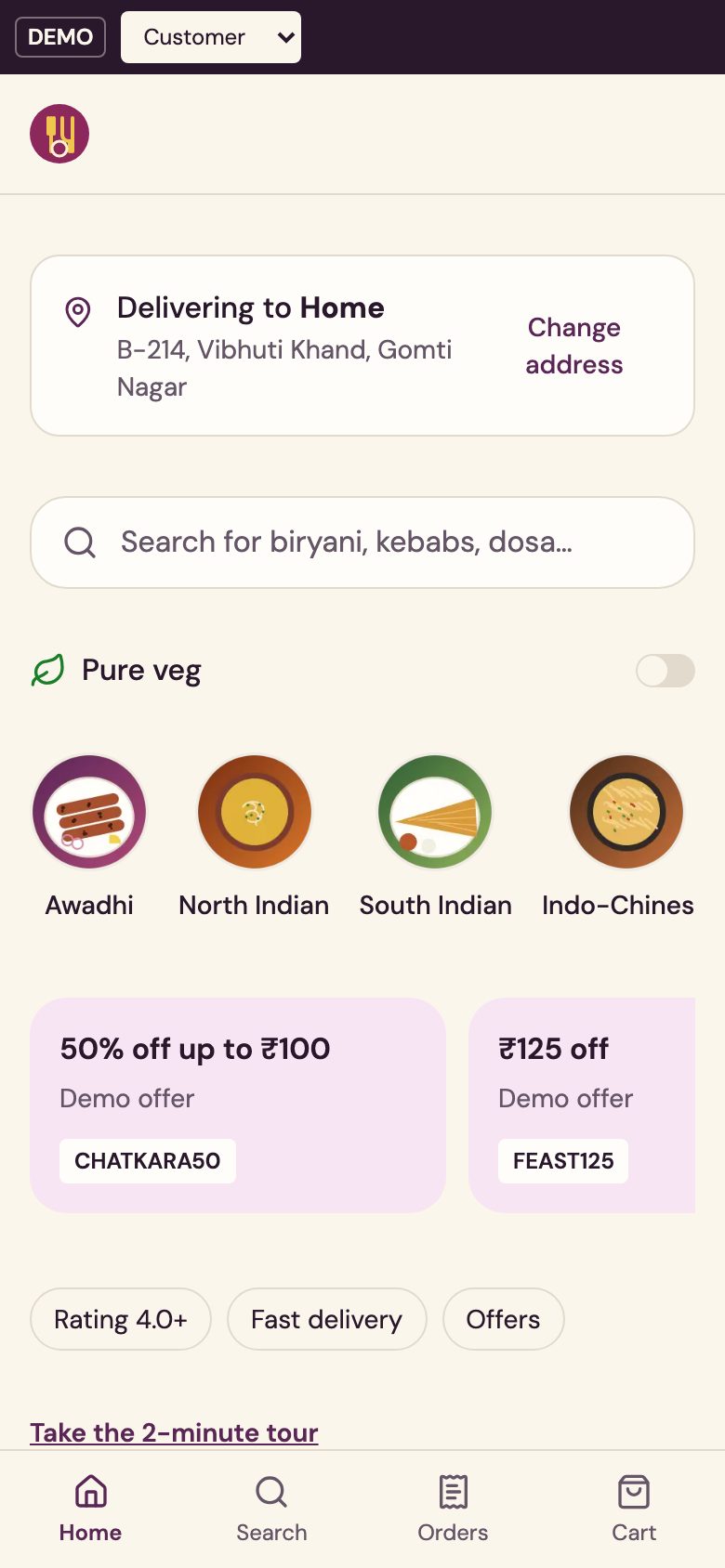
Your own app with your own riders only pays when you have a dense area and a large repeat share, since each own-delivery order has a rider cost the platform used to absorb. Our concept Bitevia is a demonstration of the customer, kitchen and rider apps; the food delivery app guide explains the cost and what to test first.
Retention: what keeps people reordering
- Consistency over novelty: the biryani must taste the same on Tuesday and Saturday. Weigh portions and time the cooking.
- Delivery time honesty: if peak delivery takes 50 minutes, mark it. A late order with no warning is a one-star review.
- Complaint handling: refund or replace missing items fast, and fix the packing step that caused it.
- Seasonal menu rhythm: summer coolers and cold desserts, monsoon snacks and soups, winter nihari and gajar halwa, and festival specials at Diwali, Eid, Navratri and Christmas, planned weeks ahead.
- Weekly special posted on WhatsApp each Thursday for the weekend.
- Loyalty: a simple 'tenth order free' card for direct orders, tracked on a sheet, works better than a complex points app.
Read the first users after launch guide for the general habits of getting early feedback. For this business, the three numbers to check weekly are repeat-order share, average rating and the cancellation rate, as laid out in the cloud kitchen playbook.
More on starting a cloud kitchen
- Start hereThe full playbook →Models, licences, startup costs and the steps to your first customer.
- Go deeperWhat to buy →Range, exhaust, cold chain, packaging and the order tablet, costed, with what to rent or skip.
- Go deeperWho to hire →Head cook, line, packer and helpers in hiring order, with pay, trial tasks and shift design.
- Go deeperFinding suppliers →Mandi, meat, dairy, dry grocery, gas and packaging sources, with vetting, terms and backups.
Questions people ask
How does a new cloud kitchen get its first orders?
Most first orders come from the delivery platform listing, so invest in clear photos of the dish in its box, a short menu and fast order acceptance. Add nearby offices, PGs and hostels with a fixed lunch menu, and share your WhatsApp number in every bag. Ask friends for honest, real orders to build the first ratings.
Should I give heavy discounts when I launch on a delivery app?
Use discounts sparingly and for a short time. After the platform's commission, food cost and packaging, a 20% launch discount can leave very little margin. Prefer combos that raise order value, set a clear end date, and stop once you have ratings and a first set of repeat customers.
How do I get customers to order directly instead of through the app?
Put a card or sticker with your WhatsApp or ordering link in every bag with a small direct-order benefit, and ask politely at the first complaint resolution. Check the platform's terms on this. Collect phone numbers with consent and message only those who opted in, at most once a week.
Is ONDC useful for a small cloud kitchen?
It can be an extra channel, since listing through an ONDC seller app puts you in front of buyers on multiple apps under different fee terms. Volumes differ by city and app, so test it alongside your main platforms. Ask the seller app for current fees in writing; we have not verified them.
How many orders a day should a cloud kitchen aim for?
It depends on your menu, price and costs, so work it out from your own numbers. Add up rent, salaries, gas and platform costs for a month, divide by the margin you earn per order, and that gives a break-even daily count. Many kitchens take several months to reach it; plan cash for that period.