A new hostel fills beds in this order: get live on one or two travel listing platforms, fix your Google Maps listing, open your doors with discounted soft-launch nights, and use reviews, events and partners to build repeat and direct bookings. The aim is to rent beds, not rooms, and to rent them in the quiet months too.
Most guests arrive through platforms that take a commission on every booking. That is acceptable to start, but plan from day one to move return guests, groups and long stays onto your own site and WhatsApp so the commission applies only where you need discovery.
Which listing platforms to join first
Travellers search different places depending on where they are from and how they travel. Start with a small set, do them well and add others once you can answer messages quickly.
| Channel | Who uses it | What to watch |
|---|---|---|
| Hostelworld | International backpackers booking weeks ahead | Review score and photos drive ranking; read its current commission and deposit rules on its partner page, as I have not verified them |
| Booking.com and Agoda | Mixed foreign and domestic guests, private-room buyers | Cancellation policy and rate parity clauses; check which room names show up for dorm beds |
| MakeMyTrip and Goibibo | Domestic travellers, weekenders, families who need private rooms | Payment terms and how dorm beds are displayed; confirm onboarding rules directly |
| Airbnb | Private rooms for couples and workation guests | Host guidelines for shared rooms; some hostels list only private rooms here |
| Google Business Profile and Google Maps | Walk-in guests, anyone searching 'hostel near me' on arrival | Free to claim; photos, bed prices, women-only dorm and opening hours matter |
| Your own website and WhatsApp | Repeat guests, groups and referrals | No commission, but needs a booking page and prompt replies |
Add a channel manager once you list on two or more platforms, so a bed booked on one disappears from the others. Without it, double-booking a bed in peak season is a near certainty.
Get your Google Maps listing right
Travellers who step off a night bus open Maps before any other app. Claim your Google Business Profile, set the category to hostel, upload 20 or more real photos of dorms, bathrooms, the common room and the view, and add the women-only dorm, check-in time, Wi-Fi speed and events in the description.
Ask guests for a review at check-out with a QR code printed at the desk, since mid-stay asks feel pushy and week-later asks are forgotten. Reply to every review in a calm, specific way. The local SEO guide covers the setup step by step.
Your first ten guests
- Friends and friends of friends, for the first three nights, at no cost or near-cost, with a clear ask to be honest and to post a review.
- Local travel creators and small photographers: offer 2 to 3 free nights in exchange for a reel; make sure they are invited to the opening night so others see them.
- Trek and activity operators nearby: offer them a discounted bunk for their clients and ask them to refer to you. See the bike rental playbook for the sort of partner you can swap guests with.
- Facebook and WhatsApp communities of travellers, remote workers and solo women, posting a clear soft-launch offer with limited beds.
- College clubs and cycling or trekking groups: offer a group rate for a quiet weekday.
- Walk-ins from the bus stand and tourist spot, with a signboard on the lane and a Google Maps pin.
Do not open to the public with only two rooms ready. A hostel with dust, paint fumes and no hot water will collect the first one-star reviews and carry them for months.
Launch pricing for dorm beds
Price the bed on the smallest unit, not by the room. Check what hostels within walking distance charge for a similar bed on a weekday and on a weekend, and place your launch price below them by a modest amount. Raise it as reviews arrive.
| Town type | Launch dorm bed per night | Typical ceiling in peak months |
|---|---|---|
| Small town or low-demand pilgrimage stop | ₹350–650 | ₹600–900 |
| Hill town in season | ₹600–1,000 | ₹1,000–1,800 |
| Beach town in season | ₹700–1,200 | ₹1,200–2,500 |
| Big-city hostel near a station or nightlife | ₹700–1,200 | ₹1,000–1,600 |
- Weekday softener: lower weekday rates by 15 to 25 percent to draw trekkers and remote workers, an estimate to test.
- Long-stay price: a weekly or monthly bed rate for workation guests, lower per night but steady.
- Event bundles: a bed plus a trek, bonfire dinner or class, priced as a package so you fill beds and the add-on.
- Women-only dorm premium or equal price: test both; some owners keep the price equal to signal safety rather than upcharge.
- Cancellation rule: state it clearly; a no-show costs you a bed that night forever.
If you charge a taxable accommodation rate, your GST treatment depends on the per-unit tariff and whether you are registered. As of late 2025, reporting suggests accommodation up to ₹7,500 per unit per day attracts a lower GST rate without input tax credit, but I have not verified how it applies to a single dorm bed. Ask a CA.
Events and community: the reason for the extra night
An evening calendar changes who books you and how long they stay. A bonfire, a pasta night, a sunrise trek, a local-food walk or a quiz night gives a solo traveller a reason to say yes to a stranger. Keep it small, free or paid at cost, and simple to run with one host.
- Run a weekly signature event on the same day each week so guests plan around it and platforms can show it.
- Print the calendar on the dorm door and the desk; post it to Instagram stories each morning.
- Take a group photo at the first-night dinner and tag the guests who consent.
- Partner with a local café or chef on a cooking night, and with a local guide for a heritage walk, paying them per session.
- Track which event led to an extra night booked. Drop the ones that did not.
- Respect the neighbourhood: set a music cut-off time, brief guests at check-in and keep the late-night noise indoors.
Move guests to direct bookings and keep them
Every guest who books direct next time saves you a commission. Build the habit from the first stay.
- Collect a WhatsApp number at check-in with permission, and send a thank-you with a direct-booking link and a small perk such as a free breakfast or late check-out.
- Offer 5 to 10 percent off or a perk on direct bookings, but check platform rate-parity clauses first so you do not breach a contract.
- Give each group leader a direct contact for bookings; groups often book 10 to 20 beds at once.
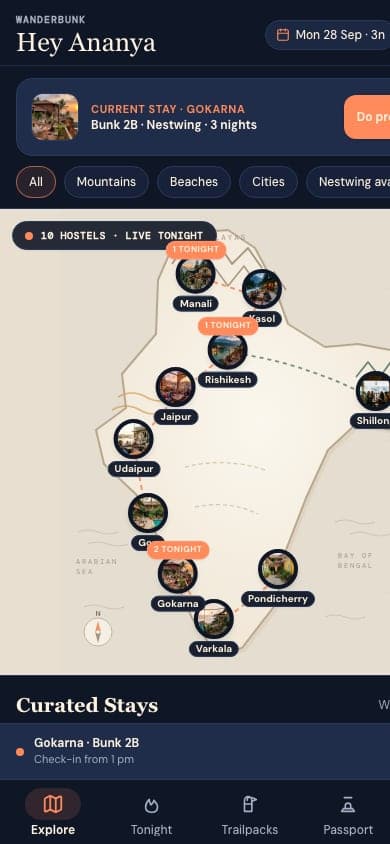
- Use a simple booking page with live bed availability, UPI payments and deposits; the travel booking website page explains what this includes, and our Wanderbunk concept shows a bunk picker and digital key.
- Hold an alumni WhatsApp community or broadcast list for off-season offers, workation weeks and event announcements; do not message without consent and always allow opt-out.
- Track the cost of each channel: commission, discount, and ad spend against the nights booked.
Read the homestay and hotel website guide for the direct-booking page basics, and the WhatsApp guide for sending messages without annoying guests.
Surviving the quiet months
Occupancy in hill, beach and desert towns can fall steeply for several months (monsoon, peak summer or post-season depending on the place). Plan for it before you open: a lower-price long-stay offer, college and corporate groups, themed workation weeks, a yoga or trekking retreat in partnership with an instructor, and tie-ups with local schools and sports clubs for short camps. Keep three months of rent aside and avoid cutting every price; cutting only weekdays or long stays protects your rate in busy weeks.
More on starting a hostel
- Start hereThe full playbook →Models, licences, startup costs and the steps to your first customer.
- Go deeperWhat to buy →Bunks, lockers, linen and safety kit costed per bed, plus what to skip until the beds fill.
- Go deeperWho to hire →Manager, housekeeping, night host and volunteers: order, ballpark pay and how to vet them.
Questions people ask
Which platforms should a new hostel list on first?
Start with Google Business Profile, one hostel-focused platform, Booking.com and your own booking page. Add MakeMyTrip, Goibibo, Agoda or Airbnb once you can reply quickly and you have a channel manager. Compare current commission, settlement and cancellation terms on each platform's partner page before signing.
How do I get my first ten guests?
Invite friends for the soft-launch nights, offer free stays to local travel creators in return for a reel, tie up with trek and activity operators, post in traveller communities, and put your Maps listing live before opening. Fix the dorms, bathroom and Wi-Fi before inviting anyone, or early reviews will hurt.
How should I price dorm beds at launch?
Check what nearby hostels charge for a similar bed on a weekday and a weekend, and price slightly below them. Small towns may start around ₹350–650 and busy beach or hill towns higher, which are estimates. Raise prices as reviews and occupancy improve, and add weekday and long-stay rates.
How do I reduce platform commissions?
Collect WhatsApp contacts at check-in, offer a perk for direct bookings and give group leaders a direct line. Add a booking page with live availability and UPI. Check each platform's rate-parity rules before discounting. Platforms still help for discovery, so aim to lower the share rather than leave them.
Do events really help fill a hostel?
They often lift length of stay and word of mouth, because solo travellers want a reason to meet people. Keep one signature event each week, track extra nights it causes and drop what does not. Always respect noise rules and local neighbours to avoid complaints.