Buy packing materials and crew tools first, and hire the vehicle trip by trip. A new mover needs roughly ₹60,000–1.5 lakh of materials and equipment for the first month of local household moves: corrugated boxes, bubble wrap, stretch film, furniture blankets, a few trolleys, straps and a basic toolkit. A truck of your own is the purchase that most often sinks a new mover.
All figures below are estimates for planning, not quotes. Prices move with city, season and how much you buy at once, so get two or three written wholesale rates before you commit.
The materials that touch the customer's belongings
Packing is where you are judged. A customer never sees your truck's engine, but they open every box. These are the items a household move uses up, and each one has a specific job.
| Material | What it protects | Estimated cost | Common mistake |
|---|---|---|---|
| Corrugated boxes, 3-ply and 5-ply, in three sizes | Books and crockery in small boxes, clothes and linen in large ones | ₹25–70 per box depending on ply and size | Reusing soft old boxes for heavy books; the bottom gives way on the stairs |
| Bubble wrap rolls (about 1 m wide) | Glassware, frames, TV screens, decor | ₹1,800–3,500 per roll | Wrapping once and taping loosely; fragile items need two layers and corners doubled |
| Stretch film (hand rolls, about 500 mm) | Sofa fabric, mattress covers, drawer fronts, bundling chairs | ₹250–450 per roll | Wrapping film directly on polished wood or leather, which can mark or trap moisture |
| Furniture blankets or quilted moving pads | Wardrobes, tables, sofas, refrigerators | ₹250–600 each | Too few; crews then stack hard furniture face to face |
| Corner protectors and edge guards | Table corners, glass tops, door edges | ₹5–20 each | Skipped entirely, then blamed on the crew |
| Brown packing tape and printed 'fragile' and 'this side up' tape | Box seals, labelling | ₹60–120 per roll | Cheap tape that splits in summer heat |
| Waterproof covers and cartons for TVs and monitors | Screens and electronics | ₹300–1,200 per carton | Moving a flat-screen upright in a soft sack, with no rigid backing |
| Wardrobe boxes with hanging rail | Clothes you want to arrive on hangers | ₹400–900 | Not offered, so customers pack suits into suitcases that crease |
| Labels, markers and a coloured room-code scheme | Fast unloading at the new home | ₹2,000–5,000 for the first stock | Writing 'kitchen' on only one side of the box |
A rough planning number: a 2-BHK move uses somewhere in the range of 40 to 70 boxes plus film, blankets and tape, which often costs ₹3,000–6,000 in materials per job. Build that into your quote rather than charging for it as a surprise extra.
Crew tools: the equipment that saves backs and sofas
Tools are cheap compared with a dented fridge or a crew member out with a back injury. Buy for the commonest jobs first: stairs, narrow lifts and heavy appliances.
| Tool | Use | Estimated cost |
|---|---|---|
| Four-wheel platform trolley (about 250 to 300 kg) | Moving boxes and loose furniture to the truck | ₹3,500–7,000 |
| Two-wheel hand truck with stair climber wheels | Refrigerators, washing machines, safes on steps | ₹5,000–12,000 |
| Appliance straps or lifting straps (pair) | Two-person lift of wardrobes and washing machines | ₹800–2,000 a pair |
| Ratchet tie-down straps | Lashing furniture and boxes inside the truck | ₹400–900 each |
| Screwdriver and spanner set, Allen keys, cordless drill, pliers | Dismantling beds, wardrobes and wall units; fitting them again | ₹3,000–9,000 |
| Zip bags and a small box for screws and fittings, labelled per item | Keeping every bolt with the right piece | ₹200–500 |
| Floor protection: carpet film, cardboard runners, door-frame guards | Stops scratches in the customer's building | ₹2,000–6,000 for a first set |
| Gloves, back support belts, non-slip shoes | Crew safety | ₹600–1,500 per person |
| Folding ladder | Taking down curtains, light fixtures, split AC outdoor units where the customer has an AC technician on site | ₹2,500–5,000 |
Uninstalling and reinstalling split ACs, geysers and chimney units is a specialist job in most cities. Many movers subcontract it to a technician rather than do it in-house. Decide that policy before you quote, not at the doorstep.
Vehicles: hire first, buy later
The usual first vehicle is not yours. Most small movers rent or attach vehicles per trip, pay the owner a trip rate, and keep the margin on packing and labour. Owning a truck ties up lakhs, adds EMI, driver salary, insurance, tyres and parking, and makes you responsible for the days the truck sits idle.
| Option | How it works | Typical cost | Best when |
|---|---|---|---|
| Hire a vehicle per trip from an owner-driver | Agree a trip or hourly rate for a mini-truck or 14 ft to 17 ft closed body | Rates vary by city and distance; budget within the range of a few thousand rupees for a local household trip (estimate) | You are starting out and volumes are uneven |
| Attach a vehicle on a monthly or per-job arrangement | An owner-driver is on call for your jobs with an agreed rate card | Negotiated per vehicle | Moves are steady and you want guaranteed availability on month-end |
| Buy a used closed-body truck | Light truck with a box body, typically 14 ft to 19 ft | ₹5–10 lakh used (estimate) | You have more than 25 to 30 moves a month and a reliable driver |
| Buy a new closed-body truck, often on a loan | Dealer chassis plus a body builder's box | ₹12–25 lakh (estimate, depends on size and body) | You already run a team and have contracts, not hope |
If you do buy, buy a closed body with a rear lift-gate or at least a ramp, floor anchor points for straps, and a wooden floor that can take plank bracing. An open pickup covered with tarpaulin is the cause of most rain and dust damage claims. Vehicle permits, fitness and insurance for goods carriage are covered in the main playbook; confirm locally with your RTO.
Insurance and paperwork you buy rather than build
Two kinds of cover matter. Vehicle insurance covers the truck. Goods-in-transit insurance, usually sold as a marine inland transit policy by general insurers, covers the customer's belongings during the move. Many movers either carry a standing policy or buy per move for higher-value consignments.
- Goods-in-transit policy: ask an insurer or a broker what is covered (fire, accident, theft, overturning) and what is excluded. Breakage from poor packing is often excluded or only partly covered, so confirm it in writing.
- Workmen's cover: crews lift for a living. Ask your broker about employee accident cover and what contractors count as employees. Rules vary; take advice.
- Printed documents: an inventory sheet with carbon copies, a consignment note, a damage report form and a signed delivery receipt. Printing 200 sets costs a few thousand rupees and settles most disputes before they start.
- Uniform and ID card: a branded t-shirt and a photo ID for each crew member. Customers let strangers into their homes more readily when they can verify who they are.
Insurance products, premiums and exclusions differ by insurer and change. Treat these as general pointers, check the policy wording, and confirm requirements with an insurance adviser. This is not insurance or legal advice.
Must-have on day one versus later
| Buy now | Buy once you have 20 to 30 moves a month | Do not buy yet |
|---|---|---|
| Boxes, bubble wrap, film, tape, blankets for the first two weeks of jobs | A second set of blankets and boxes so one crew can start while another is loading | A warehouse or godown lease |
| Two platform trolleys, one stair hand truck, straps and toolkit | Pallet jack and a small forklift if you offer storage | A fleet of owned trucks |
| Printed inventory sheets, uniforms, ID cards | Wardrobe boxes, TV cartons and crates for fragile items in bulk | Custom crates for pianos and antiques |
| Goods-in-transit cover for moves above an agreed value | A phone-based GPS tracker on each partner vehicle | A mobile app built from scratch |
Once the basics are running, software for packers and movers and how to hire a crew are the next two decisions. A clean first month costs less than fixing a bad one.
A first-month budget for a local mover
| Line | Small start (estimate) | Notes |
|---|---|---|
| Packing materials, first stock | ₹30,000–60,000 | Enough for about 10 to 15 household moves |
| Tools and trolleys | ₹20,000–50,000 | Two crews' worth if you can afford it |
| Uniforms, ID cards, safety gear | ₹10,000–25,000 | Per crew of 4 to 5 |
| Printed documents and branding | ₹5,000–15,000 | Inventory sheets, visiting cards, a banner for the van |
| Insurance (goods in transit) and permits | ₹10,000–40,000 | Depends on value insured and your vehicle plan |
| Working capital for vehicle hire and wages until customers pay | ₹60,000–1.5 lakh | Crews are paid on the day; customers often pay on delivery |
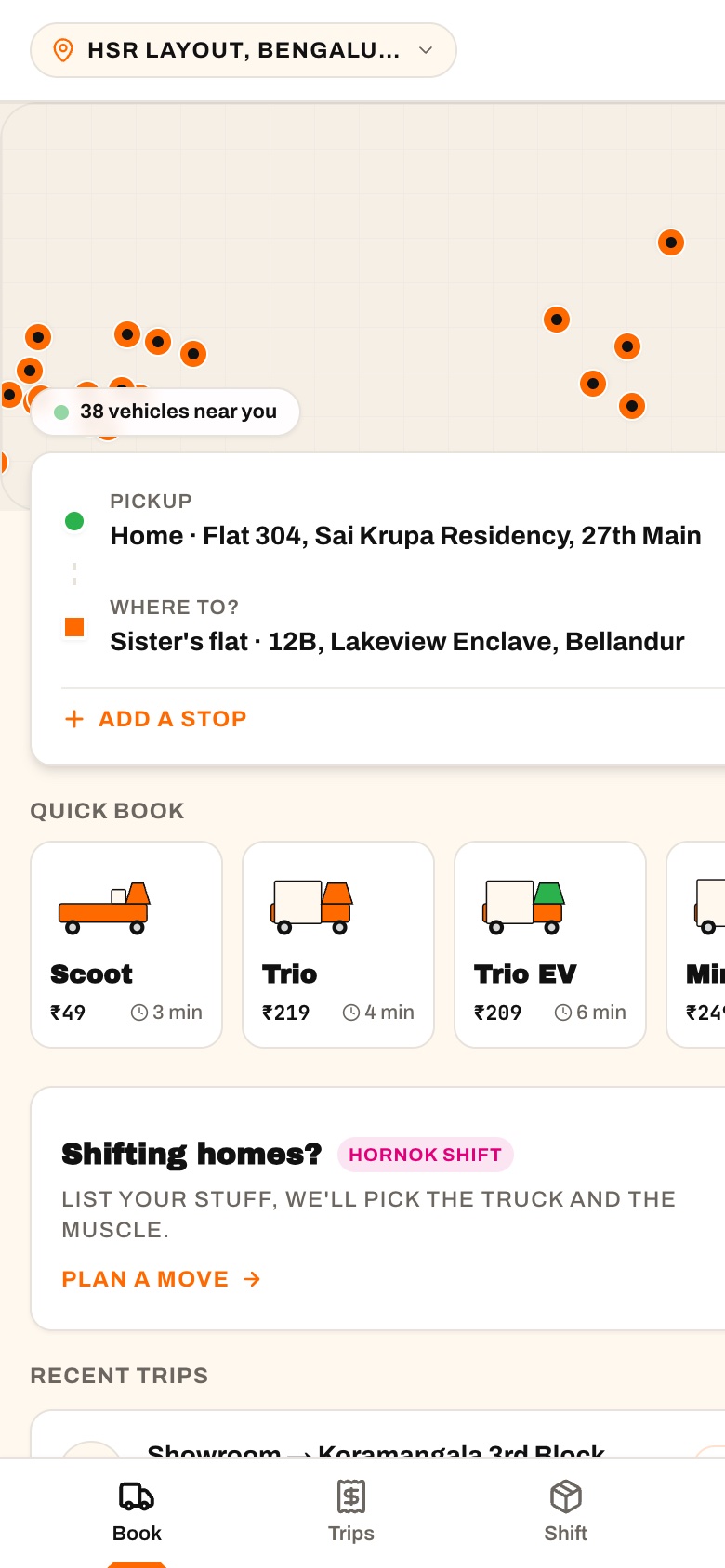
If you also plan a mini-truck-on-demand service, the vehicle and helper model is what our HornOK concept build explores. It is a useful reference for the booking flow even if you start with phone calls.
Paying for it
More on starting a packers and movers business
- Start hereThe full playbook →Models, licences, startup costs and the steps to your first customer.
- Go deeperWho to hire →Packers, loaders, supervisor, driver and estimator: hiring order, pay, vetting and contracts.
- Go deeperGetting customers →Maps, brokers, societies, corporate desks, launch pricing and review habits for movers.
- Go deeperFinding suppliers →Vehicle owners, partner movers in other cities and packing material suppliers: vetting and terms.
Questions people ask
How much does it cost to start a packers and movers business?
A small local mover using hired vehicles can start with about ₹1.5–3 lakh in estimated costs, covering packing materials, tools, uniforms, documents and working capital. Buying even one used closed-body truck adds ₹5–10 lakh or more. Registrations, permits and insurance are extra, so get quotes from your CA and insurer before you finalise the budget.
Should I buy a truck or hire vehicles when starting?
Hire first. A mover earns on packing and labour, and a truck is only profitable when it is booked most days. Hired and attached vehicles let you pay per trip and scale up for the month-end rush. Consider buying only after you have steady volume, a reliable driver and a clear picture of idle days.
How many boxes does a typical home move need?
A 1-BHK often needs roughly 20 to 40 boxes, a 2-BHK about 40 to 70 and a 3-BHK 70 to 120, plus film and blankets for furniture. These are rough planning numbers, not rules. A video or in-person survey is the only reliable way to count, and books and kitchen items push the number up quickly.
Do I need goods-in-transit insurance as a mover?
There is no single rule that applies to every mover, but carrying goods-in-transit cover is the common way to protect customers and your business from large claims. Insurers differ on what they cover, particularly breakage from packing. Ask an insurer or a broker for the policy wording and confirm requirements with your CA or an adviser. This is not legal advice.
What should I not buy in the first year?
Avoid a warehouse lease, a fleet of owned trucks, a forklift and a custom-built app until you have steady demand. Each ties up cash that is better spent on boxes, a second crew's tools and insurance. Rent storage by the month from a partner and use a shared sheet for scheduling until volume proves the need.