Get your first customers from the people who already see new pet owners: local vets, groomers, trainers, apartment-society pet groups and rescue volunteers. A pet owner picks a shop for trust and convenience, and a recommendation from their vet beats any advertisement. Then turn each first purchase into a monthly food reorder, because the food bag is the business.
The harder question is how a small shop holds its ground against online sellers on branded food. You do it by knowing pets and their owners by name, by delivering a heavy bag the same day, by keeping what they need in stock and by remembering when their food runs out. The rest of this page is a practical plan for the first 90 days. For the surrounding choices, see the pet shop playbook.
Who your customer actually is
Pet owners are not one segment. Their needs, budgets and habits differ so much that one flyer does not work for all.
| Customer | What they buy | How to reach them |
|---|---|---|
| New puppy or kitten parent | Starter food, bowls, a collar, a crate, a first vaccination-day carrier | Vets and breeders' referrals; be careful about breeders (see below); society groups |
| Long-term dog owner of a mid-size or large breed | 20 kg bags of food every 4–8 weeks, chews, grooming supplies | Home delivery and WhatsApp reminders; they care about price per kilo and brand loyalty |
| Cat parent in an apartment | Litter every few weeks, wet food, scratchers, tray | Apartment Facebook and WhatsApp groups; delivery is valued highly because litter is heavy |
| Rescuer or feeder of community animals | Bulk dry food, deworming advice referrals, bowls | Rescue groups, local volunteers, feeders' WhatsApp groups; a bulk price helps and generates goodwill |
| Fish keeper | Filter media, food, water conditioner, test kits | Hobby forums and aquarium clubs; only worth chasing if you stock the hardware |
The first ten customers
Do these in order. Each one costs time more than money, and each can be done before the shop looks perfect.
- Visit every vet within about 2 km. Bring a one-page list of the foods you stock and your delivery area. Ask what they usually recommend in puppy, adult and sensitive-stomach food and stock accordingly; this is the single best lead source. Never pay a vet a commission or offer a cut for recommending a product. It is awkward ethically and can damage trust.
- Groomers and trainers next. They see new owners the same week the dog arrives. Leave a few treat samples and cards. If a groomer sells shampoo, offer to supply instead of competing; see the pet grooming playbook.
- Apartment society and resident welfare groups. Offer a free same-day delivery for orders over a fixed amount to one building for the first month, and post in the pet-owners' WhatsApp group once, honestly, with your name and shop address. Groups tolerate one helpful post but not repeated promotions.
- Host a Sunday adoption or vaccination awareness drive with a local shelter or rescue group. Offer your frontage and a table; they bring dogs and cats that need homes. You get footfall and trust, and the animals get seen by real adopters. Take no fee and do not sell animals yourself.
- Sponsor a rescue's food bill for a month at cost. It earns goodwill and a regular bulk order and shows your priorities in a way that no advertisement can.
- Collect phone numbers at the billing counter, with permission, and note the pet's name, breed, age and food brand on the customer record. That single habit is what lets you remind a customer when the bag is nearly finished.
- Set up a Google Business Profile with a good photo of the shop, opening hours, delivery area and a link to a WhatsApp number. 'Pet shop near me' searches are very local; see the local SEO guide.
- Ask the first twenty buyers for a review, in person, and show them how. A new profile with 20 genuine reviews outranks an old one with three.
- Print a small leaflet for the vet's waiting room, with a QR code that opens WhatsApp with a prefilled 'Hi, I'd like to order dog food' message.
- Be at the park. Early-morning dog-walking circles in parks know every shop. Introduce yourself, give a sample, and listen to what they complain about in the nearby shops.
Launch pricing without wrecking the margin
Mainstream branded food has a printed MRP that online sellers discount. You will not win a price war on the biggest packs, and trying to will leave you with no margin. Compete elsewhere.
| Lever | How to use it | Rough effect (estimate) |
|---|---|---|
| Hold MRP on the biggest-name bags | Match small discounts only on the two or three items customers compare; the rest stay at MRP | Protects the margin, since these lines are often single-digit percentages |
| Better margins on accessories and treats | Put new owners' starter kits together at a bundle price: bowl, collar, leash, a small food pack and a toy | Accessories and treats usually carry a higher percentage than big food bags |
| Free local delivery above a threshold | Choose a threshold near the price of a mid-size bag so a delivery is always worth it | Costs you rider time; in return you capture the heavy, repeat items |
| Launch loyalty card or stamp | Every tenth bag of food or every fifth litter pack gets a small-pack gift | Cheaper than a discount and encourages repeat purchase |
| Bulk rescue price | A fixed, honest at-cost price on 20 kg bags to rescuers and feeders, with a limit | Low margin, good volume, strong word of mouth |
Avoid pricing games that confuse customers, such as a very low headline price on a small pack to pull people in to buy a bigger pack. Be clear on what you sell, at what weight, at what price per kilo.
Retention: the monthly food loop
A dog that eats 250 g of kibble a day finishes a 10 kg bag in about forty days. That arithmetic is your marketing plan. If you know the pet's food and daily amount, you know the day it runs out.
- Record the bag size and purchase date, then message the customer a few days before the estimated run-out date with 'Do you want us to send the same bag again?' It feels like service, not marketing.
- Offer a fixed-day monthly delivery to a building or lane, so the rider route becomes cheaper and you can plan stock.
- Keep a diet note for each pet: allergies, switch history and any vet-advised food. Remember it; online sellers will not.
- Warn before a brand or price change. If a distributor discontinues a pack, call your regulars before they arrive at an empty shelf.
- Handle returns kindly. A dog that rejects a bag should be an exchange for a smaller pack, not a debate. Opened food returns are your cost, but they keep a customer for years.
- Birthday and adoption-day notes. A small treat or free nail trim on the pet's 'gotcha day' costs little and gets shared in photos.
For the tools that do the reminding, see the software page. A WhatsApp-for-business setup covers catalogue, quick replies and order messages at no development cost.
Competing with online sellers and quick-commerce
Online marketplaces and quick-commerce apps offer large discounts on branded food and next-day or sub-hour delivery in many cities. A small shop cannot match every price, but it can win on five things.
- Advice. You can say which food suits a 7-year-old Labrador with itchy skin and why, or when a puppy should switch to adult food. An app cannot do that on the phone at 9 p.m.
- Authenticity and freshness. Buy from authorised distributors and show the manufacturing and expiry dates on request. Counterfeits, grey-market imports and near-expiry stock are real concerns in the sector.
- Speed on heavy items. Same-day delivery of litter and a 20 kg bag within 3 km is a genuine advantage.
- Flexibility. Part-pack sales, exchanges when a pet rejects food, and credit for regulars.
- Community. Weekend meet-ups, dog birthday events and shelter drives that no website can host.
Consider adding a small online store once repeat orders cross a level where a rider is busy every day; see what an ecommerce website covers and the ecommerce guide for India.
What to avoid doing to win business
- Never buy or sell animals to attract footfall. Selling pet animals needs registration with the State Animal Welfare Board, and unregistered trade can lead to sealing and confiscation. If anyone offers puppies, parakeets, tortoises or exotic species to display, decline. Many native Indian birds and reptiles are protected under wildlife law. This is general information, not legal advice; check your state board.
- Do not promise health outcomes. 'Cures skin allergy' or 'prevents ticks' is a medical claim; describe what the product is and let the vet advise.
- Do not pay for fake reviews. They are easy to spot and unethical.
- Do not spam residents' groups. One honest post is enough; repeated posts get you banned.
- Do not undercut local vets on medicines or give diagnosis at the counter.
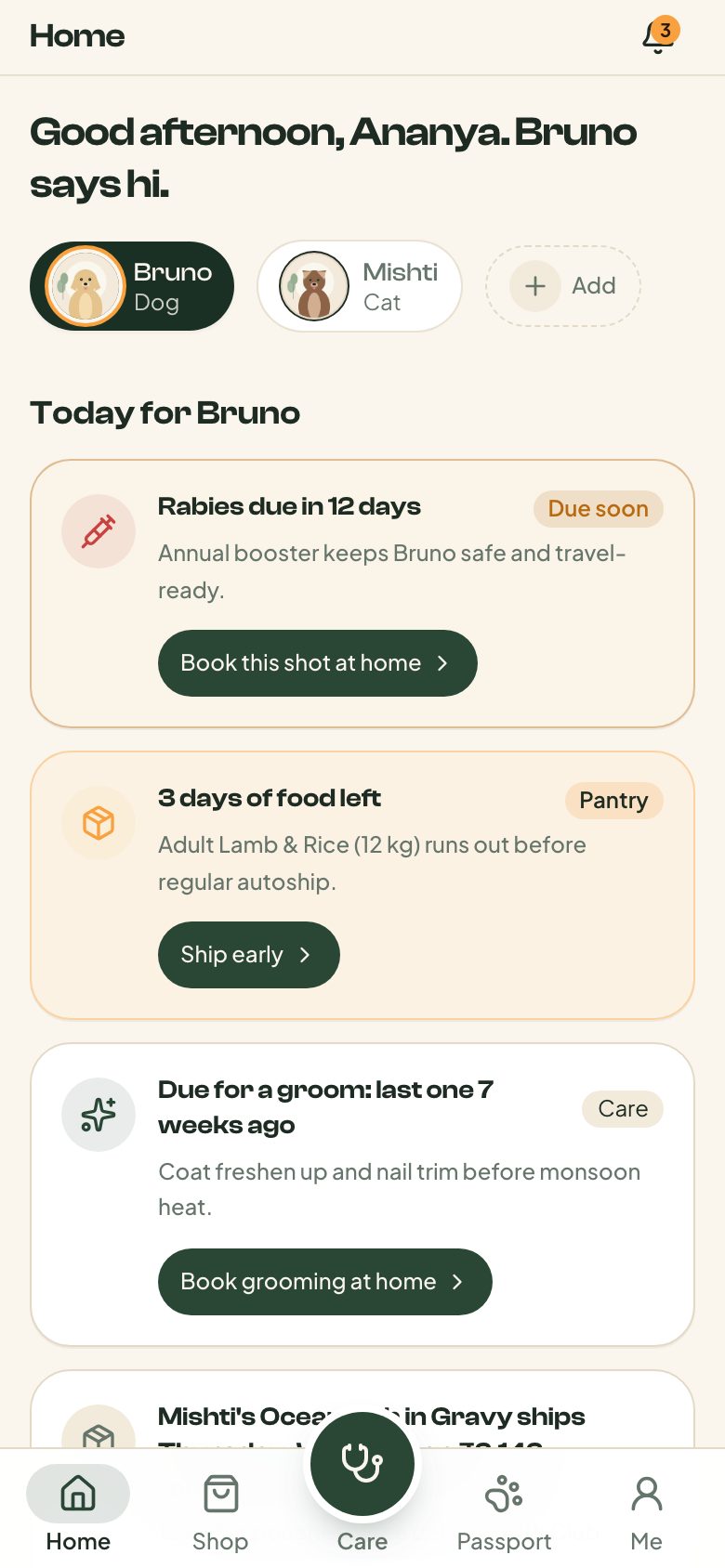
If you add a grooming or vet-visit line later, the same customer will use you for both. The Tailwise concept shows what a single pet profile across food, grooming and vet booking might look like.
More on starting a pet shop
- Start hereThe full playbook →Models, licences, startup costs and the steps to your first customer.
- Go deeperWhat to buy →Racking for heavy bags, billing, opening stock by category and the live-animal line you leave out.
- Go deeperFinding suppliers →Authorised food distributors, accessory wholesalers, credit terms, expiry returns and red flags.
Questions people ask
How do I get my first customers for a pet shop?
Start with vets, groomers and trainers within about 2 km, then apartment-society pet groups and rescue volunteers. New pet owners trust recommendations from people already caring for their animals. Offer delivery for heavy items, collect each customer's pet details with permission and remind them before their food runs out. A well-kept Google Business Profile with genuine reviews supports all of it.
Can a small pet shop compete with online discounts?
Yes, but not on price alone. Compete on advice, authentic fresh stock, same-day delivery of heavy items, flexible exchanges and community. Hold small discounts on the two or three brands customers compare and earn your margin on accessories, treats and bundles. Online sellers cannot call a customer when their dog's bag is nearly finished, but you can.
Is it ethical to give vets a commission for recommending my shop?
No. Paying commission for recommendations is awkward and can damage trust with customers and vets. A better approach is to supply a vet's clinic at fair prices, keep what they recommend in stock, deliver quickly and be reliable. Referrals then follow because your shop is useful and honest, not because anyone is paid.
Should I host an adoption drive at my shop?
Yes, if you work with a genuine shelter or rescue group. Offer your space for a weekend, take no fee and sell no animals yourself. Adopters visit, rescuers gain exposure and you earn trust and footfall. Ask the group about their screening process and keep the shop clean, with water bowls for the animals and a quiet corner.
How do I make customers reorder food every month?
Note the bag size, the date and the pet's daily amount at billing, estimate the run-out date and message the customer a few days before. A 250 g-a-day dog finishes a 10 kg bag in about 40 days. Offer a fixed delivery day for a lane or building. Reminders feel like service, so they are welcomed rather than ignored.