Most physiotherapy patients come from three places: a doctor who tells them to go, a friend or family member, and a local Google search at the moment they are in pain. Start with doctors and Google, add gyms and offices, and spend your energy on getting patients to finish their plan.
Health advertising rules in India restrict claims about cures and results, and the rules differ for ads and testimonials. Do not promise outcomes, do not publish patient photos without written consent, and confirm what applies to you with the regulator or a lawyer. This is general information, not legal advice.
Who comes through the door, and why they pick you
| Patient type | How they find a clinic | What decides it |
|---|---|---|
| Post-surgery (knee, hip, shoulder, spine) | Surgeon or hospital discharge advice | Surgeon's trust, location, a clear protocol, ability to send updates |
| Back and neck pain from desk work | Google, colleagues, HR | Evening and weekend slots, close to work, packaged sessions |
| Sports injuries | Coach, gym trainer, academy | Sport-specific experience, speed of appointment |
| Seniors and balance concerns | Family members, GP, neighbours | Home visits or ground-floor access, patient manner, family updates |
| Women's health, pre and post-natal | Gynaecologist, mothers' groups | Privacy, a woman therapist if asked, and a calm environment |
| Paediatric and neuro rehab | Specialist referral, parent groups | Specialty training and long-term plans |
Choose one or two groups to be known for, not six. A clinic that is clearly the one for desk-related back pain or for post-knee-replacement rehab is easier to refer to than a general practice.
Referral relationships: the slow channel that compounds
Orthopaedic surgeons, GPs, sports physicians, neurologists and gynaecologists send most of the patients a clinic keeps. They send them to someone who answers calls, sees people fast and sends back a short, clear note.
- Visit in person. Take a one-page sheet: who you are, your registration details, what you treat, hours, how to refer, and how you will report back. Go during a quiet time of day, not clinic rush.
- Send progress notes. A short note after the first assessment and at discharge, with the patient's consent, makes you easy to refer to. Keep it clinical and factual.
- Respect the doctor's plan. If the surgeon wants a specific protocol, follow it or call to discuss changes. Do not undermine the referrer.
- Return the patient. When someone needs a scan or a medical review, send them back with a note. That is what builds trust.
- Never pay for referrals. Payments or gifts for referrals are ethically and legally fraught; ask your council or a lawyer about what is acceptable.
The rules on what medical professionals may do in return for referrals are strict and differ by body. Do not offer commissions or kickbacks. Confirm with your state council or a lawyer.
Gyms, academies, offices and communities
- Gyms and studios: offer a monthly injury-screening day, staffed by your therapist, for members. Do not poach their trainers' clients; make it easy for trainers to send a hurt member to you and welcome them back.
- Sports academies and school teams: cricket, badminton, football and athletics coaches see injuries first. A taping or warm-up session for the team gets coaches to remember you.
- Offices and coworking spaces: a 30-minute desk-posture talk with simple stretches, offered free through HR. Avoid selling during the talk; leave a card with booking details.
- Housing societies and resident welfare groups: a senior balance or back-care session in the community hall brings family referrals.
- Yoga and Pilates studios: instructors often meet pain they are not trained to treat; a friendly referral loop helps both of you.
- Doctors' clinics without in-house rehab: a visiting-therapist arrangement can seed referrals, as long as the room and arrangement meet local rules.
Keep a one-page tracker of every partner: who, when you visited, what you agreed and when you will follow up. It is what separates a clinic with a referral network from one with a pile of business cards.
Google, WhatsApp and a website that converts
Someone searching 'physiotherapy near me' for a stiff neck decides within a minute. A clear Google Business Profile and a simple site win that minute.
- Google Business Profile: exact name, specialisation, timings, a map pin, photos of the clinic and treatment space without patients in them, and fees if you are comfortable listing them. Follow the local SEO guide.
- Services pages: one per condition group you want, for example back pain, knee rehab and sports injuries, each with who you see, how a first visit works and how to book. Avoid cure claims and before-and-after photos.
- WhatsApp Business: a catalogue of services, a greeting message and quick replies for timings, fees and directions. See our note on WhatsApp for business.
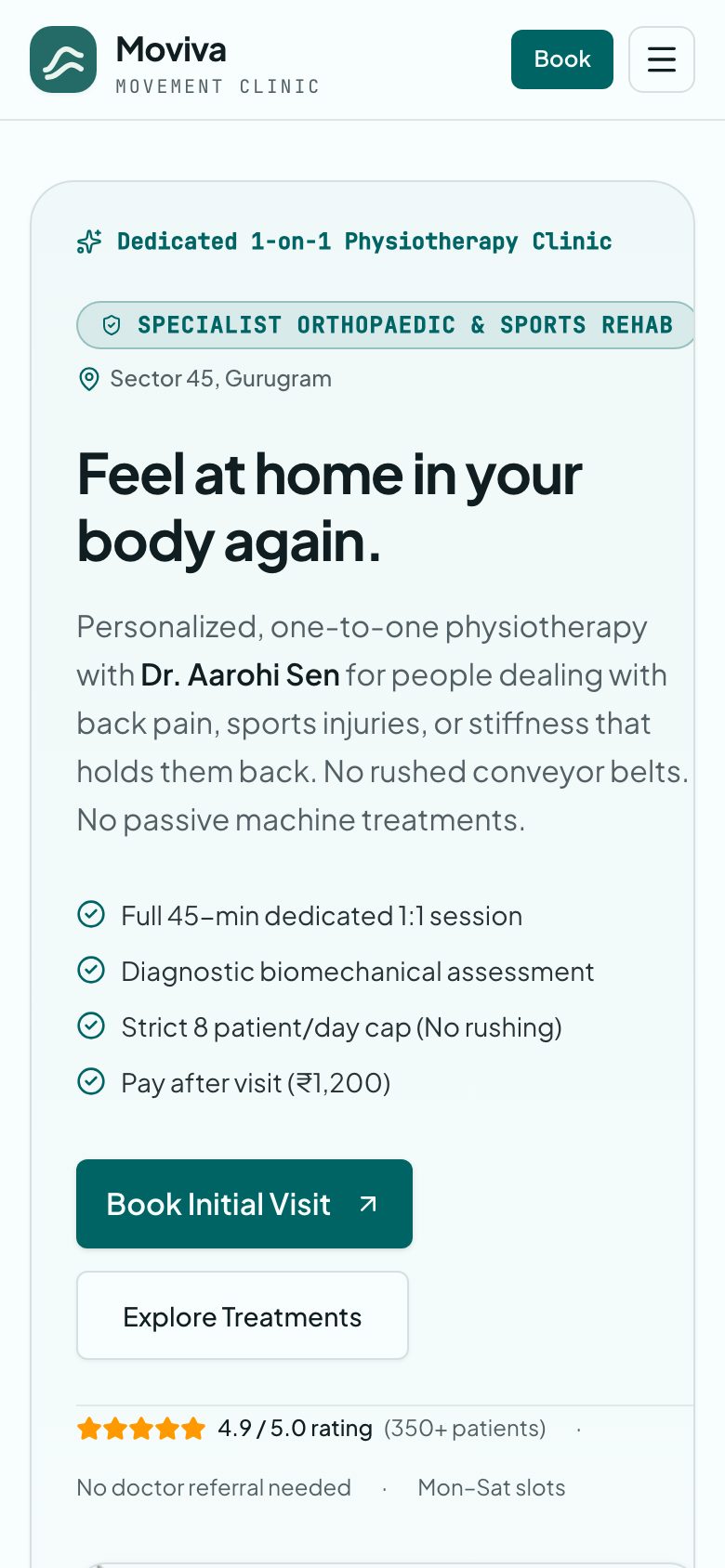
- Online booking: a slot picker that lets patients book without calling. Our concept build Moviva shows what a single-clinic version looks like.
- Local-language content: a short Hindi, Marathi, Tamil or other local-language page can matter more than another English blog post.
Ads can work for a clinic with a clear speciality, but only after the booking path is smooth. Test a small budget on 'back pain physiotherapy near [locality]', measure bookings not clicks, and stop if the cost per completed first visit does not make sense.
The first ten patients, step by step
- Weeks before opening: visit ten doctors and five gyms or academies within 3 km. Book the introductory talks.
- Week of opening: ask family and friends to refer anyone with a genuine need, not to pose as patients.
- Week one: run a desk-posture or injury-screening session at one office and one gym.
- Week two: send the first progress notes to referring doctors, then call to ask what they would like to see in future.
- Week three: ask for honest feedback from early patients and fix anything they flag, such as waiting time or booking confusion.
- Week four: review which channel brought which patient, and double down on one.
Count patients who book a second visit, not just a first. Ten first visits with two repeats means the clinic has a retention problem, not a marketing problem.
Launch pricing and package design
| Offer | Typical shape (estimate) | Why it works |
|---|---|---|
| Initial assessment | ₹500–1,500 depending on city and therapist | Pays for the longer first visit; some clinics credit it against a package |
| Single session | ₹500–1,500 | For a one-off issue; discourages dropout only if there is a clear next step |
| Package of 6, 10 or 12 sessions | 10–15 per cent below the single-session rate | Matches common treatment plans; paid upfront by UPI |
| Senior or group class | ₹300–800 per head per session | Fills quiet hours; shares the therapist's time across patients |
| Corporate or society tie-up | Negotiated rate for a batch | Steady footfall at off-peak hours |
Put the plan in writing at the end of the assessment, with the number of sessions suggested, price, validity and the reschedule rule. Never pressure someone into a bigger package than they need; a patient who feels sold to rarely refers anyone.
Retention: getting people to finish the plan
- Explain the why. At the end of session one, tell the patient what the plan aims to do, how long it will take and what could change it.
- Reminders. A WhatsApp or SMS the day before and two hours before; a one-tap reschedule link.
- Home exercises. Short videos or printed sheets, kept to three to five exercises. Check them at the next visit.
- Track simple measures such as pain score, range of movement and function at each visit; show them to the patient so improvement or plateau is visible.
- Follow-up after discharge. A check-in at two weeks and six weeks. It prevents relapse stories and gives you a reason to message.
- Waiting list. When a patient cancels late, call the next person; patients notice when a clinic is organised.
Most of the follow-up above sits comfortably in a booking and records tool. Keep patient information secure; the DPDP Act checklist explains consent and storage basics. For wider launch tactics, see first users after launch.
More on starting a physiotherapy clinic
- Start hereThe full playbook →Models, licences, startup costs and the steps to your first customer.
- Go deeperWhat to buy →Couches, electrotherapy, exercise gear and hygiene kit, costed, with what to hold off buying.
- Go deeperWho to hire →Hiring order, pay ballparks, vetting and contracts for a physiotherapy clinic team.
Questions people ask
How does a new physiotherapy clinic get its first patients?
Most early patients come from doctor referrals, gym and academy partnerships, office talks and a well-set Google Business Profile. Visit doctors in person with a one-page sheet, run a free posture or screening session, and make booking easy. Ask early patients for honest feedback and fix what they raise before spending on ads.
Can a physiotherapy clinic advertise in India?
Health advertising is regulated, and the rules differ for clinics, therapists and testimonials. Avoid claims of cure or guaranteed results, and avoid patient photos without written consent. Ask your state council or a lawyer what applies to you. Informational posts, timings, services and honest descriptions of how a first visit works are the safest content.
How should I price physiotherapy sessions?
Look at what clinics around you charge for an assessment and for a session, then set packages of six, ten or twelve sessions at a modest discount, paid upfront. As an estimate, sessions often sit between ₹500 and ₹1,500, depending on the city. Price must cover rent, salary and unpaid slots, so work it out from capacity.
How do I stop patients dropping out after a few sessions?
Explain the plan clearly at the first visit, send reminders with a one-tap reschedule link, give short home exercises and show progress numbers at each visit. Packages paid upfront help, but only if patients feel the plan is working. Follow up after discharge to reduce relapse and keep the relationship warm.
Are online reviews important for a physiotherapy clinic?
Yes, because people check Google reviews before booking, but ask only for honest reviews and never pay for them. Share the review link after discharge, and reply politely to criticism without disclosing patient details. Do not promise results in your replies. A steady trickle of genuine reviews beats a sudden burst.