A one-therapist clinic can run on a shared calendar, a spreadsheet of packages and a WhatsApp Business account. Move to clinic software when you have two or more therapists, repeat packages to track or notes you need to find quickly. Build custom only if your workflow does not fit any off-the-shelf tool.
Patient records are sensitive personal data. Whatever you use, know where the data is stored, who can see it and how it is exported. Confirm what the law requires with a professional; the DPDP Act checklist is a good place to start.
What the software has to do, in the order a patient meets it
| Moment | Software job | What goes wrong without it |
|---|---|---|
| Booking | Show real slots by therapist; no double-booking | Phone tag, empty slots, overlap with a gym or house call |
| Reminder | WhatsApp or SMS the day before and the same morning | No-shows; the next slot stays empty |
| Check-in and consent | Capture history, consent and contact details once | Repeated forms and lost paper |
| Session notes | Pain scores, range of movement, treatment given, plan | Illegible notes; nothing to show a referring doctor |
| Exercise programme | Send exercises with video or pictures to the patient | Patients forget what to do at home |
| Package tracking | Sessions bought, used, remaining and expiry | Disputes and free sessions |
| Billing and receipts | GST-compliant where it applies, UPI links, receipts | Late payment; scattered receipts |
| Reports | Sessions per therapist, repeat rate, drop-off point, revenue | Guesswork about what is working |
The sheet-and-calendar setup, and where it breaks
Start with the cheapest tools that work. A shared calendar per therapist, one spreadsheet tab for patients and packages, a second for sessions, a printed or WhatsApp consent form, and Google Forms for intake covers a solo clinic.
- Calendar: one calendar per therapist and per room or machine. Colour-code first visits and follow-ups. Share a booking page link where possible.
- Sheet columns: patient, phone, referring doctor, complaint, package bought, price, amount paid, sessions used, expiry, next visit.
- Reminders: a WhatsApp Business broadcast list or message templates, sent by the coordinator. Reply templates for fees and directions.
- Notes: paper files in a lockable cupboard, or a shared folder with a clear naming rule and restricted access.
It breaks when two therapists need the same sheet, when you want to see which patients stopped after session three, when a patient asks for last year's notes or when someone leaves and takes a phone full of WhatsApp history. That is your cue to move to a clinic tool.
Do not store patient notes in personal WhatsApp chats or on staff phones. Use a shared, access-controlled place, and tell staff what they may and may not share.
Off-the-shelf clinic software: what to look for
Several categories of tool cover parts of the job. Compare them on the tasks above rather than on the number of features. Pricing changes often and I have not verified current plans, so take quotes and trials.
| Category | Covers | Check before choosing |
|---|---|---|
| Clinic management or EMR for outpatients | Appointments, patient records, billing, reminders | Does it handle physiotherapy-style notes, packages and multiple therapists? Can you export data? |
| Booking-only tools | Slot picker, calendar sync, reminders | No-login reschedule; cancellation rules; WhatsApp reminders |
| Exercise-prescription tools | Video libraries, programme builder, patient app or link | Languages; ability to add your own videos; patient access without a download |
| Billing and accounting software | Invoices, receipts, GST where applicable, UPI links | Whether it matches your invoice format and your CA's workflow; see the GST billing guide |
| WhatsApp Business | Catalogue, quick replies, labels | Use as a front door, not a record system |
| Telehealth or video-call tools | Remote check-ins and tele-rehab | Consent, recording policy and the rules that apply to tele-consultation, which I have not verified |
- Run a real week in the trial: enter five patients, book a package, send a reminder, write a note and issue a receipt.
- Ask where data lives, who can see it, how to export it and what happens if you leave.
- Ask about support in your time zone and language, and what happens when the internet goes down in the clinic.
- Check mobile use: therapists often write notes standing beside a couch, on a phone or tablet.
- Check permissions: the coordinator should see schedules and billing, not clinical notes unless you decide so.
Exercise programmes, tele-rehab and patient communication
Clinics lose results when patients do not do their home exercises. The software question is practical: can a patient open the programme without downloading an app or remembering a login?
- Short videos in the patient's language, recorded by your own therapists on a phone, usually beat a generic library. Keep each under two minutes and show one exercise at a time.
- Written steps with sets and repetitions in large print, for seniors who print instead of watching.
- A link, not an app, that opens on any phone. Use it for appointment confirmation, reschedule and the exercise page.
- Tele-rehab check-ins for follow-up visits are convenient, but they are a clinical decision. Agree on consent, privacy of the call and what you will not do remotely.
- Feedback loop: a one-tap 'did the exercises hurt?' response that flags the therapist before the next visit.
Billing, packages and GST questions
Package accounting is where a physiotherapy clinic differs from most clinics. A patient pays for ten sessions, uses six and returns after a month. The software has to show sessions bought, used and left, and what happens on expiry.
- Track packages as liabilities. Money received for sessions not yet delivered is not the same as revenue earned; your CA will tell you how to treat it.
- Issue a receipt per payment and a per-session record, so disputes end with a lookup rather than an argument.
- Know your GST position. Healthcare services from clinical establishments and some practitioners are often exempt, but fitness or wellness-type offerings can be treated differently, and rulings vary. This is general information; confirm with a CA.
- UPI collection links and QR codes at the desk cut cash handling; reconcile them daily.
- Insurance and TPA: if you plan to accept cashless insurance, ask each insurer and the software vendor what is required; I have not verified the process.
When a custom build pays, and what it would cover
Custom software starts to pay when your workflow is the product: multiple branches with shared patients, a home-visit team routed by location, a rehab programme sold as a subscription, or an integration with your own exercise videos and a payer you work with often. For a single clinic, a custom build is rarely cheaper than a monthly subscription over the first couple of years.
| Trigger | What a custom piece would handle |
|---|---|
| Three or more branches or a franchise | Shared patient records, role-based access, central reports |
| Home-visit physiotherapists | Route planning, check-in with location, visit notes, visit-based billing |
| Subscription rehab programmes | Enrolment, recurring payments, progress tracking and renewals |
| Your own content and brand | A patient page with your exercise videos and notes in several languages |
| A particular payer or employer tie-up | Eligibility, authorisation and claim steps specific to them |
Ask any developer for a written scope, data-ownership terms, security approach, hosting location and a maintenance price. The clinic appointment software guide and the app maintenance cost note explain what to check.
A concept to look at: Moviva
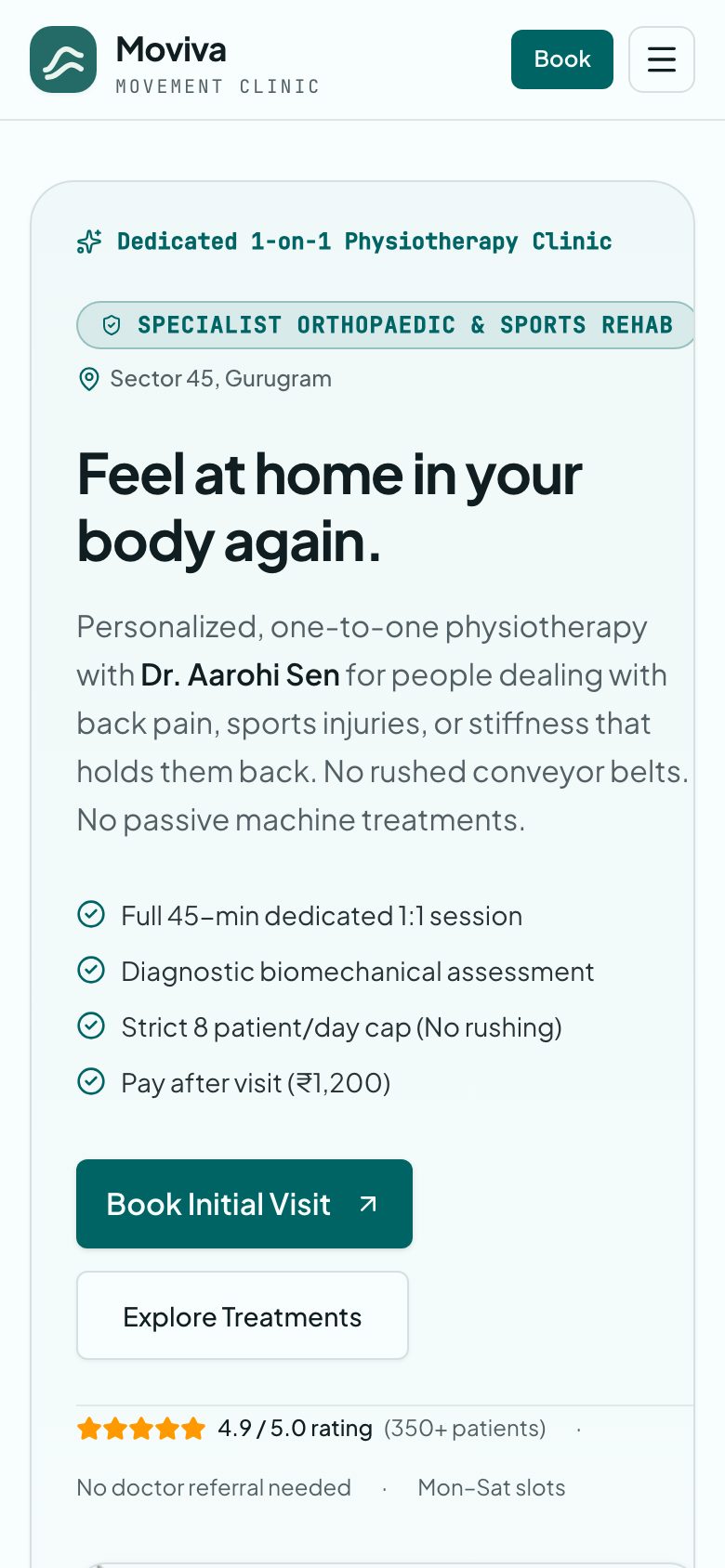
We built Moviva as a concept for a single physiotherapist's clinic. It has an instant slot picker that blocks double-booking, links to reschedule or cancel without logging in, a patient page with posture notes and personalised exercise videos, and a clinician desk for availability and blackout dates. You can open it at moviva.thesaral.com.
It is a concept for one practitioner. It is not a full clinic system: it does not claim to cover multi-therapist billing, GST invoicing, insurance claims or full clinical records. Use it as a reference for how booking and exercise sharing can feel to a patient.
If you want something like it adapted to your clinic, The Saral can scope a doctor appointment app or a business website with a booking page and quote it after a short brief.
More on starting a physiotherapy clinic
- Start hereThe full playbook →Models, licences, startup costs and the steps to your first customer.
- Go deeperWhat to buy →Couches, electrotherapy, exercise gear and hygiene kit, costed, with what to hold off buying.
- Go deeperWho to hire →Hiring order, pay ballparks, vetting and contracts for a physiotherapy clinic team.
- Go deeperGetting customers →Referral, gym, office and Google channels, your first 10 patients, launch pricing and retention.
Questions people ask
Can a small physiotherapy clinic run on spreadsheets?
Yes, a solo clinic can run on a shared calendar, a sheet for patients and packages, and WhatsApp Business. It starts to strain when you add a second therapist, need to find old notes quickly or want to see where patients drop off. Then choose a clinic tool with package tracking and exportable records.
What features matter most in physiotherapy clinic software?
Booking without double-booking, automated reminders, package tracking, session notes you can find quickly, exercise sharing by link and receipts. Reports on repeat rate and drop-off are useful too. Many general clinic tools handle appointments well but handle packages and exercise programmes poorly, so test those during a trial.
Is patient data in clinic software protected by law in India?
Patient data is sensitive personal data, and India's data protection law places duties on those who process it. Confirm what applies to your clinic with a lawyer. In practice: collect consent, limit access by role, keep backups, know where data is stored and avoid keeping records in personal chat apps. Our DPDP checklist covers the basics.
Do I need a custom app for my physiotherapy clinic?
Usually not. A single clinic can run well on off-the-shelf software and a good booking page. Custom starts to pay for multi-branch chains, home-visit networks, subscription rehab programmes or specialised payer integrations. Get a written scope and fixed quote, and compare it against a few years of subscription fees.
How should I send exercises to patients?
Send a link that opens on any phone, with one or two short videos in the patient's language and a printable sheet for those who prefer paper. Keep to three to five exercises, with sets and repetitions in plain words. Check what the patient did at the next visit. Avoid apps that need downloads or logins for seniors.