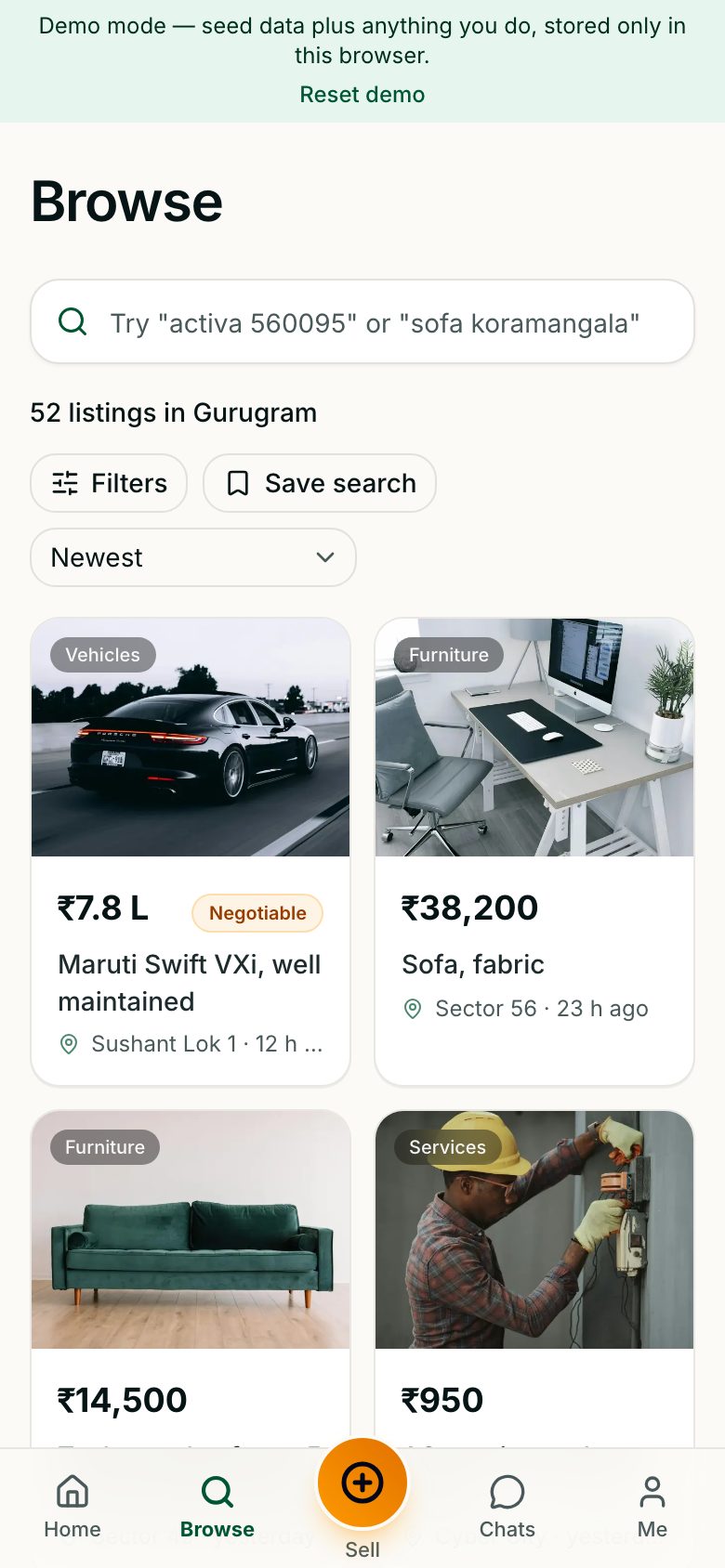
A resale business has two customers, not one: the people who sell you goods and the people who buy them. Start by winning sellers in a few housing societies and buyers among tenants and students nearby, then use real photos, a short warranty and fast WhatsApp replies to turn each sale into the next lead.
Expect the first ten sales to come from your own network, local community groups and one or two movers or landlords who send leads. Paid ads rarely pay back at low prices per item. Trust and speed do, so a clear grade, a visible flaw and a promised pickup time are your best marketing.
Two audiences, two different pitches
Sellers want money quickly, no haggling with strangers and the item gone before a move or a lease end. Buyers want a working item, a fair price and someone to blame if it fails. Your messaging must speak to each separately.
| Audience | What they worry about | What to promise |
|---|---|---|
| Sellers (families moving, expats leaving, offices refreshing) | Strangers visiting the home, bargaining, no-shows, being underpaid | A quote on photos within hours, a fixed pickup slot, payment by UPI at pickup |
| Buyers (tenants, students, first-time households) | A dead fridge, hidden damage, being cheated, no delivery | Graded condition, a short testing warranty, delivery and fitting where possible |
| Bulk sellers (PGs, hostels, offices, landlords) | Volume to clear on a deadline | A single quote for the lot, own labour, a collection date |
Channels that work for local resale
- Housing society groups on WhatsApp and Facebook. Join, read the rules (many groups ban business posts), then ask the admin to allow a monthly post or post only when someone asks. A flat in a society where you already sold something is a warm lead.
- Moving-season targets. Rental flat turnover peaks in the summer and again around the academic year. Offer departing tenants a same-day quote so they do not list on a classifieds site and wait.
- Property brokers and landlords. Brokers who place tenants know who needs a bed, fridge and washer on day one. Offer a referral fee per completed sale and a ready-to-move starter set for new tenants.
- PG and hostel owners. They refurbish rooms in batches and often sell old cots, tables and mattresses in lots. They also buy.
- Offices and coworking spaces. Chairs, desks, monitors and cabinets from office closures or upgrades. One good contact can fill your godown.
- WhatsApp Business. A catalogue with price, grade and size, labels like Sold or Reserved, and a broadcast list of buyers who asked for a category. See WhatsApp for business.
- Instagram and Reels. Before-and-after cleaning clips and short walk-arounds of a sofa or fridge draw local buyers and followers.
- Classifieds and resale platforms. Use them for reach on higher-value items, but read each platform's terms on dealers and posting before relying on them. See our marketplace guide.
- Google Business Profile. Once you have a shop-front or a godown people can visit, a verified profile helps; see the local SEO guide.
Your first 10 sales, step by step
- Tell 30 people you know that you buy and sell used furniture and appliances, naming the exact categories.
- Buy three to five items from sellers near you and prepare them well.
- Photograph and post them to your WhatsApp status, two nearby society groups where allowed, and a classifieds listing.
- Reply to every query within an hour with the grade, age, model and flaws.
- Offer a short testing warranty on appliances, for example 7 to 15 days, and write exactly what it covers.
- Deliver or arrange pickup and ask for a photo of the item installed; with permission, use it as proof.
- After each sale, ask the buyer whether they know someone selling or moving; offer a small credit or cash referral.
- Record who bought and sold in your sheet so you can message them when new stock arrives or when they move again.
Grading and pricing in public: your trust tools
Used goods have no fixed price, so a visible grading scale does the work a brand does for new goods. Keep it short and the same across every listing.
| Grade | What it means | Typical price against local used market (estimate) |
|---|---|---|
| A | Works perfectly, minimal wear, cleaned and tested | At or slightly above the median asking price |
| B | Works, visible cosmetic wear, minor repairs done | Around 10-25% below the grade A price |
| C | Works with a stated fault or heavy wear; sold as-is | Around 25-45% below the grade A price |
Start prices from what comparable units actually sold for, not from asking prices on classifieds. Add your cleaning, repair, transport and storage cost, then your margin. A common first rule is to aim for a margin of roughly a quarter to a third of the selling price on mid-range items and to accept thinner margins on fast movers. Treat these as starting points and check them against your own spreadsheet within a month.
Offer a written condition note and a short warranty only on what you test. Do not promise lifespan, safety or performance outcomes, and keep a copy of what each buyer was told.
Launch pricing and offers that do not hurt margin
- Starter sets for tenants. A bed, mattress, fridge and washing machine bundled with delivery, at a bundle price lower than the sum of parts. Bundles lift order value and clear slow items.
- Aged-stock markdowns. Drop price in steps: after two weeks, after four, and after six move the item to a clearance lot or sell to another dealer.
- Price after delivery, not before. Quote the item and delivery separately so buyers see what they pay for and you recover transport costs.
- Refer-a-seller credits. Pay a small fixed fee only after the referred item is purchased.
- No unconditional free delivery. Bundle delivery into a minimum basket or a radius.
Safe deals: protect buyers, sellers and yourself
Fake payment screenshots, stolen goods and last-minute no-shows are routine in used-goods trade. A few habits remove most of them.
- Confirm payment in your own bank or UPI app, never from a screenshot.
- Record the seller's name, phone number, address and a photo ID for every purchase, and keep it.
- Buy electronics only with proof of ownership such as a bill or box; log serial or IMEI numbers.
- Deliver and collect cash or UPI at the door, with a short delivery receipt signed or confirmed on WhatsApp.
- Never ask a stranger to pay an advance to a personal account for a hold on goods you do not yet have.
If you later accept payments online or store seller and buyer data in an app, read our notes on UPI in your app and the DPDP checklist.
Retention: why people come back to a used-goods dealer
Most households sell and buy again within two to three years, usually when they move. A business that remembers them wins the next cycle.
- Message past sellers a few months later: "Are you moving? We can quote in an hour."
- Message past buyers when they might upgrade or move: "Selling your old washer? We buy."
- Offer trade-in credit toward a better item.
- Honour the testing warranty promptly; one clean fix is worth ten ads.
- Keep a simple list of repeat buyers by category and send them new arrivals before posting publicly.
Read the second-hand goods playbook for models and registrations, and what to buy for the kit that makes your grade claims true. When your catalogue outgrows WhatsApp, see the software page and our first users after launch notes.
More on starting a second-hand goods business
- Start hereThe full playbook →Models, licences, startup costs and the steps to your first customer.
- Go deeperWhat to buy →Testing tools, cleaning kit, pickup vehicle and the first stock, costed, plus what to skip.
- Go deeperFinding suppliers →Movers, brokers, offices, auctions and buy-back: where used stock comes from and how to vet it.
Questions people ask
How do I find people who will sell me used goods regularly?
Build relationships with brokers, landlords, PG owners, movers and office managers, since they clear goods in batches and often. Join society groups and respond fast when someone posts a move-out sale. Give a fair quote on photos within hours and pay by UPI at pickup. Sellers return when you are reliable, not only when you pay the most.
Should I advertise on Instagram or Facebook for used furniture?
Organic posts are a better start than paid ads. Short videos showing cleaning, grading and testing earn local attention for free. Paid ads can work for higher-value items or a launch offer, but test with a small daily budget and track cost per enquiry and per sale against margin. Many resale items have margins too thin to carry heavy ad spend.
Do I have to offer a warranty on used goods?
No law is being cited here, but a short written testing warranty is the best trust signal you can give and is the main reason buyers choose a dealer over a stranger. Keep it narrow, for example 7 to 15 days on function, and state what is excluded. Confirm consumer-protection obligations locally; this is not legal advice.
How should I price a used fridge or sofa?
Check what similar items actually sold for locally, not their asking price, then adjust for grade, age and brand. Add your costs for cleaning, repair, pickup, storage and a margin. Review prices every two weeks and mark down aged stock in steps. Ballpark figures only; every city and season differs, so keep your own price log.
Is it worth listing on classifieds sites as well as WhatsApp?
Yes for reach on higher-value items, but treat them as a lead source, not your base. Read each platform's rules for dealers, as some limit business listings, and keep your own WhatsApp list and records so you do not depend on one platform. Move serious buyers to chat or call quickly and verify payment yourself.