A spa needs one scheduling tool that books a room, a therapist and a time together, plus GST billing, prepaid packages and WhatsApp reminders. A shared calendar and a billing app cover a one or two room spa; a salon-and-spa management app suits four to eight rooms; custom software pays only for multi-branch or unusual models.
This page covers tools for lawful relaxation and body-care operations. Client intake data can include sensitive details such as pregnancy or allergies, so privacy matters; read the DPDP checklist. Operations are in the spa starting guide.
What a spa actually has to schedule
A spa booking has three resources that must line up: a room (some are wet, some are couples suites), a therapist (with certificates for particular treatments and a gender preference some clients request) and a time slot with buffers for room reset. A plain calendar handles only the time, which is why double-booking creeps in.
| Need | What the tool must do | What goes wrong without it |
|---|---|---|
| Room and therapist booking | Block a room and a therapist for treatment time plus 10–15 minutes of reset | Two clients arrive for one wet room |
| Treatment durations and add-ons | Services with minutes, price and add-on rules (scrub plus massage) | Add-ons run over into the next booking |
| Intake and consent form | Digital form with allergies, pregnancy, recent surgery, signature and timestamp | Paper forms get lost; a therapist treats without reading |
| Packages and memberships | Balances, expiry dates and per-session deduction | Disputes over how many sessions are left |
| GST billing and tax invoice | Invoice with tax shown, UPI and card reconciliation | Slow reconciliation at month end |
| Reminders and no-show rules | WhatsApp and SMS reminders, deposit for peak slots | Empty rooms on Saturday evening |
| Therapist rota and incentive | Shifts, leave, per-treatment incentive calculation | Payroll arguments every month |
| Stock and linen count | Oil bottles, disposables, linen sets in circulation | Running out of towels mid-shift |
Four to eight rooms: salon-and-spa management software
At this size look for off-the-shelf appointment and billing systems built for salons, spas and wellness studios, many with Indian pricing and GST invoicing. Ask each for a trial and run a real week of bookings, not a demo.
| What to compare | Why it matters for a spa | Question to ask |
|---|---|---|
| Multi-resource booking | Room plus therapist plus treatment | Can one booking block a room, a therapist and a cleaning buffer? |
| Packages and memberships | Prepaid sessions with expiry | Can I set rollover and freezing rules, and see balances at checkout? |
| Digital intake and consent | Sensitive data and signatures | Where is it stored, who can see it, can a client delete it? |
| GST and invoices | Tax invoice formats and returns | Does it export in a format my CA accepts? |
| WhatsApp reminders and campaigns | No-show control | Is the WhatsApp integration official, and what are the per-message costs? |
| Staff incentives | Per-treatment pay | Can it calculate a base plus incentive by therapist? |
| Reports | Room utilisation and rebooking | Can I see revenue per room-hour and repeat rate? |
| Data export | Leaving one day | Can I export clients, packages and notes to a spreadsheet? |
Whatever you pick, set your menu, durations, buffers and rooms carefully before opening. Most software complaints trace to bad setup, such as treatments with no reset time or wet rooms not marked.
Privacy, consent and a safe rollout
Intake forms can contain health-related details. Collect only what therapists need to adapt a treatment, tell clients why you collect it, restrict access to the therapist and manager, and delete data you no longer need. The DPDP checklist explains the principles; confirm obligations with a lawyer.
- Staff logins, not a shared password; remove access the day someone leaves.
- No client photos or notes in personal WhatsApp chats.
- Role-based access: front desk sees bookings and billing, therapists see their own clients' notes, the manager sees reports.
- CCTV footage stays separate from the booking system, with clear retention rules.
- Parallel run: run old and new for a week before switching, and migrate package balances with a signed list from the front desk.
When custom software pays, and what it would cover
Custom software is rarely right for a single spa. It starts to pay when you have several branches that share clients and packages, a hotel or corporate partner who wants a branded booking page, a membership model that off-the-shelf tools cannot express, or an at-home therapist service that needs travel time, location and safety check-ins.
| Situation | What custom would add | Rough scale (estimate) |
|---|---|---|
| Multi-branch chain | Shared client and package balance across outlets, central reporting, per-branch rota | ₹6–15 lakh for a first version |
| Hotel or corporate partner portal | Branded booking, voucher codes and one invoice per company | ₹3–8 lakh |
| Membership and wellness programme | Custom credits, freeze rules, family sharing, app notifications | ₹5–12 lakh |
| At-home therapist booking | Location, travel time, live check-in with the front desk, ratings | ₹8–20 lakh |
If the number of rooms is under eight and you have one outlet, use off-the-shelf tools and spend the difference on a good therapist and a website.
A concept to look at, and where The Saral fits
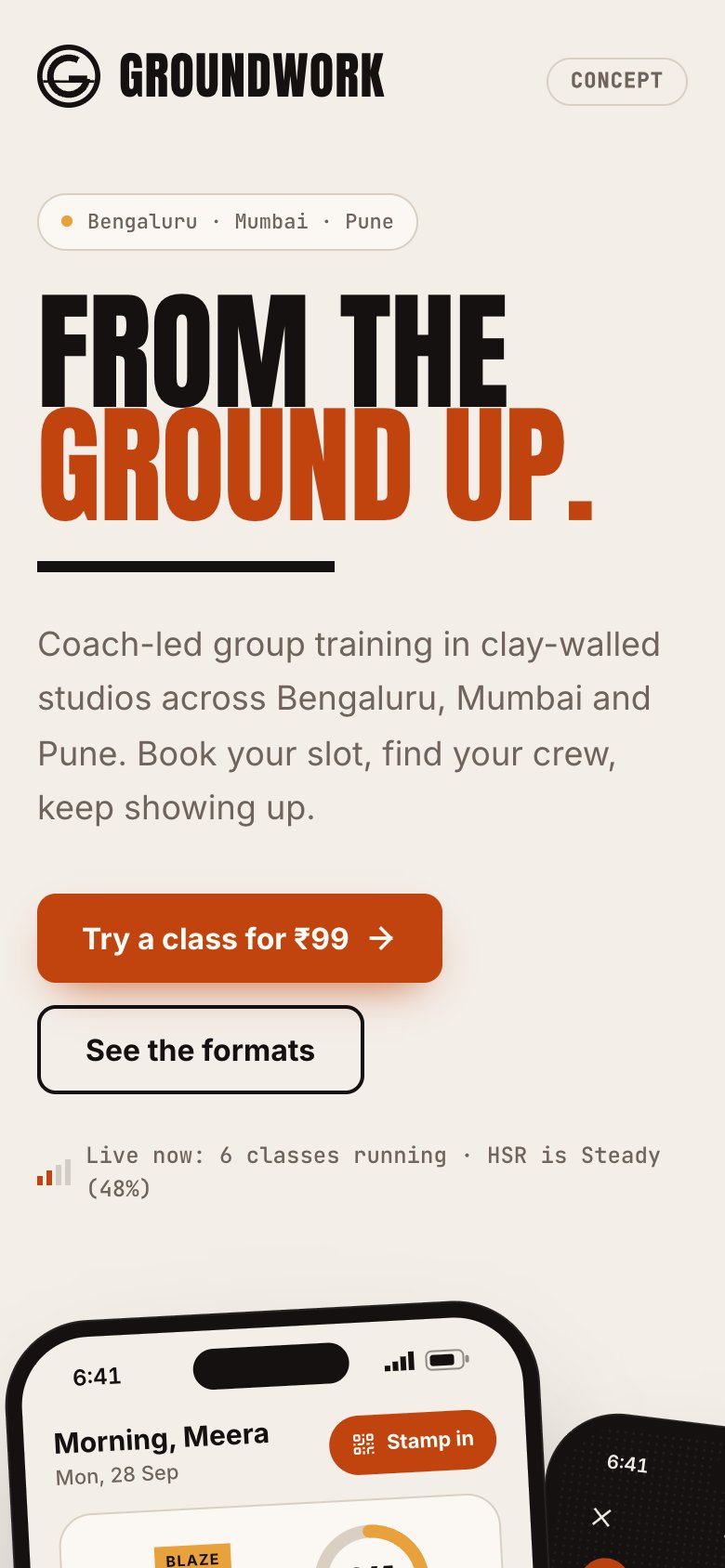
Our concept build Groundwork is a fitness and wellness booking app with member and trainer sides, slot booking, memberships and reminders. For a spa, its slot logic, memberships and staff schedules map across with rooms and treatment durations in place of classes, but it is a concept: it does not include spa-specific intake and consent forms, GST invoicing, linen stock or a payroll and incentive module, and those would need to be built.
The Saral builds web and mobile apps and websites for Indian businesses. If you have several outlets or a partner portal in mind, see our fitness and wellness app solution or the gym and fitness app guide, and send a brief for a fixed quote.
More on starting a spa
- Start hereThe full playbook →Models, licences, startup costs and the steps to your first customer.
- Go deeperWhat to buy →Beds, linen, oils, showers, steam and laundry kit for a day spa, costed, with what to hold back.
- Go deeperWho to hire →Therapists, reception, housekeeping and a manager in hiring order, with pay, vetting and training.
- Go deeperGetting customers →Maps, hotels, corporate days, gift cards, packages and rebooking for a new day spa, with launch pricing.
- Go deeperFinding suppliers →Oils, linen, beds, laundry and treatment products: where to source, how to vet, terms and red flags.
Questions people ask
What is the cheapest way to manage spa bookings?
A shared calendar with a column for each room and therapist, a digital intake form, a GST-capable billing app and a WhatsApp Business account. It costs little beyond staff time and works for one or two rooms, but breaks down at around 20–25 bookings a day.
Do I need software for packages and memberships?
Yes once you sell more than a handful. A sheet works at first, but balances, expiry and disputes grow quickly. Choose a tool that shows balances at checkout and applies expiry rules automatically, and make sure you can export the data.
Is it safe to store client intake forms digitally?
It can be, if you collect only what therapists need, restrict access to named staff, avoid chat groups and delete data you no longer need. Intake forms may include sensitive details, so read the DPDP checklist and confirm obligations with a lawyer.
When should I build custom spa software?
When you have multiple branches sharing clients and packages, a partner portal for hotels or companies, or a model such as at-home therapists that off-the-shelf tools cannot handle. For one outlet with fewer than eight rooms, ready-made software is usually cheaper and quicker.
Can a fitness booking app work for a spa?
Partly. Slot booking, memberships, staff schedules and reminders map across, but spas also need room-plus-therapist scheduling, intake and consent forms, GST invoices and linen or oil stock. Our Groundwork concept covers the first set only.