Run the first few hundred orders on a hosted store, a payment gateway with UPI and COD, a shipping aggregator, a WhatsApp confirmation tool and one shared inventory sheet. Add proper inventory and warranty software when you carry several SKUs, serial numbers and returns that no longer fit in a sheet. Build custom only for something the market tools cannot do.
The software stack for a D2C product brand is not one tool. It is six small jobs that must agree on one number: how many units are in stock and where each order is.
The six jobs and the cheapest tool for each
| Job | Cheapest that works | When it breaks |
|---|---|---|
| Storefront and checkout | Hosted store (Shopify-type or an Indian equivalent) with a stock theme and UPI at checkout | Slow pages on 4G, no room for drops with countdown, very custom bundles |
| Payments and COD | Gateway with UPI, cards, wallets and a COD option; settlement reports | COD verification is manual and reconciliation of COD remittances lags |
| Shipping and tracking | Aggregator with several couriers, label printing, NDR (non-delivery report) handling and tracking pages | Courier performance varies by pin code; rate cards need negotiation at volume |
| Inventory and orders | A shared sheet with SKU, batch, stock in hand, stock in transit and reorder point | Multiple warehouses, serial numbers, bundles and marketplace sync |
| Customer messages and support | WhatsApp Business app, then an API provider with a shared inbox; helpdesk for email | More than one agent, repeated queries, no history across channels |
| Books and GST | Accounting software with GST invoices and e-invoicing when applicable; see GST billing software | Marketplace settlements, COD remittances and returns do not reconcile |
Do not buy an ERP in year one. Choose tools with exports, so you can move your data when you outgrow them.
Setting up the order flow so nothing drops
A single order passes through eight hands: checkout, payment, fraud or COD check, packing, courier, tracking, delivery and return. Most losses are between steps, not within them.
- Order arrives in the store admin with payment status.
- COD confirmation message goes out on WhatsApp; the buyer taps confirm or edits the address.
- Confirmed orders sync to the shipping aggregator, which creates the label and AWB number.
- Packing station scans the unit's serial number or batch QR into the order, and takes a photo.
- Dispatch triggers a tracking message with a link.
- NDR handling: if the courier cannot deliver, the aggregator's NDR queue prompts a call or WhatsApp to the buyer the same day.
- Delivery starts the warranty clock; a message asks for warranty registration and a review.
- Returns are logged with a reason code and a photo, and the unit goes into a 'to inspect' bin, not back to stock.
Even in a sheet, add columns for COD status, AWB, serial number, return reason and refund status. These five fields answer 90% of the support questions.
Inventory when you have serial numbers and batches
Electronics carry batch and serial numbers because faults cluster by batch. Once you have more than one supplier batch in stock, track them.
| Data to hold | Why it matters |
|---|---|
| SKU, colour and variant | Variant mix-ups are a common wrong-delivery cause |
| Batch number and factory lot | Trace a bad lot after a spike in returns and claim from the supplier |
| Serial or QR per unit (optional at first) | Warranty claims and theft or fake returns |
| Landed cost per batch | True margin by batch, not an average |
| Stock in hand, in transit and reserved by open orders | Prevents overselling when a drop starts |
| Reorder point and supplier lead time | A stock-out in festival season is the costliest mistake |
Move from a sheet to inventory software when you have three or more SKUs, more than one place holding stock, or you sell on marketplaces too and oversell. Look for barcode scanning, bundle handling, marketplace sync and returns inspection in whatever you pick; our store guide lists related checks.
Warranty and returns tooling
Warranty is where a gadget brand wins or loses trust. A form that captures serial number, invoice and phone, and returns a claim ID, is enough at the start.
- Registration page linked from a QR in the box: name, phone, serial, purchase channel.
- Claim form with a short video upload for faults; most pairing and charging issues become visible in 20 seconds.
- Triage rules: setup issue (send the guide), swap (ship a replacement), inspect (reverse pickup).
- Reverse pickup booking through the aggregator, with a return-address block for the unit.
- Supplier claim sheet: unit, batch, fault, date, so you can claw back cost from the factory.
Handle phone numbers and addresses carefully. Collect consent for marketing messages separately from service messages; confirm current rules with a lawyer.
When a custom build pays for itself
Custom software is worth considering when a repeatable job costs you more in time or lost sales than the build would, or when the product itself needs software.
| Reason | What custom would cover | Rough sign it is time |
|---|---|---|
| Drops and launches overload the hosted store | Fast storefront, queue, countdown and reservation of stock | Checkout fails or slows during every launch |
| COD fraud and RTO | Rules by pin code, order history and basket; verification flow | RTO is a large share of orders and manual checks are slow |
| The product needs an app | Companion app for pairing, firmware updates, settings and warranty | Support spends its time on setup the app could solve |
| Complex bundles and multiple warehouses | Order routing and stock allocation | Overselling or mis-shipping more than a few times a week |
| Loyalty and subscriptions for consumables | Subscription billing and a customer portal | Repeat orders depend on manual reminders |
Even then, start narrow: one module (for example a warranty portal or a COD-risk rule engine) that talks to your existing store through its API, rather than replacing the store. Our MVP guide and UPI payments guide cover the starting point.
Where the Bassline concept and The Saral fit
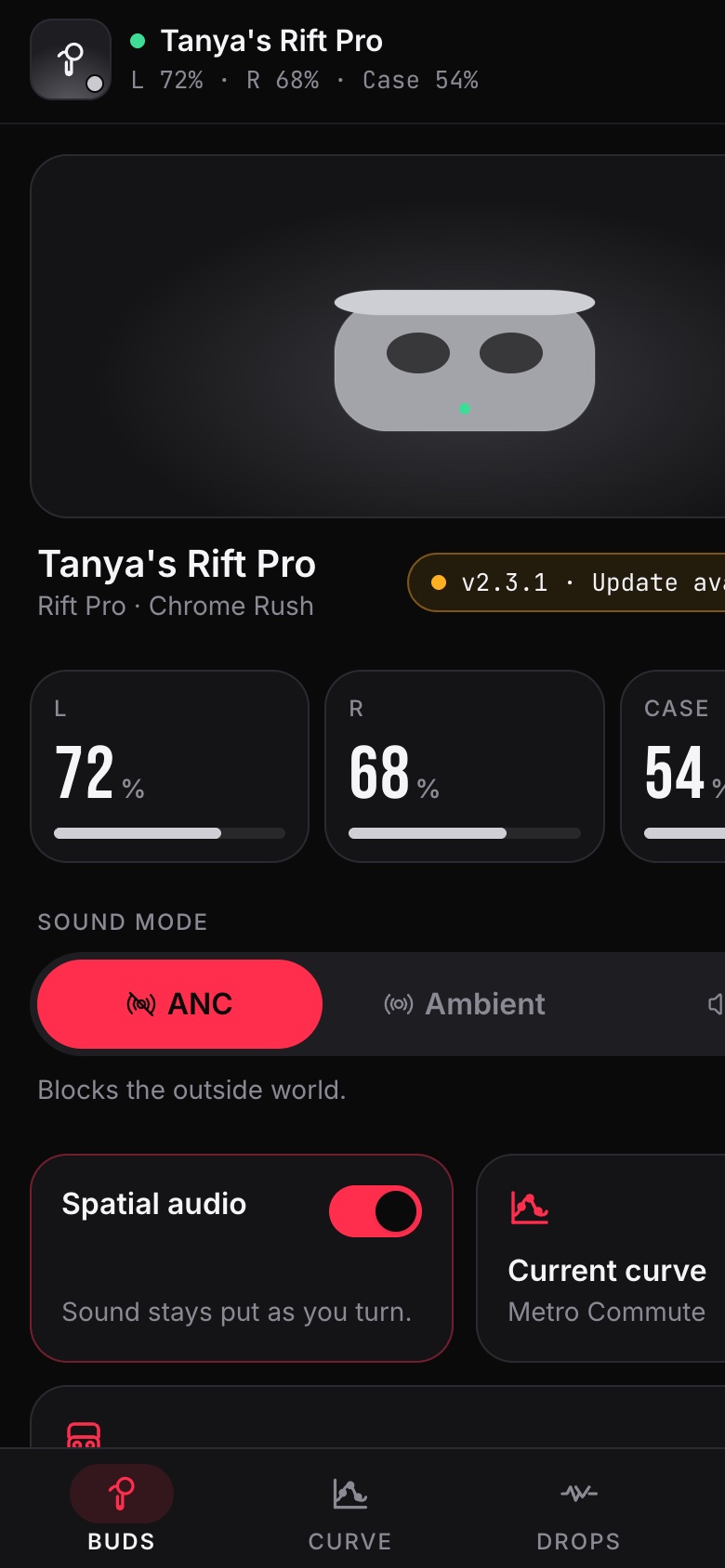
Bassline is our own concept for a D2C audio brand: a web store, a companion app and an unboxing-and-setup flow. It shows how those pieces can connect; it is a demo, not a live product, and it does not replace shipping, accounting or your supplier systems.
If you reach the point where drops, COD rules or a companion app justify a custom build, The Saral can scope it. See ecommerce websites and our store guide. Until then, the hosted tools above are the cheaper answer.
More on starting a D2C brand
- Start hereThe full playbook →Models, licences, startup costs and the steps to your first customer.
- Go deeperWhat to buy →Samples, tooling, certification, first batch and packaging, costed, with what to hold back.
- Go deeperGetting customers →Reviews and creators, Meta ads, COD and RTO control, launch pricing and repeat purchase.
- Go deeperFinding suppliers →India vs China factories, ODM or OEM, vetting, MOQ, payment terms, QC and red flags.
Questions people ask
What software does a D2C brand need to start?
A hosted store with UPI and COD, a shipping aggregator, a WhatsApp business setup for order confirmation and support, and a shared inventory sheet. Add accounting software with GST support. That stack is enough for the first few hundred orders and costs far less than a custom build.
How do I handle COD verification in software?
Use a WhatsApp or SMS confirmation step that moves an order from pending to confirmed only after the buyer replies. Many store apps and aggregators offer this. Add pin-code rules for high-refusal areas once you have data. Keep a status column or field so your packer ships only confirmed orders.
When should I move inventory out of Google Sheets?
Move when you have three or more SKUs, stock in more than one place, marketplace sales that cause overselling, or serial and batch tracking needs. Sheets work until the first oversell. Choose an inventory tool with barcode scanning, bundles and exports, and migrate before a big sale, not during it.
Do I need a mobile app for my electronics brand?
Not for selling. A fast site handles discovery and checkout. Build an app only if the product itself needs one, such as pairing, firmware updates or settings, or if you have a large repeat base. Otherwise a setup page and warranty portal are cheaper and just as useful.
Is custom software worth it for a small D2C brand?
Rarely at the start. It pays when a specific, repeated problem costs more than the build, such as failed launch checkouts, heavy COD fraud or a product that needs an app. Start with a small module that connects to your existing store instead of replacing it.