Win the first customers with free or low-cost eye tests that bring people through the door, then turn each test into a record you can use: a prescription, a family name and a reminder date. Eye camps, ophthalmologist referrals and a well-kept Google Business Profile do most of the work for a neighbourhood optical store.
Optical is a repeat business on a long cycle: adults change glasses every one to three years, children more often as their eyes change. So the job is not only to sell the first pair; it is to be the shop they return to, and to send the next family member.
Why optical customers choose a shop, and what that means for you
People buy glasses on three things: trust in the test, how the frame looks on their face, and how soon it is ready. Price comes after those for many customers, though not for all. A price-led online seller can win on a plain frame but not on a fitted progressive, a child's first pair or an adjustment on a bent temple.
- Lead with the test, not the frames. Name your optometrist and their qualification on the store board and profile, within what the local rules allow.
- Lead with turnaround, and keep the promise. A date you hit is worth more than a discount.
- Lead with after-care: free adjustments, free cleaning and a clear remake policy.
- Do not make medical claims in advertising. Do not promise to cure or prevent eye conditions. Say what the service is and refer disease to an ophthalmologist.
Channels that work for an optical store, ranked by effort
| Channel | What you do | Cost and effort (estimate) | Typical result |
|---|---|---|---|
| Google Business Profile | Complete the profile, add the testing service, hours, frame photos and ask for reviews after pick-up | Free; a few hours to set up and a few minutes a week | Nearby searches such as optical shop near me or eye test near me |
| Eye-check camps | Set up a screening table at offices, schools, housing societies and clinics | ₹2,000–10,000 per camp for staff time, transport and consumables | Names, prescriptions and referrals, with no pressure to buy |
| Ophthalmologist referrals | Meet nearby clinics and offer to dispense their prescriptions, referring disease cases back to them | Time, plus follow-up | A steady stream of customers with ready prescriptions |
| School screenings | With the school's permission, run a vision screen and send a note home to parents | Time and printed notes | Children's first pairs and long-term families |
| WhatsApp catalogue and status | Share new frames, ready-for-pickup messages and offers to people who have opted in | Free to low | Repeat customers and referrals |
| Corporate and group tie-ups | Offer discounted tests and frames for an office, a school staff room or a society | Time; discount budget | Batches of customers at a time |
| Local ads and flyers | Pin-code targeted ads or flyers around markets, coaching centres and bus stops | ₹5,000–20,000 a month | Walk-ins in the first weeks |
Optical retail is strongly local. Set up your search listing early, as covered in our local SEO guide, and use WhatsApp thoughtfully; the WhatsApp for business apps guide explains the basics of messaging customers who have agreed to hear from you.
Running an eye-check camp well
- Choose the site by who is there. An IT office has many screen users with headaches; a school has children who may not have noticed a problem; a housing society has seniors and families.
- Get permission and a date in writing, and agree where the table goes. Poor light or noise ruins a refraction.
- Bring the right kit: an autorefractor if it is portable, a trial set, a near chart and a way to record each person's name, age, contact and result on the spot.
- Screen, do not sell. Tell people what you found and what to do next: a full test, glasses, or a visit to an ophthalmologist. A person who feels pushed will not come back.
- Record consent to follow up on WhatsApp, and note when they last had a test. See our DPDP Act checklist for handling personal data carefully.
- Follow up within two days with a message and an invitation to a full test at the store.
Camps are also where you find your referral partners. A doctor or school principal who watched you handle a queue calmly is more likely to send people than one who received a brochure.
Your first ten customers
- Customers 1 to 3: family, friends and neighbours who need glasses or have not been tested in years. Ask for honest feedback and, if they are happy, a review.
- Customers 4 to 6: your first eye camp, converted by a free test and a no-pressure follow-up.
- Customers 7 to 8: an ophthalmologist or clinic referral, where the prescription is already written and you win on dispensing and speed.
- Customers 9 to 10: a school or office tie-up, a staff member who becomes your unofficial ambassador.
Write each one down: where they came from, what they bought and when you promised delivery. After ten you will know which channel paid for itself, and you can drop the rest.
Launch pricing without training people to wait for sales
- Free or very low-priced eye test, which is your door-opener. Some stores credit the test fee against a purchase.
- A clear bundle: frame plus single-vision lenses at a set price in your main band, so customers can compare easily.
- A family offer, for example a second pair at a reduced price for a spouse or child bought the same day.
- A kid's pair with a break clause, such as one free replacement of lenses if the prescription changes within a stated time. Define it carefully; costs add up.
- Avoid permanent big discounts. If every frame is always half price, nobody believes the full price, and you lose the margin you need to fund remakes and after-care.
Offers and prices here are ideas to test, not recommended figures. Keep your margin after lab cost, remakes and GST; confirm tax treatment with your CA.
Corrective glasses and sunglasses are taxed differently under GST, so keep your price lists and tags clear about what is included. The software page notes how to set up billing for that.
Retention: the yearly recall and the family network
The best marketing for an optical store is the next sale from a person who has already trusted it. That takes a system, not goodwill.
- Record the next test date at pick-up. Adults commonly return every one to two years; children often sooner. Ask your optometrist what to set for each person.
- Send a reminder by WhatsApp a few weeks before the date, with a link or number to book a slot.
- Keep the prescription on file so a returning customer does not repeat the history.
- Free adjustments and cleaning at any time, with no purchase, make your shop the default place to go.
- Ask every satisfied customer for one family name, and offer a free test to that person.
- Seasonal touchpoints: school reopening for children's check-ups, the summer months for sunglasses and the festive season for gifting and second pairs.
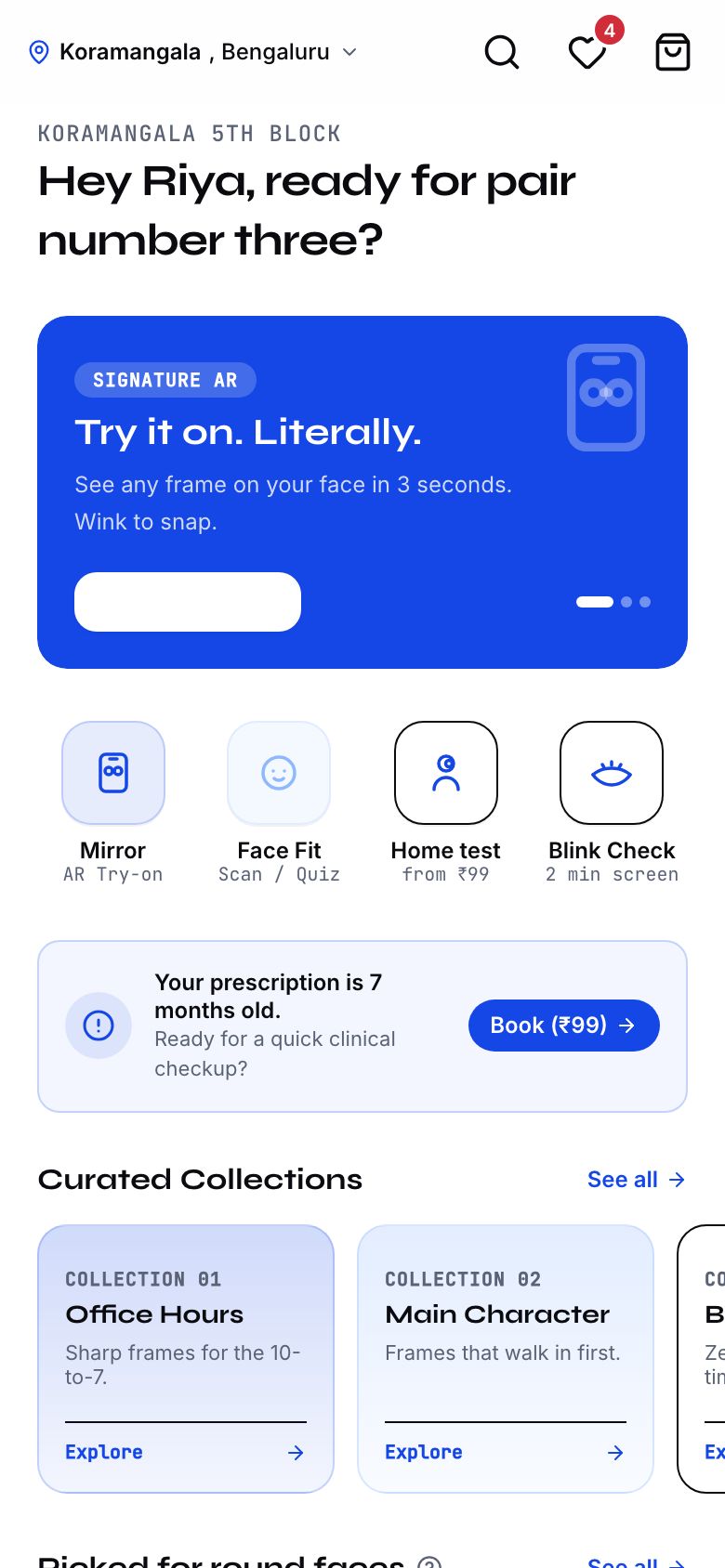
If you later want an online store or a booking flow, our concept build Specsy shows how a retail desk, home eye tests and online ordering can share one customer record. For a broader consumer brand, see how to start a D2C brand. Back at the start, the what to buy page covers the kit you need before the first camp, and our business website work covers the web side.
More on starting a optical store
- Start hereThe full playbook →Models, licences, startup costs and the steps to your first customer.
- Go deeperWhat to buy →Testing kit, dispensing bench, frame and lens stock, costed, with what to outsource or skip.
- Go deeperFinding suppliers →Frame wholesalers, lens labs and distributors: where to find, vet and agree terms.
Questions people ask
How do I get my first customers for an optical store?
Start with people you know, then run an eye-check camp at a nearby office, school or housing society, and set up a complete Google Business Profile. Add referral relationships with nearby ophthalmologists. Record where each customer came from so that after your first ten you know which channel is worth repeating.
Is a free eye test a good idea for a new optical store?
Yes for many stores, because the test brings people in and builds trust. Make sure the optometrist's time is covered by the frame and lens margin, and keep the offer honest: no pressure to buy, and a referral to an ophthalmologist when something needs medical care. Some stores credit the test fee against a purchase.
How do I work with ophthalmologists as a new optical store?
Visit nearby clinics, explain what you offer and offer fast, accurate dispensing of their prescriptions. Refer disease and medical cases back to them and keep them informed about turnaround. Referral relationships take time and follow-up, and you should not pay for prescriptions or patient referrals; check the rules for your state.
How do I bring customers back for a new pair?
Record the next test date at pick-up, keep the prescription on file and send a WhatsApp reminder a few weeks ahead to customers who agreed to hear from you. Offer free adjustments and cleaning at any time. Ask your optometrist what recall interval suits each customer, and children usually need shorter ones.
Can I advertise eye care claims?
Keep advertising to what the store actually offers: eye tests by a qualified optometrist, frames, lenses and after-care. Avoid claims that glasses or products cure, reverse or prevent eye disease, and avoid before and after outcome promises. Rules on health advertising can apply; check current rules with your regulator or a lawyer. This is general information, not legal advice.