Source in layers: vegetables and fruit from your city's mandi or an agent there, dairy direct from the dairy's route, staples from a grain and kirana wholesaler, branded FMCG from a distributor or a cash-and-carry, and everything else through partner shops. Get two suppliers for every fast mover, because a single missed milk delivery loses customers faster than any price difference.
Prices, margins and credit terms below are estimates; actual terms depend on your volume, relationships and city. Check current licence requirements for suppliers and for yourself with FSSAI and your state authorities before you commit.
Supplier layers: what comes from where
No single supplier covers a grocery basket. Each category has its own rhythm, its own price swings and its own typical failure.
| Category | Typical source | Order rhythm | Failure mode |
|---|---|---|---|
| Vegetables, fruit and leafy greens | City APMC or wholesale mandi (e.g. Yeshwanthpur in Bengaluru, Vashi in Navi Mumbai, Azadpur in Delhi, Koyambedu in Chennai, Bowenpally in Hyderabad, Gultekdi in Pune) via commission agents or a B2B produce supplier | Daily, before dawn, or a night-before order for early pickup | Price swings by the day; quality varies by lot; you are buying at 3 to 5 am |
| Milk, curd, paneer and butter | State dairy brands (for example Nandini, Amul, Mother Dairy, Aavin, depending on state) via agents or the dairy's distributor | Daily, early-morning route | Missed route, damaged packets, and sour-curd batches in hot weather |
| Eggs, bread and bakery | Egg wholesalers or farm agents, local and branded bakeries | Daily or alternate days | Cracked trays and short shelf life |
| Rice, atta, dal, oil, sugar, spices | Grain wholesalers and kirana wholesale markets in your city, or cash-and-carry outlets | Weekly or fortnightly | Mixed-quality lots, short weight and stock that has sat for months |
| Packaged FMCG and household | Authorised distributors or stockists of each brand, wholesale cash-and-carry or B2B apps | Weekly | Minimum order quantity, slow credit and old-batch stock |
| Meat, fish and frozen | Licensed meat sellers and cold-chain distributors | Daily | Cold-chain breaks; needs separate licensing and hygiene care |
| Organic and speciality | Farmer groups, FPOs and specialist distributors | Weekly | Supply gaps, certification claims you cannot verify and higher shrink |
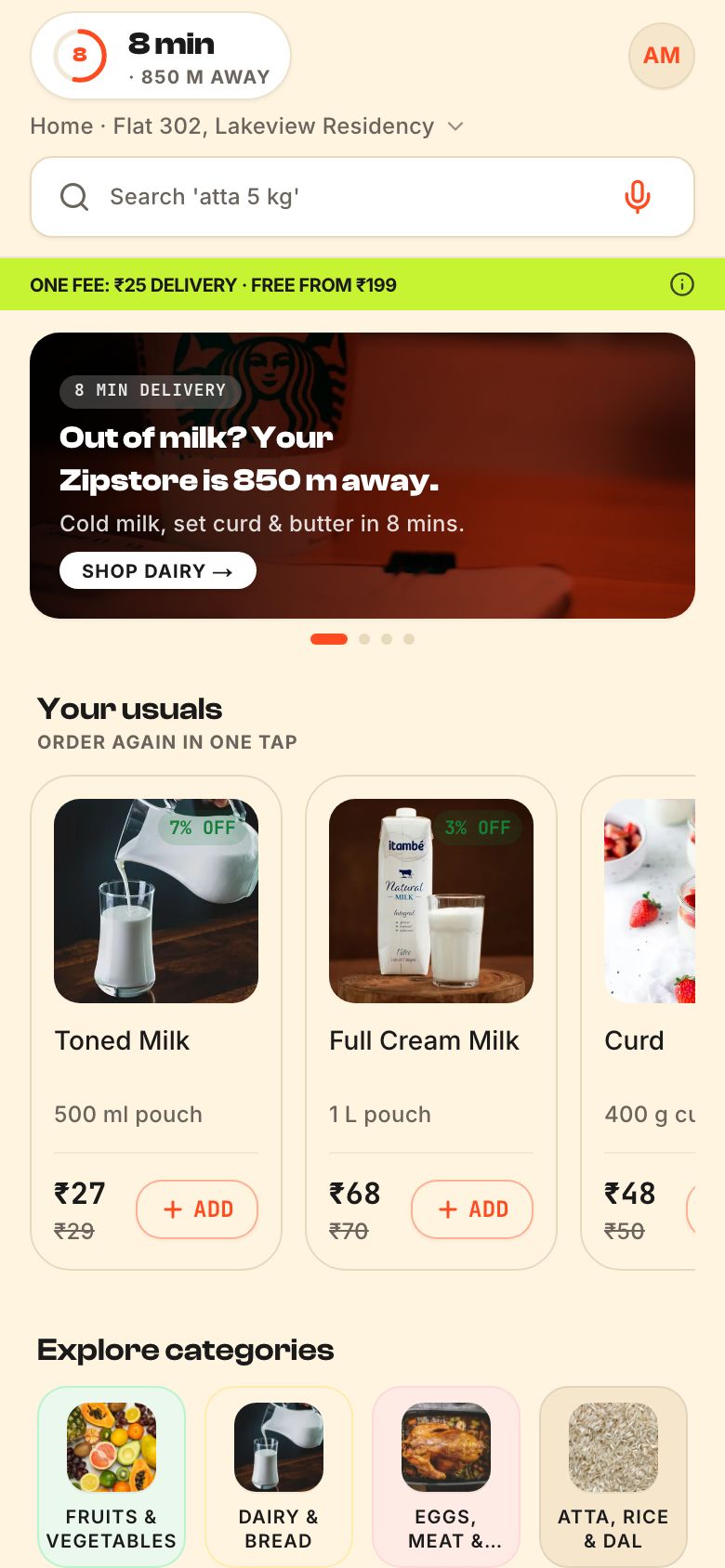
If you run a multi-shop model like Zippit, you do not own most of this supply chain; local shops do. Your job becomes vetting shops, not buying stock, and the same checks below apply to each shop you list.
Where to find them
- Mandi agents (commission agents or arhtiyas): visit the market before dawn with a friend who knows the lanes. Ask three agents for a price list on the same ten vegetables and compare for a week before committing.
- B2B produce suppliers and aggregators: some firms deliver mandi produce to shops and restaurants (examples to check include Ninjacart and Vegrow). Ask for a trial week and compare their delivered price against what you would pay at the mandi plus your own transport.
- Dairy routes: ask your area's dairy depot or distributor for an agency, or buy from an existing agent who supplies kiranas. A direct agency may need a deposit and a minimum daily volume.
- Staples wholesalers: grain and provision markets in your city; check weighing, packing and stock freshness on your visit.
- FMCG distributors: the brand's regional distributor list (call the company's customer care or ask your local kirana which distributor supplies them) or a cash-and-carry outlet such as Metro or similar wholesale formats where you hold a business account.
- B2B wholesale apps and marketplaces: examples to compare include Udaan and Jumbotail; verify current fees, minimums and credit terms yourself.
- Shop owners and your future competitors: a shop-led delivery model works with kiranas who like extra orders; ask them for their own wholesalers' names.
Names above are examples to shortlist, not endorsements. We have not verified current terms, coverage or fees for any of them; check with each directly.
Vetting a supplier: what to check before the first order
| Check | How to do it | What you want to see |
|---|---|---|
| FSSAI registration or licence | Ask for the licence number and verify it on the FSSAI portal (FoSCoS) | A valid, unexpired registration for the premises that supply you |
| GST registration | Ask for the GSTIN and verify it on the GST portal | A valid number and proper tax invoices for every purchase |
| Weighing accuracy | Weigh a delivered sack or crate on your own scale | Short weight below 1 per cent as a rule of thumb; more is a red flag |
| Sample quality over a week | Buy small lots for five to seven days and log wastage per item | Consistent grading and low rejects |
| Cold chain | Check the temperature of milk and curd on delivery with a probe or by touch | Cold packets, intact seals and no bulging |
| Batch and expiry | Inspect the date on every case of packaged goods | At least 70 per cent of shelf life left on arrival, as a suggested rule |
| Delivery reliability | Track on-time arrival for two weeks | Arrives at the promised hour, with a way to reach a person |
| Returns and credit notes | Ask what happens when you reject a lot | A written policy and credit notes in the next invoice |
Visit the premises at least once. A clean storage area with proper racks, a visible licence and staff wearing caps or gloves says more than a brochure.
Terms, credit and margins to negotiate
Terms matter as much as price when your margin is a few rupees on each item.
| Term | Typical start for a new buyer (estimate) | What to aim for as you grow |
|---|---|---|
| Payment on mandi produce | Cash or UPI on delivery | Weekly settlement once you have a record with the agent |
| Payment on dairy | Advance deposit and daily or weekly payment | Weekly settlement; fixed monthly bill |
| Payment on FMCG | Cash on delivery or advance for new accounts | 7 to 15 days of credit after three months of clean payments |
| Margin on staples (dal, rice, atta, sugar) | Often low single digits | Better rates from buying a month's volume in one go |
| Margin on fresh vegetables and fruit | Often 10 to 25 per cent before wastage, depending on item and season | Reduce wastage by ordering for two days, not four |
| Margin on packaged FMCG | Roughly 5 to 15 per cent depending on brand and category | Trade schemes from the distributor, such as case-wise discounts |
| Returns for short-dated or damaged stock | Accepted within 24 hours with proof | Written credit-note policy |
- Get a price list in writing for your top 40 items, valid for a week for fresh items and a month for staples.
- Ask for a scheme sheet from FMCG distributors: free cases, case-wise discounts and quarterly targets.
- Pay on time for the first three months. That is the single biggest lever to move from advance to credit.
- Keep GST invoices for every purchase; you need them for input tax credit. Confirm your GST position with a CA.
Backups, red flags and a weekly routine
- Two sources for each fast mover: milk, bread, eggs, onions, potatoes, tomatoes, atta and rice should each have a backup supplier you have already paid once.
- A fallback shop for the missing item: if an item is out, a nearby shop can supply it at retail price for a premium rather than losing the order.
- Red flags: only cash accepted with no invoice, a licence number that does not verify, prices that are much lower than everyone else's, delivery lots that change quality between visits, a refusal to take back spoiled goods and pressure to buy big lots upfront.
- Seasonal gaps: mango, leafy vegetable and tomato prices spike at predictable times; sign up two or three agents before the squeeze rather than during it.
- Keep a simple price sheet that records buying price, selling price, wastage and the supplier for each of the top 40 items; review it weekly.
Once you work with more than a few suppliers, a stock and purchase tool keeps this sane; see the software page and our billing software guide. For what to stock first, see what to buy.
Licence rules for suppliers, repacking and labelling are set by FSSAI, legal metrology and state authorities and change over time. Confirm what applies to your business with a CA or the relevant department. This is general guidance, not legal advice.
More on starting a grocery delivery business
- Start hereThe full playbook →Models, licences, startup costs and the steps to your first customer.
- Go deeperWhat to buy →Crates, cold storage, scales and bags: what to buy on day one, what to rent, what to skip.
- Go deeperWho to hire →Riders, pickers and a store lead: pay, shifts, where to find them and how to test them.
- Go deeperGetting customers →Societies, WhatsApp and reorders: how to win your first 10 households and keep them weekly.
Questions people ask
Where do I buy vegetables for a grocery delivery business?
Most operators buy from the city's APMC or wholesale mandi through a commission agent, or from a B2B produce supplier that delivers to shops. Visit the market before dawn, compare three agents' prices on the same ten items for a week, and start with small lots. Expect prices to swing daily and plan for wastage.
How do I get a milk and dairy supply for deliveries?
Contact your area's dairy depot or distributor and ask about an agency or a supply through an existing agent. Direct agencies may need a deposit and a minimum daily volume. Check the cold chain on every delivery, agree on a delivery hour before your morning slots and keep a backup source for days when the route is missed.
Do my suppliers need FSSAI and GST registration?
Suppliers of food should hold valid FSSAI registration or a licence for their premises, and GST-registered suppliers issue tax invoices you can claim input credit on. Ask for the numbers and verify them on the official FSSAI and GST portals. Rules and thresholds change, so confirm what applies to each supplier with a CA.
What credit terms can a new grocery delivery business expect?
Expect cash or advance payment on fresh produce and dairy, and cash on delivery or advance on FMCG in the beginning. After three months of clean payments, many distributors offer 7 to 15 days of credit, as an estimate. Pay on time, keep invoices and ask for scheme sheets; these matter more than a one-off discount.
How many suppliers do I need for each item?
Two for every fast mover. Milk, bread, eggs, onions, potatoes, tomatoes, atta and rice should each have a primary and backup you have already paid once. A single missed dairy run or mandi shortage should never leave you cancelling orders. Slower, long-tail items can sit with one supplier or a partner shop.