Hire in this order: you (or a partner) as the ops lead, one or two riders on shifts, a picker-packer once orders outgrow your own hands, and a part-time accounts person. A grocery delivery business is won or lost by riders who show up at 6 am and pickers who do not substitute without asking, so hire for reliability before speed.
Pay figures below are ballpark monthly estimates for 2026 and swing by city and shift length. Labour laws, minimum wages and gig-worker rules differ by state and change; confirm what applies with your state labour department or a CA.
Hiring order and what each role does
Resist the urge to build a team before the work exists. Grocery work comes in two daily peaks, early morning and early evening, so most roles are part-day at first.
| Role | When to hire | What they do | Ballpark monthly pay (estimate) |
|---|---|---|---|
| Owner / ops lead | Day one | Sets the catalogue, checks stock, handles complaints, talks to shopkeepers | You |
| Rider, part-shift | First 30 to 60 orders a day | Delivers 3 to 4 stops per loop in the morning and evening peaks | ₹10,000–16,000 for two shifts, or ₹25–45 per order, as estimates |
| Picker-packer | When you hold stock and orders overlap | Picks to a list, scans, packs, seals, labels | ₹11,000–17,000 |
| Rider, full-shift | Orders spread across the day | Delivers all day with a break; handles cash and returns | ₹15,000–24,000 plus fuel allowance |
| Store lead | Dark store or 150+ orders a day | Opens and closes, counts fast movers, manages wastage and rider shifts | ₹22,000–40,000 |
| Part-time accountant or bookkeeper | From the first GST filing | Daily cash tally, vendor payments, GST returns with your CA | ₹6,000–15,000 part-time, as an estimate |
| Customer support | When you cannot answer WhatsApp in 5 minutes | Substitutions, refunds, delivery updates | ₹10,000–15,000 |
Many grocery operators never need more than two riders, one picker and a part-time accountant in the first six months. The store lead role is the one you hire last and keep longest.
Riders: salaried, per-order or gig
Rider cost and rider quality sit in tension. Pay too little per order and riders leave for platform work; pay a flat salary and they may idle between orders.
| Model | How it works | Good for | Watch out for |
|---|---|---|---|
| Fixed salary with fuel allowance | Monthly pay for set shifts, typically 6 days a week | Steady order volume in one area, early-morning dairy and vegetables | Idle time in the afternoon; you pay for capacity you may not use |
| Per-order rate with a minimum guarantee | A rate per delivery plus a floor on days with few orders | Growing volumes; riders stay motivated to cover more stops | Riders may bunch orders unfairly or reject small loops |
| Gig or third-party rider pool | Borrow riders through a delivery network on a per-trip basis | Peak overflow and trying a new area | Less control over packing, handling and customer service |
| Part-timers from nearby shops or students | Evening and weekend shifts | Peak-hour cover | Reliability and knowledge of the area vary |
- Riders need: a valid driving licence for the vehicle, a vehicle RC and insurance, a smartphone and a clean police verification or a local reference. Check the originals, not photos.
- Cash handling: if you accept cash on delivery, hand each rider a small float and settle every evening; do not let balances roll over.
- Rider safety: helmets are mandatory for two-wheeler riders; supply a good one, a reflective jacket and a rain cover. Monsoon is where accidents and late deliveries cluster.
- Insurance: ask your insurer about cover for riders and goods in transit; do not assume a personal two-wheeler policy covers commercial delivery. Confirm with the insurer.
Whether a rider is an employee, a contractor or a gig worker affects PF, ESI, welfare cess and other obligations, and several states have introduced or proposed gig-worker welfare rules. We have not verified current rules for your state; confirm with your state labour department or a CA.
Pickers and packers: the quiet quality role
A picker decides whether a customer opens a bag to find ripe tomatoes or three days old ones. Train for judgement on produce and discipline on substitutions.
- What to teach in week one: reading an order list, the pick path through the store, checking expiry dates, the rule that no substitution happens without a call or message, and how to pack heavy items at the bottom, eggs on top and chilled items in an insulated bag.
- Produce grading: show three grades side by side for tomatoes, onions, bananas and leafy greens: ship, discount and discard. Pickers who can name what makes a bad pomegranate are worth ₹2,000 extra a month.
- Packing standards: a one-page sheet with photos of how a correct bag looks. Check one bag in ten at the sealing station until errors fall.
- Speed targets: a picker should handle a 15 to 25 item order in roughly 5 to 8 minutes once trained, as a rough estimate; do not set pace targets that push them to skip expiry checks.
- Shift pattern: most dark stores run a 5:30 to 10:30 am morning shift and a 4 to 9 pm evening shift, rather than one long day.
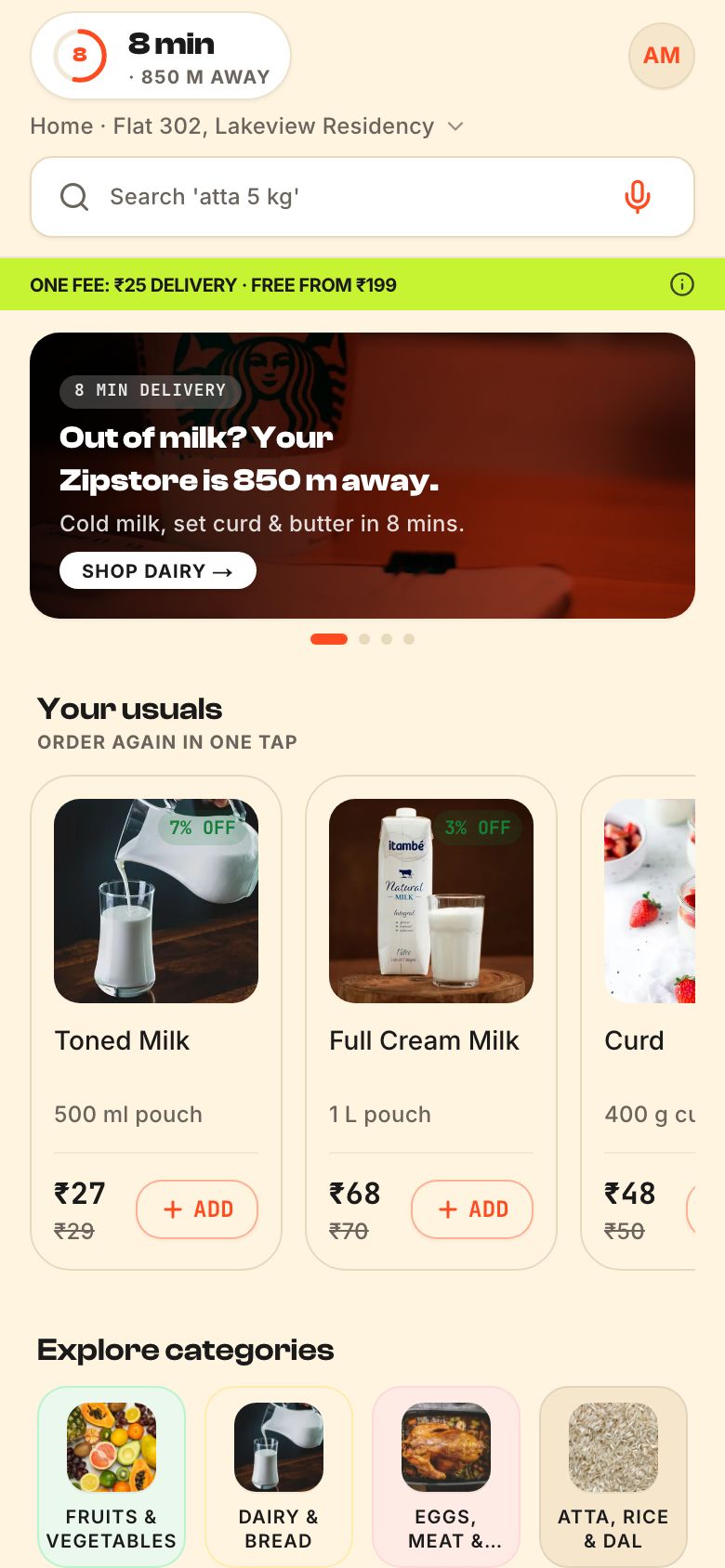
If you work with partner shops instead of your own store, the picker role is often a shopkeeper's helper. Pay a small per-order packing fee and hold the shop to the same checklist; Zippit's picker screen in our concept build is designed around exactly that handover at the shop counter.
Where to find people, by role
| Role | Where to look | Tip |
|---|---|---|
| Riders | Referrals from existing riders, local delivery stands, paan and tea stalls near the area, rider groups on WhatsApp, local gig-work and job apps | Existing riders vouch for people they know; offer a small referral bonus after 30 days |
| Pickers and packers | Retail and kirana staff, walk-ins near the store, job apps like Apna or WorkIndia for entry-level roles, women self-help groups in some towns | Ask for people who have worked with grains, vegetables or counter billing; retail experience transfers |
| Store lead | Supermarket and kirana veterans, a department head from a local chain, a former dark-store supervisor | Ask about wastage and stock-count methods, not just target numbers |
| Accountant | Your CA's office staff for a few hours a week, or a freelance bookkeeper | Clear a daily cash tally and a weekly GST-ready export |
Vetting: one day of paid trial work
A resume tells you little about a rider or a picker. A paid half-day trial tells you almost everything.
- Rider trial (paid, about ₹300–500 as an estimate): give five mock stops in your real radius, one with a wrong phone number, one on an upper floor with no lift and one in a gated society. Watch how they call the customer, read the map and handle the gate guard.
- Picker trial: hand over a 20-item order with two items out of stock and one past its expiry date. See if they ask before substituting and whether they spot the expired pack.
- Arithmetic and cash check: a simple 10-item bill with discounts for a picker or rider who will collect cash.
- Reference call: one call to a previous employer or shopkeeper; ask if they would hire the person again and why they left.
- Probation: a written one-month trial with an agreed per-order or monthly rate and a clear no-show rule.
Write the basics on a single sheet: shift timings, pay date, how advances work, what happens if a customer reports a damaged item, and who to call at night. For anything beyond a few helpers, ask your CA how to handle PF, ESI, bonus and wage registers under the rules in your state.
Keeping people past month three
- Pay on the same date every month. Delayed salary is the top reason riders move to platform work.
- Cover the real cost of the job: fuel, phone data and a helmet. A flat allowance feels fairer than deducting for a puncture.
- Rotate difficult routes. If one rider always gets the sixth-floor walk-up with no lift, they quit.
- Share wastage and complaint numbers weekly so people see what matters, and thank pickers whose bags generate no complaints.
- Write down who covers a sick day. Keep one trained backup rider or part-timer; a single no-show on a Monday morning loses repeat customers.
As you grow, a rider app that shows loops, proof of delivery and cash collected cuts the evening reconciliation to minutes; read the software page for what to use at each stage. For how to find the customers who need those riders, see getting customers.
Before you hire anyone
More on starting a grocery delivery business
- Start hereThe full playbook →Models, licences, startup costs and the steps to your first customer.
- Go deeperWhat to buy →Crates, cold storage, scales and bags: what to buy on day one, what to rent, what to skip.
- Go deeperGetting customers →Societies, WhatsApp and reorders: how to win your first 10 households and keep them weekly.
- Go deeperFinding suppliers →Mandis, dairy, wholesalers and distributors: where to buy, how to vet, and terms to ask for.
Questions people ask
How many riders do I need for a grocery delivery business?
Start with one or two riders on shifts for the morning and evening peaks. A rider on a two-wheeler can usually handle roughly 8 to 12 deliveries a shift in a dense area, as an estimate. Add riders only when late deliveries start happening during peaks, not before. Track average delivery time by hour to know exactly when to hire.
How much should I pay a grocery delivery rider in India?
Ballpark pay is ₹15,000–24,000 a month for a full-shift rider plus fuel allowance, or ₹25–45 per order with a minimum guarantee, as estimates for 2026 in tier-1 and tier-2 cities. Rates vary by city and shift, so check what local platforms and shops pay. Always confirm current wage and gig-worker rules in your state.
Should riders be employees or freelancers?
It depends on how much control you need and how steady their hours are. Salaried riders give better packing and service but cost more when orders are thin. Per-order riders give flexibility. Rules on classification, PF, ESI and gig-worker welfare vary by state and are changing, so ask your CA or the state labour department before fixing the arrangement.
What does a picker-packer actually do in a grocery business?
A picker collects each item on an order list from shelves or partner shops, checks expiry dates and produce quality, scans items, packs heavy goods at the bottom and chilled items in an insulated bag, then seals and labels the bag. They decide whether substitutions are needed and must ask before swapping. Good pickers cut complaints more than any app feature.
How do I check a rider or picker before hiring?
Use a paid half-day trial and check originals of documents. For riders, give five mock stops with a few traps such as a wrong number and a gated society. For pickers, give an order with an out-of-stock item and an expired pack. Add one reference call to a previous employer and a one-month probation with agreed pay.