The short answer
Start with one service you can deliver properly, such as full-home deep cleaning or sofa and carpet shampooing, in a few neighbourhoods your crews can reach within half an hour. Buy professional machines rather than household ones, verify every cleaner, and price by the size and condition of the home rather than by the hour. Customers forgive a late arrival; they do not forgive a scratched floor or a missing watch.
As a ballpark, a two-crew start in a tier-2 city needs about ₹3–7.5 lakh for machines, a vehicle, chemicals and a couple of months of wages. A metro firm with several crews, commercial machines and a small office often needs ₹17–35 lakh. Below are the models, registrations, costs, a launch plan, daily operations, customer channels and tech.
Is a deep cleaning business right for you?
Deep cleaning sits between everyday house help and renovation. Families book it before festivals, after renovation work, when moving in or out, and when a rented flat must be handed back in good shape. Offices, clinics and restaurants book periodic deep cleans that their daily housekeeping cannot manage. Demand is seasonal but dependable, with a big rush before Diwali and the major festivals in each region.
It suits someone who likes process and can lead a crew. A three-bedroom flat with two bathrooms can keep a team of three busy for most of a day, and the result depends on checklists more than effort. You do not need a large office, but you must be reachable on weekends, when most households want the work done.
The hard parts are crew turnover, damage claims, and customers who expect stains that have sat there for years to vanish. Margins also shrink when a team spends two hours in traffic. Keep your service area tight and write down what each package does and does not include.
Business models to choose from
| Model | How it works | Suits |
|---|---|---|
| Full-home deep cleaning | A crew cleans every room, the kitchen and bathrooms in one visit, priced by home size | Most new firms; festival and move-in demand |
| Specialist upholstery cleaning | Sofa, mattress, carpet and curtain shampooing with extraction machines | Small teams; easy to bolt on to home jobs later |
| Kitchen and bathroom packages | Degreasing chimneys and tiles, descaling taps, showers and fittings | Short jobs that fill gaps between big bookings |
| Post-construction and move-in cleaning | Removing cement, paint splashes and dust after renovation or before handover | Builders, interior designers and landlords |
| Commercial periodic cleaning | Scheduled deep cleans for offices, clinics and restaurants | Firms that want contracts and weekday work |
Households give you volume and reviews; commercial clients give you weekday work and predictable invoices. Many firms run both. If you would rather supply daily house help than periodic cleaning, read how to start a maid service, and if you want to sell termite and cockroach treatment as well, starting a pest control business explains the separate licence that work needs.
Licences and registrations
| Registration | Why you need it | Where you get it |
|---|---|---|
| Business registration | A proprietorship is fine to start; an LLP or company helps when you bid for commercial contracts | Ministry of Corporate Affairs for LLPs and companies; a bank current account for proprietors |
| GST registration | Above the turnover limit, and earlier if offices and builders insist on GST invoices | GST portal |
| Shop & Establishment registration | Covers your office or store room and your staff's hours and holidays | State labour department or municipal body |
| EPF and ESI | Apply once your headcount brings you under them; they also help you keep staff | EPFO and ESIC |
| Police verification of staff | Not a licence, but customers and housing societies expect it before cleaners enter homes | Local police, often through the state's online citizen services |
| Insurance | Covers damage to customer property and injuries to your crew | General insurers; ask about public liability and group accident cover |
Use cleaning chemicals sold for professional use, with clear labels, keep their safety data sheets, and train crews on dilution and on never mixing bleach with acid-based cleaners. Avoid unlabelled concentrates bought loose. If a marble floor gets etched, you will need to show exactly what was used on it.
Requirements differ by state and by the kind of client you serve, and labour rules have recently been consolidated into the new labour codes. Check your obligations with a CA. This is not legal advice.
What it costs to start
| Item | Small start | Larger setup |
|---|---|---|
| Scrubbing machine and wet-and-dry vacuums | ₹60,000–1.2 lakh | ₹3–6 lakh |
| Sofa and carpet extraction machine | ₹30,000–80,000 | ₹1.5–3 lakh |
| Steam cleaner, ladders, brushes and microfibre | ₹25,000–50,000 | ₹1–2 lakh |
| Professional chemicals for the first months | ₹20,000–50,000 | ₹1–2 lakh |
| Vehicle (used van or three-wheeler) | ₹80,000–2 lakh | ₹5–10 lakh |
| Uniforms, ID cards and insurance | ₹15,000–40,000 | ₹75,000–2 lakh |
| Wages for the first two months | ₹80,000–1.5 lakh | ₹4–8 lakh |
| Website, booking and launch marketing | ₹20,000–50,000 | ₹1–3 lakh |
| Rough total | ₹3–7.5 lakh | ₹17–35 lakh |
Price packages so that a crew's day covers wages, travel, chemicals and machine wear with something left over, then test them against what local customers actually pay. Take an advance on large jobs, and photograph the home before you start so that damage disputes are settled with evidence.
Figures here are rough market ranges to help you plan, not quotes from any supplier.
Step by step: from idea to first customer
- Pick your service area: a cluster of neighbourhoods your crews can reach quickly, with homes that match your packages.
- Learn the techniques. Work with an experienced crew or take a course on machines, chemicals and surfaces such as marble, granite and wood.
- Define packages by home size, such as 1, 2 and 3 BHK, each with a checklist of what is included.
- Register the business, open a current account and apply for GST if your clients need tax invoices.
- Buy machines for the packages you sell, plus spares for the parts that wear out first.
- Hire crews and verify them: ID, address, references and police verification before anyone enters a home.
- Train with mock jobs in your own home and those of friends, timing every task.
- Arrange insurance for property damage and staff accidents.
- Set up booking and payments: one number, a booking form, UPI and a small advance for large jobs.
- Launch ahead of a festival season, when demand peaks, with a modest introductory price for the first homes in each society.
Running it day to day
Crews leave the store room early with a loaded kit and a checklist for each job, on paper or on a phone. A supervisor or the owner drops in on the first few jobs every day, inspects the kitchen and bathrooms before the crew packs up, and walks the customer through the finished home. Evenings go to confirming tomorrow's bookings, charging batteries and restocking chemicals.
- Checklists: room by room, signed off by the customer. They end arguments about what was promised.
- Before-and-after photos: take them on every job. They are your evidence in a dispute and your marketing afterwards.
- Machine care: clean filters and tanks after each job, because a broken extractor on a Saturday costs a day's revenue.
- Crew welfare: water, lunch breaks, gloves and masks. Exhausted crews skip corners and then quit.
- Valuables: ask customers to put away jewellery and cash first, and never leave one crew member working alone in a bedroom.
Getting your first customers
Early customers usually come through someone who has already used you, so make that easy. Hand over a card after every job, ask for a Google review while the customer is admiring the kitchen, and post before-and-after photos with permission. Our guide on winning your first users after launch has more ideas for early traction.
- Housing society groups: offer a society day when several flats book together and the crew stays on the premises.
- Property managers and brokers: move-out cleaning is part of every rental handover.
- Interior designers and contractors: they need post-construction cleaning before handing over a home.
- Clinics and small offices: sell a monthly deep clean that their daily housekeeping cannot manage.
- Festival campaigns: start promoting three to four weeks before the season so your calendar fills early.
The tech you need
To start, a WhatsApp Business number, a price list, a simple booking form, UPI and GST invoicing are enough. As crews multiply, you need a booking system that shows open slots per crew, collects an advance online, sends each crew its addresses and checklists, and asks for a rating after the job. Our guide to UPI payments in your app covers collecting advances without friction.
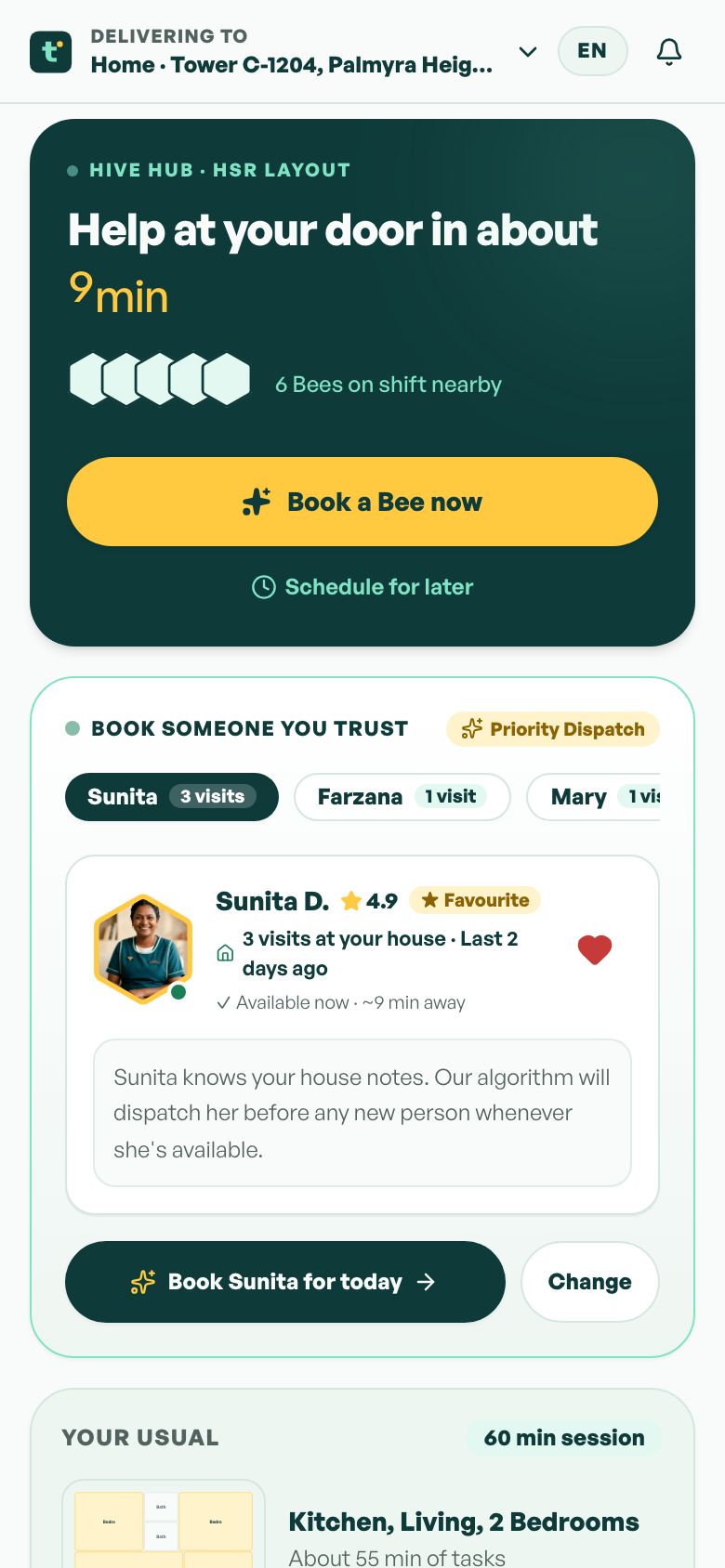
Our concept build TidyBee is on-demand house help billed by the half-hour, with verified helpers and dignity designed into the experience. Deep cleaning is sold per package rather than per half-hour, but the verification flow, slot booking and helper profiles transfer directly; crew assignment and job checklists would be added. Read about building a home services app, or share a brief with us for a fixed quote.
See the app a deep cleaning business runs on
We designed and built this concept end to end, every side of it, so you can open it and try it before you plan your own. Our home services app page covers the features, timeline and what moves the cost.
Questions people ask
How much does it cost to start a deep cleaning business in India?
A small start with two crews and one vehicle in a tier-2 city usually needs ₹3–7.5 lakh, mostly for machines, the vehicle and the first two months of wages. A larger metro firm with several crews and an office often needs ₹17–35 lakh. Treat these figures as planning ballparks, not quotes.
Do I need a licence for a cleaning business?
There is no single cleaning licence, but you need the usual registrations: GST once you cross the limit or when clients want tax invoices, Shop & Establishment for your premises, and EPF and ESI once your staff numbers bring you under them. Police verification of cleaners and insurance are not mandatory everywhere, but customers expect both.
How should I price deep cleaning?
Price by package and home size rather than by the hour, because customers want to know the final amount before you arrive. Build each price from crew wages, travel, chemicals and machine wear for that job size, add a margin, and charge extra for heavy grime, post-construction work or add-ons such as sofa shampooing.
What equipment do I need to start?
At minimum, a floor scrubbing machine, a wet-and-dry vacuum, a sofa and carpet extraction machine, a steam cleaner, ladders, microfibre cloths and professional chemicals for different surfaces. Buy for the packages you will actually sell, keep spare parts for the items that wear out, and add specialist machines once demand justifies them.
How do I handle damage complaints?
Prevent most of them by photographing the home before work starts, testing chemicals on a hidden patch and training crews on delicate surfaces. When something does get damaged, acknowledge it quickly, inspect it with the customer and settle fairly. Insurance that covers customer property lets you pay a claim without losing a month's profit.


