The short answer
Most new gyms in India start as either a compact functional-training studio of around 1,000–1,500 sq ft or a full-floor gym with cardio, machines and free weights. You need a registered business, GST, a Shop & Establishment registration, a municipal trade licence and, depending on the building, a fire NOC. Equipment and fit-out take most of the money; rent and salaries decide whether you survive.
The hard part is not opening. It is keeping members past the first three months, when the January and post-Diwali resolutions fade. Plan your pricing, classes and follow-up for retention from day one, and the rest of the business gets much easier.
Is a gym right for you?
Fitness has moved from a niche to a habit in most Indian cities. Office-goers want an early-morning slot near home, students want low monthly fees, women want a floor where they feel safe, and older members want guided strength work for knees and backs. Every neighbourhood has a slightly different mix, which is why the same gym concept can thrive in one area and struggle two kilometres away.
People who do well usually have one of three strengths: they are trainers with a following, they know the local area and its families, or they are operators who love systems — attendance, maintenance schedules, renewals. If you have none of these, partner with someone who does.
- Seasonal demand. Sign-ups spike in January, before weddings and after festivals, then dip in the monsoon and exam season.
- Peak hours. Most of your members want 6–9 am and 6–9 pm. Afternoons are quiet, so your space and staff sit idle for half the day unless you plan for it.
- Retention. Many members stop coming within weeks. A gym that renews members is far healthier than one that keeps hunting new ones.
- Capital locked in kit. Commercial equipment is expensive and loses resale value fast. Buy for your members, not for the brochure.
Business models to choose from
| Model | How it works | Suits |
|---|---|---|
| Full-floor gym | Cardio, machines and free weights, monthly to annual memberships, personal training on top | Owners with a larger budget and a dense residential catchment |
| Functional or group-class studio | Small floor, timed batches (strength, HIIT, mobility), capped class sizes | Trainers with a following; smaller spaces in busy areas |
| Women-only or senior-focused gym | Dedicated floor or timings, more guided coaching | Areas where a general gym leaves a group underserved |
| Society or corporate gym operator | You run gyms inside housing societies or offices for a fee | Operators who want low capex and steady contracts |
| Hybrid studio + online coaching | Studio classes plus paid home programmes and remote check-ins | Coaches who want income beyond the floor's capacity |
If you are unsure, start smaller. A studio with timed batches tells you exactly how many people turn up, which a big open floor hides. You can always add a second floor; you can't easily give one back.
Licences and registrations
| Registration | Why you need it | Where you get it |
|---|---|---|
| Business entity (proprietorship, partnership, LLP or private limited) | A legal identity for contracts, a bank account and liability | Bank and PAN for a proprietorship; MCA portal for LLPs and companies |
| GST registration | Gym memberships and personal training are taxable services once you cross the threshold, and corporate clients will want GST invoices | GST portal |
| Shop & Establishment registration | Covers working hours, holidays and staff records | State labour department, usually online |
| Trade or health licence | Most municipalities license gyms and fitness centres as a trade | Municipal corporation or local body |
| Fire NOC | Depends on building height, floor area and occupancy | State or city fire department |
| Music licences | Playing recorded music in a commercial space may need licences from copyright societies | The relevant copyright licensing bodies |
| Signage permission | Many cities regulate shopfront and rooftop boards | Municipal corporation |
Trainer certifications are not a government licence, but ask for them, keep copies, and make sure every floor trainer is trained in first aid and CPR. Get public liability insurance as well: someone will eventually drop a dumbbell on a foot.
Rules vary by state and city, and they change. Confirm the current requirements with your municipal office, a CA or a lawyer before you sign a lease. This is general information, not legal advice.
What it costs to start
| Item | Small start | Larger setup |
|---|---|---|
| Rent deposit and advance | ₹2–6 lakh | ₹8–25 lakh |
| Fit-out: flooring, mirrors, AC, changing rooms, lockers | ₹5–12 lakh | ₹20–50 lakh |
| Equipment | ₹8–20 lakh | ₹40 lakh–1 crore |
| Registrations, legal and CA | ₹30,000–1 lakh | ₹1–3 lakh |
| Launch marketing and founding-member offers | ₹50,000–2 lakh | ₹3–8 lakh |
| Software: billing, bookings, website | ₹20,000–1 lakh a year for ready-made tools | Custom apps quoted separately |
| Working capital (3–6 months of rent and salaries) | ₹4–10 lakh | ₹20–50 lakh |
These are rough ballparks to help you plan, not quotes. Rent, equipment brand and city change the numbers a lot. Get three quotes for fit-out and equipment, and keep working capital separate from your setup budget.
The line people underestimate is working capital. Annual memberships bring cash in early, but that money belongs to the next twelve months of service. Spend it as if it arrived monthly.
Step by step: from idea to first customer
- Pick your member. Office-goers, students, women, seniors or athletes. One clear answer shapes your floor, timings and price.
- Walk the catchment at peak hours. Stand outside existing gyms at 7 am and 7 pm. Count footfall, note prices on their boards, and ask people what they wish was different.
- Shortlist a site. Ground or first floor, a slab that can take heavy weights, ventilation, parking for two-wheelers, and visibility from the main road.
- Build the budget and runway. Setup costs plus six months of rent and salaries. Decide how much is your money, a loan or a partner's.
- Register the business, open a current account, and apply for GST, Shop & Establishment and the trade licence.
- Plan the floor before you buy. Map zones for strength, cardio and classes. Buy commercial-grade kit with a service contract.
- Hire and train trainers. Check certifications, run a trial session, and agree how personal-training revenue is shared.
- Set pricing and policies. Monthly, quarterly and annual plans, PT packs, a freeze policy for travel, and a clear refund rule written down.
- Pre-sell founding memberships four to six weeks before opening, with a site banner, a Google Business Profile and a WhatsApp number.
- Soft-launch with trial classes for a week, fix the snags, then open properly.
- Watch weeks three to eight closely. Call anyone who has not come in for ten days. That call saves more memberships than any ad.
Running it day to day
A gym is an operations business dressed up as a fitness one. The mornings run on whether the floor is clean, the AC works and the trainer turned up.
- Staffing peaks. Roster your strongest trainers for 6–9 am and 6–9 pm. Use afternoons for PT, women-only batches or senior sessions.
- Maintenance log. Note every machine fault, who fixed it and when. A broken treadmill for a week costs more in goodwill than the repair.
- Health declarations. Ask new members to fill a short health questionnaire and sign a waiver. Store it securely; it is personal health data, so read our DPDP Act checklist.
- Attendance and renewals. Track who comes, who has dropped off and whose plan ends this month. Renewal calls should go out two weeks before expiry.
- Cash flow. Collect by UPI and card, issue GST invoices, and keep annual-plan money in a separate account so a slow month doesn't eat it.
- Hygiene. Towels, wipes, clean washrooms and fresh air. Women members notice first and tell their friends.
Getting your first customers
Your first members will live or work within two or three kilometres. Win that circle before you spend on anything wider.
- Google Business Profile. Exact timings, real photos of the floor, the class timetable and your phone number. Our local SEO guide walks through it.
- Trial week. Let people try three sessions free or at a token price. Follow up personally on day four.
- Societies and offices. Offer a group rate to a housing society or a nearby office, with a batch at a time that suits them.
- Referrals. A free month for the member who brings a friend who joins.
- Honest content. Share workouts and member stories only with written consent. Avoid promises like guaranteed weight loss — they attract the wrong members and invite complaints.
Reviews matter, but ask for them after a good session rather than paying for them. Fake reviews can get your profile restricted.
The tech you need
Don't build an app on day one. Start with a billing tool that issues GST invoices, WhatsApp for reminders, a Google Business Profile and a simple website with your timetable and prices. Our guide on whether you need a website, an app or both helps you decide what to add when.
Once you have a couple of hundred members, or more than one branch, a proper fitness app starts paying for itself: class booking with capped slots, a digital pass at the door, renewals by UPI AutoPay (see UPI payments in your app) and a trainer app for attendance and progress notes.
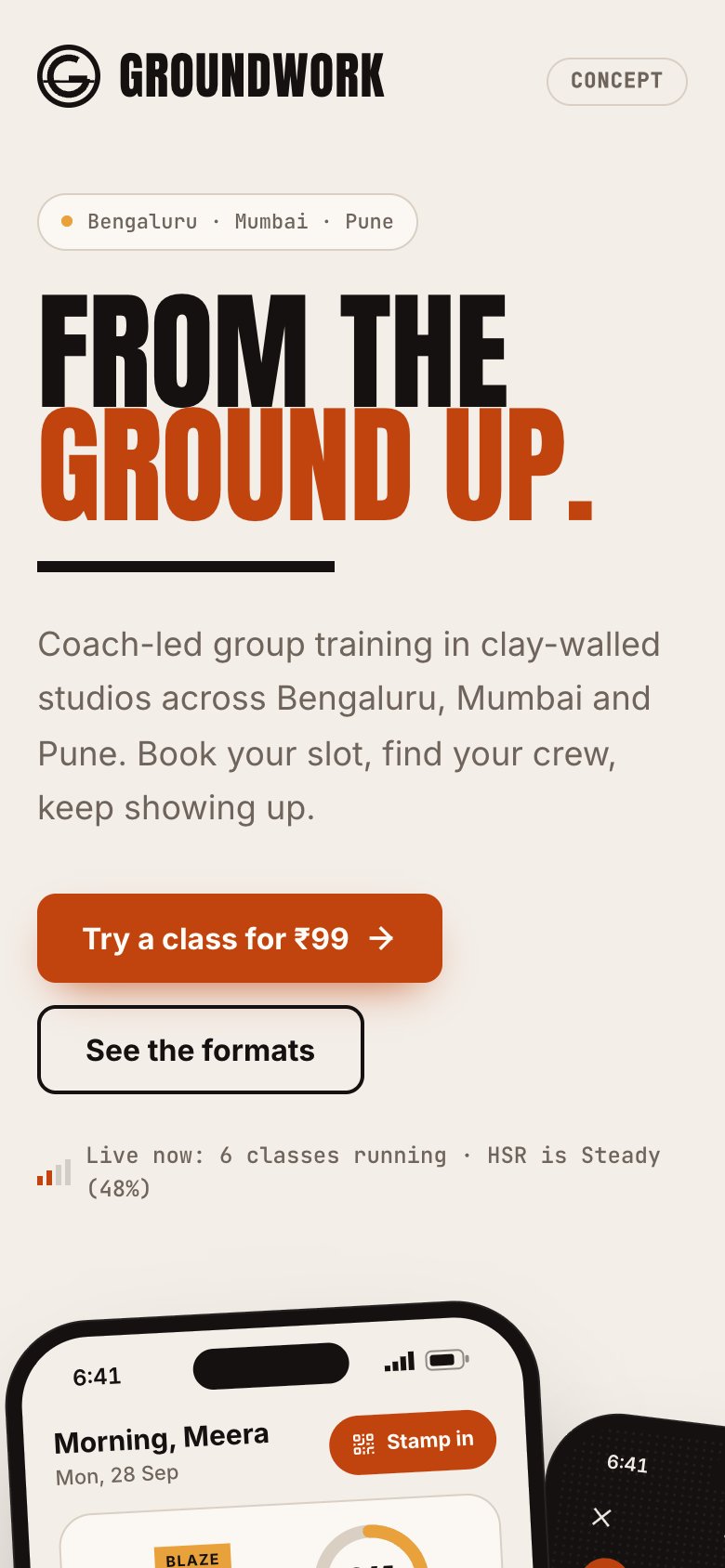
Our concept build Groundwork shows what that looks like: a member app with class bookings and workout streaks, a trainer app for check-ins and form feedback, and a studio ops dashboard for floor capacity, equipment maintenance and retention. If you're planning something similar, send us a brief — you'll get a fixed quote within 48 hours.
Running a physio corner inside the gym? Read how to start a physiotherapy clinic too.
See the app a gym runs on
We designed and built this concept end to end, every side of it, so you can open it and try it before you plan your own. Our fitness and wellness app page covers the features, timeline and what moves the cost.
Questions people ask
How much does it cost to open a gym in India?
A compact functional studio in a mid-sized city often needs somewhere around ₹20–50 lakh including deposit, fit-out, equipment and a few months of running costs. A large full-floor gym in a metro can need well over a crore. These are ballparks; rent, equipment brand and city move them a lot, so get local quotes before committing.
Do I need a licence to open a gym in India?
Yes, usually several. Most gyms need a registered business, GST once they cross the threshold, Shop & Establishment registration, a municipal trade or health licence and, depending on the building, a fire NOC. Some cities also regulate signage and recorded music. Requirements differ by state, so check with your municipal office or a CA.
How do gyms make money besides memberships?
Personal training is usually the biggest extra, followed by group classes, diet and coaching programmes, supplements and merchandise, and corporate or society contracts. Keep add-ons honest: members who feel pushed into packages stop renewing, which costs more than the upsell earned.
Should I take a franchise or build my own gym brand?
A franchise gives you a known name, playbooks and suppliers, in exchange for fees, royalties and less control over pricing and design. Your own brand costs less upfront and lets you fit the neighbourhood, but you build trust from scratch. Talk to existing franchisees before you sign anything.
How many members does a gym need to break even?
Divide your monthly fixed costs — rent, salaries, electricity, maintenance and loan repayments — by the average monthly revenue each member brings in, including personal training. That number is your break-even membership. Then plan how to reach it with renewals, not only new sign-ups.


