The short answer
A bike taxi business moves one passenger at a time on a two-wheeler, usually for short city trips where traffic makes cars slow and autos scarce. You can run your own fleet, sign up independent riders (captains) on an app, or serve one employer's commute. The demand is real in congested cities. The hard part is not the ride: it is the rules, which differ from state to state, and keeping captains safe, paid and on the road.
Start by checking your state's current position on bike taxis, then pilot in one corridor with a small group of verified captains, a booking flow your riders can use in two taps, and a simple ops screen. Grow only once you can show safe rides and steady repeat use.
Is a bike taxi business right for you?
Bike taxis fill a gap in Indian cities. A metro station is a kilometre from the office, the bus is full, and an auto will not come for a short hop. A two-wheeler weaves through the jam and costs less. Students, young office staff and shift workers are the people who ride most often, and they decide on price and speed.
People who do well in this business tend to have three things: local knowledge of where the demand sits (stations, tech parks, colleges, markets), patience with paperwork and police, and the discipline to run safety as a daily habit rather than a slogan.
The hard parts are worth naming up front:
- The rules move. Some states have welcomed bike taxis with a policy; others have restricted or paused them. A plan that works in one city may not be allowed in the next.
- Captains come and go. Many riders do this part-time. You need onboarding that is quick but still checks licences and documents properly.
- Trust is fragile. One bad incident spreads fast on WhatsApp. Women riders in particular need visible safety features before they try you.
- Margins are thin. Fares are low, so a business that leaks money on fuel, incentives or cancellations will not last.
Business models to choose from
Pick one model to start. You can add others later, but each brings different rules, costs and risks.
| Model | How it works | Suits |
|---|---|---|
| Captain marketplace | Independent riders sign up, go on duty in an app and accept trips. You take a commission or a daily pass fee. | Founders who can invest in an app and in captain supply |
| Own fleet | You buy or lease bikes (often electric) and hire riders on salary or per trip. | Operators who want control over quality and vehicles |
| Corporate commute | You run fixed shuttles for one employer, a tech park or a college, billed monthly. | A first step with predictable revenue |
| Last-mile feeder | Short fixed routes from metro or railway stations to nearby offices and homes. | Dense corridors with a clear start and end point |
A corporate commute or station feeder is a sensible way to test demand. You learn about captains, safety and pricing with a known group of riders before you open to the public.
Licences and registrations
Say this plainly to yourself and to any investor: whether you can legally run bike taxis depends on your state, and the answer has changed more than once in several states. Check the current position with your state transport department and RTO before you spend money.
| Registration | Why you need it | Where you get it |
|---|---|---|
| Company or firm registration | A legal entity to sign contracts, hold bank accounts and insure vehicles | Ministry of Corporate Affairs (company or LLP), or a partnership deed |
| GST registration | To bill riders and corporate clients and claim input credit where it applies | GST portal |
| Udyam registration | Recognition as a micro or small enterprise, useful for loans and schemes | Udyam portal |
| Shop & Establishment registration | Covers your office or ops hub and staff | Your state labour department or municipal body |
| Aggregator licence or state permission | Many states require app-based ride operators to hold a licence under their aggregator rules; some states do not allow bike taxis at all | State transport department |
| Commercial (transport) registration and permits | Depending on the state, bikes used as taxis may need transport registration, a permit and commercial insurance | Your RTO |
| Rider documents and police verification | Valid driving licence, vehicle papers and background checks for every captain | Captain's own documents, verified by you; police verification through the local process |
Rules for bike taxis and ride aggregators vary by state and change often. Confirm everything with your RTO, a chartered accountant and a lawyer before launch. This guide is not legal advice.
What it costs to start
Your costs depend mostly on whether you own bikes. A captain marketplace spends on technology and incentives; an own-fleet model spends on vehicles.
| Item | Small start | Larger setup |
|---|---|---|
| Company, GST, legal and permits | ₹50,000–₹1.5 lakh | ₹2–5 lakh |
| Vehicles (own-fleet only) | Lease 10 bikes: ₹30,000–₹60,000 a month | Buy 50 electric bikes: ₹40–60 lakh |
| Helmets, jackets, rain gear for riders | ₹50,000–₹1 lakh | ₹3–6 lakh |
| Rider app, captain app and ops dashboard | ₹3–8 lakh for a pilot build | ₹20–40 lakh for a full product |
| Insurance (vehicles and riders) | ₹50,000–₹1.5 lakh a year | ₹5–10 lakh a year |
| Captain sign-up and launch incentives | ₹1–3 lakh | ₹10–25 lakh |
| Working capital for 3–6 months | ₹5–10 lakh | ₹30 lakh and above |
These are rough estimates to help you plan, not quotes. Vehicle prices, insurance and permit costs change by state and over time. For how app costs are built up, read what an app costs in India.
Step by step: from idea to first customer
- Check your state's current rules on bike taxis and aggregators, in writing if you can.
- Pick one corridor: a metro station and the offices or colleges within three kilometres.
- Register your company, GST and Udyam, and open a current account.
- Decide your model: captain marketplace, own fleet or a corporate commute contract.
- Arrange vehicle and rider insurance, and buy helmets for both rider and passenger.
- Recruit your first 15–30 captains. Check licences, vehicle papers and complete police verification.
- Set a simple fare: a base fare plus per-kilometre, with a clear cap so riders trust it.
- Launch a basic rider booking flow and a captain app, even if the first version is small.
- Run a two-week pilot with a known group: one company, one college or one station.
- Watch cancellations, wait times and safety reports daily. Fix the worst one each week.
- Open to the public in that corridor once riders come back without being reminded.
Running it day to day
Captains. Supply is your first job every morning. Know how many captains are on duty at peak hours and where they are. Day passes or low commissions bring people back; late payouts drive them away. Pay out on a fixed, predictable schedule.
Safety. Make helmets non-negotiable for both people on the bike. Give riders an SOS button that reaches a real person, share-my-trip links, and a way to report a captain. Suspend first, investigate quickly, and tell the rider what happened.
Vehicles. If you own the fleet, track service dates, tyres and brakes for every bike. Electric bikes need a battery swap or charging plan that does not leave captains waiting.
Money. Most riders pay by UPI, some in cash. Reconcile both every evening. Watch the cost of incentives against what each captain earns you in a week. If you take commission, show captains exactly how it is worked out.
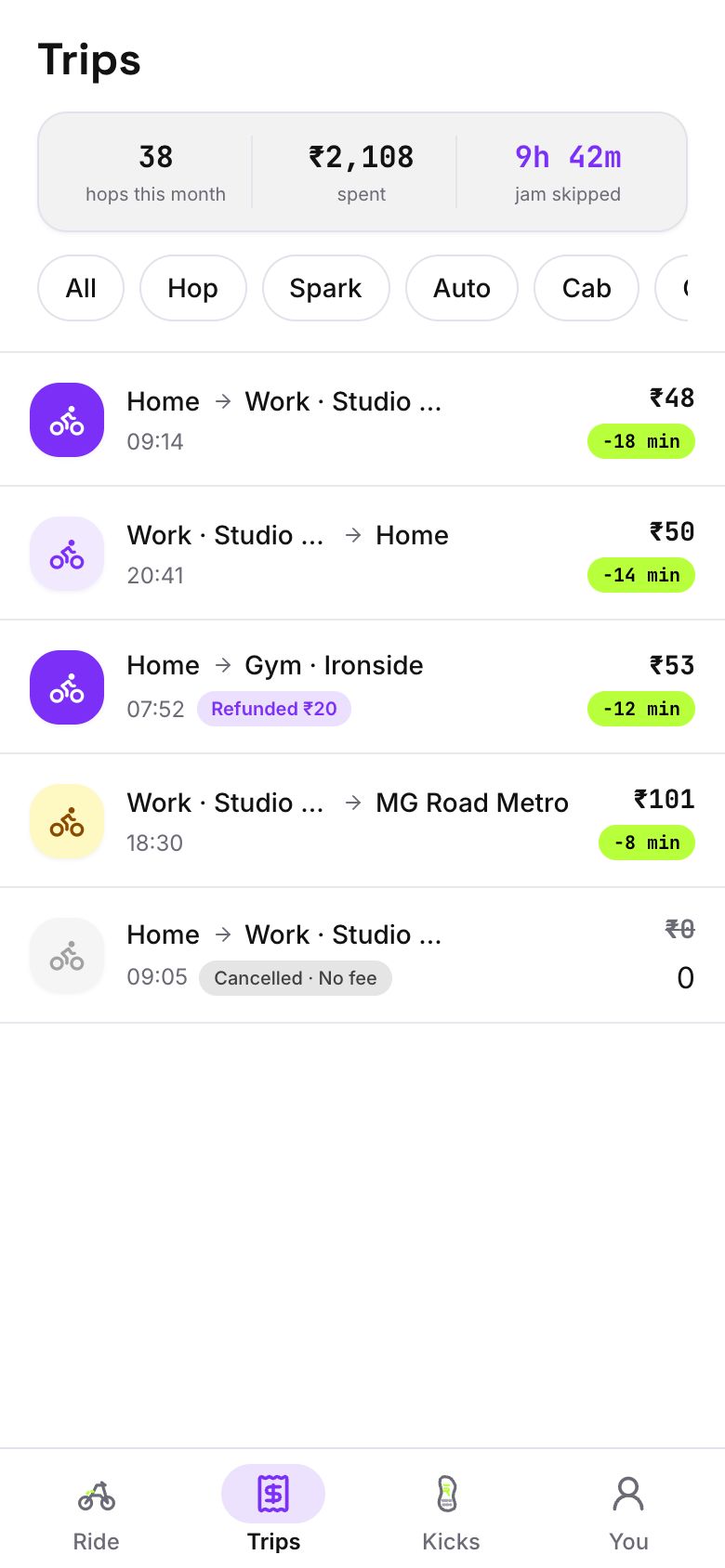
Your ops screen. You need one live view: demand by area, captains online, open trips and any SOS alerts. Our Hoppr concept build has a Pulse Board with a demand heatmap, surge caps and a live SOS feed, which shows the kind of screen an ops team watches all day.
Getting your first customers
Bike taxi demand is local and habit-driven. Win one corridor before you advertise to a city.
- Be found on Google. Set up a Google Business Profile for your ops hub and add the areas you serve. Our local SEO guide explains how to do it honestly.
- Partner with places. Offices, co-living spaces, colleges and hostels near your corridor can share a code with their people. A corporate commute deal brings riders every working day.
- Use WhatsApp. A broadcast for regular riders with peak-hour availability and a first-ride offer works better than general ads.
- Referrals. A free ride for both the rider and the friend they bring in is simple and effective.
- Be visible at the station. A branded pick-up point with a helmet stand makes you real to people walking past.
The tech you need
At the pilot stage you can take bookings over WhatsApp and a shared sheet, but you will outgrow it within weeks. A bike taxi business needs three connected pieces: a rider app, a captain app and an ops dashboard, all working from the same live data.
| Stage | What to use |
|---|---|
| Pilot, one corridor | WhatsApp bookings, a simple captain sign-up form, UPI payments, a shared sheet for trips |
| Public launch | Rider app with fare estimate and live tracking, captain app with duty toggle and earnings, a basic ops dashboard |
| Growing across a city | Demand heatmaps, surge caps, incentives, SOS desk, payouts and reports |
Read what goes into a taxi booking app, and open Hoppr, our concept build with a rider app, a captain app and a Pulse Board running on realistic data. If you are still deciding how much to build first, our guide to building an MVP helps you cut scope. When you're ready, send us a brief.
See the app a bike taxi business runs on
We designed and built this concept end to end, every side of it, so you can open it and try it before you plan your own. Our taxi booking app page covers the features, timeline and what moves the cost.
Questions people ask
Are bike taxis legal in India?
It depends on the state. Some states have a policy that allows bike taxis under aggregator or transport rules, while others have restricted or paused them, and positions have changed over time. Check the current rules with your state transport department and RTO before investing, and get the answer in writing if you can. This is not legal advice.
Do bike taxi captains need a commercial licence?
Every captain needs a valid driving licence for the vehicle they ride. Whether the bike needs commercial (transport) registration, a permit and commercial insurance depends on your state's rules. Some states have allowed private two-wheelers under specific schemes; others require transport registration. Ask your RTO what applies to your model before onboarding captains.
How much money do I need to start a bike taxi business?
A small pilot in one corridor with leased bikes or independent captains can start from around ₹10–20 lakh, including permits, insurance, a basic app and a few months of running costs. An owned electric fleet across a city needs far more. Treat these as rough estimates and build your own budget from the cost table above.
How do bike taxi businesses earn money?
Marketplaces earn a commission on each trip or charge captains a daily or weekly pass. Own-fleet operators keep the fare and pay riders a salary or per trip. Corporate commute contracts bill an employer monthly. Many operators combine models: a corporate contract for steady income, and public rides to use spare capacity.
What safety features should a bike taxi app have?
At minimum: verified captain profiles with photo and vehicle number, an SOS button that reaches a person, trip sharing with family, a helmet check before the ride, ratings and an easy way to report a problem. Some operators also offer women-captain options. Safety features matter most before the first ride, because that is when riders decide to trust you.


