The short answer
Decide early whether you will resell ice cream from a manufacturer or make your own, because that single choice changes your licences, equipment, costs and margins. Choose a spot with evening and weekend footfall, such as a market, a mall or a road near schools and parks, and plan for dependable power, since a few hours without electricity can ruin a freezer full of stock.
As a ballpark, a small resale parlour in a tier-2 city can open for roughly ₹5–12 lakh. A metro parlour making its own gelato or artisanal ice cream, with seating and a production room, often needs ₹28–60 lakh. This guide explains the models, licences, costs, launch steps, the daily routine and the tech for orders, delivery and party bookings.
Is an ice cream parlour right for you?
Ice cream sells to every age group, and Indian customers now try far more than vanilla and butterscotch: regional fruits, kulfi, sundaes, waffles and dairy-free scoops. Evenings, weekends, summer holidays and birthdays bring most of the sales, and party orders add bulk business on top.
The work suits people who enjoy serving families and who think about the cold chain all day. Ice cream that melts and refreezes loses its texture and becomes a food safety risk, so freezer temperatures, delivery handling and power backup are daily concerns. If you make your own, you also need patience to perfect recipes and cost each one.
The hard parts: electricity bills, winters and monsoons that slow sales, freezer breakdowns, and a crowded field of franchise brands. A clear identity, whether flavours nobody nearby offers or a warm space for families, helps you stand apart.
Business models to choose from
| Model | How it works | Suits |
|---|---|---|
| Resale parlour | Buy from a manufacturer or distributor and sell scoops and packs | Lower investment and simpler licences; thinner margins |
| Franchise outlet | Run a brand's outlet under its rules, menu and supply | Owners who want a known name and a set playbook |
| In-house artisanal | Make ice cream or gelato on site in small batches | Food-focused founders; higher margins and more compliance |
| Dessert parlour | Ice cream with waffles, shakes, sundaes and brownies | Malls and high streets; a higher bill per visit |
| Kiosk or cart | A small counter or cart at parks, beaches or events | Testing demand; seasonal and event income |
Resale is the quickest way in, while making your own gives you a product no one else can copy. Many founders start with resale or a mixed menu, learn what sells, and introduce their own flavours later. If you also plan a sit-down space with coffee and snacks, our cafe playbook covers the overlap.
Licences and registrations
| Registration | Why you need it | Where you get it |
|---|---|---|
| FSSAI licence or registration | Mandatory for selling ice cream; making it on site counts as manufacturing and may need a higher tier than resale | FSSAI online portal |
| GST registration | Needed above the turnover limit; parlours have their own GST treatment, so ask a CA how your sales are classified | GST portal |
| Shop & Establishment registration | Covers the outlet as a workplace under state law | State labour department or municipal body |
| Trade or health licence | City permission to sell food at the premises | Municipal corporation |
| Fire NOC | Often required for outlets in malls or larger buildings, depending on size | State or city fire department |
| Franchise approvals | If you take a franchise, the brand's own site approval and supply terms apply | The franchisor |
| Labelling and Legal Metrology | Take-home tubs and packs need FSSAI-compliant labels and net quantity declarations | FSSAI regulations and the state Legal Metrology department |
Products made with vegetable fat instead of milk fat must be sold and labelled as frozen dessert, not ice cream, under FSSAI standards. If you make your own, choose your base early and label it honestly.
Licence tiers and tax treatment for ice cream depend on your state and on how you make and sell it, and both get revised. Confirm your exact position with a CA or food safety consultant. This is not legal advice.
What it costs to start
| Item | Small start | Larger setup |
|---|---|---|
| Rent deposit and advance | ₹50,000–2 lakh | ₹4–10 lakh |
| Interiors, seating and signage | ₹1.5–3 lakh | ₹8–15 lakh |
| Display freezers, deep freezers and dipping cabinet | ₹1–2.5 lakh | ₹4–8 lakh |
| Batch freezer, pasteuriser and blast freezer | Not needed for resale | ₹5–12 lakh |
| Power backup and electrical work | ₹40,000–1 lakh | ₹1.5–3 lakh |
| Licences, CA and consultant fees | ₹20,000–60,000 | ₹1–2 lakh |
| Opening stock, cones and packaging | ₹50,000–1 lakh | ₹1.5–3 lakh |
| Staff and running costs, two months | ₹80,000–1.5 lakh | ₹3–6 lakh |
| Rough total | ₹5–12 lakh | ₹28–60 lakh |
Electricity is the cost that surprises new owners. Freezers run all night, every night, and summer bills climb fast. Buy energy-efficient freezers, size backup power for them, and train staff not to leave display cabinets open. If you make your own, cost each tub including dairy, sugar, flavourings, power and wastage before you fix prices.
These are indicative numbers for sanity checks, not quotes. Franchise fees, mall rent and equipment choices can push them well past this range.
Step by step: from idea to first customer
- Choose resale, franchise or in-house, and visit parlours of each type to see what they really sell on a weekday.
- Shortlist flavours and serving formats: cones, cups, sundaes, shakes and take-home tubs.
- Pick a location near schools, parks, markets or malls, and check the power load the building can supply.
- Register the business and apply for FSSAI in the right category, GST and the trade licence.
- Order freezers from a supplier with service support in your city, and install backup power before stock arrives.
- Fix your supply: a distributor schedule for resale, or a tested dairy source and recipes for in-house.
- Train staff on scoop weights, hygiene and freezer temperature logs.
- Set up billing and UPI, with combos and party packs entered as separate items.
- Create your Google Business Profile and Instagram page with photos of real scoops, not stock images.
- Open before summer if you can, with a launch-week offer for families and children.
Running it day to day
Mornings are quiet: check freezer logs, receive stock or run production, clean dipping cabinets and prepare toppings. Footfall builds after school hours and peaks late in the evening and at weekends. At night you note temperatures, count stock by tub, wash scoops and wells, and confirm that backup power is ready for any cut.
- Temperature logs: record freezer and display readings at fixed times and act on any rise at once.
- Portion control: weigh scoops during training and spot-check them every week.
- Stock rotation: first in, first out, and never refreeze a tub that has melted.
- Winter menu: push waffles, brownies and hot desserts served with a scoop when cold sales slow.
- Party orders: keep a booking sheet for birthday and event orders, with delivery times and tub counts.
Getting your first customers
Families and teenagers find ice cream shops by walking past and by checking photos on Instagram and maps. Bright, honest pictures of your scoops, a clear price list and fast service do most of the marketing. Set up your listing and reviews with help from our local SEO guide.
- Schools and tuition classes: a small after-school offer on weekdays brings children in with parents.
- Birthday parties: sell party tubs and a staffed scoop counter for homes and society events.
- Restaurants and caterers: supply tubs or kulfi wholesale for their dessert menus.
- Delivery: food delivery apps extend your reach, but pack for melting and keep an eye on commissions.
- Flavour of the month: a rotating special gives regulars a reason to come back and post photos.
The tech you need
Day one tech is simple: billing software that handles scoops, combos and GST, a UPI QR and a temperature log, even if that log is a notebook. Once regulars and party orders arrive, a website with your flavour list, party-pack ordering and delivery slots starts to pay off. Our guide to ordering online without commissions explains the options, and the restaurant website page covers what to build.
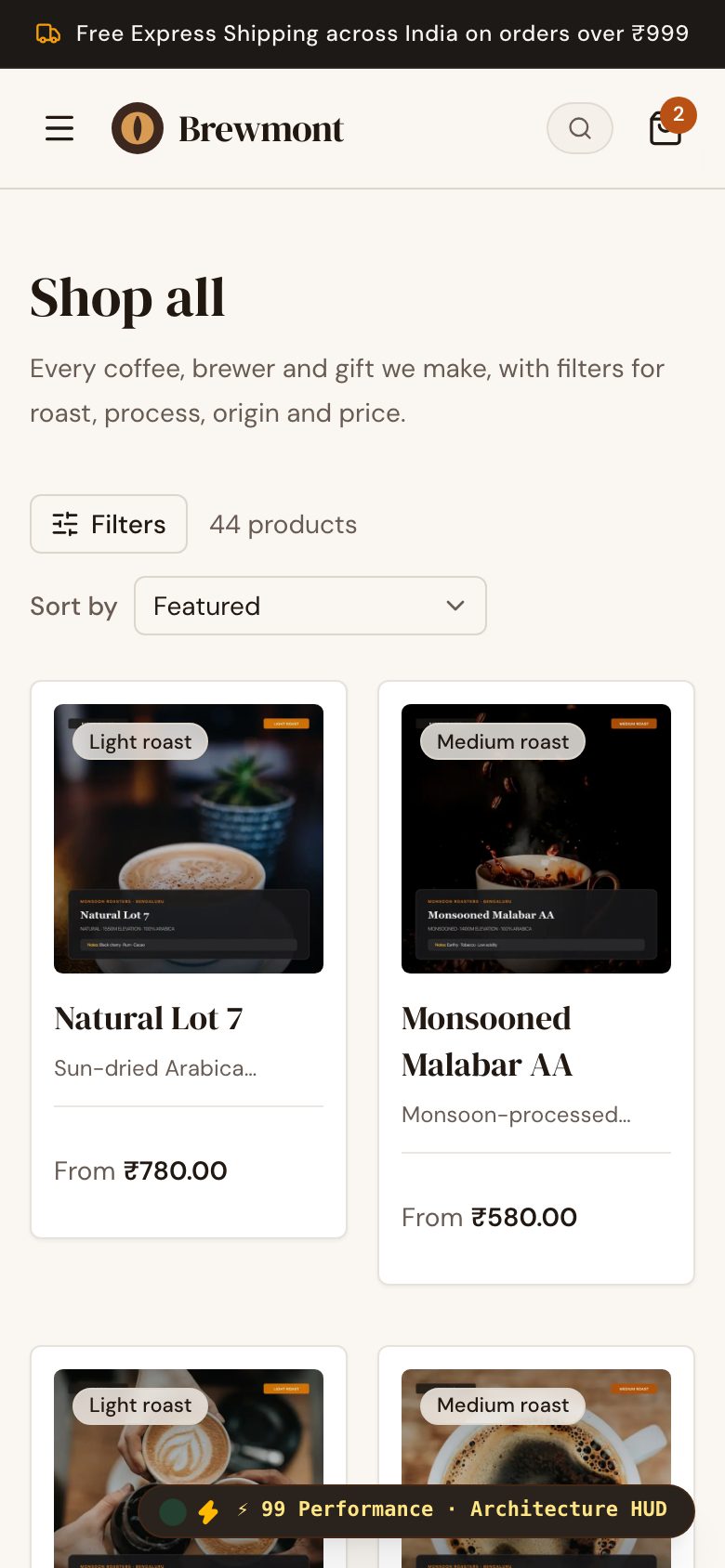
Our concept build Brewmont is a coffee storefront, but its tasting flight maps neatly onto an ice cream sampler of four mini scoops, and its shop and checkout could sell take-home tubs and party packs with delivery slots. Its subscription feature could become a monthly pint club for regulars. Send us a brief and we will reply with a fixed quote.
See the app a ice cream parlour runs on
We designed and built this concept end to end, every side of it, so you can open it and try it before you plan your own. Our restaurant website and qr ordering page covers the features, timeline and what moves the cost.
Questions people ask
How much does it cost to open an ice cream parlour in India?
Roughly ₹5–12 lakh for a small resale parlour in a tier-2 city, covering rent deposit, interiors, freezers, power backup, licences and stock. A metro parlour that makes its own ice cream, with seating and a production room, often needs ₹28–60 lakh. Production equipment and rent account for most of the difference.
Do I need a different licence to make ice cream myself?
Often yes. Making ice cream on site is treated as manufacturing, which may need a higher FSSAI category or tier than reselling a brand's products. You also have to follow standards on ingredients and labelling, including the line between ice cream and frozen dessert. A food safety consultant can confirm your category.
Is a franchise better than an independent parlour?
A franchise is easier to start, because you get a known name, a menu, supplies and training, but you pay fees and accept the brand's rules and margins. An independent parlour takes more effort to build, yet you keep control of flavours and pricing. Compare the franchise's total cost and payback honestly before signing.
How do I handle power cuts?
Install backup power that can run your freezers through the longest cuts common in your area, and keep freezer lids shut during an outage. Good freezers hold temperature for a while if left closed. Log temperatures after every cut, and throw out stock that has softened and refrozen rather than risk complaints.
Can an ice cream parlour survive winter?
Yes, if you plan for it. Sales drop in the colder months across much of India, so add hot chocolate, brownies, waffles, shakes and warm desserts, and promote party and festival tub orders. Parlours in warm southern and coastal cities see a smaller dip. Keep winter costs lean by trimming staff hours.


