The short answer
Sort out water and drainage before anything else. A car wash needs a reliable water source, a lawful way to discharge dirty water and, increasingly, a recycling system, so ask what your State Pollution Control Board and groundwater authority require for the site before you sign. Then choose the model, whether a fixed wash bay, a detailing studio or a doorstep service, that suits the cars and owners around you.
As a ballpark, a small semi-automatic wash bay on a rented plot in a tier-2 city costs roughly ₹5–14 lakh. A larger multi-bay site with automatic equipment, water recycling and a detailing room in a metro is closer to ₹35–85 lakh. This guide covers the models, the approvals, costs, launch steps, daily running, first customers and the tech.
Is a car wash business right for you?
Cars in Indian cities pick up dust, construction grime and monsoon mud, and many owners have no space or water to wash at home. Apartment residents, busy professionals, showrooms, taxi operators and owners of new cars who want paint protection all pay for washing and detailing, and the need comes back every week or two.
It suits people who like cars, notice details and can run a small crew to a fixed standard. You will spend the first months at the bay, checking wheels and door edges, training washers to avoid scratches and talking to customers about what their car needs.
The hard parts are water: summer shortages, borewell rules and the cost of treating what you discharge. Demand dips in heavy rain, washers leave for small raises, equipment breaks at the worst moment, and one scratched bonnet can turn into a long argument. Compliance on effluent and sludge is a real cost, not paperwork.
Business models to choose from
| Model | How it works | Suits |
|---|---|---|
| Fixed wash bay | Pressure wash, foam and vacuum at a roadside plot or fuel station | Main roads and busy residential areas |
| Detailing studio | Interior deep cleaning, polishing, ceramic coating and paint protection film | Metros and keen owners; a higher ticket |
| Doorstep wash | Staff on two-wheelers with waterless or low-water kits, working in parking areas | Apartment complexes; low capital, monthly plans |
| Automatic or tunnel wash | Machine washing with rollover gantries or a conveyor | High-traffic sites; heavy capital and power needs |
| Fleet washing | Contracts with taxi operators, rental firms and company fleets | Steady volume at tight rates |
A doorstep service is the cheapest way to test demand, because it needs kits rather than land. Fleets can steady a fixed bay's weekday income: our playbooks on starting a car rental business and a used car business show the kind of operators who buy washing in bulk.
Licences and registrations
| Registration | Why you need it | Where you get it |
|---|---|---|
| Trade licence | Permission to run a commercial service at the site | Municipal corporation or local body |
| Shop & Establishment registration | Covers the premises, working hours and staff | State labour department or municipal body |
| GST registration | Washing and detailing are taxable services, and fleet clients expect invoices | GST portal |
| Pollution control consent | Where your state requires it for vehicle washing and the effluent it creates, often a consent to establish and then to operate | State Pollution Control Board |
| Groundwater permission | If you draw from a borewell; many areas restrict commercial use | State groundwater authority |
| Water and drainage connections | Commercial water supply and permission to send treated water to the drain | Municipal body or water and sewerage board |
| Oily sludge and used oil disposal | These count as hazardous waste and must go to an authorised handler, never into the drain | Handlers authorised by the State Pollution Control Board |
Design the site so compliance is easy: a sloped bay draining into settling chambers and an oil and grease trap, a recycling unit that filters and reuses most of the water, and a log of sludge handed over. Courts and city bodies in several places have pressed car washes hard on water use, so ask before you assume an old site's arrangement is still acceptable.
Pollution and groundwater rules for car washes differ by state and even by area within a state. Confirm the requirements for your exact site with the State Pollution Control Board and a CA. This is not legal advice.
What it costs to start
| Item | Small start | Larger setup |
|---|---|---|
| Site rent deposit | ₹50,000–1.5 lakh | ₹3–8 lakh |
| Civil work: wash bay, drainage and oil trap | ₹1.5–3 lakh | ₹8–15 lakh |
| Pressure washers, foam units, vacuums and compressor | ₹1–2.5 lakh | ₹10–30 lakh |
| Water recycling unit | ₹50,000–2 lakh | ₹5–12 lakh |
| Borewell, tanks and plumbing | ₹50,000–1.5 lakh | ₹2–4 lakh |
| Chemicals, microfibre and detailing supplies | ₹20,000–50,000 | ₹1–2 lakh |
| Licences, consents and CA fees | ₹20,000–60,000 | ₹1–2 lakh |
| Staff wages for the first two months | ₹60,000–1.2 lakh | ₹3–6 lakh |
| Booking, billing and a website | ₹10,000–50,000 | ₹1–4 lakh |
| Launch marketing | ₹20,000–50,000 | ₹1–2 lakh |
| Rough total | ₹5–14 lakh | ₹35–85 lakh |
Running costs deserve as much attention as setup. Water, power for pumps and compressors, chemicals and cloth replacement come every month, and detailing products are expensive. Monthly plans smooth income across rainy weeks, and detailing jobs carry the margin that plain washes rarely do.
Think of these as estimates for a first plan, not quotes. Land, water and equipment choices change the total sharply from site to site.
Step by step: from idea to first customer
- Count the cars: stand at the site at peak hours, and list apartment complexes, offices, showrooms and taxi stands nearby.
- Check water and discharge for the site: municipal supply, borewell rules, drain connection and whether you need pollution control consent.
- Lease with approvals in mind, with a clause that lets you exit if consent or water permission is refused.
- Register the business, open a current account and apply for GST, Shop & Establishment registration and the trade licence.
- Build the bay: a proper slope, drainage, oil trap, recycling unit, good lighting and a shaded waiting area.
- Buy equipment from sellers who offer local service and keep spare parts in stock.
- Hire and train washers on a written checklist and paint-safe methods: clean mitts, separate cloths for wheels and plenty of lubrication.
- Set the menu and prices: exterior wash, interior clean, full wash, monthly plans and detailing add-ons, shown clearly at the bay.
- Start an arrival inspection with photos of existing scratches and dents, signed by the customer.
- Set up payments and reminders: UPI, GST invoices and a list of customers' numbers for wash-due messages.
- Open with a launch offer for nearby societies and offices, and collect a phone number with every car.
Running it day to day
Mornings bring office-goers who want a quick exterior wash; weekends bring families and detailing jobs that take hours. Rainy weeks go quiet and dusty summer weeks fill up. The day ends with cleaning the bay, emptying traps, washing microfibre cloths and checking the recycling unit for the next morning.
- Arrival inspection: photograph each car's condition before washing, so damage claims can be settled with evidence.
- Quality checks: wheels, door jambs, glass and interiors, with a supervisor signing off every car before it leaves.
- Water and sludge: clean the traps and recycling filters on schedule, and log every sludge handover.
- Equipment upkeep: service pumps, replace worn hoses and keep wiring dry, since water and electricity meet all day.
- Monthly plans: track which subscribers are due and send reminders, because missed washes turn into cancelled plans.
Getting your first customers
Car owners choose a wash on convenience and trust. Being easy to find on maps, showing before-and-after photos and visibly protecting the paint win more customers than discounts do. A Google Business Profile with services, prices, photos and reviews is the first thing to set up.
- Apartment complexes: monthly doorstep plans or reserved weekend slots for residents.
- Showrooms and dealers: pre-delivery washes and detailing for new and used cars.
- Fleets: taxi operators, rental companies and company cars on a monthly contract.
- WhatsApp reminders: a short message when a wash is due, with a booking link. Our guide to WhatsApp for business explains how to send them properly.
- Loyalty: a free interior clean after a set number of paid washes keeps regulars coming back.
The tech you need
On day one you need billing with GST invoices, a UPI QR, a register of cars and monthly plans, and WhatsApp for reminders. Next comes online slot booking to spread demand across the day, plans that renew automatically, and before-and-after photos stored against each car so disputes are easy to settle.
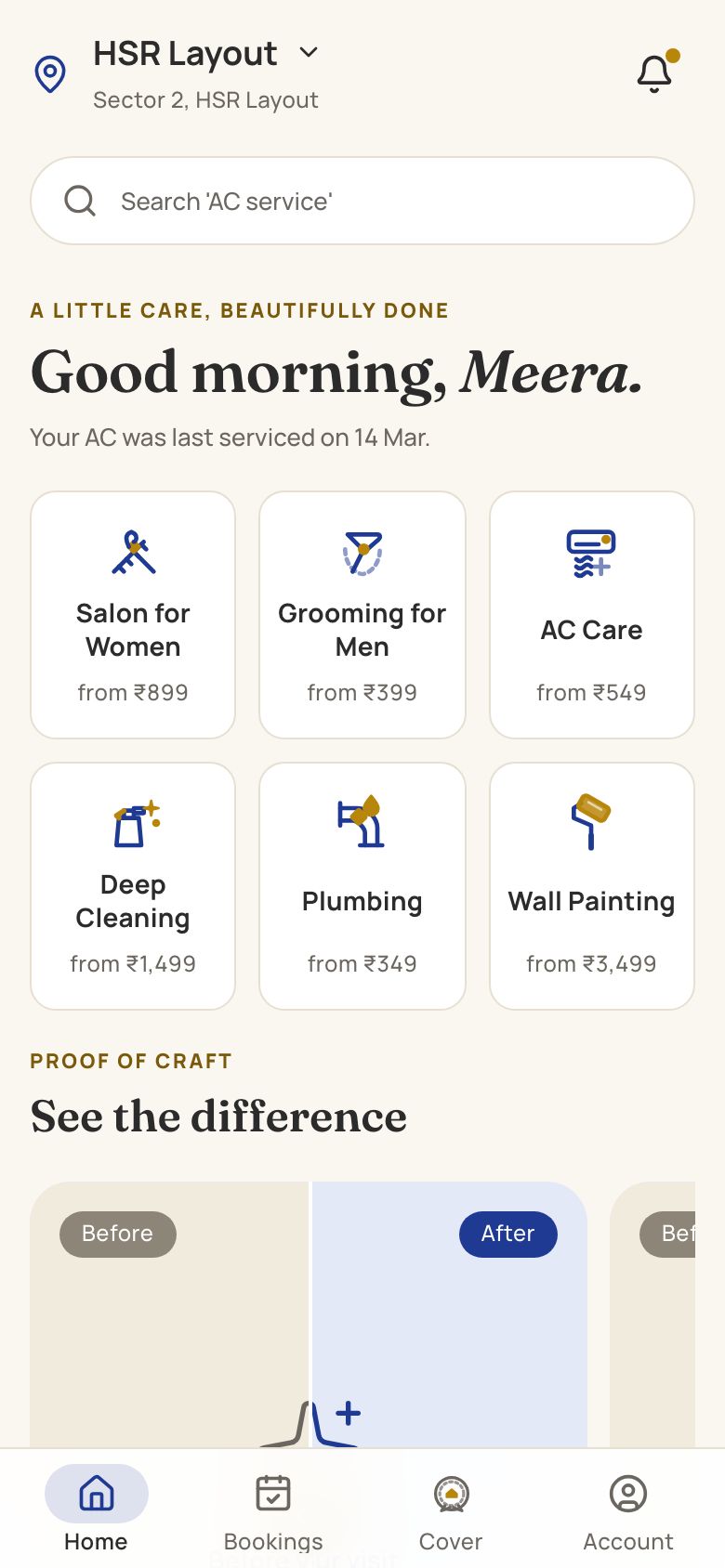
For doorstep washing, a home services app brings it together: customers book a slot for a specific car, washers get routes and checklists, and you see photos from each job. Our concept build HomeCraft shows that pattern for scheduled home services, with each certified pro showing their finished work, and it maps closely onto a doorstep car wash. Recurring plans follow the subscription delivery app model. Send us a brief for a fixed quote.
See the app a car wash business runs on
We designed and built this concept end to end, every side of it, so you can open it and try it before you plan your own. Our home services app page covers the features, timeline and what moves the cost.
Questions people ask
How much does it cost to start a car wash business in India?
A small semi-automatic wash bay on a rented plot in a tier-2 city usually costs about ₹5–14 lakh. A metro site with three or four bays, automatic equipment, water recycling and a detailing room is closer to ₹35–85 lakh. A doorstep service with low-water kits and two-wheelers can start for much less and is a good way to test demand.
Do I need pollution control approval for a car wash?
In many states, yes. State Pollution Control Boards often require consent for vehicle washing because of the oily wastewater it produces, and some also expect water recycling. If you use a borewell, the state groundwater authority may need to approve it too. Check with the board for your exact site before you sign a lease or build the bay.
Can a car wash recycle its water?
Yes, and it is increasingly expected. Wash water runs through settling chambers and an oil and grease trap, then a recycling unit filters it for reuse in the first rinse and pressure wash. Fresh water is still needed for the final rinse. Recycling cuts your water bill and makes approvals and summer shortages far easier to handle.
Is a doorstep car wash a good way to start?
Often, yes. It needs no land, little civil work and modest equipment: low-water or waterless kits, microfibre, a vacuum and a two-wheeler per washer. Apartment complexes with many cars in one place make the routes efficient. The challenges are training washers to avoid scratches, getting society permission and keeping monthly plans renewing on time.
How do I avoid damage claims from customers?
Inspect and photograph every car on arrival, note existing scratches and dents, and have the customer sign or acknowledge the record. Train washers in paint-safe methods with clean mitts and separate cloths for wheels. Keep photos after the wash too. Clear evidence settles most disputes quickly, and careful work prevents most of them.


