The short answer
Start with a craft and artisans you know — block prints, blue pottery, brass, terracotta, textiles, paintings — and a buyer who values the story. Price fairly for the artisan's time, photograph the work well, and sell through your own store, Instagram, exhibitions and, later, export buyers.
Handmade work sells on story and trust. Show who made it, how and where, and be honest that no two pieces are identical. That honesty turns small variations into a reason to buy.
Is a handicraft business right for you?
India has an extraordinary range of crafts, often concentrated in clusters — Jaipur's block prints and blue pottery, Moradabad brass, Kutch embroidery, Channapatna toys, Bengal terracotta. Buyers in Indian cities and abroad increasingly want handmade, sustainable and story-led products for their homes and wardrobes.
This suits founders who enjoy working with people as much as with products. You will spend time with artisans, managing quality without killing what makes the work special. A design eye helps: small changes in colour, size or use can turn a traditional craft into something a city buyer wants today.
The hard parts: production is slow and seasonal, consistency varies, fragile items break in transit, and pricing handmade work fairly while staying affordable takes care.
A useful test before you commit: can you name three artisans you would trust with a repeat order, and ten people outside your circle who would pay full price for their work? If you can, you have the beginnings of a supply chain and a market. If not, spend a season visiting clusters and selling small batches at fairs before you invest in stock or a brand.
Business models to choose from
| Model | How it works | Suits |
|---|---|---|
| Own brand from artisans | You design or curate, artisans make, you sell under your brand. | Founders with design sense and cluster links |
| Artist or maker storefront | A single artist sells originals, prints and commissions. | Artists and studios |
| Curated marketplace | Many artisans list; you curate, handle payments and take a commission. | Founders who want scale and can manage quality |
| Exhibitions and retail | Craft fairs, pop-ups and stockists. | Products people need to touch |
| Export and B2B | Supplying stores, hotels and buyers abroad in bulk. | Clusters with capacity and consistent quality |
Licences and registrations
| Registration | Why you need it | Where you get it |
|---|---|---|
| GST registration | Online sellers generally need a GSTIN, and marketplaces ask for one. Confirm the rules for handicrafts with a CA. | GST portal |
| Udyam registration | Records you as an MSME, useful for schemes and some loans. | Udyam portal |
| Artisan card (for artisans) | Some government schemes and fairs ask artisans for an artisan identity card. | Office of the Development Commissioner (Handicrafts) |
| Trademark | Protects your brand name. | Indian trademark registry |
| Legal Metrology declarations | Packaged consumer goods need declarations such as MRP and maker details. | Follow packaging rules; state Legal Metrology department |
| IEC | Needed to export, which many handicraft businesses do. | DGFT portal |
Some products — certain woods, animal-derived materials — have additional rules, especially for export. Confirm your exact obligations with a CA or export consultant. Not legal advice.
What it costs to start
Assumptions: a small start is a curated brand working with 3–5 artisans, selling online. A larger setup is a marketplace or brand with many artisans, a warehouse and exhibition presence.
| Item | Small start | Larger setup |
|---|---|---|
| First stock (advance to artisans) | ₹50,000–2 lakh | ₹5–15 lakh |
| Samples and design development | ₹20,000–75,000 | ₹1–4 lakh |
| Packaging for fragile items | ₹20,000–60,000 | ₹1–3 lakh |
| Photography | ₹20,000–60,000 | ₹1–3 lakh |
| Website or marketplace | ₹30,000–1.5 lakh (hosted store) | ₹10–30 lakh (multi-artisan marketplace) |
| Exhibitions and travel | ₹30,000–1 lakh | ₹2–6 lakh |
Estimates only, not quotes. A marketplace with artist accounts, commissions and payouts costs much more to build than a single store.
Step by step: from idea to first customer
- Choose a craft and cluster you can visit, and a buyer — home decor, gifting, fashion or collectors.
- Meet artisans, understand their process, capacity and seasons, and agree fair prices and timelines.
- Develop a small range that keeps the craft but fits modern homes or wardrobes.
- Pay advances on time and write down specifications for each order.
- Register for GST and Udyam, and protect your brand name.
- Design packaging that protects fragile pieces and tells the maker's story.
- Photograph each piece in use, and note size, material and care.
- Open a store or Instagram catalogue with UPI and WhatsApp ordering.
- Book a stall at a craft fair or pop-up to test prices in person.
- Collect stories, reviews and photos from your first buyers.
Running it day to day
Artisans. Pay on time, plan orders around harvest and festival seasons, and share sales feedback. Reliable relationships are your supply chain.
Quality. Agree what variation is acceptable and check pieces before dispatch. Explain natural variation on product pages.
Inventory. Many pieces are one of a kind; mark sold items quickly so you do not sell the same piece twice.
Shipping and breakage. Double-box ceramics and glass, photograph packed items and choose couriers who handle fragile goods.
Returns. Be clear about returns on handmade and custom pieces. Confirm COD orders before shipping.
Cash flow. Artisans need advances; marketplaces and exhibitions pay later. Keep a buffer.
Story and records. Keep a short record for each artisan and each piece — who made it, where, the technique and the time it took. Buyers ask, stockists want it for their own tags, and it turns into product-page copy and social content without extra work.
Getting your first customers
- Instagram and video. The making process is your best content.
- Craft fairs and exhibitions. Meet buyers, stockists and corporate gifting leads.
- Corporate and festive gifting. Diwali and year-end orders can carry a season.
- WhatsApp. Share new pieces with repeat buyers first.
- Stockists and concept stores. Consignment or wholesale to boutiques in other cities.
- Marketplaces. Handmade and craft marketplaces add reach.
The tech you need
Early on: a store with good photos, UPI and WhatsApp. Later: one-of-a-kind stock handling, commission requests, artist or artisan profiles, and — if you bring many makers together — a marketplace with seller accounts, approvals and payouts.
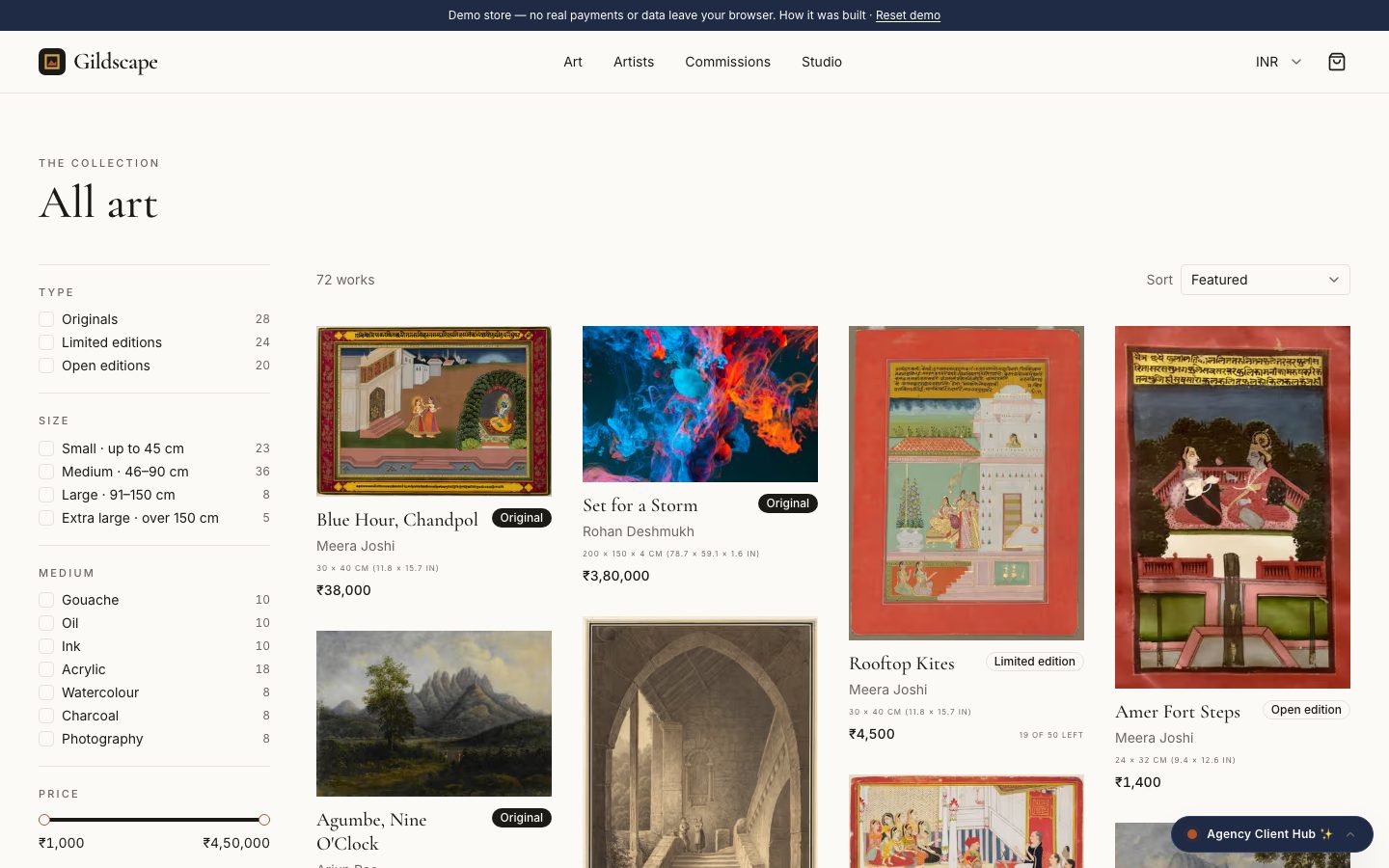
Our concept build Gildscape is an artist storefront and art marketplace with commissions, a cart and an artist studio — a picture of where a handmade business can go. Read what a marketplace app involves, or start smaller with an ecommerce website. If you sell in Jaipur or another craft city, our city pages cover local needs too.
Payments matter more than they look. Buyers abroad pay by card, buyers in India by UPI, and artisans need prompt payouts. Read adding UPI payments to your app before you choose a gateway, and if you sell to export buyers, keep invoices and shipping documents in one place from day one.
See the app a handicraft business runs on
We designed and built this concept end to end, every side of it, so you can open it and try it before you plan your own. Our marketplace app page covers the features, timeline and what moves the cost.
Questions people ask
How do I start a handicraft business from home?
Choose one craft and a few artisans you can work with directly, develop a small range, register for GST, and sell through Instagram, WhatsApp and a simple online store. Ship carefully packed orders from home and use craft fairs to meet buyers. Grow the range once you know what sells.
How should I price handmade products?
Start with materials, the artisan's fair pay for their time, packaging, shipping, platform fees and your margin, then compare with similar work. Do not underprice handmade work to match machine-made goods. Explain the time and skill involved — buyers who value handmade will pay for it.
Do I need GST to sell handicrafts online?
Online sellers generally need GST registration, and marketplaces usually ask for a GSTIN. Handicrafts may have specific rules, so confirm with a CA. If you plan to export, you will also need an IEC from the DGFT.
How do I ship fragile handicrafts safely?
Wrap each piece individually, use rigid boxes with padding on every side, double-box ceramics and glass, and photograph items once packed. Choose couriers experienced with fragile goods, consider transit insurance for high-value items, and state your breakage policy clearly.
Can I export handicrafts from India as a small business?
Yes. Many small businesses export handicrafts. You need an IEC, proper invoicing and packaging, and you should check rules for materials such as certain woods. Start with a few buyers, samples and small orders, and get advice from an export consultant or CA.


