The short answer
Start with one building you can fill, close to a place people must reach every day: a tech park, a cluster of colleges or a large hospital. Lease rather than buy, register with the municipal body where your city asks for it, verify every resident with the police from day one, and price beds so the building covers its rent well before it is full. A PG lives on occupancy and on how long residents stay, so food, clean bathrooms and a fair warden matter more than fresh paint.
As a ballpark, leasing and furnishing a 20-bed PG with meals in a tier-2 city costs roughly ₹7–15 lakh before the first resident moves in, and a 60–80 bed building in a metro often needs ₹30–65 lakh. This guide covers the models, the registrations, the setup budget, a launch sequence, daily operations, filling beds and the software that keeps rent and complaints in order.
Is a PG accommodation business right for you?
Every year, students leave home for college and coaching, and young professionals move to a new city for their first job. Most can't afford a flat of their own, or don't want the bother of a lease, furniture and a cook. A furnished bed with meals, Wi-Fi and laundry within walking distance of work or class is exactly what they are after, which is why PGs fill quickly around tech parks, campuses and hospitals.
It suits people who like systems and don't mind being on call. You are running a small hotel with a long-stay twist: residents have expectations, parents phone you, the cook takes leave, and the water tank runs dry at 7 am when twenty people want a bath. If you own or can lease a building in the right area and can stay patient through a slow first few months, it can give steady monthly income.
The hard parts are well known. Occupancy dips at the end of the academic year and when people change jobs. Some residents stop paying, deposit refunds turn into arguments, landlords object to changes, and neighbours or housing societies complain about a commercial use next door. Food is the most common complaint of all.
Business models to choose from
| Model | How it works | Suits |
|---|---|---|
| Leased building | You lease a whole house or floor and let it out bed by bed | First-time operators near demand; needs the landlord's written consent |
| Own property | You convert a building you already own | Lowest rent risk; check that the building's approved use allows it |
| Student PG | Shared rooms, fixed meal times, stricter rules and parents kept informed | Streets near colleges and coaching hubs |
| Working professionals' PG | Single and twin rooms, flexible meals, late entry | Areas around tech parks and office clusters |
| Co-living | Private rooms, shared lounges, app-based services and a higher rent | Metros with young professionals who pay for comfort |
| Management contract | You run beds in an owner's building for a share of revenue | Owners who want income without the daily work |
Decide early whether you will house men, women or both in separate buildings, and whether meals are included. Those two choices shape the layout, staffing, security and the registrations you need. If travellers and short stays appeal more than monthly residents, how to start a hostel is the closer guide.
Licences and registrations
| Registration | Why you need it | Where you get it |
|---|---|---|
| Trade licence or PG registration | Some city corporations require PGs to register or hold a trade licence for the premises | Municipal corporation or local body |
| Police verification of residents | Many city police forces expect operators to collect ID and submit resident details | Local police station or the city police's online tenant verification service |
| Approval for the building's use | Running beds in a residential building may need permission, and a lease that allows it | Municipal or development authority; the landlord's consent in writing |
| Fire NOC | Needed for larger buildings, depending on height, floor area and occupancy | State or city fire department |
| FSSAI registration or licence | Required if you cook and serve meals to residents | FSSAI, online |
| GST registration | Whether PG rent attracts GST has been debated and ruled on, so ask a CA how your rents are treated | GST portal |
| Shop & Establishment registration | Covers your staff and their working hours under state law | State labour department or municipal body |
| Written stay agreements | Sets rent, deposit, notice period, house rules and refunds for each resident | Drafted with a lawyer; stamp duty rules vary by state |
Housing societies and apartment associations often have their own rules on commercial use, so read the bylaws before leasing a flat inside one. Udyam registration is optional but can help with loans.
Requirements differ between cities, and some are enforced only after a complaint, which is no reason to skip them. Check the current list with your municipal office, the local police and a CA before you sign a lease. This is not legal advice.
What it costs to start
| Item | Small start | Larger setup |
|---|---|---|
| Rent deposit and advance | ₹1–3 lakh | ₹6–15 lakh |
| Repairs, painting, plumbing and wiring | ₹1–2.5 lakh | ₹5–12 lakh |
| Beds, mattresses, wardrobes and study tables | ₹1.5–3 lakh | ₹6–12 lakh |
| Kitchen, water purifier and dining area | ₹50,000–1.5 lakh | ₹3–6 lakh |
| Washing machines, geysers and power backup | ₹1–2 lakh | ₹4–8 lakh |
| Wi-Fi, CCTV and door access | ₹30,000–80,000 | ₹1.5–4 lakh |
| Registrations, agreements and CA fees | ₹20,000–60,000 | ₹1–2 lakh |
| Staff wages for the first two months | ₹60,000–1.2 lakh | ₹3–6 lakh |
| Listings, signage and a simple website | ₹20,000–80,000 | ₹1–3 lakh |
| Rough total | ₹7–15 lakh | ₹30–65 lakh |
The deposits you collect from residents are not income. Keep them in a separate account so you can refund people on time when they leave; slow refunds produce the angriest reviews a PG ever gets. Plan to cover rent and wages for three or four months while occupancy builds, because the first beds fill faster than the last few.
Treat every figure here as a planning ballpark, not quotes. Rents, furniture and labour vary widely from one neighbourhood to the next.
Step by step: from idea to first customer
- Pick the demand first: list the colleges, offices or hospitals within a short walk or ride, and ask people there what they pay now and what they dislike about their current PG.
- Choose men's, women's or separate buildings, and decide whether meals are included. This drives the layout and the staff you hire.
- Inspect buildings with a checklist: bathrooms per bed, water supply, power backup, ventilation, fire exits and space for a kitchen.
- Get the landlord's written consent for PG use, and check society rules and the building's approved use before you pay a deposit.
- Register the business, open a current account, and start the trade licence, FSSAI and GST paperwork alongside.
- Furnish for durability: sturdy cots, lockable cupboards, decent mattresses and enough plug points beside every bed.
- Hire a warden and a cook, plus housekeeping, and write down house rules, meal timings and the visitor policy.
- Set up resident onboarding: ID collection, police verification, a signed stay agreement and a receipt for the deposit.
- Photograph every room honestly and publish rates, inclusions and the notice period on your listings and website.
- Open with a move-in offer for the first residents and ask each of them for feedback after their first week.
Running it day to day
A PG day starts early. Breakfast and packed lunches are ready before residents leave for work or class, housekeeping cleans bathrooms and common areas mid-morning, and the warden handles deliveries, repairs and visitor entries through the afternoon. Dinner and a night-time check of the gate close the day. Rent collection, utility bills and vendor payments bunch up at the start of every month.
- Rent and deposits: send reminders before the due date, take UPI, issue a receipt every time, and record any deductions at move-out with photos.
- Food: rotate a weekly menu, let residents vote on it now and then, and keep the kitchen clean enough to show any visiting parent.
- Maintenance: fix water, Wi-Fi and power issues the same day. A complaints log with a promised fix time stops small irritations turning into notice letters.
- Safety: CCTV at entrances, a visitor register, working fire extinguishers and an emergency contact list near the door.
- Resident data: you hold ID copies and phone numbers for everyone. Store them securely and share them only where the law requires; our DPDP checklist is a sensible starting point.
Getting your first customers
Most people look for a PG on their phone, often typing the name of the nearby office or college. A Google Business Profile with photos of the real rooms, food and bathrooms, the right category and accurate prices gets you found. Our local SEO guide walks through the setup.
- Rental listing sites and apps: list every room type with real photos and an honest list of what's included.
- College and office tie-ups: HR teams and student welfare offices often keep a list of verified PGs for newcomers.
- WhatsApp: answer enquiries within minutes with a room video, the rate card and directions. See how small businesses use WhatsApp.
- Referrals: offer a small rent discount to residents who bring a friend who stays for a few months.
- Visit days: let parents and new joiners see the room, the kitchen and the warden before anyone pays.
The tech you need
On day one you need a rent sheet or a simple rent app, UPI collection, a register for resident IDs and police verification, and a Google Business Profile. That covers twenty beds. As you add buildings, you'll want a website with room types and live availability, online booking with a deposit, digital stay agreements, and a resident app for rent, complaints, meal opt-outs and notices.
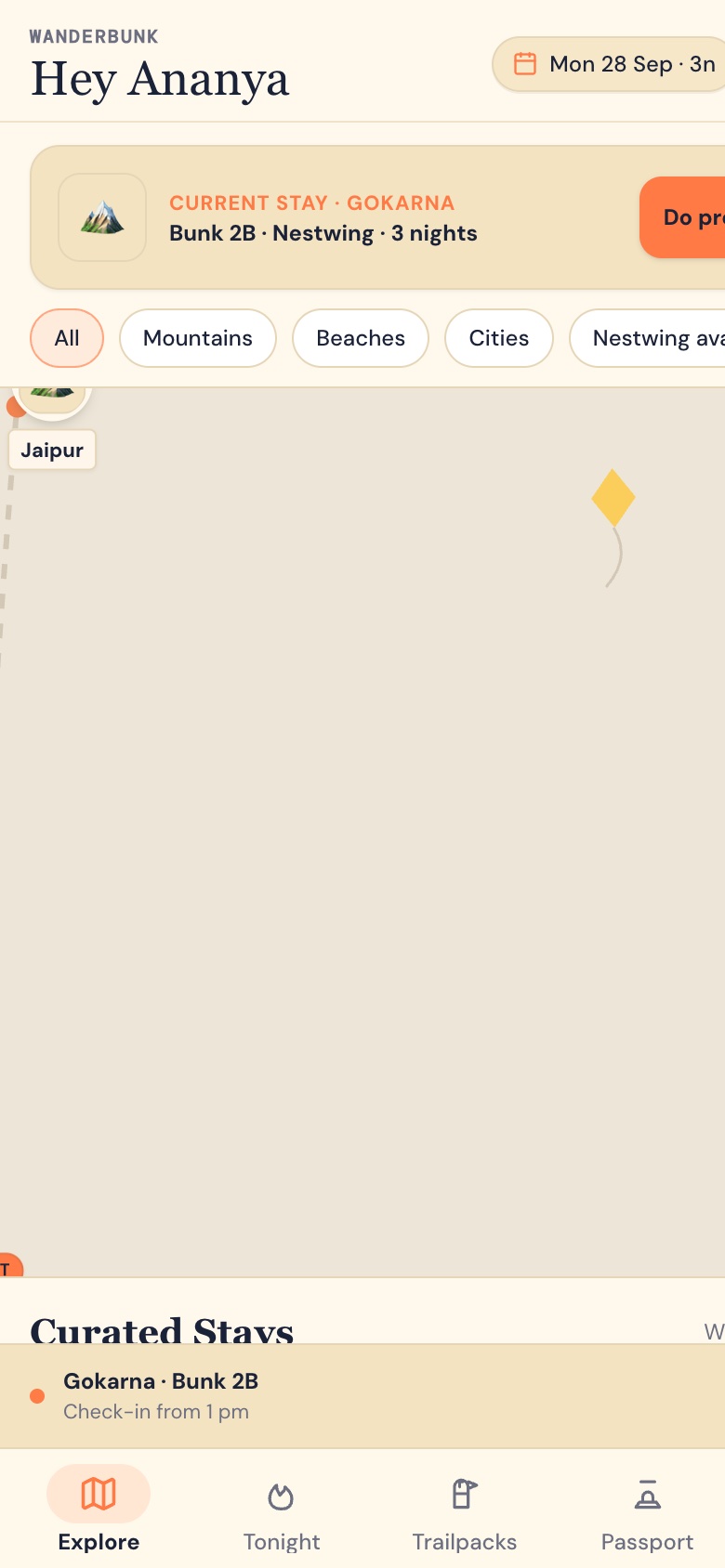
Our concept build Wanderbunk was designed for backpacker hostels, but much of it carries over to a PG: bed-level inventory, online check-in with ID upload, and a resident app where people raise requests and read notices. See what a booking website for stays involves, read our guide to websites for stays, or send us a brief for a fixed quote within 48 hours.
See the app a PG accommodation business runs on
We designed and built this concept end to end, every side of it, so you can open it and try it before you plan your own. Our travel booking website page covers the features, timeline and what moves the cost.
Questions people ask
How much does it cost to start a PG in India?
Roughly ₹7–15 lakh for a leased, furnished 20-bed PG with meals in a tier-2 city, and ₹30–65 lakh for a 60–80 bed metro building fitted out to a co-living standard. The rent deposit, furniture and repairs take most of it. Keep three or four months of rent and wages aside too, because beds rarely fill in the first month.
Do I need a licence to run a PG?
In many cities, yes. The municipal body may require a trade licence or a PG registration, and the police usually expect you to verify every resident. If you serve food you need FSSAI registration, and larger buildings may need a fire NOC. Requirements vary a lot from city to city, so confirm them with the local office and a CA.
Is GST charged on PG rent?
It depends, and the position has been argued over. Rent for residential use is treated differently from short-stay accommodation, and tax rulings have gone different ways for PGs and hostels. Your rent level, the length of stays and whether meals are bundled can all matter. Ask a CA to look at your exact setup before you price beds or issue invoices.
How do I handle residents who don't pay rent?
Prevent it with a clear stay agreement, a deposit, and rent due on a fixed date with reminders before it. If someone falls behind, talk to them early and agree a written plan. Adjusting the deposit is the usual last resort. Avoid locking people out or removing their belongings, which can land you in legal trouble.
Is a PG business profitable?
It can be steady once beds stay full. Profit depends on the gap between your lease rent and what residents pay, how full you keep the building across the year, and how tightly you control food and power costs. Operators who fix complaints quickly keep residents longer, and long stays are where the margin sits.


