The short answer
Most homestays and small hotels in India get bookings from three places: travel platforms that take a commission, repeat guests who call or message, and people who find them on Google Maps. A good direct-booking website grows the last two and lowers your dependence on the first.
You do not need a giant system. You need a fast site that shows your rooms honestly, a calendar that never double-books, a way to take a deposit by UPI, and a simple desk screen for check-ins. Add a guest app only when you have something guests will use during the stay.
Why direct bookings matter
Platforms bring guests you would not otherwise reach, and most properties should stay on them. But every direct booking keeps the full room rate and gives you the guest's details for next time.
| Booked through a platform | Booked direct | |
|---|---|---|
| Commission | A share of every booking | Payment gateway fee only |
| Guest contact | Often limited | Yours, with consent |
| Repeat visits | Usually rebook on the platform | Can rebook with you, with an offer |
| Control | Their rules on cancellations and display | Your rules, your photos, your story |
What the website needs
- Real photos of every room and the views, the bathroom and the approach road. Honest photos reduce bad reviews.
- Room types with clear inclusions: meals, bed type, occupancy, heating or air-conditioning, parking.
- A booking engine with live availability, seasonal rates and minimum-stay rules.
- A location section with a map, how to reach you by road, rail and air, and what is nearby.
- House rules and cancellation policy in plain language before payment.
- Fast pages on mobile data. Many guests book from their phone, often while travelling.
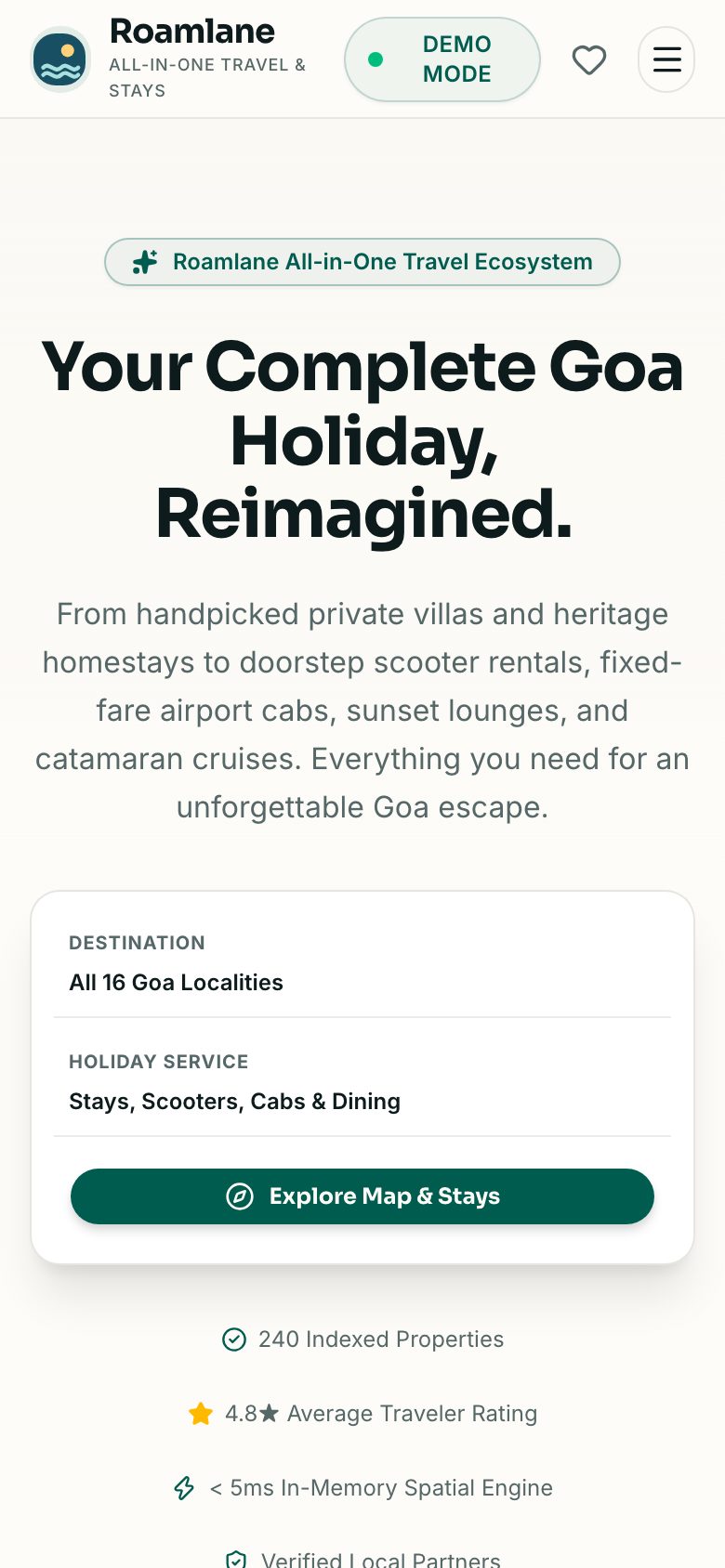
If you are in a tourist region with many properties, a directory-style site like our Roamlane concept — map and list search across stays, with scooter rentals and local tips — can serve a whole cluster of hosts.
Write the words yourself. A short paragraph on who the property suits — families, couples, trekkers, remote workers — and what a typical day looks like does more than a list of amenities. Mention honest limits too: steep stairs, no lift, a walk from the road, weak mobile signal. Guests who know in advance rarely complain.
If you have several properties, give each its own page with its own photos, rooms and reviews, and one shared booking engine underneath. That keeps search engines and guests clear about which place they are looking at.
Calendars, deposits and no double bookings
Double bookings are the fastest way to lose a guest and a review. If you sell on platforms and direct, your availability must stay in sync.
- Keep one calendar as the source of truth, and sync it with each platform through a channel manager or calendar feeds.
- Take a deposit or full payment by UPI or card at booking, and send a confirmation by email and WhatsApp.
- Hold a room for a few minutes during checkout so two people cannot pay for the same dates.
- Make refunds by policy automatic where possible, so staff do not have to calculate them by hand.
For how UPI collection and refunds work, read adding UPI payments to your app.
The staff desk
A small property does not need complex hotel software, but the person at the front desk needs one screen that answers: who is arriving today, which rooms are ready, and who has paid.
- A bed or room availability grid for the next few weeks.
- Check-in with ID details captured as required, and check-out with the final bill.
- Housekeeping status: dirty, cleaning, ready.
- Add-ons like meals, treks, airport pickups or scooter rentals, billed to the stay.
Wanderbunk includes a property staff desk with a bed matrix, check-in and check-out, room turnover and an activity desk. Peakride shows how a hill-town counter can work offline for handovers and deposits when the signal drops.
Guest messages and the stay itself
Most of the guest experience happens on WhatsApp: directions, check-in time, the Wi-Fi password, a late arrival. Automate the predictable messages and keep a person on the rest.
- Booking confirmation with the address, map pin and contact number.
- A message the day before with directions, check-in time and parking notes.
- A welcome message on arrival with Wi-Fi details and house info.
- A thank-you after check-out with a review link and a returning-guest offer.
A full guest app makes sense for hostels and resorts with events, activities and social features — not for a four-room homestay. See WhatsApp for business apps for how to do messaging properly.
Reviews start here. Guests who were looked after on WhatsApp — a quick answer about the road, a late check-in handled kindly — leave better reviews than guests who could not reach anyone. Make sure every message goes to a shared inbox the whole team can see, not one manager's personal phone, so nobody waits when that person is busy or off duty.
Guest ID collection and reporting rules for accommodation vary by state and local authority. Confirm what your property must capture and report, and store ID documents securely — see our DPDP Act checklist.
Rates, seasons and offers
Small properties often run on one rate all year and leave money on the table in peak season. A booking engine should let you price the way the season actually behaves.
- Seasonal rates for peak, shoulder and off-season, with long weekends and festival dates set in advance.
- Minimum stays in peak periods, so a one-night booking does not block a three-night one.
- Weekday and long-stay discounts for remote workers and slow travellers — a growing group for hill and beach properties.
- Direct-booking perks like breakfast, early check-in or a free pickup instead of a price cut, so platform rates stay in line.
- Returning-guest codes sent after check-out, which reward the guests most likely to book direct.
Keep the rules simple enough that the owner can change them from a phone. Complex revenue tools rarely suit a property with eight rooms.
Mistakes small properties make
- Beautiful photos of one room standing in for every room type. Guests who get the other room leave the review you were afraid of.
- No price on the website, just "call for rates". Many guests will not call; they book somewhere that shows a price.
- A booking form, not a booking engine. A form that emails you creates back-and-forth, and guests book elsewhere while they wait.
- Calendars updated by hand across several platforms. It works until the first double booking in peak season.
- No plan for poor signal. In hill and rural properties, the desk needs to keep working when the internet drops, and sync later.
For how much a direct-booking site usually costs and what changes the number, read how much a website costs in India.
Getting found
Your Google Business Profile, reviews and website work together. Keep your name, address and phone the same everywhere, reply to reviews, and link the profile to your booking page. Our local SEO guide covers this step by step.
A direct-booking website for one property is usually a 3–6 week build. A multi-property site with a staff desk and channel sync takes longer. See travel booking websites for the full scope, or the Goa and Dehradun pages for regional context.
Questions people ask
Can a small homestay take bookings on its own website?
Yes. A simple site with real photos, a booking engine, UPI or card payment and automatic confirmations is enough. The important part is keeping one calendar in sync with any platforms you also sell on, so you never double-book a room.
How do we avoid double bookings across platforms?
Pick one calendar as the source of truth and sync it with every platform, either through a channel manager or calendar feeds. Hold rooms briefly during checkout, and update availability the moment a booking or cancellation comes in from any channel. Check the sync daily in peak season.
Do guests want a hotel app?
Rarely, for small properties. Guests are happy with WhatsApp messages and a good website. A guest app makes sense for hostels, resorts or chains where guests book activities, join events or stay often enough to keep it installed. Start with messaging and add an app only if guests ask for more.
How long does a hotel booking website take?
A direct-booking site for a single property usually takes 3 to 6 weeks. A multi-property site with a staff desk, channel sync and add-on bookings takes longer. We give a fixed quote within 48 hours of your brief, with scope and timeline in writing.


