The short answer
An EV scooter dealership sells and services electric two-wheelers for one or more manufacturers. You run a showroom, handle test rides, finance and registration paperwork, and keep a service bay for batteries, motors and software issues. As more buyers consider electric, a dealer with trained staff and honest advice can build a loyal local base.
Start by choosing a manufacturer whose product, service support and payment terms you trust. Read the dealer agreement carefully, plan for a service bay from day one, and be ready to answer every buyer's first question: how far will it go, and where will I charge it?
Is an EV scooter dealership right for you?
Electric scooters appeal to daily commuters, delivery riders and families who want lower running costs. Buyers are curious but cautious. They ask about range, charging at home, battery life, resale value and service. A dealer who answers these honestly wins trust that online ads cannot.
People who do well here usually have retail or automobile experience, a good location on a busy road, and the patience to explain a new technology to first-time buyers. You should be comfortable with inventory, finance partners and after-sales service.
The hard parts:
- Choosing a brand. Manufacturers vary widely in product quality, spare parts supply and dealer support.
- Incentives change. Government incentives for EVs have changed over time, which affects prices and demand.
- Service is the business. Buyers come back for battery checks, software updates and repairs. Poor service ruins your reputation quickly.
- Inventory and working capital. Stock ties up money, and models change fast.
Business models to choose from
| Model | How it works | Suits |
|---|---|---|
| Exclusive brand dealership | Showroom and service for one manufacturer under its dealer agreement | Cities where the brand is known and supported |
| Multi-brand EV store | Several brands under one roof, where agreements allow it | Buyers who want to compare; smaller towns |
| Sub-dealer or experience point | A smaller outlet linked to a main dealer | Lower capital and smaller catchments |
| Service and charging centre | Repairs, battery checks, accessories and charging for EV owners | Areas with many EVs but few service points |
| Fleet sales | Selling to delivery companies and businesses in bulk | Dealers near commercial hubs |
Licences and registrations
| Registration | Why you need it | Where you get it |
|---|---|---|
| Business entity and current account | Required by manufacturers and finance partners | Bank; Ministry of Corporate Affairs for LLPs and companies |
| GST registration | To buy from the manufacturer and invoice buyers | GST portal |
| Udyam registration | MSME recognition for loans and schemes | Udyam portal |
| Shop & Establishment and trade licence | For your showroom and staff | Municipal body or state labour department |
| Dealer agreement with the manufacturer | Sets your territory, margins, targets, stock and service obligations | The manufacturer (OEM) |
| Trade certificate | Lets a dealer move and test-ride vehicles before they are registered | Your RTO |
| Fire safety and electrical approvals | Charging and battery storage need safe wiring and fire precautions | Local fire department and electricity authority, as applicable |
You will usually handle registration for buyers through the RTO process your state uses for new vehicles. Some vehicles, like low-speed scooters, may have different registration requirements; your manufacturer should tell you what applies to each model.
Dealer requirements, EV incentives and registration processes vary by state and change. Confirm with the manufacturer, your RTO and a chartered accountant. This guide is not legal advice.
What it costs to start
| Item | Small start | Larger setup |
|---|---|---|
| Showroom rent and deposit | ₹30,000–₹80,000 a month plus deposit | ₹1–3 lakh a month plus deposit |
| Interiors and branding (often to OEM standards) | ₹3–8 lakh | ₹15–30 lakh |
| Security deposit to the manufacturer | Varies by brand; ask before you sign | Varies by brand |
| Initial vehicle stock | ₹10–20 lakh | ₹50 lakh–₹1 crore |
| Service bay, tools, diagnostics, chargers | ₹2–5 lakh | ₹10–20 lakh |
| Staff training and salaries for 3 months | ₹2–4 lakh | ₹10–15 lakh |
| Website, CRM and marketing | ₹50,000–₹2 lakh | ₹5–10 lakh |
These are planning estimates, not quotes. Manufacturer deposits, margins and stock requirements differ a lot between brands.
Step by step: from idea to first customer
- Shortlist three or four manufacturers and visit their existing dealers. Ask about service, spares and payment terms.
- Study your area: who commutes, who delivers, where people park and charge.
- Apply for the dealership and read the dealer agreement with a lawyer.
- Register your business, GST and Udyam, and arrange working capital or inventory finance.
- Find a showroom on a visible road with space for a service bay and safe charging.
- Get trade certificate, fire safety and electrical work done.
- Hire and train sales and service staff with the manufacturer.
- Tie up with banks and NBFCs for buyer finance.
- Set up a test-ride route and a simple range demonstration.
- Open with a local event: test rides, charging demos and a talk on running costs.
- Follow up every buyer at the first service and ask for a review.
Running it day to day
Sales. Most buyers visit two or three times. Track every enquiry with a name, number, model and next step. Explain range honestly, including how it changes with speed, load and hills.
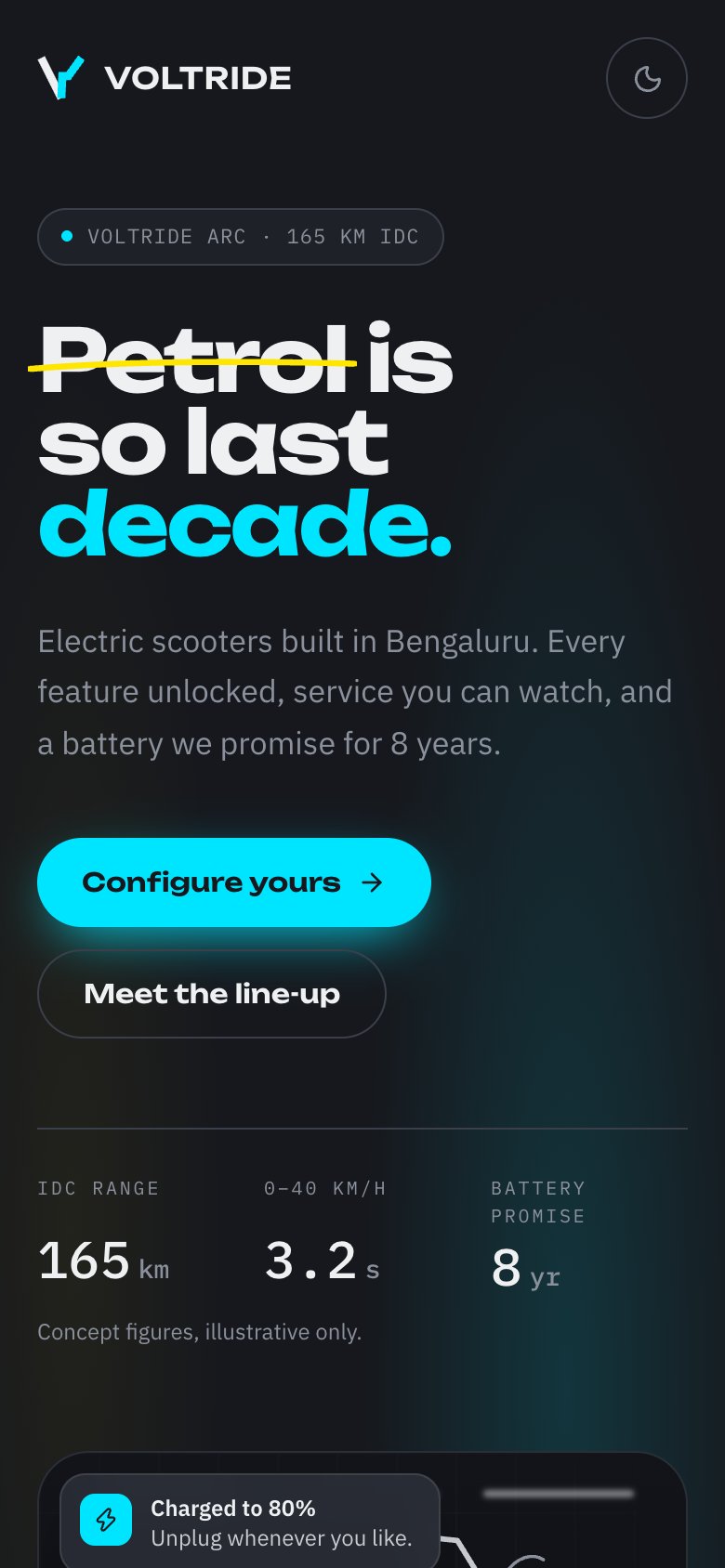
Service. Battery health checks, software updates and quick repairs keep owners loyal. Train technicians and keep common spares in stock. Our Voltride concept build includes an owner app and a service technician app, which shows how service bookings and job cards can work.
Charging and safety. Store batteries and charge vehicles in a well-ventilated, fire-safe area. Teach every buyer safe home charging.
Finance and paperwork. Keep registration, insurance and finance paperwork moving quickly. Delays here are a common complaint.
Stock. Watch which colours and variants sell, and do not over-order models that are about to change.
Getting your first customers
- Google Business Profile. Buyers search “electric scooter showroom near me”. Keep photos, hours and reviews fresh. See our local SEO guide.
- Test-ride events. Take scooters to apartment complexes, colleges and office parks.
- Delivery riders and fleets. Running costs matter most to people who ride all day. Talk to local delivery businesses.
- WhatsApp follow-ups. Send brochures, finance options and test-ride slots to every enquiry.
- Referrals. Offer existing owners a free service or accessory for every buyer they bring.
The tech you need
Your manufacturer may provide a dealer management system for orders and warranty. You will still benefit from your own website and a simple CRM for leads, test rides and service reminders.
| Stage | What to use |
|---|---|
| Opening | Google Business Profile, WhatsApp, a lead register, the manufacturer's dealer system |
| Growing | A business website with models, a range calculator, test-ride booking and service booking |
| Multiple outlets | A CRM, service job cards, owner reminders and reports across showrooms |
See what goes into a business website, and open Voltride, our concept build of a connected EV scooter with an owner app, service technician app and website configurator. Our guide to website costs in India explains budgets. Send us a brief when you're ready.
See the app a EV scooter dealership runs on
We designed and built this concept end to end, every side of it, so you can open it and try it before you plan your own. Our business website page covers the features, timeline and what moves the cost.
Questions people ask
How do I get an EV scooter dealership in India?
Apply directly to the manufacturer, usually through the dealership enquiry section of its website or its regional sales team. They will assess your location, capital, experience and showroom plans. Before signing, visit existing dealers, read the dealer agreement with a lawyer and understand the security deposit, margins, stock targets and service obligations.
How much investment is needed for an EV showroom?
A small showroom in a mid-size town can need roughly ₹20–40 lakh including interiors, initial stock, a service bay and working capital, before any manufacturer deposit. A large city showroom needs much more. Requirements vary a lot by brand, so ask each manufacturer for their full investment estimate in writing.
Do EV dealers need a trade certificate?
Generally, yes. A trade certificate from the RTO allows a dealer to move and demonstrate vehicles before they are registered. Requirements can depend on the vehicle category, as some low-speed scooters are treated differently. Check with your RTO and your manufacturer about what applies to the models you sell.
Is an EV dealership profitable?
It can be, but margins on vehicles alone are often modest. Profit usually comes from a mix of vehicle sales, accessories, extended warranties, finance commissions and steady service income. Choose a brand with reliable products and good spares supply, because after-sales service drives both profit and word of mouth.
Should an EV dealer have a website?
Yes, even if the manufacturer has one. Local buyers search for nearby showrooms, test rides and service. Your own site can show the models you stock, finance options, test-ride booking and service booking for your town, and it connects your Google listing to something more useful than a phone number.


