The short answer
To start a mutual fund distribution business in India, you pass the relevant NISM certification, register with AMFI for an ARN, complete the distributor KYC process, and then empanel with the fund houses whose schemes you want to offer. You earn commission from the fund houses on regular plans, so the business is built on trust and on clients who stay invested for years.
It needs very little money to start and a lot of patience. The first year is mostly conversations, paperwork and small SIPs. The ones who last treat it as a service business: clear explanations, quick help with KYC and nominations, and a review every year.
Is a mutual fund distribution business right for you?
More Indian households now invest through SIPs, but many first-time investors still want a person to explain the options, help with KYC and stay with them when the market falls. That person is often a local distributor: someone known in the colony, the office or the family network.
People who do well here usually have three things. They are comfortable talking about money without jargon. They are organised enough to track dozens of folios, nominations and SIP dates. And they can wait, because income comes as trail commission that grows slowly as the money under their care grows.
The hard parts are real. Direct plans and investing apps mean you must earn your place with service, not access. A falling market brings anxious calls. And the rules are strict: a distributor sells and services products, and must not present that as fee-based investment advice.
Distribution and advice are different licences. If you want to charge clients a fee for advice, that is investment advice, which needs separate SEBI registration as an investment adviser.
Business models to choose from
| Model | How it works | Suits |
|---|---|---|
| Individual distributor | You hold the ARN yourself and service clients personally, often from home. | Career switchers, retired bankers, part-time starters |
| Sub-broker to a larger distributor | You work under an established distributor's platform and share commission. | People who want back-office support in year one |
| Small firm or LLP | A firm with its own ARN and certified employees, each with their own employee code. | Two or three partners with a shared client base |
| Distributor plus allied products | Mutual funds alongside other licensed products, such as insurance, where you hold those licences too. | Families who want one person for all paperwork |
Whichever model you pick, keep the client relationship in your own name and records. Your book of folios is the business.
Licences and registrations
| Registration | Why you need it | Where you get it |
|---|---|---|
| NISM certification for mutual fund distributors | The qualifying exam for selling and servicing mutual funds | National Institute of Securities Markets |
| ARN (AMFI Registration Number) | Identifies you as a registered distributor; fund houses pay commission against it | AMFI, through its registration process |
| Know Your Distributor (KYD) | Verifies your identity and bank details for commission payments | Completed as part of ARN registration |
| Employee unique code | Each certified person in a firm who advises on sales needs their own code | AMFI, for employees of a registered firm |
| Empanelment with fund houses | Lets you offer their schemes and receive commission | Each fund house's distributor onboarding |
| GST registration | Commission income can attract GST once you cross the threshold | GST portal |
| Udyam registration (optional) | Recognises you as a small business for some schemes and loans | Udyam portal |
You also agree to follow SEBI's rules and AMFI's code of conduct for distributors. In practice that means disclosing commissions, recommending schemes that suit the client, keeping records and never promising returns. Certification needs renewing periodically, so put the date in your calendar.
Rules change. Confirm current requirements with AMFI, NISM, SEBI and a chartered accountant before you start. This guide is not legal, tax or financial advice.
What it costs to start
This is one of the cheapest businesses to start. The real cost is the time before commission income covers your living expenses.
| Item | Small start | Larger setup |
|---|---|---|
| Certification, ARN and KYD | A few thousand rupees | A few thousand rupees per certified person |
| Laptop, phone and printer | ₹50,000–₹80,000 | ₹1.5–3 lakh for a small team |
| Back-office and client-reporting software | ₹10,000–₹40,000 a year | ₹50,000–₹2 lakh a year |
| Office | Home office | ₹1–3 lakh to set up a small rented office |
| Website, visiting cards, local promotion | ₹15,000–₹50,000 | ₹1–3 lakh |
| Living expenses until commission builds | 6–12 months of savings | 12–18 months of runway for salaries |
These are rough estimates for planning, not quotes. Prices vary by city and supplier.
Step by step: from idea to first customer
- Decide who you want to serve: salaried families, small business owners, retirees or a community you already know.
- Prepare for and pass the NISM mutual fund distributor exam.
- Apply to AMFI for your ARN and complete the KYD process with your bank details.
- Empanel with a handful of fund houses, or join a distribution platform that gives you access to many.
- Set up your back office: a client-reporting tool, a folder system for KYC documents and a simple spreadsheet of SIP dates.
- Write a one-page note on how you work: what you earn, how you choose schemes, how often you review.
- Start with ten people who already trust you. Help them complete KYC and nominations, even before they invest.
- Open the first SIPs, however small. A ₹1,000 SIP kept for years matters more than one large lump sum.
- Send each client a short welcome message with your contact, their folio list and the next review date.
- Book a review three months later. Ask whether anyone else in their circle needs the same help.
Running it day to day
Most days are service, not selling. Clients call about a missed SIP, a bank mandate that failed, a change of address or a nominee update. Fast, calm help on these small things is what keeps clients with you.
- Records: keep every application, risk profile and recommendation on file. If a regulator or fund house asks, you need to show why a scheme suited that client.
- Reviews: meet each client at least once a year. Rebalance only when their goals or time horizon change, not because of headlines.
- Commission tracking: reconcile commission statements every month so you notice missing trail early.
- Data care: client PAN, bank and Aadhaar details are sensitive. Lock your laptop, avoid sharing documents over personal chat groups, and read our DPDP Act checklist.
- Cash flow: income arrives monthly and grows slowly. Keep personal spending low in the first two years.
Getting your first customers
Clients come through trust, and trust comes from showing up. Run a free evening session for your housing society or office on basics: what an SIP is, how to read a factsheet, why emergency funds come first. Do not pitch schemes in the room.
Set up a Google Business Profile with your real address and hours, and ask happy clients for honest reviews. Our local SEO guide covers how to do this properly. A simple business website with your ARN, your process and a contact form helps people check you before they call.
WhatsApp is where the work happens. Use it for reminders, KYC links and statement requests, but keep marketing messages rare and useful. Referrals do the rest: a client who felt looked after during a market fall will tell their siblings.
Never promise returns or guaranteed outcomes in any message, post or advertisement. Regulators take this seriously.
The tech you need
In year one, a reputable back-office tool, a spreadsheet and WhatsApp are enough. As the book grows past a few hundred clients, you will want a client portal where people see their holdings, download statements and raise service requests without calling you.
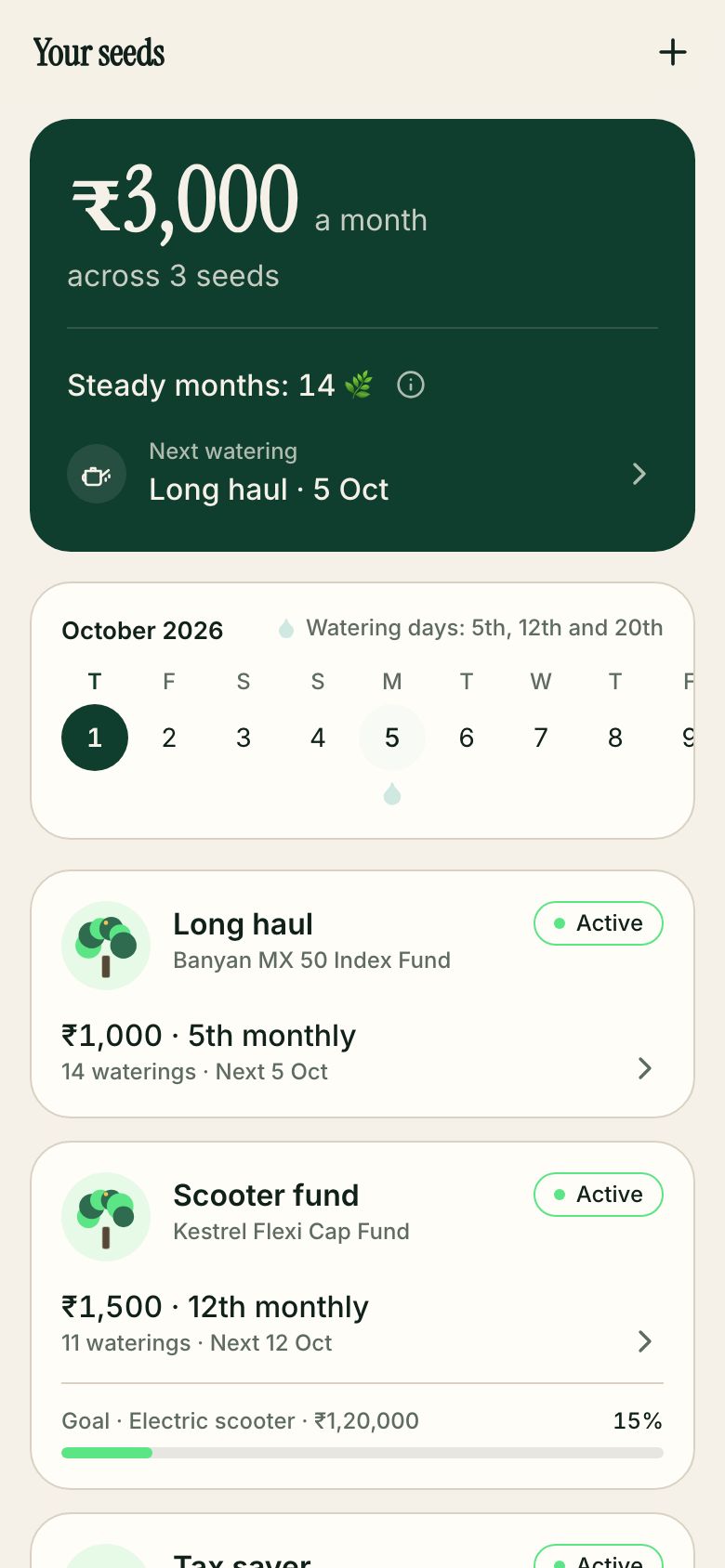
That is the point to think about your own branded app or web portal. Our fintech app page covers what goes into one. Seedvest, our concept build for first-time investors, shows the patterns that work for this audience: plain-language onboarding, a calm portfolio view and SIP reminders that feel encouraging rather than pushy.
Payments matter too. SIPs run on bank mandates and UPI AutoPay, and clients expect those to just work. Read adding UPI payments to your app before you design anything. And if your clients are more comfortable in Hindi, Marathi or Tamil, see building apps in Indian languages.
See the app a mutual fund distribution business runs on
We designed and built this concept end to end, every side of it, so you can open it and try it before you plan your own. Our fintech app page covers the features, timeline and what moves the cost.
Questions people ask
Do I need a degree to become a mutual fund distributor?
No specific degree is needed in most cases. What you need is the NISM certification for mutual fund distributors and an ARN from AMFI. Many successful distributors come from banking, teaching or sales, but plenty start with no finance background. Check the current eligibility conditions with AMFI before you apply, as they can change.
How do mutual fund distributors earn money?
Distributors earn commission from fund houses on investments made through regular plans, mostly as trail commission paid while the client stays invested. You do not charge the client separately for distribution. Because trail grows with the assets you service, income is small in the first years and builds over time if clients stay with you.
Can a mutual fund distributor give investment advice?
A distributor can explain products and recommend suitable schemes as part of the sale, but cannot charge a fee for advice. Fee-based investment advice needs separate registration with SEBI as an investment adviser, and the rules keep the two roles apart. If you want to advise for a fee, read SEBI's investment adviser rules first.
Can I start a mutual fund distribution business part time?
Yes, many people start part time, often alongside a job or after retirement. The work is flexible: evening meetings, weekend sessions and phone calls. The risk is slow service. Clients expect quick help when a mandate fails or a nominee needs updating, so set clear hours and use reminders to stay on top of requests.
Do mutual fund distributors need a website or app?
Not on day one. A Google Business Profile and a simple website listing your ARN, your process and contact details are enough to start. Once you service a few hundred clients, a branded portal where they can see holdings and download statements saves you hours every week and makes you look as organised as you are.


