The short answer
Start with a compact kiosk or counter where there is daytime footfall, such as a gym belt, hospital road, college or office area, and a menu built around seasonal fruit you can buy fresh each morning. Register with FSSAI, sort out the trade licence and your water quality, and keep the menu short enough that wastage stays low. Juice is a volume business: the margin comes from fast service and people who come back daily.
As a ballpark, a kiosk with two juicers and a chiller in a tier-2 city can open for roughly ₹3–8 lakh. A sit-down juice and smoothie café in a metro mall or high street often needs ₹20–45 lakh. This guide walks through the formats, licences, money, a launch plan, daily operations and the tech that turns walk-ins into regulars.
Is a juice bar right for you?
Fresh juice has long been street food in India, from sugarcane carts to mosambi stalls, and city customers now also look for cold-pressed juice, smoothies and protein shakes. Gym-goers, office workers, students and patients' families all buy juice every day. Summer brings the biggest sales; winter and the monsoon are slower in most of the country.
It suits someone who enjoys early mornings at the fruit market and can stay strict about hygiene. Customers drink juice raw, so one dirty juicer or bad water damages trust quickly. You also have to be comfortable with a menu that shifts with the season, because fruit prices swing every few weeks.
Watch for the hard parts: fruit wastage, power cuts that stop juicers and chillers, seasonal dips, and carts nearby selling cheaper. Your answer to the cart down the road has to be hygiene, consistency and drinks it cannot copy.
Business models to choose from
| Model | How it works | Suits |
|---|---|---|
| Kiosk or counter | A small stall in a mall, hospital, office lobby or market | First-time owners; low rent and quicker payback |
| Juice and smoothie café | Seating, bowls, sandwiches and shakes alongside juice | High streets and malls where customers linger |
| Cold-pressed bottles | Bottled juice sold at the counter, to gyms and by delivery | Health-focused buyers; needs a strict cold chain |
| Gym and campus counters | Outlets inside gyms, offices or colleges | Daily orders that depend less on passing trade |
| Subscriptions | Daily or weekly bottles delivered to homes and offices | Customers on cleanses or diet plans; predictable revenue |
A kiosk is the easiest place to prove your menu and prices. Subscriptions and cold-pressed bottles need more equipment and careful handling, but they bring income that does not depend on the weather. A juice counter also sits well inside a cafe or a gym if you can share space.
Licences and registrations
| Registration | Why you need it | Where you get it |
|---|---|---|
| FSSAI registration or licence | Required for preparing and selling juice; the tier depends on turnover and on whether you bottle | FSSAI online portal |
| GST registration | Needed once you cross the turnover limit, or when businesses you supply want GST invoices | GST portal |
| Shop & Establishment registration | Registers your outlet as a workplace, with rules on hours and staff | State labour department or municipal body |
| Trade or health licence | City permission to sell food and drink at the premises | Municipal corporation |
| Water quality test | Food businesses must use potable water; a periodic report from an accredited lab helps during inspections | An FSSAI-notified or NABL-accredited testing lab |
| Landlord or mall approvals | Malls and office campuses set their own rules on fit-out, hours and fire safety | The property's management office |
| Labelling compliance | Bottled juice needs labels that follow FSSAI labelling and Legal Metrology rules | FSSAI regulations and the state Legal Metrology department |
Licence tiers and local requirements differ between states and change over time, and malls often add conditions of their own. Check the full list for your outlet with a CA or your local food safety office. This is not legal advice.
What it costs to start
| Item | Small start | Larger setup |
|---|---|---|
| Rent deposit and advance | ₹30,000–1 lakh | ₹3–8 lakh |
| Counter, interiors and seating | ₹50,000–1.5 lakh | ₹6–15 lakh |
| Juicers, blenders and cold press | ₹40,000–1 lakh | ₹3–8 lakh |
| Chillers, deep freezer and water purifier | ₹40,000–1 lakh | ₹2–4 lakh |
| Licences and consultant fees | ₹15,000–40,000 | ₹50,000–1.5 lakh |
| Opening stock, cups and bottles | ₹20,000–50,000 | ₹1–2 lakh |
| Staff and running costs, two months | ₹60,000–1.5 lakh | ₹3–5 lakh |
| Billing, menu board and launch marketing | ₹20,000–60,000 | ₹1–3 lakh |
| Rough total | ₹3–8 lakh | ₹20–45 lakh |
Fruit is both your largest running cost and your largest source of waste. Buy daily in small lots, price each glass from that week's fruit rates, and change the menu board when a fruit turns expensive. Seasonal specials help: watermelon and mango in summer, oranges and carrots in winter.
Treat these as rough planning numbers, not quotes. Location, mall terms and the equipment you pick shift them noticeably.
Step by step: from idea to first customer
- Define your menu around eight to twelve drinks, mixing everyday staples with two or three signature blends.
- Cost every glass using current fruit prices, cups, straws and expected wastage, then set prices for your area.
- Pick a location with daytime footfall from health-conscious people: gyms, hospitals, offices and colleges.
- Check the space for a water connection, drainage and enough electrical load for juicers and chillers.
- Register and apply for FSSAI, GST and the trade licence, and get your water tested.
- Buy equipment that strips down easily for cleaning, plus an inverter or backup for the chillers.
- Find two fruit suppliers or plan your own early market run, and agree on quality and delivery time.
- Set up billing and UPI at the counter, with a clear board showing sizes and prices.
- List the outlet on Google with photos, hours and the menu, and print a loyalty card.
- Open with tasting cups for the first week and note which drinks people come back for.
Running it day to day
The day begins at the mandi or with a supplier drop soon after dawn. Fruit is washed, sorted and stored before opening, and the busiest windows are usually late morning and the afternoon heat. Juicers are rinsed several times a day and fully stripped at closing, when you also log wastage and match sales against the bill book.
- Cleaning routine: a written schedule for juicers, blenders and the counter, signed off by staff each shift.
- Ice and water: make ice only from filtered water and keep the purifier serviced.
- Pricing: review fruit costs weekly and adjust prices or swap drinks instead of absorbing losses.
- Recipes: train counter staff on portions so every glass tastes the same whoever makes it.
- Off-season menu: add hot drinks, soups or protein shakes for winter and monsoon months.
Getting your first customers
Most juice sales are impulse buys by people already walking past, so visibility and speed matter more than advertising. A bright menu board, fruit on display and a short queue win walk-ins. Online, a well-kept map listing with real photos helps people searching for juice nearby; our local SEO guide explains how to set one up.
- Gyms nearby: give members a discount card or a protein shake deal after workouts.
- Hospitals and clinics: patients' families buy fresh juice daily, so keep sugar-free options ready.
- Offices: take bulk orders for meetings and send a daily menu on WhatsApp to regulars.
- Subscription trial: offer a week of morning bottles at a fixed price to test demand for home delivery.
- Loyalty: a stamp card or digital points so every tenth juice is free.
The tech you need
Day one needs little: a billing app with GST, a UPI QR, a stock sheet for fruit and a Google Business Profile. Once you have regulars, a simple website or ordering page lets offices and gym members order ahead for pickup or delivery. Compare what a café ordering website can do before you decide how far to go.
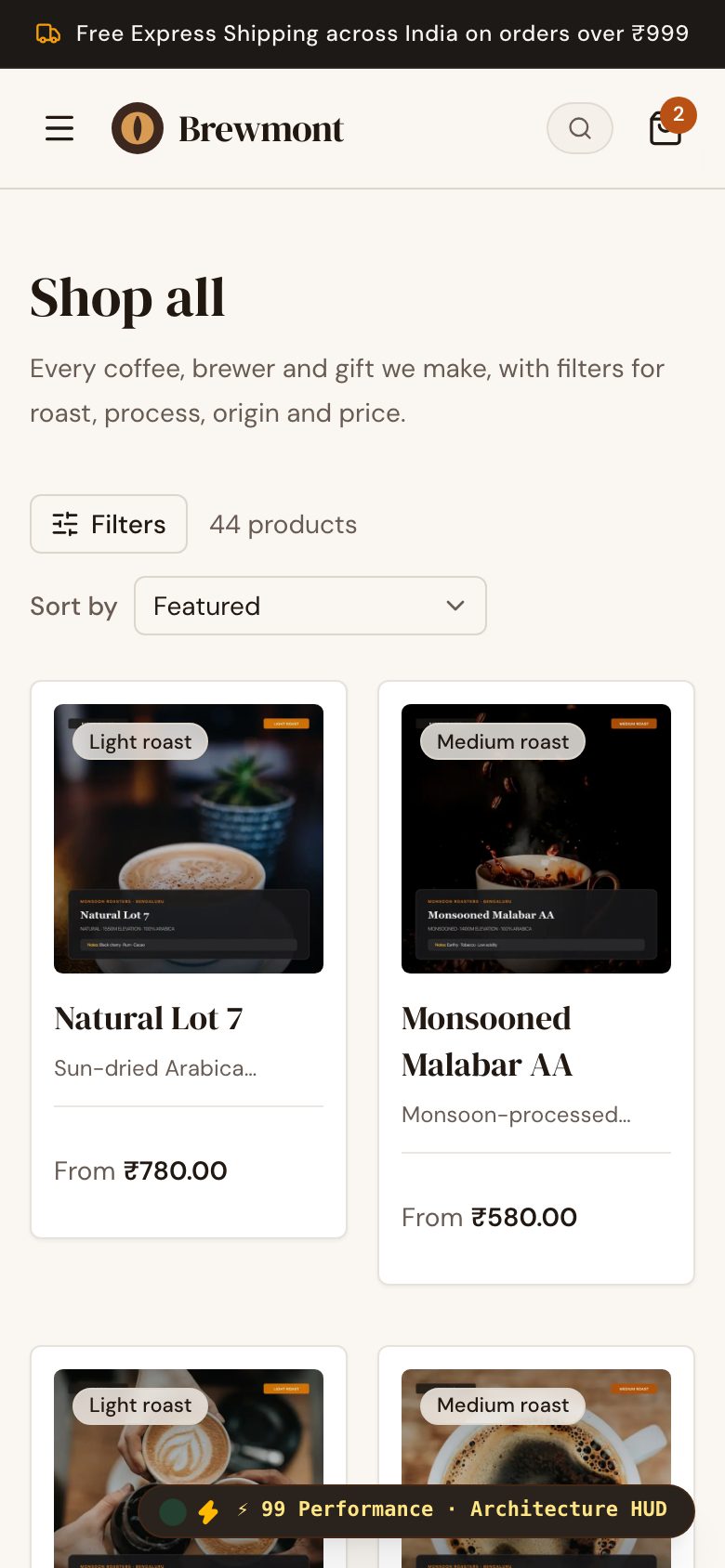
If bottled subscriptions are part of the plan, look at our concept build Brewmont. It was designed as a coffee storefront, but the parts a juice brand needs are the same: a product shop, recurring subscriptions that customers can skip or pause, and a tasting flight that could become a sampler pack of six juices. Our subscription app guide explains how recurring orders and payments work. Send us a brief and get a fixed quote back within 48 hours.
See the app a juice bar runs on
We designed and built this concept end to end, every side of it, so you can open it and try it before you plan your own. Our restaurant website and qr ordering page covers the features, timeline and what moves the cost.
Questions people ask
How much does it cost to start a juice bar in India?
A kiosk-style juice bar in a tier-2 city usually needs roughly ₹3–8 lakh, covering a small rent deposit, the counter, juicers, chillers, licences and early running costs. A metro juice and smoothie café with seating and cold-press equipment often needs ₹20–45 lakh. Rent and fit-out drive most of the difference.
Is a juice bar profitable?
It can be, because the ingredient cost per glass is modest when fruit is bought well and wastage is controlled. Profit depends on footfall, rent and how many glasses you sell in the busy hours. Seasonal dips are real, so many owners add shakes, bowls or hot drinks to keep sales steady through winter.
Which licences do I need for a juice shop?
You need FSSAI registration or a licence, and usually a trade or health licence from the municipal body plus Shop & Establishment registration. GST applies above the turnover limit, and bottled juice adds labelling rules. Malls and campuses may set their own conditions, so confirm the full list with a CA.
What equipment does a juice bar need?
At minimum, a citrus juicer, a centrifugal or slow juicer for other fruit, a blender, a display fridge, a deep freezer and a water purifier. Cold-pressed juice adds a press and bottling setup. Choose machines that are quick to strip and clean, because hygiene is your main selling point.
How do I reduce fruit wastage?
Buy daily in small quantities, track what sells on each day of the week, and keep the menu tight so the same fruits appear in several drinks. Use slightly soft fruit in smoothies the same day. Record wastage every evening by item; patterns show up within a couple of weeks.


