The short answer
Find a location with steady footfall and few nearby stores, register the shop, stock the 300–500 items your neighbourhood buys most, and set up UPI, a weighing scale and simple billing from day one. Then win customers with reliability, fair weights and a little credit to people you trust.
A kirana store is one of the steadiest small businesses in India because people need daily essentials every day. Margins are modest, so success comes from location, stock turnover and careful credit — not from a big launch.
Is a kirana store right for you?
The neighbourhood kirana remains how much of India buys milk, bread, eggs, atta, oil, snacks and household items. It is close, it opens early and closes late, and the owner knows the family.
People who do well are patient and present. A kirana runs long days, often seven days a week. You need to be good with numbers, comfortable negotiating with distributors, and able to say no to credit when you must.
The hard parts: margins on staples are thin, so you need volume. Cash gets stuck in slow-moving stock and in customers’ unpaid credit. And customers now compare prices with delivery apps, so you must win on convenience, trust and service, not only price.
Business models to choose from
| Model | How it works | Suits |
|---|---|---|
| Classic counter kirana | Owner serves customers across the counter from a compact shop | Small premises and family-run shops |
| Self-service mini mart | Open shelves, a billing counter and a slightly wider range | Busier areas with more floor space |
| Kirana plus delivery | Counter shop that also takes WhatsApp or phone orders for nearby homes | Shops near housing societies |
| Franchise or tie-up | A branded store format with supply and systems from a franchisor | First-time owners who want a playbook and accept fees |
Many owners start as a counter kirana and add delivery within months. If that’s your plan, read our playbook on starting a grocery delivery business.
Licences and registrations
| Registration | Why you need it | Where you get it |
|---|---|---|
| Shop & Establishment registration | Registers the shop and covers hours and staff under state law | State labour department, usually online |
| Trade licence | Permission to trade from your premises | Municipal corporation or local body |
| FSSAI registration | You sell food items, packaged or loose | FSSAI’s FoSCoS portal |
| GST registration | Required above the turnover threshold; useful earlier for input credit and B2B buyers | GST portal, usually through a CA |
| Legal metrology verification | Your weighing scale must be verified and stamped; repacked goods need proper labels | State legal metrology department |
| Udyam registration | MSME recognition for schemes and some loans | Udyam portal, free |
Some items, such as tobacco products or certain medicines, carry extra rules or need separate licences. Don’t stock them until you have checked.
Rules and thresholds vary by state and change. Confirm what applies to your shop with a CA or the local authority. This is general guidance, not legal advice.
What it costs to start
| Item | Small start (150–250 sq ft) | Larger setup (500–1,000 sq ft mini mart) |
|---|---|---|
| Rent deposit and advance | ₹50,000 – ₹2 lakh | ₹2 lakh – ₹6 lakh |
| Racks, counter, signboard | ₹40,000 – ₹1.5 lakh | ₹2 lakh – ₹5 lakh |
| Opening stock | ₹1.5 lakh – ₹4 lakh | ₹5 lakh – ₹12 lakh |
| Fridge or visi-cooler, freezer | ₹25,000 – ₹80,000 | ₹1 lakh – ₹3 lakh |
| Scale, billing device, printer, UPI QR | ₹15,000 – ₹50,000 | ₹60,000 – ₹1.5 lakh |
| Working capital (2–3 months) | ₹50,000 – ₹1.5 lakh | ₹2 lakh – ₹5 lakh |
These are planning estimates, not quotes. Location changes rent dramatically, and distributor credit terms change how much stock cash you need upfront.
Step by step: from idea to first customer
- Study the street. Count footfall at morning and evening, note the nearest shops and what they don’t stock.
- Choose the shop. Ground floor, visible, with space for a fridge and a small stock room.
- Register. Shop & Establishment, trade licence, FSSAI and GST as applicable.
- Meet distributors. Ask each FMCG and staples distributor about credit days, minimum orders, delivery days and returns.
- List your first range. Start with daily needs and the brands your neighbourhood already buys; ask a few households.
- Set up the counter. Verified scale, UPI QR, a billing app or device, a printer if you plan GST invoices.
- Price clearly. Display prices on fast movers; never sell above MRP.
- Open with a small offer. A free delivery week for nearby buildings, or a small discount on the first bill.
- Start a credit book with rules. Who gets credit, how much, and when it’s settled.
- Review after 30 days. Drop slow items, add what people ask for, renegotiate with distributors.
Running it day to day
A kirana day usually has two rushes: early morning for milk and bread, and evening for dinner and next-day needs. Restock fast movers before each rush, not during it.
Know your fast and slow movers. Most of your sales come from a small share of items. Keep those always in stock and order slow movers in smaller quantities. Expired stock is pure loss.
Credit (udhaar) needs discipline. Credit builds loyalty, but unpaid balances can quietly drain your working capital. Keep a written or digital ledger, set limits, and send polite reminders on fixed days.
Reconcile every evening. Cash in the drawer, UPI received, credit given and credit collected should match your sales. A five-minute daily tally prevents month-end surprises.
Keep distributors close. Pay on time, and they’ll give you better schemes, priority on new products and help with returns of near-expiry stock.
Getting your first customers
- Google Business Profile. Many people search “kirana store near me” or “grocery shop open now”. Add accurate hours, photos and your phone number. See our local SEO guide.
- WhatsApp ordering. Put your number on the board and on every bill. Let regulars send a list and collect it ready-packed or have it delivered.
- Home delivery for nearby buildings. Even a helper on a cycle makes you more useful than a bigger shop further away.
- Fair weights and honest change. In a neighbourhood, reputation travels fast — in both directions.
- Ask what’s missing. Keep a small notebook of items customers ask for and don’t find. Stock the ones that come up twice.
The tech you need
You don’t need much to start, but a few tools save hours and money every week.
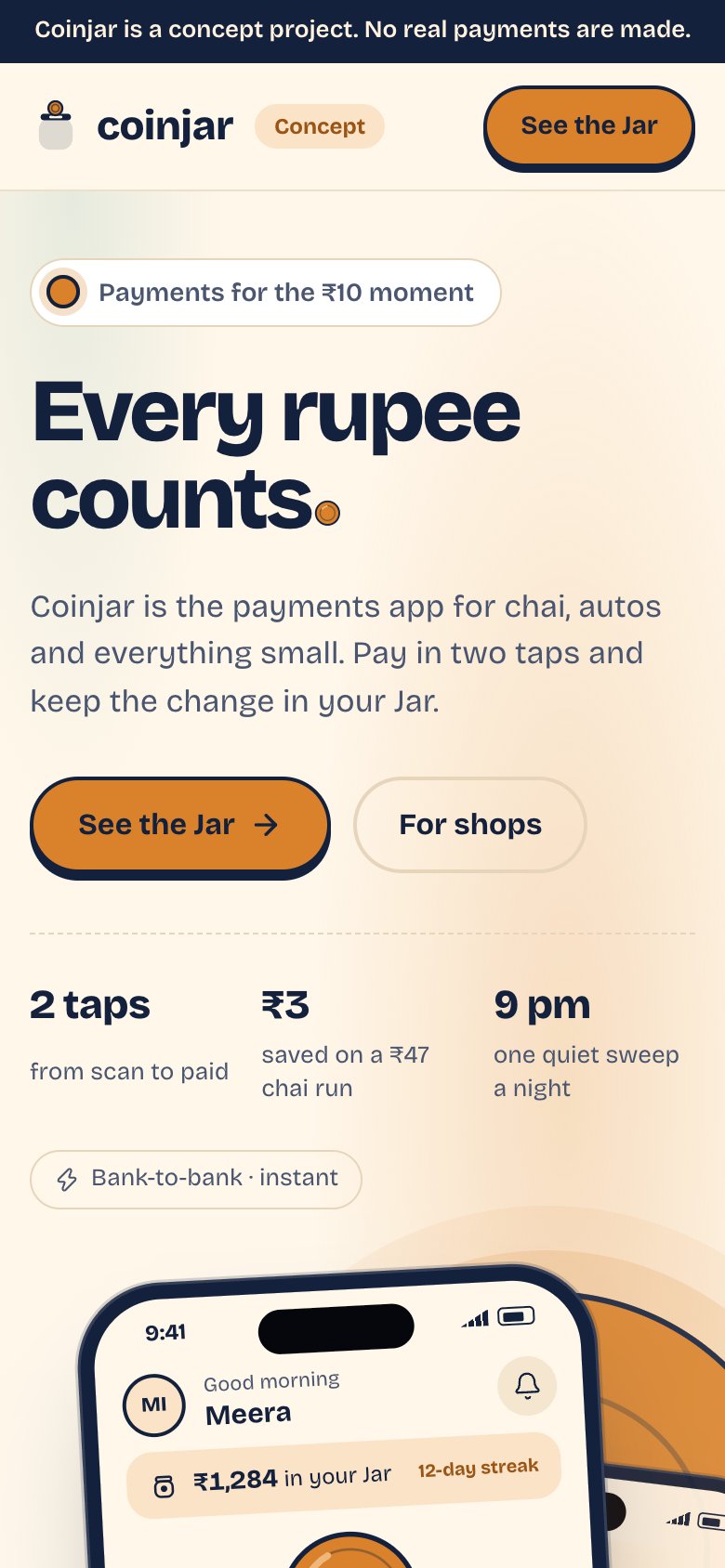
- UPI QR and a payment speaker. Customers expect to pay by UPI, and an audio confirmation stops disputes at a busy counter. Our concept build Coinjar includes a merchant app with a QR, a daily settlement summary, a voice soundbox in regional languages and a khata credit book.
- Billing and stock. A billing app with barcode scanning, GST invoices, a credit ledger and low-stock alerts. Our billing app page explains what to look for, and Tillbook shows a countertop billing app with WhatsApp reminders and a daily tally.
- Ordering. Start with WhatsApp. If delivery grows, a simple ordering website or app with your catalogue saves time; see our grocery delivery app page.
If you are adding UPI to your own ordering site later, read adding UPI payments to your app first.
See the app a kirana store runs on
We designed and built this concept end to end, every side of it, so you can open it and try it before you plan your own. Our gst billing app page covers the features, timeline and what moves the cost.
Questions people ask
How much does it cost to open a kirana store in India?
A small kirana store of 150–250 sq ft typically needs roughly ₹3–8 lakh, covering rent deposit, racks, opening stock, a fridge, a scale and working capital. A larger self-service mini mart can need ₹12–30 lakh. These are rough estimates; rent and distributor credit terms change the figure a lot.
What licences do I need for a kirana store?
Commonly a Shop & Establishment registration, a trade licence from your municipal body, FSSAI registration because you sell food, GST registration above the threshold, and a verified, stamped weighing scale. Requirements vary by state and city, so confirm with a CA or the local authority before opening.
How much profit does a kirana store make?
Profit depends on location, sales volume and how well you control stock and credit. Staples carry thin margins, while snacks, personal care and household items usually earn more. Owners who turn stock quickly, avoid expiry losses and keep credit under control do noticeably better than those who don’t.
Should a kirana store offer home delivery?
Usually yes, if you are near housing societies. Delivery to buildings within a short walk or ride turns occasional customers into regulars. Start with WhatsApp orders and one helper, and set a minimum order so each trip is worth it.
Do I need billing software for a small kirana?
Not on day one, but it helps quickly. A billing app tracks sales, stock, GST invoices and customer credit, and sends payment reminders. It also gives you clean numbers when you approach a bank or distributor for credit. Many owners switch once their credit book gets hard to manage.


