The short answer
Pick an occasion and a buyer you can own, such as corporate Diwali hampers, personalised gifts for college students, or handmade décor for housewarmings, rather than stocking a little of everything. A gift shop lives on curation, presentation and speed in festival weeks. Generic stock sits on the shelf for months, while a well-chosen range with good wrapping sells itself.
As a ballpark, a 250 sq ft gift shop in a tier-2 market can open for roughly ₹5–13 lakh. A metro store with personalisation machines and a corporate hamper unit often needs ₹25–55 lakh. This guide covers the models, the registrations, the costs, the festival calendar and how to sell gifts online.
Is a gift shop right for you?
Indians give gifts constantly: birthdays, weddings, Rakhi, Diwali, Christmas, housewarmings, farewells, return gifts at children's parties and the festive boxes companies send to staff and clients. That gives a gift shop many small reasons to be visited and a few very large selling seasons.
It suits people who love finding things, care about wrapping and presentation, and can stay organised when fifty corporate hampers are due on the same Friday. You need taste, but also discipline about what you buy, because a shelf of charming things nobody wants is the usual way gift shops lose money.
The hard parts are dead stock, breakage of glass and ceramics, low average bills on small items, heavy competition from online sellers, and long payment cycles on corporate orders. Seasonal peaks also make staffing tricky: the shop is calm for weeks, then overwhelmed.
Business models to choose from
| Model | How it works | Suits |
|---|---|---|
| General gift and novelty store | Cards, soft toys, décor, small gadgets and wrapping at the counter | High footfall near colleges, markets and malls |
| Personalised gifts | Engraving, printed mugs, photo frames and name plates made to order | Makers with machines; works well online |
| Hampers and corporate gifting | Curated boxes for festivals, onboarding and client gifts, in bulk | Founders with business contacts and working capital |
| Handmade and artisan gifts | Pottery, block prints and crafts sourced from local makers | Curators with maker networks |
| Online-first gift studio | Instagram and a website, shipping across India from a small workroom | Low rent; needs strong photos and packaging |
Personalised and corporate work usually earns better margins than shelf stock, because the value is in your work rather than the item. If artisan products are your angle, the handicraft business playbook covers sourcing fairly from makers.
Licences and registrations
| Registration | Why you need it | Where you get it |
|---|---|---|
| Shop & Establishment registration | Covers hours, holidays and staff at your shop | State labour department or municipal body |
| Trade licence | Permission to trade from that address | Municipal corporation |
| GST registration | Needed above the turnover limit and for most corporate clients, who expect GST invoices | GST portal |
| Legal Metrology compliance | Packaged goods must carry the mandatory declarations; if you pack hampers under your name or import, registration as a packer or importer may apply | State Legal Metrology department |
| BIS marking on what you stock | Toys and certain electrical and electronic items, such as chargers, power banks and lights, must carry the BIS mark | Bureau of Indian Standards; check each supplier's licence |
| FSSAI registration or licence | If hampers include chocolates, dry fruits, sweets or other food | FSSAI, online |
| Import Export Code | Only if you import goods directly | DGFT, online |
For food in hampers, buy from FSSAI-licensed suppliers, keep the original labels and expiry dates visible, and never repack loose food without the right registration.
What applies depends on your products and state. Check with a CA before you stock food, toys or electronics. This is not legal advice.
What it costs to start
| Item | Small start | Larger setup |
|---|---|---|
| Rent deposit and advance | ₹60,000–2 lakh | ₹4–10 lakh |
| Shelving, display, lighting and signage | ₹1–2.5 lakh | ₹5–10 lakh |
| Opening stock | ₹2–4 lakh | ₹8–15 lakh |
| Personalisation kit: heat press, printer, laser engraver | ₹50,000–1.5 lakh | ₹3–6 lakh |
| Wrapping, boxes, ribbons and cards | ₹20,000–50,000 | ₹1–2 lakh |
| Licences and CA fees | ₹15,000–40,000 | ₹50,000–1 lakh |
| Staff for the first two months | ₹50,000–1.2 lakh | ₹3–6 lakh |
| Billing, product photos and web store | ₹30,000–1 lakh | ₹1–4 lakh |
| Rough total | ₹5–13 lakh | ₹25–55 lakh |
Corporate gifting needs extra working capital. You often buy and assemble hundreds of boxes before Diwali, while the client pays weeks after delivery. Take an advance on bulk orders and agree payment dates in writing.
These are planning ballparks only, not quotes. Stock depth and machinery change the numbers most.
Step by step: from idea to first customer
- Choose your occasion and buyer and write down the ten gifts they would most likely buy from you.
- Walk the competition: visit gift shops nearby and browse online sellers to find gaps in price, taste or service.
- Find suppliers: wholesale markets, trade fairs and local makers. Order samples and test quality, packaging and breakage.
- Register the business and apply for GST, Shop & Establishment and a trade licence, adding FSSAI if food is involved.
- Buy a narrow first range, in modest quantities, and plan reorders around what sells in the first month.
- Set up a personalisation corner if you offer it, and test turnaround times on real orders.
- Design your wrapping: a signature box, ribbon or card that makes your gifts recognisable.
- Set up billing with barcodes, GST invoices and a UPI QR.
- Photograph your range and build a WhatsApp catalogue and a Google Business Profile.
- Pitch ten local companies for festive hampers before the season, with a sample box.
- Open before a gifting season so the first weeks have natural demand.
Running it day to day
A gift shop runs on the calendar. Plan stock three to four months ahead for Rakhi, Diwali, Christmas, Valentine's Day and the wedding months, and keep quieter weeks for photography, supplier visits and corporate pitching. Daily work is receiving and checking stock, wrapping, personalisation orders and the after-work rush.
- Stock ageing: review slow items every month and bundle or mark them down before they gather dust.
- Breakage: pack fragile items with care, photograph them before dispatch and keep spares for replacements.
- Personalisation queue: confirm spellings and photos in writing before printing or engraving anything.
- Corporate orders: a simple tracker with quantities, branding, delivery addresses and payment status for each client.
- Festival staffing: line up part-time wrappers and helpers well before the rush.
Getting your first customers
Gift buyers are usually in a hurry, so being visible and easy to order from matters. A Google Business Profile with photos, Instagram reels of wrapping and personalisation, and fast WhatsApp replies cover most early orders. Our guide to getting your first users in India has more ideas that work for small shops too.
- HR and admin teams: offer festive and onboarding hampers with a sample box and clear bulk pricing.
- Colleges and coaching hubs: affordable personalised gifts for birthdays and farewells.
- Wedding families: return gifts and guest hampers, often through event managers.
- Children's parties: ready return-gift packs at a few price points.
- Gift reminders: with consent, remind customers before birthdays and anniversaries they bought for last year.
The tech you need
On day one you need billing with barcodes and GST invoices, a UPI QR, a WhatsApp catalogue and an order form for personalised items that captures names, photos and dates. Later, a website with personalisation fields, a hamper builder, gift notes, wishlists and a bulk quote form for companies lets you sell across India and handle corporate orders without endless email.
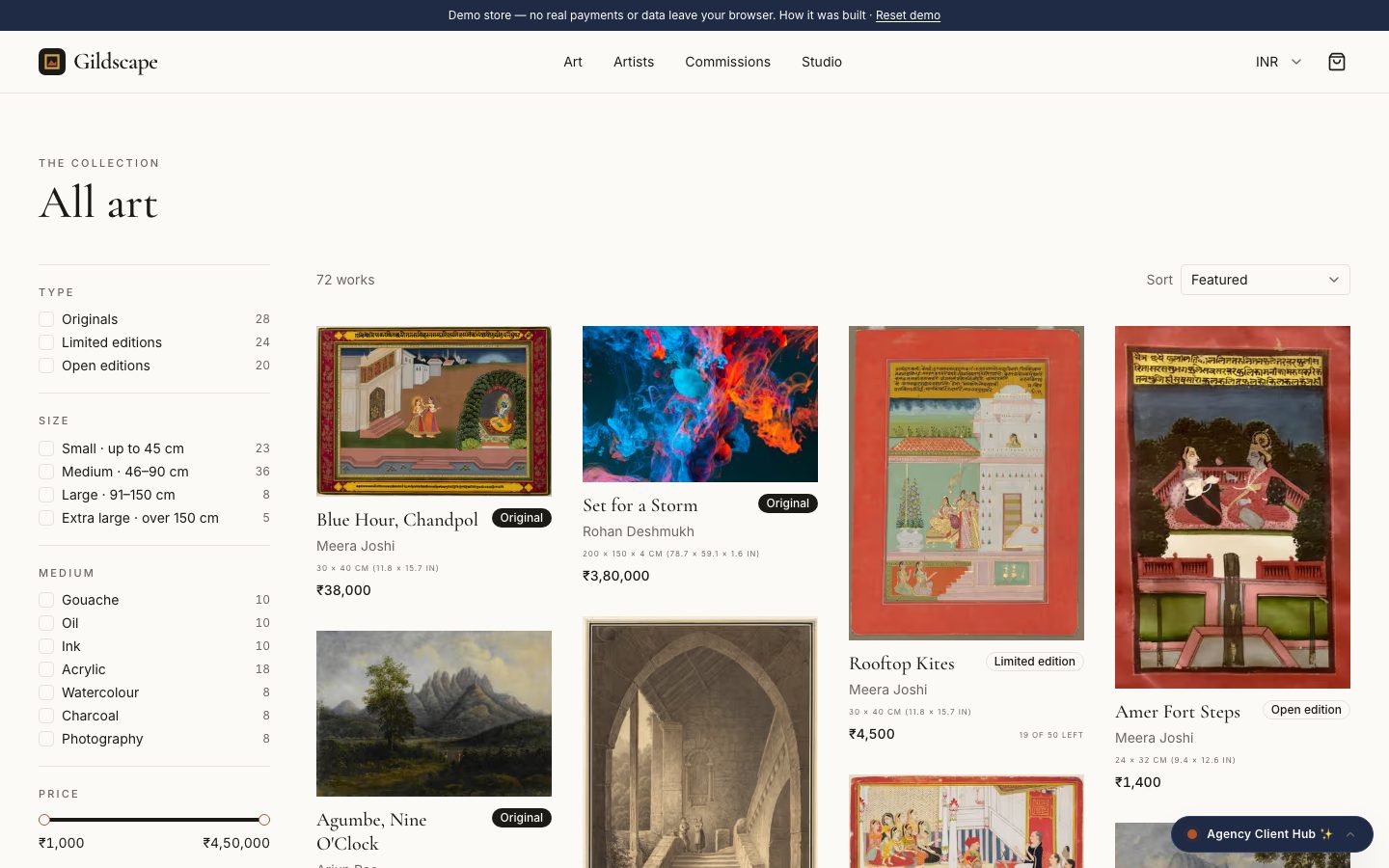
Our concept build Gildscape is an artist storefront and art marketplace, not a gift shop, but several parts carry over: the curated catalogue, the commission flow from brief to proof to approval for personalised orders, gift notes at checkout and wishlists. See what an ecommerce website for gifting needs, or send us a brief for a fixed quote in 48 hours.
See the app a gift shop runs on
We designed and built this concept end to end, every side of it, so you can open it and try it before you plan your own. Our ecommerce website page covers the features, timeline and what moves the cost.
Questions people ask
How much does it cost to start a gift shop in India?
A small gift shop in a tier-2 market typically needs about ₹5–13 lakh, and a metro store with personalisation machines and a corporate hamper unit often needs ₹25–55 lakh. Stock, rent and fit-out are the big items. Corporate gifting also needs working capital, because clients often pay weeks after you deliver.
Do I need FSSAI registration to sell gift hampers with chocolates?
Usually yes, if you sell food as part of hampers. FSSAI registration or a licence, depending on your size, covers selling chocolates, dry fruits and sweets. Buy from licensed suppliers, keep original labels and expiry dates visible, and do not repack loose food without proper registration. Confirm the right category with a CA or food safety officer.
Is personalised gifting a good business in India?
It can be, because customers pay for the personal touch, not just the item. Engraving, printed mugs, photo frames and name plates have better margins than shelf stock and sell well online. The work is detail-heavy, so confirm spellings and photos in writing, keep turnaround times realistic and price urgent orders higher.
How do I get corporate gifting clients?
Start with companies near you and reach out to HR, admin and founders a few months before Diwali and year-end. Send a sample box with clear bulk pricing, branding options and delivery timelines. Deliver one small order perfectly, then ask for the festive order. Repeat clients usually come from reliability on dates, not from the cheapest price.
Should a gift shop sell online or open a store?
Many start online and add a store later, or start with a store and add online orders. Online suits personalised and artisan gifts that ship well, with low rent. A store suits walk-in gifting near colleges and markets. Most gift shops end up doing both, with a WhatsApp catalogue and a simple website alongside the counter.


