The short answer
Get the RTO licence lined up first and build everything around it. A motor driving school needs a licence from your state transport department under the Motor Vehicles Act, qualified instructors, dual-control vehicles and a classroom, so plan the premises and fleet to match those rules. Start with two cars in one part of town, fill the early-morning and evening slots, and add vehicles as bookings grow.
As a ballpark, a two-car school in a tier-2 city can start for roughly ₹12–25 lakh, most of it the cars, and a six-car metro school with two-wheelers and a simulator often needs ₹60 lakh–1.1 crore. Financing the vehicles cuts the cash you need on day one. This guide covers the models, the RTO process, costs, launch steps, daily operations and the tech.
Is a driving school right for you?
Every year a fresh wave of college students, working women, new car owners and people moving to cities need to learn to drive, and many families would rather pay a school than teach at home. Demand for two-wheeler lessons is growing too, along with refresher courses for people who hold a licence but have not driven in years.
It suits calm drivers who are patient teachers and comfortable managing vehicles and staff. People from the transport trade, retired instructors and families who already run a taxi or travel business often make the move smoothly.
- Fleet costs. Fuel, clutch plates, brakes, tyres and insurance add up fast on cars driven by beginners.
- Peak hours. Everyone wants an early-morning or evening slot. Midday cars sit idle unless you find homemakers, retirees or shift workers.
- Instructor quality. One rude or careless instructor can undo months of reviews. Hiring and training matter more than the car.
- Safety and liability. Learners make mistakes on real roads. Dual controls, the right insurance and safe practice routes are not optional.
Business models to choose from
| Model | How it works | Suits |
|---|---|---|
| Licensed driving school | Theory classes and on-road lessons in dual-control cars, after which the learner takes the RTO test | Most new schools; the standard route |
| Accredited driver training centre | A larger centre with simulators and a test track, whose graduates may be exempt from the RTO driving test | Well-funded operators with land on the edge of the city |
| Two-wheeler training | Scooter and motorcycle lessons in an open ground, then on quiet roads | Areas with many students and working women; low vehicle cost |
| Refresher and confidence courses | Short courses for licence holders: highway, night driving, parking, city traffic | Metro schools with experienced instructors |
| Commercial driver training | Courses for people seeking a transport vehicle licence or a driving job | Schools licensed for heavier vehicles, often near transport hubs |
Most schools start on the licensed-school route with two cars, and add two-wheeler training if they can reach safe open space. The accredited centre is a bigger project, closer to building a small campus than opening an office. If you also want to hire out vehicles, see how to start a car rental business, which needs different permits.
Licences and registrations
| Registration | Why you need it | Where you get it |
|---|---|---|
| Driving school licence | Mandatory to run a motor driving training school; covers premises, instructors, vehicles and teaching aids | State transport department, through the regional transport office (RTO) |
| Qualified instructors | The rules set experience and qualification requirements for instructors, checked when you apply | Documents submitted with your RTO application |
| Dual-control training vehicles | Cars used for training must have dual controls and be registered or endorsed for training use as your state requires | RTO, after inspection |
| Accredited Driver Training Centre (optional) | Under the newer central rules, accredited centres with simulators and test tracks can issue certificates that may exempt graduates from the RTO driving test | State transport department, against the accreditation conditions |
| Vehicle insurance | Training use needs suitable cover for learners, instructors and third parties; tell your insurer exactly how the car is used | A general insurer |
| GST registration | Driving lessons are generally a taxable service; register once you cross the limit or when corporate clients need invoices | GST portal |
| Shop & Establishment registration | Covers your office and staff under state labour law | State labour department or municipal body |
| Trade licence and signage | Permission for a commercial office and the boards outside it, in many cities | Municipal corporation |
Ask your RTO for the current checklist before you buy vehicles. States differ on classroom size, the equipment they inspect, renewal periods and how training vehicles are marked, and the inspector will check the cars you actually have.
Transport rules are set centrally but applied by each state, and they are updated from time to time. Confirm everything with your RTO or a consultant who handles transport paperwork. This is not legal advice.
What it costs to start
| Item | Small start | Larger setup |
|---|---|---|
| Office and classroom deposit and setup | ₹50,000–1.5 lakh | ₹3–6 lakh |
| Training cars (new, used or financed) | ₹8–15 lakh | ₹40–60 lakh |
| Dual-control fitting and branding | ₹30,000–80,000 | ₹1.5–3 lakh |
| Insurance and registration for training use | ₹60,000–1.5 lakh | ₹3–6 lakh |
| Two-wheelers for training | ₹1–2 lakh | ₹3–5 lakh |
| Classroom aids, projector and simulator | ₹30,000–1 lakh | ₹5–15 lakh |
| Licences, CA and RTO paperwork | ₹25,000–75,000 | ₹1–2 lakh |
| Instructor pay and fuel for the first two months | ₹1–2 lakh | ₹5–9 lakh |
| Website, booking and local ads | ₹30,000–1 lakh | ₹1.5–4 lakh |
| Rough total | ₹12–25 lakh | ₹60 lakh–1.1 crore |
Vehicles dominate the budget, so decide early whether to buy new, buy used or finance. Small hatchbacks with light clutches are easier for learners and cheaper to repair. An accredited centre with its own track costs far more than either column, mainly because of the land.
These are indicative numbers for sizing up the idea, not quotes. Vehicle choice, finance terms and the city change them more than anything else.
Step by step: from idea to first customer
- Visit your RTO and collect the current requirements for a driving school licence in your state.
- Recruit a qualified lead instructor who meets those requirements, since your licence depends on them.
- Find an office with a classroom on a main road, close to residential areas and to quiet practice routes.
- Register the business, open a current account, and apply for GST, Shop & Establishment and the trade licence.
- Buy or finance training cars, fit dual controls, and arrange insurance that covers training use.
- Apply for the driving school licence with the premises, instructor and vehicle documents, and prepare for the inspection.
- Design your courses: number of sessions, theory topics, practice routes and a mock test before the real one.
- Set up booking and payments: a slot calendar per car and instructor, UPI collection and WhatsApp reminders.
- Publish a Google Business Profile with photos of your cars, instructors and classroom, plus prices and timings.
- Start with friends and referrals for two weeks to smooth out pickups, timings and routes.
- Track test results and feedback from the first batch, and fix whatever made learners nervous.
Running it day to day
A driving school's day starts early. The first lessons begin around 6 or 7 am, before traffic builds, and the evening rush runs from late afternoon until dark. Between the two come theory classes, RTO visits for learner's licences and tests, vehicle servicing and the constant reshuffling of slots when a learner cancels.
- Slot planning: match every booking to a car and an instructor, and leave buffer time for pickups across town.
- Vehicle upkeep: check brakes, clutch, tyres and the dual controls daily. A breakdown with a learner at the wheel is dangerous and bad for reviews.
- Cost per lesson: know what each hour of driving costs you in fuel and wear, so your prices cover it.
- Learner records: log each session's progress so any instructor can take over, and decide together when a learner is ready for the test.
- RTO paperwork: help learners with learner's licence applications and test bookings. It is one of the things they value most.
- Instructor conduct: set clear rules on punctuality, phones and behaviour. Many women learners ask for women instructors, so try to have at least one.
Getting your first customers
People choose a driving school on three things: a convenient area, a feeling of safety and a fair price. Reviews that mention patient instructors carry a lot of weight. Most searches are some version of 'driving school near me', so a complete Google Business Profile matters more than any pamphlet; our local SEO guide for Indian businesses walks through it.
- Colleges and hostels: offer group packages before the summer and winter breaks.
- Car showrooms: new buyers who cannot drive yet are your most motivated learners, so leave brochures with the sales staff.
- Women-only batches with women instructors, promoted through workplaces, gyms and housing societies.
- Corporate tie-ups for refresher courses and defensive-driving sessions.
- Referral discounts for learners who send a friend or family member.
The tech you need
On day one, a shared calendar per car, UPI payments and WhatsApp reminders are enough to run lessons. What learners really want from you online is a clear website: courses, prices, areas you cover, instructor profiles and an easy way to book a trial lesson. For most driving schools that is the main tech need, and it is where to spend first. See what a business website for a service business includes, and check our website cost guide when you budget.
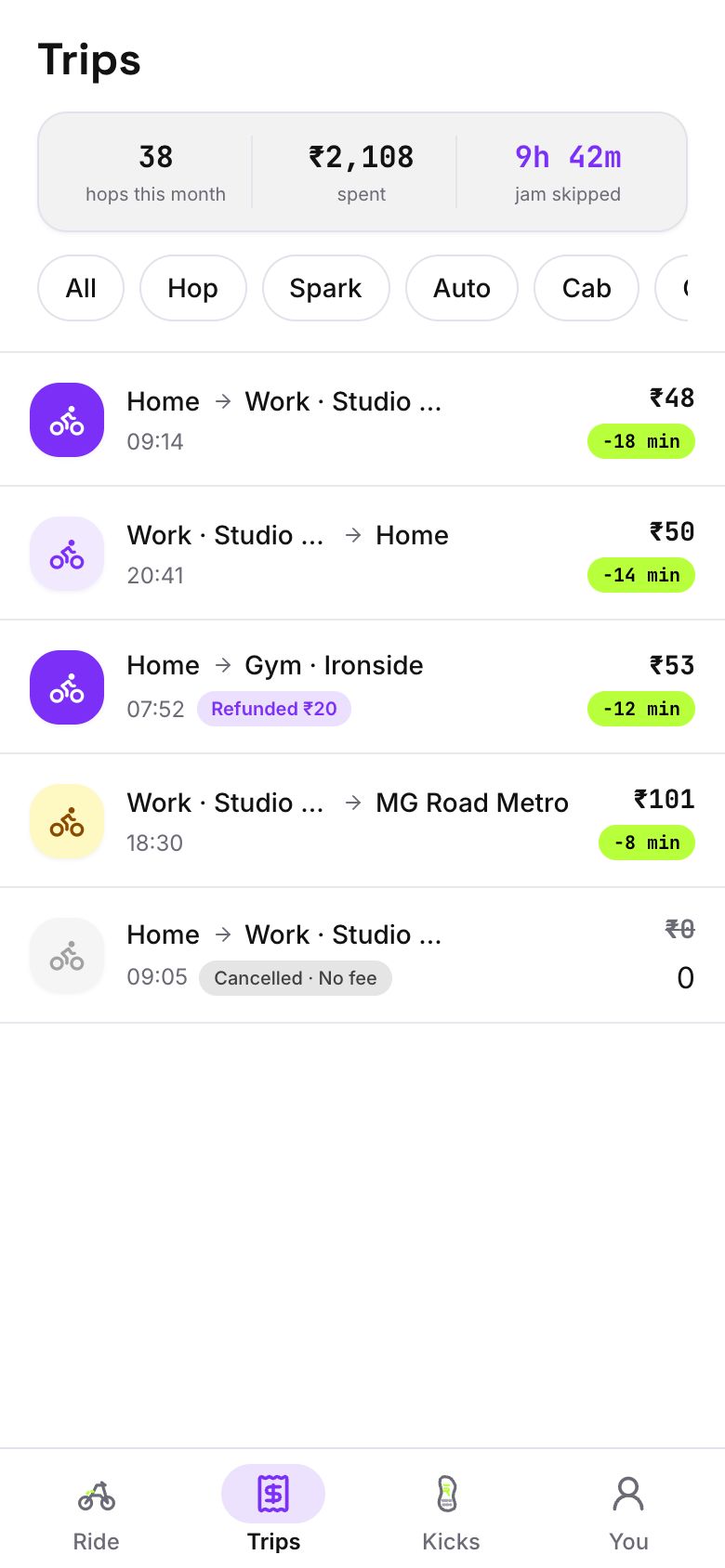
Later, once you run several cars, an instructor app and online slot booking stop double bookings and let learners see their progress. Our concept build Hoppr is a bike-taxi app, not a driving school product, but parts of it carry over: scheduling people and vehicles, live location for pickups, and a partner app for the person at the wheel, which here becomes your instructor. Whatever stage you are at, send us a brief and we will reply with a fixed quote.
See the app a driving school runs on
We designed and built this concept end to end, every side of it, so you can open it and try it before you plan your own. Our business website page covers the features, timeline and what moves the cost.
Questions people ask
How do I get a driving school licence in India?
You apply to your state transport department through the RTO, under the Motor Vehicles Act and the Central Motor Vehicles Rules. Expect to show suitable premises with a classroom, qualified instructors and dual-control training vehicles, followed by an inspection. Requirements and paperwork differ by state, so collect the current checklist from your RTO before buying cars.
How much does it cost to start a driving school?
Roughly ₹12–25 lakh for a two-car school in a tier-2 city, and ₹60 lakh to ₹1.1 crore for a six-car metro school with two-wheelers and a simulator. Vehicles are most of the cost, so financing them lowers the cash you need upfront. Insurance, fuel and instructor pay make up most of the running costs.
What is an Accredited Driver Training Centre?
It is a larger training centre accredited under rules the central government notified in 2021, with simulators, a test track and a set curriculum. Under those rules, people who complete its course may be exempted from the driving test at the RTO when they apply for a licence, depending on how your state applies them. The land and equipment make it a much bigger investment.
Can a driving school also teach two-wheelers?
Yes, if your licence covers two-wheelers and you have safe space to teach balance and control before going on the road. Two-wheeler lessons need cheaper vehicles and are popular with students and working women. Use helmets and protective gear on every lesson, and check that your insurance covers learners on bikes and scooters too.
Does a driving school need an app?
Most driving schools need a good website before an app: courses, prices, areas covered and online booking for a trial lesson. An app becomes useful once you run several cars and instructors, to manage slots, send reminders, track each learner's progress and collect payments. Start with the website and add the app as you grow.


