The short answer
Lease before you build, and check the building's papers before you lease. A banquet hall stands or falls on its occupancy certificate, permitted land use, fire NOC and parking, so confirm those first, then decide whether you will run the catering yourself or work with approved caterers. Bookings bunch around auspicious wedding dates, festivals and weekends, so plan cash for the quiet months as carefully as for the busy ones.
As a ballpark, fitting out a leased 150–250 guest hall in a tier-2 city costs roughly ₹35–80 lakh. A leased 500-plus guest venue in a metro often runs ₹1.5–3.5 crore. Neither figure includes buying land or a building. This guide covers the models, approvals, costs, launch steps, daily operations, marketing and the tech.
Is a banquet hall right for you?
Indian families celebrate in halls: engagements, weddings, receptions, birthdays, naming ceremonies, anniversaries and religious functions. Offices, schools and associations add meetings, annual days and training sessions. In most towns there are more celebrations on the good dates than there are decent halls to hold them.
It suits people who own a suitable property or can secure one on a long lease, who enjoy hosting, and who stay calm when three vendors arrive at once and the generator coughs. Relationships with caterers, decorators and planners matter as much as the building, because they bring and shape most bookings.
The hard parts are seasonality, double bookings, cancellations and refund arguments, and neighbours who complain about sound, crackers and parking. Big bills for air conditioning, generators and washrooms arrive whether you have events or not, and finding trained service staff for peak dates is a constant scramble.
Business models to choose from
| Model | How it works | Suits |
|---|---|---|
| Hall only | Rent the space by slot; clients bring their own caterer and decorator | Owners who want a small staff and simple operations |
| Hall with in-house catering | Per-plate packages from your own kitchen and service team | Higher revenue per event; needs a strong kitchen manager |
| Hall with approved vendors | A short list of caterers and decorators who may work there, often for a fee | Venues that want quality control without cooking |
| Lawn or open-air venue | Outdoor space with temporary structures and a smaller covered hall as backup | Edge-of-city plots; weather is a real risk |
| Small party hall | Space for 50–120 guests for birthdays, kitty parties and meetings | Residential areas; steadier weekday demand |
Catering roughly doubles the complexity, but it also changes the revenue per event. If you will cook, read our playbook on starting a catering business. If planners will be your main channel, our guide to event management shows how they think about venues.
Licences and registrations
| Registration | Why you need it | Where you get it |
|---|---|---|
| Trade or health licence | Permission to run a banquet or eating place at the address | Municipal corporation |
| Fire NOC | Places of assembly usually need one, with working fire systems and clear exits | State or city fire department |
| Occupancy or completion certificate and land use | Shows the building is approved and that assembly or commercial use is allowed on the plot | Municipal body or development authority |
| Police or eating-house permission | Required in some cities for places of public assembly or that serve food | City police or licensing authority |
| Music licences | Needed to play recorded music at events | The copyright licensing bodies for recorded music |
| Occasional liquor permit | Needed for each event where alcohol is served; who applies depends on the state | State excise department |
| Pollution control consent | For DG sets and, in some states, for the venue itself | State Pollution Control Board |
| FSSAI licence | Only if you run the catering yourself | Food Safety and Standards Authority of India, online |
| GST registration | Hall rental and catering are taxable services and clients expect invoices | GST portal |
| Parking compliance | Many cities set parking norms for halls; a shortfall can block approvals | Municipal or traffic authority, depending on the city |
You will also need Shop & Establishment registration for your staff in most states. Learn the local rules on sound levels and loudspeaker hours, which police enforce firmly in residential areas. A hall that loses a permission after repeated late-night complaints also loses the dates already booked.
Approvals for halls vary a lot between states and cities, and some depend on your building's history. Have an architect and a CA confirm the list for your property before you sign the lease. This is not legal advice.
What it costs to start
| Item | Small start | Larger setup |
|---|---|---|
| Rent deposit and advance | ₹5–15 lakh | ₹25–60 lakh |
| Interiors, stage, lighting and washrooms | ₹12–25 lakh | ₹50 lakh–1.3 crore |
| Chairs, tables, linen and décor stock | ₹3–6 lakh | ₹10–20 lakh |
| Kitchen and service equipment | ₹3–8 lakh | ₹15–30 lakh |
| Air conditioning and DG set | ₹6–12 lakh | ₹30–60 lakh |
| Fire safety systems | ₹1–3 lakh | ₹5–10 lakh |
| Licences, architect and CA fees | ₹1–2 lakh | ₹3–6 lakh |
| Staff salaries for the first two months | ₹2–4 lakh | ₹8–15 lakh |
| Website, booking calendar and billing | ₹50,000–2 lakh | ₹2–6 lakh |
| Launch marketing and open days | ₹1–3 lakh | ₹5–10 lakh |
| Rough total | ₹35–80 lakh | ₹1.5–3.5 crore |
A large share of a year's revenue lands on a limited set of auspicious dates and long weekends. Take a booking advance large enough to cover your costs if a family cancels, write the refund terms into the booking form, and keep reserves to carry salaries, power and maintenance through the months with few weddings.
These are planning ballparks, not quotes. Fit-out costs depend heavily on the building's condition, the city and the finish you choose.
Step by step: from idea to first customer
- Study the local calendar. List the wedding and festival dates for the coming year and visit other halls on those dates to see which ones fill up and why.
- Have an architect check the property: occupancy certificate, land use, fire exits, structural safety and how many cars it can park.
- Negotiate a long lease with a lock-in that covers your fit-out, and a clause that protects you if approvals are refused.
- Decide the catering model before design, because an in-house kitchen changes the layout, drainage, exhaust and approvals.
- Register the business, open a current account and apply for GST, the trade licence and FSSAI if you will cook.
- Fit out for flexibility: movable partitions, a stage, a bride's room, clean washrooms and lighting that suits both a wedding and a seminar.
- Get the fire NOC once the systems are installed and tested, and keep the inspection report where staff can find it.
- Build clear packages: hall only, hall with décor, and per-plate menus, each with inclusions, timings and overtime charges.
- Line up approved vendors: a few caterers, decorators, photographers and DJs you trust, with written rules for setup and clearing time.
- Hold a showcase evening for planners, caterers and nearby families, then take the first bookings with a signed contract and an advance.
Running it day to day
Event days start early and finish late. Setup crews arrive in the morning, the kitchen starts prep by afternoon, guests come in the evening, and the hall must be cleared and cleaned before the next slot. On days without events, the work moves to site visits by families, repairs, vendor meetings and chasing enquiries.
- One master calendar: every enquiry gets a hold that expires, so two families are never promised the same date.
- An event sheet per booking: timings, guest count, menu, décor, vendor phone numbers and the balance due, on a single page the whole team can see.
- Planned maintenance: service the ACs, DG set and fire systems on a schedule. A failed generator in the middle of a reception is hard to live down.
- Neighbours: stop amplified music on time, post parking attendants on busy nights and give residents a number to call.
- Payments in stages: an advance at booking, a second instalment before the event and the balance before guests arrive, each with a GST invoice.
Getting your first customers
Families choose a hall after walking through it, so your job is to get them through the door. A Google Business Profile with real photos of the hall dressed for different events, the guest capacity, parking details and a phone number someone answers brings most early enquiries. Our local SEO guide covers the setup.
- Planners: invite wedding and event planners for a walkthrough and agree a clear referral fee. They return with repeat bookings.
- Caterers and decorators: vendors recommend venues where setup is smooth and the staff are helpful.
- Weekday clients: offices, schools, associations and religious groups need space for meetings, annual days and functions.
- Open house before the season: a fully decorated setup on a weekend lets families picture their own event.
- Fast follow-up: send the brochure, package sheet and free dates on WhatsApp within the hour of an enquiry.
The tech you need
On day one you need a shared booking calendar, GST billing, a UPI QR and a Google Business Profile. Once enquiries pick up, a website with a photo gallery, capacity, packages and live date availability saves hours of phone calls and puts an end to double bookings.
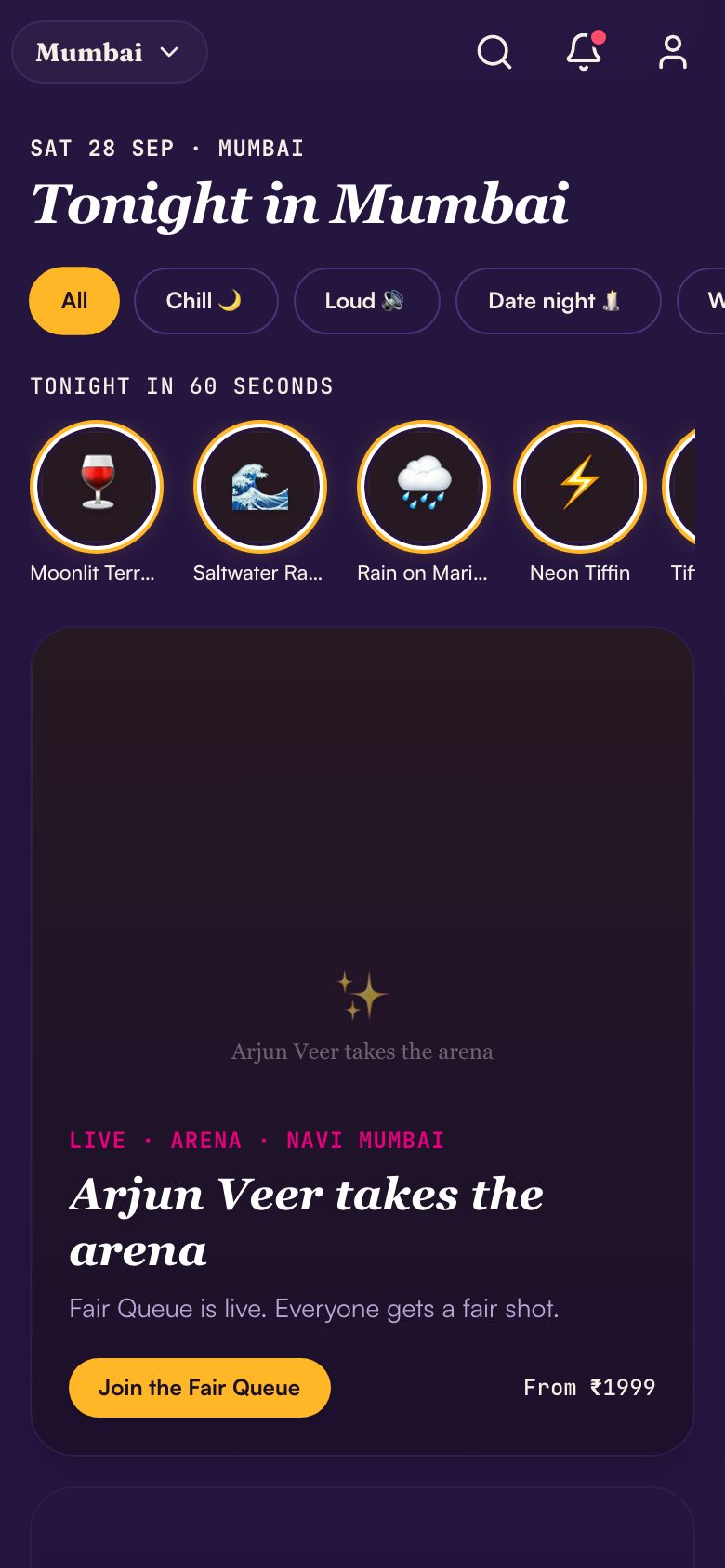
Later, an online enquiry and booking flow that holds a date against an advance, sends payment reminders and keeps each event's details in one place pays for itself within a season. An event booking app covers that. Our concept build Outpass was made for booking tables, seats and tickets rather than whole venues, but its live availability, booking holds and online payments are the same pieces a hall booking flow needs. Read our event and wedding app guide, then send us a brief for a fixed quote.
See the app a banquet hall runs on
We designed and built this concept end to end, every side of it, so you can open it and try it before you plan your own. Our event & ticketing app page covers the features, timeline and what moves the cost.
Questions people ask
How much does it cost to start a banquet hall in India?
Fitting out a leased hall for 150–250 guests in a tier-2 city usually costs about ₹35–80 lakh, and a leased 500-plus guest venue in a metro often costs ₹1.5–3.5 crore. Interiors, air conditioning, the DG set and the rent deposit take the most. Buying land or a building would be a separate and much larger cost.
Which licences does a banquet hall need?
Usually a trade or health licence, a fire NOC, an occupancy certificate with the right land use, GST and Shop & Establishment registration. Depending on the city and your services, you may also need police permission, music licences, event liquor permits, FSSAI for in-house catering and pollution consent for DG sets. Confirm the list with an architect and a CA.
Should I run my own catering or allow outside caterers?
It depends on your appetite for running a kitchen. In-house catering earns far more per event and gives you control over food quality, but it needs a skilled kitchen team, FSSAI and more capital. A hall-only model with a short list of approved caterers is simpler to start, and you can add your own kitchen once bookings are steady.
How do I fill a banquet hall outside wedding season?
Sell weekdays and quiet months to different customers. Offices need space for meetings, training and annual days; schools and associations hold functions; families host birthdays and small religious events. Offer smaller sections of the hall, simpler packages and lower weekday rates, and keep in touch with planners, who also handle corporate and community events.
How do I avoid double bookings and cancellation disputes?
Keep one master calendar and let only one person confirm dates. Give enquiries a short hold that expires, confirm a booking only after an advance, and send a written contract that spells out the slot, inclusions, overtime and refund terms. Booking software with date holds and payment reminders removes most of the mix-ups that phone and paper create.


