The short answer
Learn the repair work properly before you open the shutter. Most new repair shops struggle on skill and trust rather than rent, because a botched screen fitting or a customer's leaked photos travel fast through a neighbourhood. Train on board-level work, start with a small counter in a busy market or near colleges and offices, buy parts from steady suppliers, and give a written warranty on every job.
As a ballpark, a one-counter shop with core tools and a starting stock of parts and accessories in a tier-2 city needs roughly ₹2.5–7.5 lakh. A larger service shop with three or four technicians, board-level equipment and a pickup service in a metro is closer to ₹16–37 lakh. This guide walks through models, registrations, costs, launch steps, daily work, marketing and tech.
Is a mobile repair shop right for you?
Phones run banking, work, school and family life in India, so a broken one is an emergency. Many people repair rather than replace, especially for screens, batteries, charging ports, cameras and water damage, and plenty of older phones are passed down the family and kept going for years.
It suits people who are patient with fine work, keep learning as new models arrive, and can explain a fault in plain words to a worried customer. Honesty is the product: customers cannot see inside the phone, so they come back to the shop that told them the truth about a repair that was not worth doing.
The hard parts are poor-quality parts that fail within weeks, fast model changes that leave you with dead stock, price cutting by neighbouring shops, comebacks and warranty claims, arguments over damage that existed before the repair, and the responsibility of holding someone's whole digital life on your bench.
Business models to choose from
| Model | How it works | Suits |
|---|---|---|
| Walk-in counter | A small shop in a market for screens, batteries, ports and software fixes | First shops; low rent and quick turnaround |
| Board-level repair lab | Chip-level work, water damage and data recovery, often for other shops as well | Skilled technicians; higher margin per job |
| Repairs plus accessories | Repairs alongside cases, chargers, cables and screen guards | Busy markets where accessories help pay the rent |
| Doorstep and pickup service | A technician visits homes and offices or collects phones for repair | Metros; needs trusted staff and job tracking |
| Refurbish and resell | Buy used phones, repair them and sell with a warranty | Founders with sourcing contacts and testing discipline |
A walk-in counter is the usual first step. If you plan to buy and resell used phones, read our playbook on starting a second-hand goods business as well, because pricing, testing and returns work very differently from repairs.
Licences and registrations
| Registration | Why you need it | Where you get it |
|---|---|---|
| Shop & Establishment registration | Covers the shop, its opening hours and staff under state law | State labour department or municipal body |
| GST registration | For billing repairs and parts properly, and required for many business clients | GST portal |
| Trade licence | Permission to run a shop at that address, where your city requires one | Municipal corporation |
| E-waste disposal arrangement | Dead boards, screens and other scrap must go to an authorised recycler under the E-Waste (Management) Rules | Recyclers authorised by the State Pollution Control Board |
| Used battery disposal | Spent lithium batteries are covered by separate battery waste rules and should go to an authorised collector | Authorised collectors and recyclers |
| Udyam registration (optional) | Records you as a micro or small enterprise for loans and schemes | Udyam portal |
If you sell chargers, power banks or batteries, stock only products that carry the BIS standard mark, since many electronics sold in India fall under compulsory BIS registration. Treat customer data with care: ask customers to back up and sign out where possible, never browse or copy anything, record who handled each device, and delete anything you had to open. Our DPDP Act checklist explains the wider duties around personal data.
Waste and data rules are being tightened and applied differently across states. Confirm what applies to your shop with a CA and your State Pollution Control Board. This is not legal advice.
What it costs to start
| Item | Small start | Larger setup |
|---|---|---|
| Shop rent deposit | ₹30,000–1 lakh | ₹2–5 lakh |
| Counter, display and interiors | ₹50,000–1 lakh | ₹3–6 lakh |
| Tools: soldering and hot-air stations, microscope, power supply, testers | ₹40,000–1.5 lakh | ₹3–8 lakh |
| Spare parts stock | ₹50,000–1.5 lakh | ₹3–6 lakh |
| Accessories stock | ₹30,000–1 lakh | ₹2–4 lakh |
| Training, or technician pay for the first two months | ₹15,000–50,000 | ₹1.5–3 lakh |
| Registrations and CA fees | ₹10,000–30,000 | ₹30,000–60,000 |
| Billing, job cards and a website | ₹10,000–40,000 | ₹1–3 lakh |
| Launch marketing and signboard | ₹10,000–30,000 | ₹50,000–1.5 lakh |
| Rough total | ₹2.5–7.5 lakh | ₹16–37 lakh |
Parts are where margins are won or lost. Keep a small stock of fast-moving parts for popular models and order the rest on demand from two suppliers. Label every part with model and grade, and tell customers plainly whether you are fitting an original, a compatible or a refurbished part, with the warranty that goes with each.
These numbers are rough guides for planning, not quotes. Rent in a busy market and the depth of your parts stock move the total most.
Step by step: from idea to first customer
- Train first: take a hands-on course, then spend a few months as an assistant in a busy shop to see real faults.
- Choose the spot: a market lane, a stretch near a college or a cluster of offices, with steady footfall and a visible front.
- Find two parts suppliers in the wholesale market, compare grades and agree how faulty parts are returned.
- Register the business, open a current account and complete GST, Shop & Establishment and trade licence registrations.
- Set up a safe bench: an anti-static mat, strong lighting, a microscope and fume extraction for soldering.
- Design a job card: customer details, IMEI, visible damage, passcode policy, estimate and warranty terms, signed at intake.
- Arrange e-waste pickup with an authorised recycler and keep the handover receipts.
- Publish a price list for common repairs by model band and display it on the counter.
- Set up billing and payments: GST invoices, a UPI QR and a card machine if your customers use cards.
- Open with a free check-up week for batteries and charging ports to bring people in and show what you can do.
- Track comebacks from the first month and drop any part or supplier that keeps failing.
Running it day to day
Mornings are quiet: technicians clear pending jobs while someone visits the wholesale market for parts. Footfall builds from late morning, peaks after office hours, and weekends are busiest. Every phone that comes in gets a job card, a photo of its condition and a promised time before anyone opens it.
- Intake checks: test and record what works before you touch a phone, so you are not blamed for faults it already had.
- Turnaround: do quick jobs while the customer waits, and give a firm time for the rest.
- Warranty log: record every return, find the cause and stop buying from a supplier whose parts fail.
- Stock: count parts weekly and reorder what moves. Parts for old models lose value quickly.
- Data care: no browsing, no copying, and a written passcode policy that customers sign.
Getting your first customers
People look for a repair shop the moment their phone breaks, usually on a map app and usually in a hurry. A Google Business Profile with the right category, opening hours, photos of your bench and honest reviews that mention specific repairs brings walk-ins from the first week. Our local SEO guide covers the setup step by step.
- Shop front: a clear board listing the repairs you handle, and same-day screen replacement if you can deliver it.
- Colleges and offices: a student discount, and a pickup and drop service for office staff.
- Other shops: offer board-level work to smaller shops that only change screens and batteries.
- WhatsApp updates: message customers when the phone is ready, with a photo of the finished repair.
- Reviews: ask happy customers to mention the model and the fix, which helps the next person searching for it.
The tech you need
On day one you need billing software that prints GST invoices, a job card system (even a spreadsheet works), a UPI QR and a Google Business Profile. Next come status messages on WhatsApp, a parts inventory and a warranty record you can search by phone number. Our GST billing software guide explains what to look for.
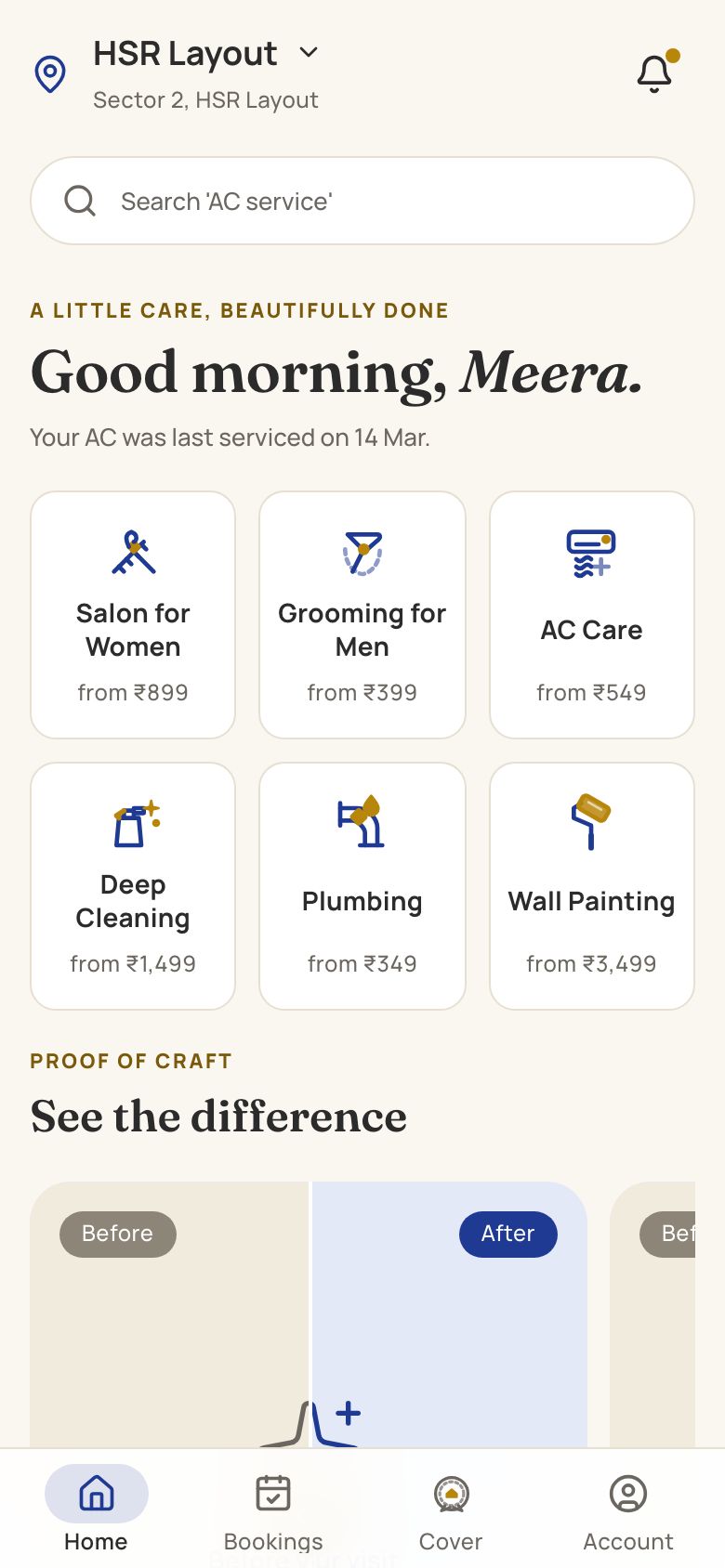
If you add doorstep repairs or office pickups, you need what a home services app provides: slot booking, technician assignment, live job status, before-and-after photos and payment. Our concept build HomeCraft shows that pattern for scheduled home services, with certified pros who show their work, and the same booking, technician profiles and proof of work carry over to phone repair. Send us a brief and we will come back with a fixed quote.
See the app a mobile repair shop runs on
We designed and built this concept end to end, every side of it, so you can open it and try it before you plan your own. Our home services app page covers the features, timeline and what moves the cost.
Questions people ask
How much does it cost to open a mobile repair shop in India?
A one-counter shop in a tier-2 city, with core tools and a starting stock of parts and accessories, usually needs about ₹2.5–7.5 lakh. A metro service shop with three or four technicians, board-level equipment and a pickup service is closer to ₹16–37 lakh. Rent and parts stock move the figure most, so keep stock lean at first.
Do I need a licence or certificate to repair mobile phones?
There is no special licence just to repair phones, but you need the usual shop registrations: Shop & Establishment, GST and a trade licence where your city requires one. You must also send e-waste and used batteries to authorised recyclers. A training certificate is not mandatory, though it helps customers trust a new shop.
How do I handle customers' data during a repair?
Touch as little of it as possible. Ask customers to back up their phone and remove accounts or locks where the repair allows, write your passcode policy on the job card, and never browse, copy or keep anything. Record who handled each device, and if you had to access data for testing, delete it and tell the customer.
Where should I buy spare parts?
From two or three suppliers in the nearest wholesale electronics market, chosen for consistent quality rather than the lowest price. Test parts before fitting, agree how faulty ones are returned, and keep records of which supplier sent which part. Tell customers the grade you are fitting, because a cheap part that fails costs you the customer.
Can I offer doorstep phone repair?
Yes, and it works well in metros for screens, batteries and simple fixes that a technician can finish in under an hour. Board-level work is better done at the bench, so offer pickup and drop for those. You will need trusted, well-presented technicians, slot booking, job tracking and clear warranty terms to make it work.


