The short answer
Most new Indian beauty brands start with a small, focused range — a sunscreen, a lip tint, a hair oil — made by a licensed third-party manufacturer. You own the formula brief, the brand and the customer; the manufacturer handles production under its licence. Sort out labelling and licensing before you print a single box.
Beauty buyers try before they trust. Shade, skin type and ingredients drive every purchase, so the brand that explains them clearly — and helps people choose — wins repeat orders.
Is a cosmetics brand right for you?
Indian buyers are more ingredient-aware than ever, and Indian skin tones, climates and hair types are still underserved by many products. That leaves room for brands that solve one specific problem well: humidity-proof makeup, shades for deeper skin tones, simple routines for oily skin.
People who do well here tend to have product sense and patience. Formulation, stability testing and packaging take months. You will rely on manufacturers and suppliers, and you have to be careful about what you claim on a label or an ad.
The hard parts: regulatory paperwork, minimum orders on bottles and tubes, shade ranges that multiply inventory, and the trust gap — new customers worry about reactions and fakes. Good information and an easy way to choose the right shade are your best tools.
Business models to choose from
| Model | How it works | Suits |
|---|---|---|
| Third-party manufacturing | A licensed manufacturer makes your product to your brief and packs it under your brand. | Most first-time founders |
| White label | You choose from a manufacturer's ready formulas and change the packaging and branding. | Fast, low-cost tests of a category |
| Own manufacturing | You set up a facility and hold the manufacturing licence yourself. | Founders with capital and a formulation team |
| Own website (D2C) | You sell through your own store, with quizzes, shade guides and subscriptions. | Brands that want customer data and margin |
| Marketplaces and retail | You list on beauty marketplaces and later in pharmacies and stores. | Reach once the product is proven |
Licences and registrations
| Registration | Why you need it | Where you get it |
|---|---|---|
| Cosmetics manufacturing licence | Cosmetics made in India must be manufactured under a licence under the drugs and cosmetics framework. If you use a third-party manufacturer, it is their licence; check it covers your product category. | State licensing authority (your manufacturer holds it) |
| Cosmetics import registration | Imported cosmetics generally need registration before they are sold in India. | CDSCO, usually through an authorised agent |
| GST registration | Online sellers generally need a GSTIN, and marketplaces ask for one. Confirm the current rules with a CA. | GST portal |
| Trademark | Protects your brand and product names; beauty is crowded, so check early. | Indian trademark registry, through a trademark attorney |
| Legal Metrology and labelling | Packaged products need declarations such as MRP, net quantity, maker details and customer-care contact; cosmetics labelling rules add ingredient and batch information. | Follow the packaging and cosmetics labelling rules; your manufacturer can advise |
| Udyam and Shop & Establishment | Records you as an MSME; a Shop & Establishment registration covers an office or store with staff. | Udyam portal; state labour department |
Cosmetics regulation is detailed and changes. Avoid medical claims (“cures acne”) unless you know the product can legally make them. Confirm licensing, labels and claims with a regulatory consultant, CA or lawyer. This is general information, not legal advice.
What it costs to start
Assumptions: 2–4 products made by a third-party manufacturer, a first batch at the manufacturer's minimum order, sold online. A larger setup adds more products and shades, retail-ready packaging and stronger marketing.
| Item | Small start | Larger setup |
|---|---|---|
| Formulation, samples and testing | ₹50,000–2 lakh | ₹3–8 lakh |
| First production batch | ₹1.5–5 lakh | ₹10–30 lakh |
| Packaging design and printing | ₹50,000–1.5 lakh | ₹3–8 lakh |
| Branding and photography | ₹50,000–1.5 lakh | ₹3–6 lakh |
| Online store | ₹30,000–1.5 lakh (hosted) | ₹6–20 lakh (custom, with shade tools) |
| Regulatory and trademark help | ₹25,000–75,000 | ₹1–3 lakh |
| Marketing for three months | ₹75,000–2 lakh | ₹5–15 lakh |
Estimates only, not quotes. Minimum order quantities on bottles, jars and tubes change the first batch cost more than anything else.
Step by step: from idea to first customer
- Choose one problem and one customer — for example, a lightweight sunscreen for oily skin in humid cities.
- Study ingredient lists and reviews of what that customer buys today; write down what they complain about.
- Shortlist licensed third-party manufacturers and check their licence covers your product type.
- Brief the formula, approve samples and ask about stability and other testing the manufacturer runs.
- Lock the brand name, check the trademark and domain, and file early.
- Design packaging with every required label detail; get it checked before printing.
- Register for GST, open a current account and set up UPI payments.
- Run a small first batch and test it on real users, with honest feedback.
- Build product pages that explain ingredients, skin type and how to use it, with real photos on several skin tones.
- Launch to a waitlist and a few creators who genuinely fit the product.
- Follow up every order on WhatsApp and collect reviews before scaling.
Running it day to day
Batches and shelf life. Track batch numbers and expiry dates for every unit. Sell oldest stock first and never let products age in a warehouse.
Inventory. Shades multiply stock fast. Launch fewer shades done well, and add new ones when data shows demand.
Returns and RTO. Opened cosmetics usually cannot be resold, so be clear about your returns policy. Confirm COD orders before dispatch and encourage prepaid UPI.
Packaging. Leak-proof caps, bubble wrap for glass and tamper seals matter more in transit than a fancy outer box.
Customer service. Questions about reactions, ingredients and shades need fast, careful answers. Keep a written FAQ your team follows, and escalate any adverse reaction properly.
Cash flow. Manufacturers usually want advance payment. Plan reorders around your sell-through, not your hopes.
Getting your first customers
- Creators and Instagram. Small creators whose skin and audience match your product, showing real use over a few weeks.
- Sampling. Minis, trial kits and samples in other brands' orders lower the risk of a first purchase.
- WhatsApp. Routine reminders and refill messages — see our WhatsApp guide.
- Marketplaces. List hero products for discovery once reviews start coming in.
- Salons, pharmacies and pop-ups. Physical trial builds trust quickly.
The tech you need
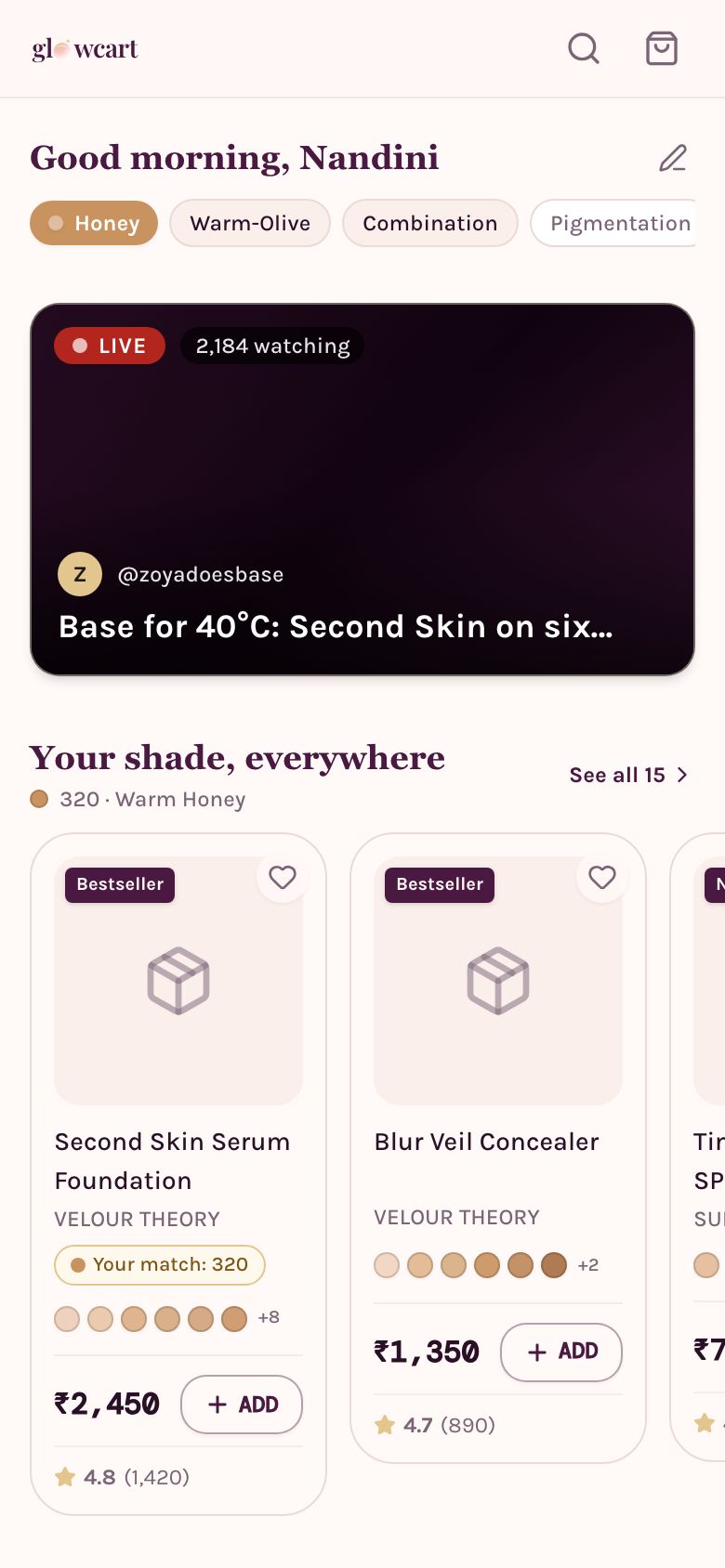
Early on: a clean store with ingredient lists, UPI and COD, and a shade guide. Later: a shade finder, routine quizzes, subscriptions for refills, reviews with photos, and live shopping sessions.
Our concept build Glowcart is beauty commerce designed around Indian skin tones, with shade matching and live shopping — a useful picture of where a brand's store can go. See what an ecommerce website involves, read about UPI payments, and if you also run a salon, see how to start a salon.
See the app a cosmetics brand runs on
We designed and built this concept end to end, every side of it, so you can open it and try it before you plan your own. Our ecommerce website page covers the features, timeline and what moves the cost.
Questions people ask
Do I need a licence to sell cosmetics in India?
Cosmetics made in India must be manufactured under a licence, and imported cosmetics generally need registration. Most new brands use a licensed third-party manufacturer, whose licence covers production. You still need GST, correct labelling and a trademark. Check your product category with a regulatory consultant.
How much does it cost to start a skincare brand in India?
A small brand with two to four products made by a third-party manufacturer often needs ₹5–12 lakh to launch, covering formulation, a first batch, packaging, a store and early marketing. A larger range with retail packaging can need ₹30 lakh or more. These are ballparks, not quotes.
What is third-party manufacturing for cosmetics?
A licensed manufacturer produces your product to your brief and packs it under your brand. You own the brand, the marketing and the customer; they handle production, testing and compliance for manufacturing. It lets small founders start without building a factory.
Can a new cosmetics brand claim its product treats acne or pigmentation?
Be careful. Claims that a product treats or cures a condition can move it into a different regulatory category and attract scrutiny. Describe what the product does cosmetically and back claims with evidence. Ask a regulatory consultant to review your labels and ads.
How do I sell cosmetics online without a lot of returns?
Help people choose correctly. Show shades on several real skin tones, explain who each product suits, list ingredients clearly, and offer minis or trial kits. Be clear that opened products cannot be returned, and confirm COD orders before dispatch.


